- Popular countries
- Popular regions
- Popular cities
- Popular airports
- Car hire Italy
- Car hire United Kingdom
- Car hire Spain
- Car hire United States
- Car hire Portugal
- Car hire Greece
- Car hire France
- Car hire Ireland
- Car hire Poland
- Car hire Cyprus
- Car hire South Africa
- Car hire Netherlands
- Car hire Switzerland
- Car hire Croatia
- Car hire Hungary
- Car hire Malta
- Car hire Canada
- Car hire Germany
- Car hire Australia
- Car hire Norway
- Car hire England
- Car hire Sicily
- Car hire Scotland
- Car hire Sardinia
- Car hire Florida
- Car hire Malta
- Car hire Crete
- Car hire California
- Car hire Lanzarote
- Car hire Majorca
- Car hire Menorca
- Car hire Fuerteventura
- Car hire Tenerife
- Car hire Rhodes
- Car hire Madeira
- Car hire Kefalonia
- Car hire Corsica
- Car hire Gran Canaria
- Car hire Corfu
- Car hire Ibiza
- Car hire London
- Car hire Milan
- Car hire Malaga
- Car hire Faro
- Car hire Lisbon
- Car hire Rome
- Car hire Dublin
- Car hire Alicante
- Car hire Porto
- Car hire Amsterdam
- Car hire Geneva
- Car hire Bergamo
- Car hire Budapest
- Car hire Athens
- Car hire Luqa
- Car hire Larnaca
- Car hire Manchester
- Car hire Pisa
- Car hire Palermo
- Car hire Orlando
- Car hire London Heathrow Airport
- Car hire Dublin Airport
- Car hire Malaga Airport
- Car hire Lisbon Airport
- Car hire Faro Airport
- Car hire Alicante Airport
- Car hire London Gatwick Airport
- Car hire Porto Airport
- Car hire Bergamo Airport
- Car hire Athens Airport
- Car hire Malta Airport
- Car hire Budapest Ferihegy Airport
- Car hire Rome Fiumicino Airport
- Car hire Manchester Airport
- Car hire Geneva Airport (Switzerland)
- Car hire Larnaca Airport
- Car hire Amsterdam Schiphol Airport
- Car hire Pisa Airport
- Car hire London Luton Airport
- Car hire Milan Malpensa Airport

10 Day Trips by Rental Car from Nice
The Best Attractions on the Côte d’Azur
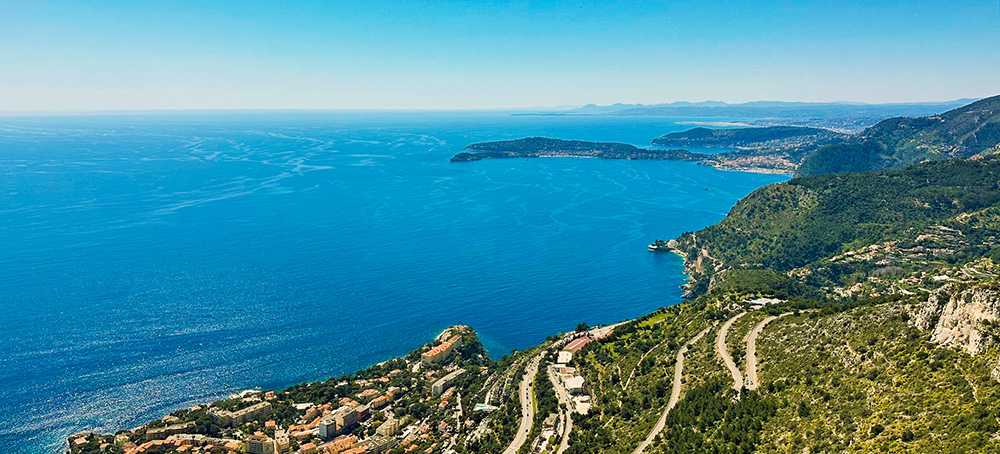
Nice is often called “the queen of the Côte d’Azur,” and once you’ve been there, you’ll understand why. It’s a stunning city, beautifully situated on a natural bay that you can already admire as your plane begins its descent toward the airport. Nice has a charming historic center, interesting museums, beautiful squares, cozy bars, restaurants, and outdoor cafes, a lovely beach, and, of course, the iconic Promenade des Anglais along the azure-blue Mediterranean Sea. You can easily spend a few days in the city, and you don’t need a rental car to see the sights in Nice itself or nearby (Villefranche-sur-Mer).
Flying to Nice + a rental car: a smart combination
Nice Airport is the natural gateway to the French Riviera. The runway is literally right on the Mediterranean Sea, and you can start your road trip without first having to drive for hours on French highways. That makes flying and renting a car on the spot ideal for a week-long road trip. You can pick up your rental car as soon as you land and then decide for yourself where to stop, how long to stay somewhere, and which coastal route to take. This offers a great deal of freedom, especially for places like Èze, Cap d’Antibes, and the area around Saint-Tropez. No bus or train will take you past the cliff-top villas and bays of movie stars that make this route legendary.
Riviera Road Trip at a Glance: 8 Stops
| Stop | Reason | Distance traveled * | Length of stay | Unique to |
|---|---|---|---|---|
| Nice | Capital of the Riviera + gastronomy | -- | 2 days | Promenade des Anglais, Old Nice, Cours Saleya |
| Èze | Medieval eagle’s nest (429 m) | 12 km | 0.5 day | Botanical garden with cacti and ocean views |
| Monaco | Glamour, speed, and the principality | 10 km | 0.5 day | F1 Circuit, Casino, Prince’s Palace |
| Menton | French charm with an Italian atmosphere | 12 km | 1 day | Lemons, Old Town, Jean Cocteau Museum |
| Antibes | Art & mega-yachts | 58 km | 1–2 days | Port Vauban, Picasso Museum, Cap d'Antibes |
| Cannes | Film & Glamour | 12 km | 1 day | La Croisette, Palais des Festivals, Lérins Islands |
| Saint-Tropez | Chic bay and marina | 75–95 km | 1–2 days | Place des Lices, Pampelonne Beach |
| Nice (return) | Return flight, final dinner | 120 km | 0.5 day | Socca & final evening by the sea |
* Driving distance from the previous stop is approximate and depends on which route you choose.
Côte d’Azur Road Trip: From Nice to Saint-Tropez
1. Nice: The Elegant Capital of the Riviera
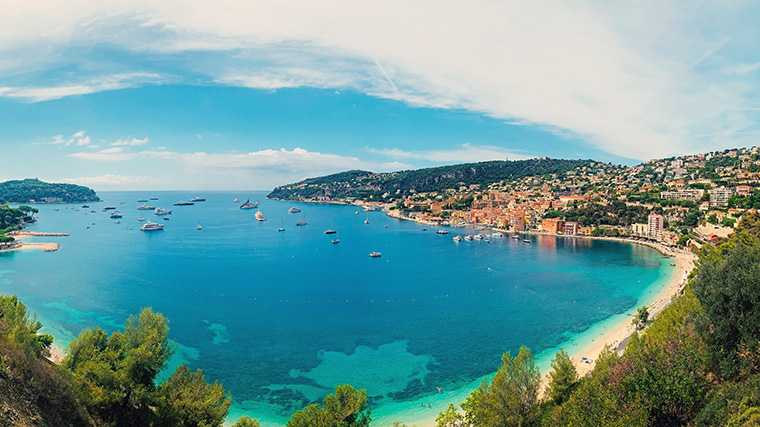
Nice is the bustling capital of the Côte d’Azur, situated along the Baie des Anges. Start at the Promenade des Anglais, the famous waterfront boulevard lined with palm trees and Art Deco facades. Then stroll toward Vieux-Nice, where ochre- and pastel-colored facades, narrow streets, and Baroque churches set the scene. On the Cours Saleya, you’ll find market stalls selling flowers, fruit, herbs, and local products. Here, you’ll immediately get a taste of Nice’s Provençal side. Be sure to order a socca, the thin, savory pancake made from chickpea flour that’s one of the local specialties.
Recommended time: Set aside 2 days to explore Nice’s sights. That way, you’ll have time for the old town, the boulevard, museums, and an afternoon at the beach.
Parking: The Interparking Sulzer underground parking garage is very centrally located, right on the boulevard. An alternative is the renovated Promenade des Arts parking garage (entrance along Avenue Saint-Jean-Baptiste).
Day Trips: Nice is an ideal base if you’d rather not sleep in a different bed every night and prefer to take day trips. From Nice, you can reach Èze in thirty minutes, Monaco in twenty, and even Cannes is less than an hour’s drive away.
2. Èze: a medieval eagle’s nest
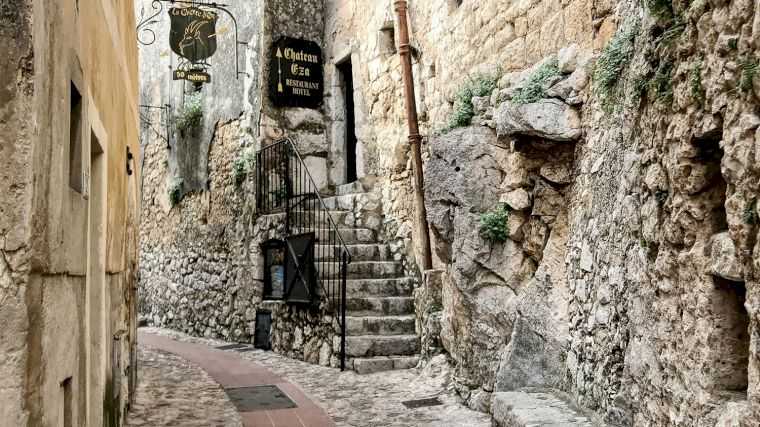
From Monaco, it’s just a short drive to Èze. Yet it feels as if you’re entering a different world. Nowhere else do you feel the drama of the Riviera as directly as in Èze. The village clings to a rocky outcrop, rising 429 meters above the sea, with winding alleys of yellow natural stone that lead to a botanical garden full of cacti and a sea view that, on clear days, stretches all the way to Corsica. The drive there, via the Moyenne Corniche (D6007) or Grande Corniche (D2564), is exactly the kind of coastal road for which you’d rent a convertible.
Parking: There are a few parking lots, but spaces are limited, so be sure to arrive early. The historic center is largely pedestrian-only.
Recommended time: Half a day is enough to explore the village and the garden, making it perfect for a stopover on the way to Monaco.
Day trip: From Nice, it’s just a 12-kilometer drive along the Corniche to Èze, but it can easily take 30 minutes.
3. Monaco: speed, glamour, and a pocket-sized principality
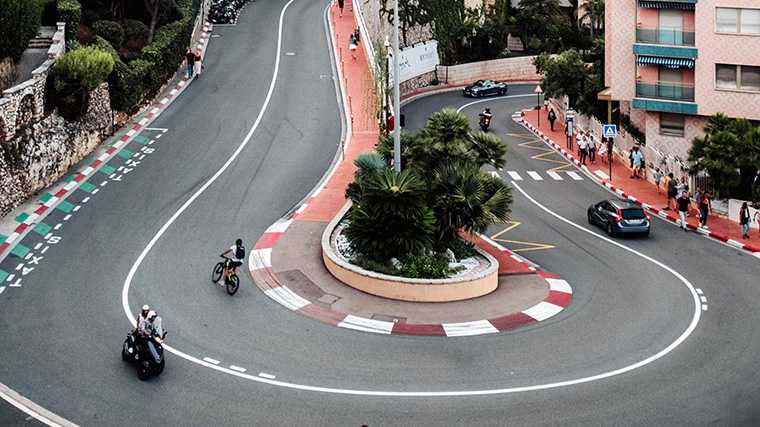
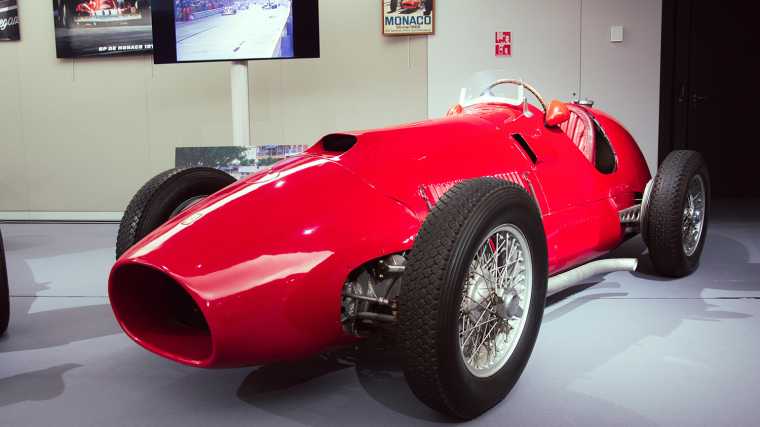
The landscape along the coast toward Monaco becomes increasingly spectacular: grand villas nestled against the hills, a rocky coastline, and deep-blue waters. Monaco is small but brimming with iconic landmarks. Drive along parts of the famous Formula 1 street circuit, admire the superyachts in Port Hercule, and try your luck at the 19th-century Casino de Monte-Carlo. The Prince’s Palace sits atop the Rock of Monaco, and the Musée océanographique is located on the coast. The latter is especially interesting if you’re traveling with children.
Parking: Right next to the Oceanographic Museum is a large parking garage: Parking du Chemin des Pêcheurs.
Recommended time: A full day is enough to see the main sights in Monaco.
Day trip: Monaco is about 20 kilometers from Nice, making it a perfect day trip. If you’re driving a rental car, you can also stop at scenic overlooks along the coast along the way.
4. Menton: City of Lemons and Color
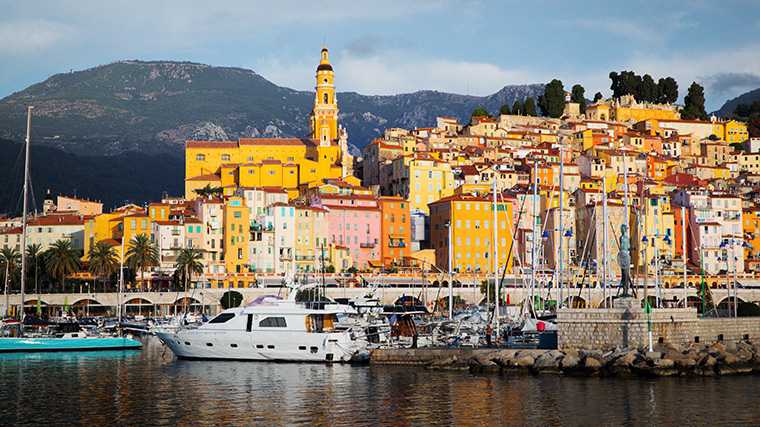
Menton is more laid-back and greener than its neighbors: the lemon trees that made the city world-famous grow almost everywhere here, from private gardens to the public Jardins Biovès. The colorful facades and Italian influences give the city a character quite different from that of Monaco or Cannes. The Musée Jean Cocteau at the harbor pays tribute to the poet, writer, and filmmaker who left his mark here.
Parking: There is a large parking garage near the marina and Sablettes Beach: Parking Vieille Ville.
Recommended time: Half a day is enough to get a good impression of the city; if you want to enjoy a leisurely lunch and visit the gardens, you can easily spend a whole day there.
Day trip: Menton is about 30 kilometers from Nice, making it a great destination for a day trip.
5. Antibes: art, beaches, and superyachts
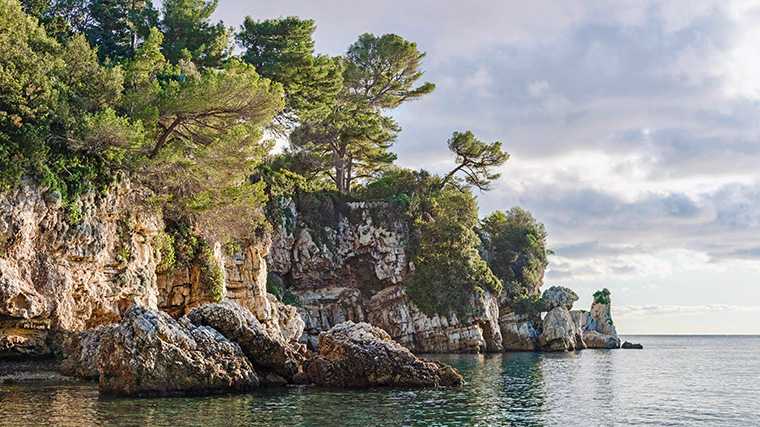
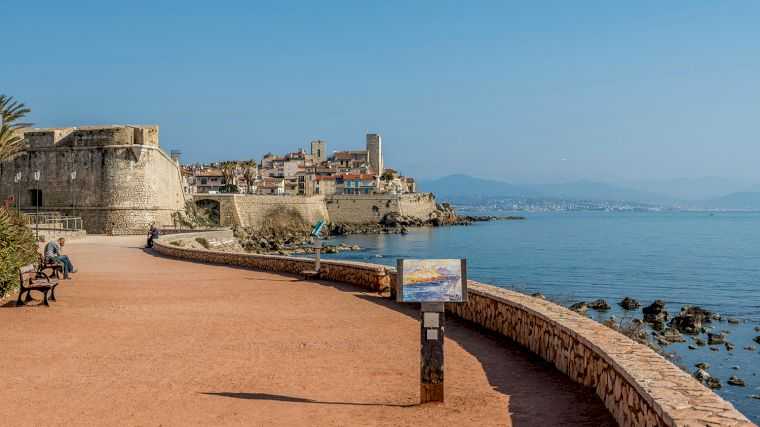
From Menton, it takes just over an hour to drive along the A8 toll road to Antibes (58 km), which combines a charming, walled old town with one of the largest marinas in the region. In the 16th-century Château Grimaldi, you’ll discover works by Pablo Picasso, who worked here for a time in 1946. Afterward, you can stroll toward Port Vauban, where impressive superyachts are moored. Be sure to also take some time to visit Cap d’Antibes. The peninsula is one of the most beautiful places to park your rental car for a bit and explore the coast on foot, for example along the Le Sentier du Littoral hiking trail.
Parking: Pré aux Pêcheurs is a large parking garage close to Port Vauban and the old town. On the other side of the harbor is a free parking lot, from which a shuttle bus runs to the center every 10 minutes.
Recommended time: Allow at least a full day for Antibes, including a trip around the peninsula.
Day trip: From Nice, it’s a half-hour drive to Antibes in a rental car, making the city ideal for a day trip.
6. Cannes: The Côte d’Azur as a Film Set
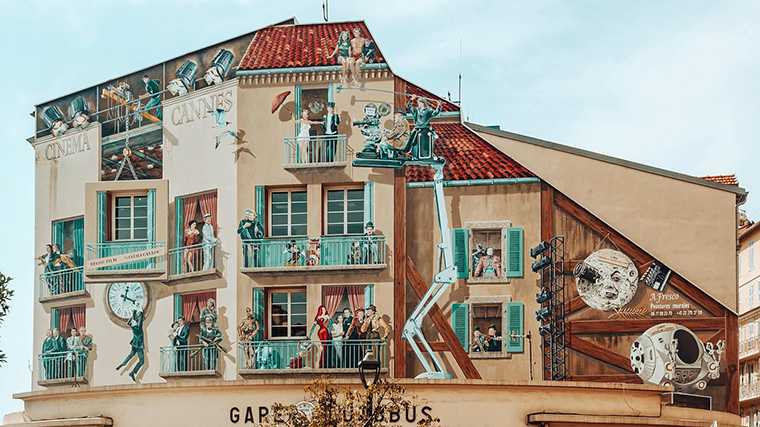
Cannes is perhaps the most cinematic stop on the entire route. The city has become synonymous with cinema, luxury, and the international jet set. Stroll along the Boulevard de la Croisette, with its luxury hotels and views of the bay. Take a photo at the Palais des Festivals, where the film festival takes place every May, and then climb up to Le Suquet, the historic hilltop district. Take the boat to the Îles de Lérins for a more peaceful contrast: pine forests, an ancient abbey, and views of the coast from the water.
Parking: There are several (underground) parking garages in and around the center of Cannes.
Recommended time: One day is more than enough to explore Cannes and the islands off the coast.
Day trip: From Nice, it’s about a 40-minute drive to Cannes, and it’s also easy to combine with a visit to Antibes on the same day.
7. Saint-Tropez: the ultimate chic dream
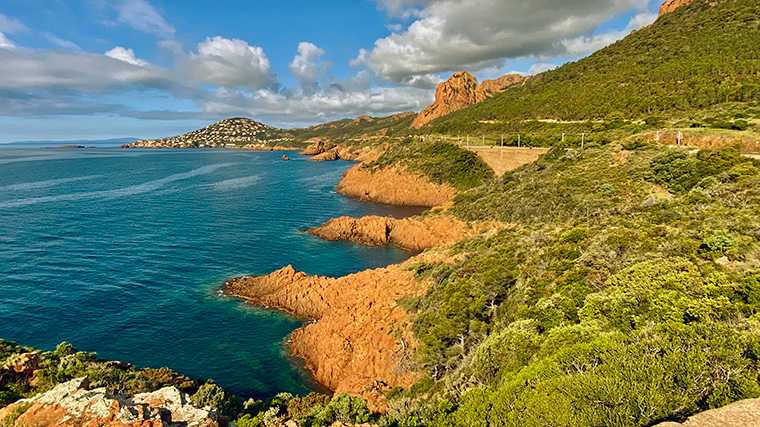
From Cannes, the route heads toward Saint-Tropez. This is the longest leg of the tour and also one of the most beautiful—at least if you don’t take the highway. The D6098 coastal road runs along the rugged, red cliffs of the Esterel Massif, the famous Corniche d’Or. In Saint-Tropez, visit the spots that have made it a jet-set destination for decades: the harbor with yachts that seem bigger than the houses behind them, the Place des Lices market (Tuesdays and Saturdays) full of fresh produce, and the 18-kilometer-long Pampelonne Beach, south of Saint-Tropez.
Parking: Parc des Lices is a large underground parking garage, not far from the square of the same name. There’s also a huge parking lot near the harbor: Parking du Nouveau Port.
Recommended time: Plan for at least one, but preferably two days—the town really comes into its own when you take the time to look beyond the marina.
Day Trip: Saint-Tropez is the only stop on this route that’s less suitable as a standalone day trip from Nice; the drive easily takes two hours and even longer if you take the coastal road. Staying overnight is therefore much more relaxing.
8. Back to Nice: The Final Leg
For the final leg, drive back to Nice—a distance of about 120 kilometers if you take the A8 highway. Be sure to allow at least two hours for this, but plan for extra travel time during the summer months.
If you’re flying out of Côte d’Azur Airport in the morning, it’s a good idea to spend your last night in Nice. That way, you won’t have to make a long drive from Saint-Tropez on the day of your departure. A final evening in Nice deserves a fitting finale. Take one last stroll through Vieux-Nice, order a glass of wine, and enjoy a dinner of socca and pan bagnat on a terrace.
Return your rental car at the airport and wrap up your Riviera road trip.
Practical Information: Driver's License, Traffic Rules, Tolls, and Parking
Driver’s License
People with a driver’s license from a country in the European Union, the United Kingdom, Liechtenstein, Iceland, or Norway can rent a car in France without any problems. Travelers from other countries are advised to bring an international driver’s license along with their national license. This is even mandatory for holders of a U.S., Canadian, or Australian driver’s license.
Traffic Rules
In France, you drive on the right, and road signs are exclusively in French. The standard speed limits are 50 km/h in built-up areas, 80 km/h on single-lane roads outside built-up areas, and 130 km/h on highways. The speed limit on single-lane roads was reduced from 90 to 80 km/h in 2018, but some departments have partially reinstated the 90 km/h limit; pay attention to the signs. Lower limits apply in rainy conditions, and low beams are required during the day.
Toll Roads
Many French highways charge a toll (péage), and this is also the case on the A8 along the Côte d’Azur. You can pay with a debit card, credit card, or cash. Some rental cars in Nice are equipped with a transponder for electronic payment, but this is by no means the case for all rental cars. You can calculate the toll online, but we actually recommend avoiding the A8 as much as possible, since other routes are much more scenic, even if they do take a bit longer.
Parking
In addition to the parking garages mentioned above, busy cities like Nice, Monaco, and Cannes have P+R lots on the outskirts of town. These are ideal for parking your rental car and continuing on foot or by public transportation. Parking regulations are strictly enforced on the Côte d’Azur, and illegally parked cars may be towed.
Which car class is best suited for the Côte d’Azur?
For the route described here, a compact or midsize rental car is ideal. A smaller car is an advantage in the narrow streets of Èze, historic town centers, and tight parking garages.
If you really want to experience the Riviera, rent a convertible: driving along the coast with the top down is a unique experience. The price is higher, but the drive is worth it.
An SUV isn’t necessary for this route. Choose one only if you’re extending your road trip into the mountainous interior and plan to visit, for example, the Mercantour National Park.
For day trips, you won’t be traveling with much luggage. That changes if you’re planning a round-trip. When choosing your rental car class, be sure to consider space for both passengers and luggage.
Are you traveling with young children? Reserve a child or infant seat in advance, at the same time you book your rental car.
Ready to plan your route? Check out the rental car options in Nice.
Costs and when is the best time to book?
The Côte d’Azur is one of France’s most exclusive vacation destinations, and that’s reflected in the prices. Rental cars here are often more expensive than in many other Mediterranean destinations, especially during peak season. In addition to the rental price, factor in costs for fuel, tolls, and parking. Parking, in particular, can add up significantly on the Riviera.
If you’re traveling during a popular time of year, it’s a good idea to reserve your rental car six to eight weeks in advance. Around major events, such as the Cannes Film Festival, it’s wise to book even earlier. For the Christmas season, it’s also best to plan well in advance.
The best time to travel is in September and October: quiet after the summer crowds, with temperatures between 20–24°C and relatively affordable car rental rates. In May and June, you can enjoy the beautiful flowers lining the roads and the scenery before (or just after) the film festival. Avoid July and August if you’d rather steer clear of the crowds in Saint-Tropez and temperatures above 32°C. Want to know more about the ideal booking period? Read our guide on the best time to rent a car.
Frequently Asked Questions About Driving Along the Riviera
Is it better to fly or drive to the Côte d’Azur?
That depends on your point of departure, but for a seven-day road trip, flying to Nice Côte d’Azur Airport is the most efficient option for many travelers. You’ll save yourself the long drive there and have that time to enjoy the route itself. You’ll start your vacation right on the Mediterranean Sea and can pick up your rental car at the airport.
How many days do I need for the Côte d’Azur?
You’ll need at least 7 days for the classic route through Nice, Èze, Monaco, Menton, Antibes, Cannes, and Saint-Tropez. Anything less than five days will be very rushed: Saint-Tropez alone is worth two days. In a week, you can see the main highlights without spending hours in the car every day. If you have more time, consider adding the Mercantour National Park, Saint-Paul-de-Vence, or the Route Napoléon, for example.
When is the best time for a Côte d’Azur road trip?
May–June and September–October are excellent times to visit. In the spring, the landscapes are green and many flowers are in bloom. Keep in mind, however, that during the Cannes Film Festival in the third week of May, prices skyrocket and it gets very crowded. September and October combine pleasant temperatures with fewer crowds. The fall break is the perfect time for a road trip through southern France. July and August are sunny, but much busier and warmer. Winters are mild, with daytime temperatures ranging from 12 to 16°C, though swimming isn’t recommended during this time.
Can I drive a convertible along the Riviera?
Absolutely—it’s actually the best way to experience the Riviera. Renting a convertible from Nice Airport (NCE) is recommended for the Grande Corniche, the classic coastal road from Nice via Èze and Monaco to Menton. Expect to pay an extra €20–40 per day compared to a compact car, and book six to eight weeks in advance, as availability is limited. The iconic Route Napoléon between Cannes and Grenoble is also an impressive drive with the top down.
Is a Côte d’Azur road trip suitable for children?
Yes, the route offers a surprising amount for families. The Oceanographic Museum in Monaco is an obvious favorite, while Èze, with its steep streets and spectacular setting, is an adventure in itself. Nice is also easy to enjoy with children: the beach, ice cream, and short walks through Vieux-Nice provide plenty of variety. Cannes and Saint-Tropez are less kid-friendly and can get very crowded during peak season. Be sure to reserve a child seat when you book your rental car online.
Can I drive from the Côte d’Azur to Italy?
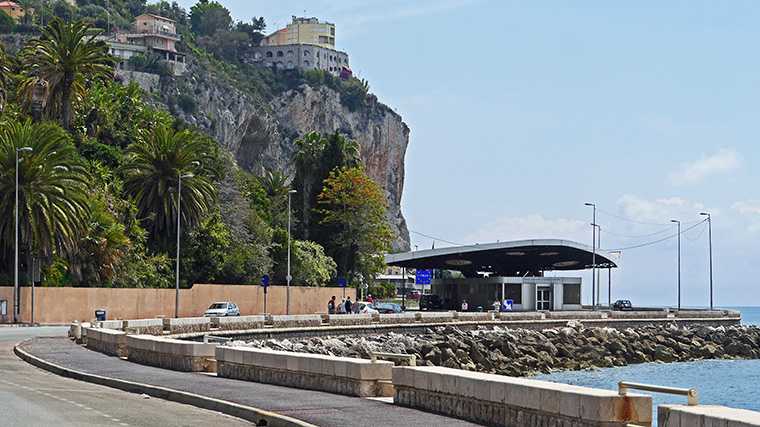
Absolutely. Menton is practically right on the Italian border. From there, you can reach Ventimiglia in about 15 minutes and Sanremo in 45 minutes. For the Cinque Terre, you should plan on a drive of over three hours. If you cross the border, you must make sure to mention this when reserving your rental car; otherwise, you won’t be insured in Italy. You’ll usually pay a surcharge for crossing the border.
Rent a car in Nice for the ultimate road trip
A road trip along the Côte d’Azur is a succession of iconic moments. From the Promenade des Anglais in Nice and the Monaco F1 circuit to medieval Èze, the lemons of Menton, the yachts of Antibes, the film scene of Cannes, and the beaches of Saint-Tropez. In seven days, you’ll experience the best of the French Riviera: glamour, culture, coastal roads, Provençal charm, and the Mediterranean Sea as a constant backdrop.
It’s precisely a rental car that makes this bucket-list road trip so appealing. You don’t have to follow a fixed schedule and can stop along the way whenever a view, village, beach, or restaurant catches your eye. Rent a car in Nice and choose a compact model for practical convenience or a convertible if you want to experience the Riviera to the fullest.
<a class="et-button et-button--primary et-button--small" style="text-decoration:none" href="https://www.easyterra.nl/frankrijk/nice/autohuur-nice-airport.html">Compare rental cars at Nice Airport</a>

Where would you like to rent a car?
- 24000+ pick-up locations
- Free cancellation
- Independent comparator

Useful tips for a well-prepared trip
Which insurance should I choose, and what's the deal with the deposit? Read our articles with useful information and tips to ensure you choose the right rental car for you.


