- Popular countries
- Popular regions
- Popular cities
- Popular airports
- Car hire United Kingdom
- Car hire Italy
- Car hire Spain
- Car hire United States
- Car hire Portugal
- Car hire Greece
- Car hire France
- Car hire Poland
- Car hire Ireland
- Car hire Cyprus
- Car hire Netherlands
- Car hire South Africa
- Car hire Switzerland
- Car hire Croatia
- Car hire Canada
- Car hire Malta
- Car hire Germany
- Car hire Hungary
- Car hire Norway
- Car hire Australia
- Car hire England
- Car hire Sicily
- Car hire Scotland
- Car hire Florida
- Car hire Sardinia
- Car hire Malta
- Car hire California
- Car hire Crete
- Car hire Lanzarote
- Car hire Majorca
- Car hire Menorca
- Car hire Tenerife
- Car hire Rhodes
- Car hire Fuerteventura
- Car hire Corsica
- Car hire Kefalonia
- Car hire Madeira
- Car hire Corfu
- Car hire Ibiza
- Car hire Gran Canaria
- Car hire London
- Car hire Faro
- Car hire Malaga
- Car hire Milan
- Car hire Lisbon
- Car hire Rome
- Car hire Alicante
- Car hire Dublin
- Car hire Manchester
- Car hire Porto
- Car hire Amsterdam
- Car hire Larnaca
- Car hire Geneva
- Car hire Luqa
- Car hire Bergamo
- Car hire Athens
- Car hire Budapest
- Car hire Pisa
- Car hire Orlando
- Car hire Palermo
- Car hire London Heathrow Airport
- Car hire Faro Airport
- Car hire Lisbon Airport
- Car hire Malaga Airport
- Car hire London Gatwick Airport
- Car hire Alicante Airport
- Car hire Manchester Airport
- Car hire Dublin Airport
- Car hire Larnaca Airport
- Car hire Porto Airport
- Car hire Malta Airport
- Car hire Bergamo Airport
- Car hire Athens Airport
- Car hire Budapest Ferihegy Airport
- Car hire Rome Fiumicino Airport
- Car hire Geneva Airport (Switzerland)
- Car hire Amsterdam Schiphol Airport
- Car hire Milan Malpensa Airport
- Car hire Pisa Airport
- Car hire Orlando International Airport

21 Tips for Road Trips in Rhodes with a Rental Car
Rent a car and enjoy history, beaches, and nature
In Ancient Greece, the sun god Helios was the patron deity of Rhodes. To this day, he remains favorable toward the island, for with more than three thousand hours of sunshine per year, Rhodes is one of the sunniest places in Europe. A gigantic statue of Helios, the Colossus, once adorned the entrance to the harbor of Rhodes Town. The north and east coasts, in particular, are lined with hotels, and there are even entire villages built specifically for tourists. But as soon as you leave those coasts behind, you’ll encounter unspoiled nature, authentic villages, and abandoned churches. You can only explore that side of the island if you rent a car in Rhodes.
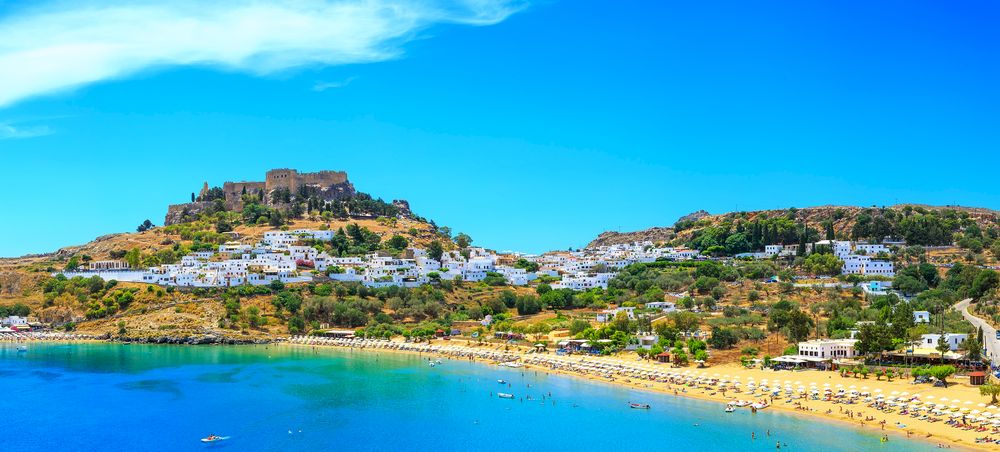
Greece’s fourth-largest island is diverse enough to offer something new every day and has something for everyone. Of course, there’s sun, sea, and sand, but there’s also culture and history, and you can get very active there as well. Below, we describe 21 of the best, most beautiful, and most interesting sights on Rhodes. We’ll more or less follow a route starting from the capital and traveling clockwise around the island, plus, of course, some beautiful spots inland. For most attractions, a rental car is the ideal way to get around. But we’ll start with a destination that doesn’t require a rental car at all.
1. Rhodes Town
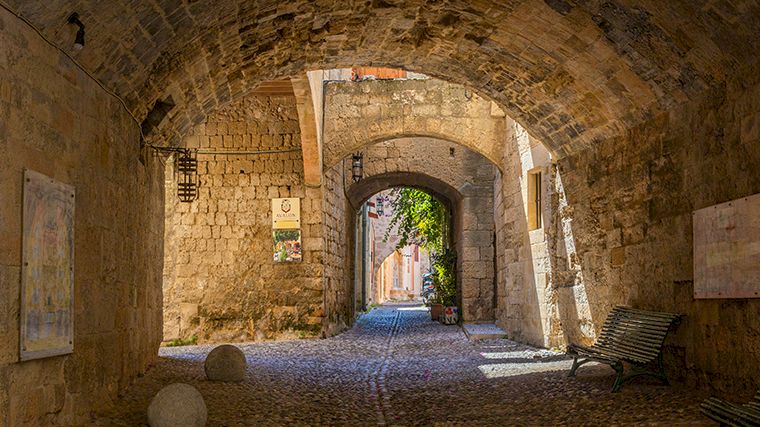
The capital, Rhodes, is located in the north of the island of the same name and is an excellent base for trips by rental car. Be sure to book accommodations with parking. If you’re staying somewhere else on Rhodes, it’s best to leave your rental car behind when you head into the capital for the day. Finding a parking spot in Rhodes Town is very difficult. While there are parking lots just outside the historic city walls, you’ll need to arrive very early in the morning to find an open spot. Please note: the shortage of parking spaces is only a problem in the capital; elsewhere on Rhodes, you’ll have no trouble finding a spot for your rental car.
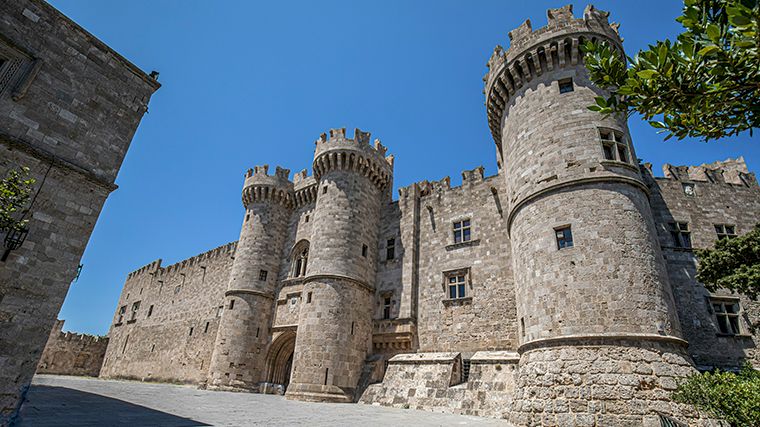
There are no fewer than eleven gates through which you can enter the old city. Rhodes was one of the last bastions of Christianity in this region. In 1522, the Knights Hospitaller were defeated by the Ottomans, who remained there for nearly four centuries. Those knights built the Palace of the Grand Master, also known as the Kastello. Nearby stands the Knights’ former hospital, which is now the impressive Archaeological Museum. Lose yourself in the maze of cobblestone streets and hidden alleys that wind through the historic heart of Rhodes. The medieval city center is so well-preserved that you almost expect a knight on horseback to ride by at any moment. The Porta Marina, the entrance to the city’s old harbor, is flanked on either side by two enormous towers with arrowslits. Surrounding the old city walls are lush, green parks—oases of tranquility.
2. Kallithea Springs
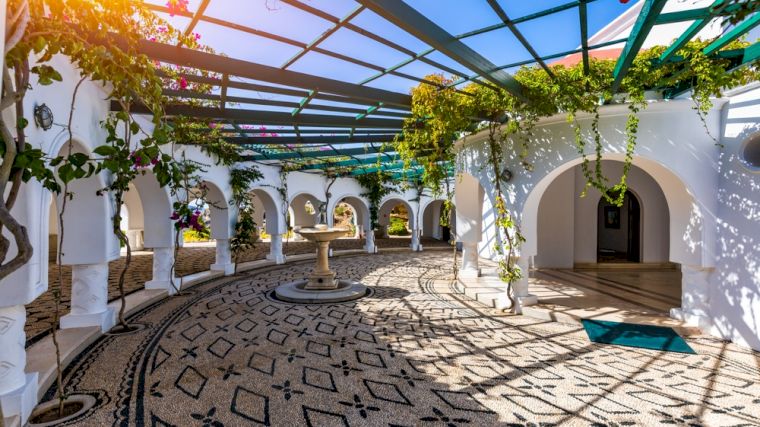
About nine kilometers south of Rhodes Town, the turnoff to the Kallithea Springs is clearly marked on the signs (Piges Kallitheas). These thermal springs have been known since ancient times for their healing properties. Over the centuries, their fame spread beyond the island’s borders. During Ottoman rule, people from all over Anatolia traveled here in search of healing from the water seeping from the rocks. It wasn’t until the late 1920s that Italy built structures around them. The architecture is a blend of vaulted structures with Art Deco features, arabesques, staircases, patios, mosaic floors, Moorish arches, and beautifully landscaped gardens. Following a meticulous restoration, the complex now offers modern amenities without compromising its original charm. In the large rotunda, decorated with mosaics, you’ll feel as though you’ve stepped back in time to when these springs were an elite destination. Whether you believe in their healing powers or not, it’s wonderful to bathe in this water, surrounded by palm and pine trees.
3. Anthony Quinn Bay
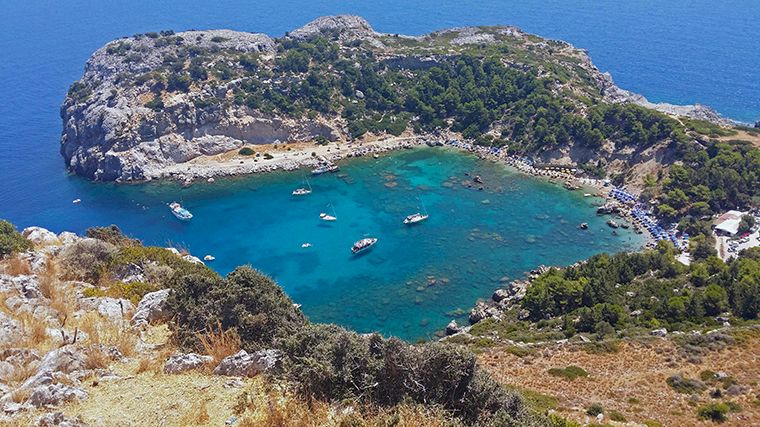
Until the bay served as the location for the film *The Guns of Navarone*, starring Anthony Quinn, this cove was called Lagies. Quinn was so charmed by the place that he bought a plot of land there. As a thank-you for promoting the island, he had to pay only a symbolic amount, and the bay was named after him. But in 1984, the Greek government canceled the agreement and seized what Quinn believed to be his property. He never set foot on Rhodes again.
It’s easy to see why the actor fell in love with this place. The bay’s natural beauty is unparalleled and offers the perfect setting for swimming, relaxing, and snorkeling. It’s located near the popular beach town of Faliraki, which means it’s already crowded by 9 a.m. during peak season. On the other side of the isthmus lies the rocky Plaka, an excellent spot for snorkeling. Across from it lies Ladiko Beach, with its fine sand. The surrounding hills, accessible via narrow trails, offer stunning views, especially at sunrise or sunset when the beaches are (still or once again) serene.
4. Rock Climbing and Rappelling at Ladiko Bay
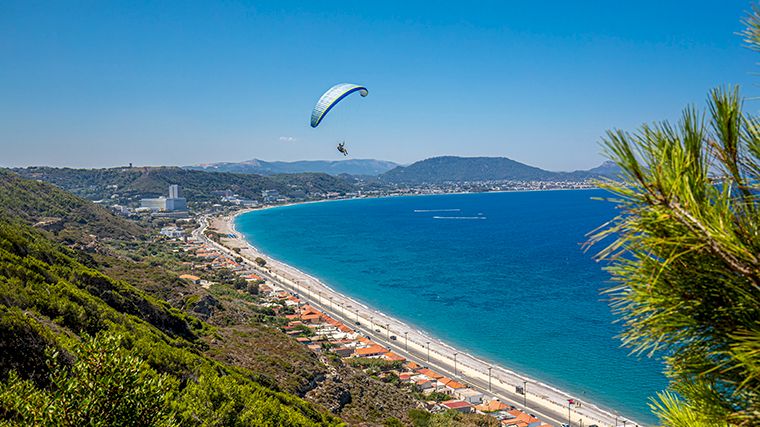
We briefly mentioned Ladiko Beach above. Behind it lies Rhodes’s most important limestone climbing crag. There are various routes to help you get the hang of rock climbing, as well as challenging routes for more advanced climbers, featuring overhangs, tufas, or flat walls. Climbing excursions depart in the afternoon from the Cathrin Hotel. After a short hike through the mountains along the coast, you’ll reach the climbing wall, which is in the shade at that time of day. It’s a peaceful spot, and once you’re at the top of the cliff, the view is phenomenal. Enthusiasts can abseil a little further along the front of a beautiful cave.
5. Epta Piges (Seven Springs)
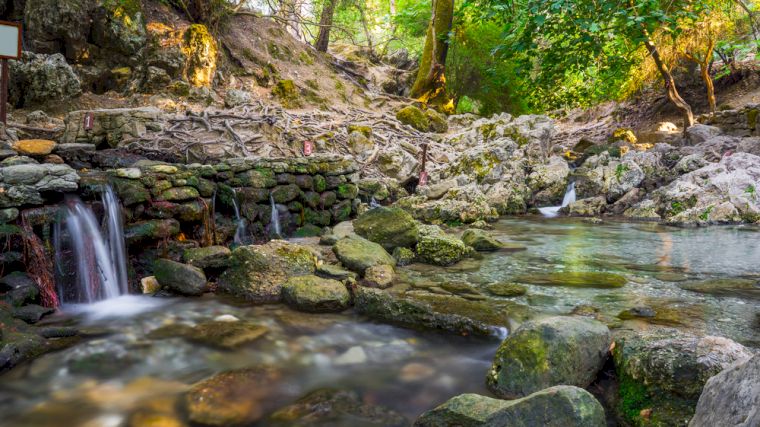
If you drive further south from Anthony Quinn Bay, you’ll see a turnoff for Epta Piges near Kolimbia. These seven springs, with their cool water, offer the perfect refreshment. Don’t expect too much from these springs in the summer or fall, though, as there’s little or no water then. The best time to visit is at the end of winter. Still, this easy hike through beautiful nature is highly recommended in any season. The springs flow through a 150-meter-long tunnel into a small artificial lake. You can walk through this tunnel to the lake, but be sure to wear water shoes! An alternative route runs along the top of the hills.
If you’ve rented a car, you can continue from here along a scenic road to the Butterfly Valley, but we’ll discuss that in more detail later.
6. Tsambika Monastery / Beach
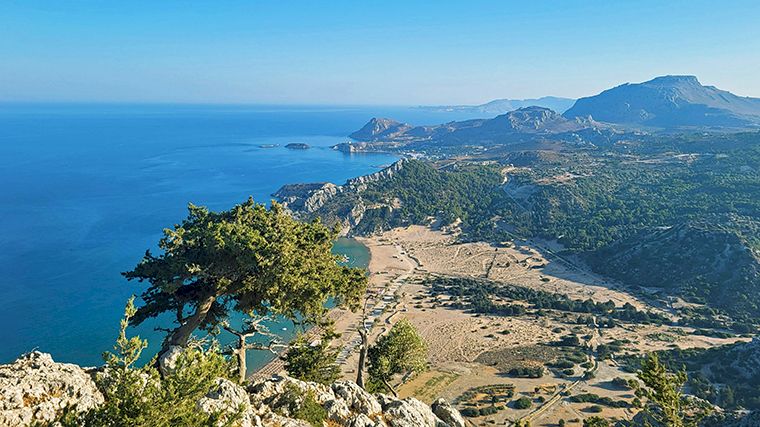
One of the most attractive beaches on the east coast is the golden-sand Tsambika, 25 kilometers south of Rhodes Town. Behind the wide, long sandy beach with crystal-clear turquoise water lie green, lush hills. At the top of a 240-meter-high cliff stands a whitewashed monastery of the same name. The monastery was built in the traditional architectural style, with concave roof tiles and mosaic floors made of black and white pebbles. You can drive part of the way up the hill, but be prepared for a final steep stretch of road leading to the parking lot. You can also park your rental car just before that very steep section. From the parking lot, you’ll need to climb 300 steps to reach the summit. Every fifth step is numbered, so you can keep track of how many you have left to go!
7. Archangelos
Archangelos charms every visitor with its narrow streets, picturesque houses adorned with ceramic tiles, and intimate little squares. The village’s centerpiece is the tiered bell tower of the church, named after the Archangel Michael. The church features beautiful 14th-century frescoes depicting knights with swords and a panorama of the Last Supper. Not far from this village, you’ll find the tranquil Serena Beach, which lives up to its name. Just south of the beach lies the Koumellos stalactite cave, but the entrance is hard to find. The easiest trail is marked with blue dots, which can be a bit hard to spot.
8. Charaki: castle and/or kayaking
The hike to the ruins of Feraklos Castle near Charaki—a somewhat lesser-known beach town south of Archangelos—is also no easy feat. Just past the information sign, you’ll climb a stone staircase, then turn left and follow a path uphill. You’ll then reach a loophole in the castle wall that you can pass through. The terrain inside the walls is very uneven, so be sure to wear good hiking shoes; a walking stick can also be helpful. Be especially careful of slippery spots and loose stones on the descent. At the foot of the hill where the castle ruins stand, there’s plenty of space to park your rental car. The ruins are beautifully illuminated in the evening and at night.
Would you rather do something on the water? Rhodes has many places where you can go kayaking, but Charaki isn’t crowded, which is quite pleasant. From your kayak, you’ll have a beautiful view of the castle and the rugged coastline with its sea caves. A popular destination for a kayaking tour is the secluded Red Sand Beach, a great spot to take a break, go for a swim, or snorkel.
9. Lindos
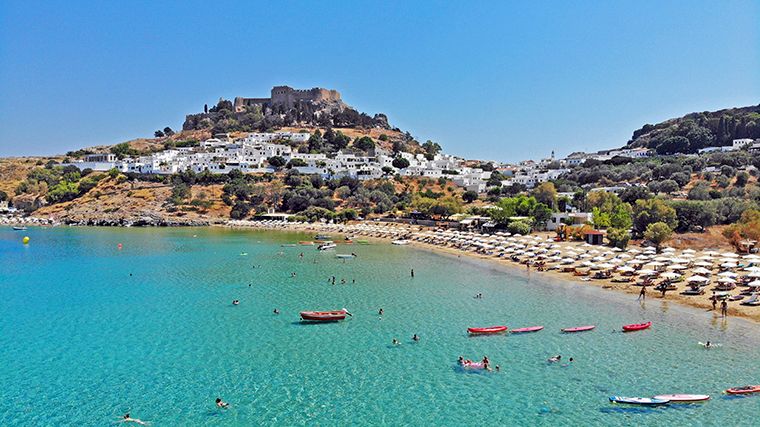
Lindos is one of the most beautiful places on Rhodes. The old town combines unique historical grandeur with natural beauty. It’s delightful to stroll through the narrow alleys adorned with pebble mosaics and up steep stairways between whitewashed houses adorned with vibrant bougainvillea. The houses have flat roofs, and some have been transformed into lovely rooftop terraces where you can enjoy a drink or a snack while looking out over Lindos and the sea. Between the sixteenth and eighteenth centuries, wealthy merchants built the so-called “captains’ houses” in Lindos. The interiors are fairly simple, but the ceilings are beautifully painted and the walls are adorned with exquisite ceramic plates. The Byzantine church features impressive murals.
Between the eighth and fifth centuries B.C., Lindos was a powerful trading center, which only lost its importance after the founding of Rhodes City. The jewel of Lindos is the acropolis, where you can feel the rich history of this little town. At the top of the hill stand not only remnants from ancient Greece, such as a Doric temple and a colonnade, but also the walls of a fortress and the 13th-century Church of St. John. Of course, you’ll enjoy a panoramic view of the glistening Aegean Sea. At the foot of the cliff, the silhouette of a Greek warship—a trireme—has been carved into the rock.
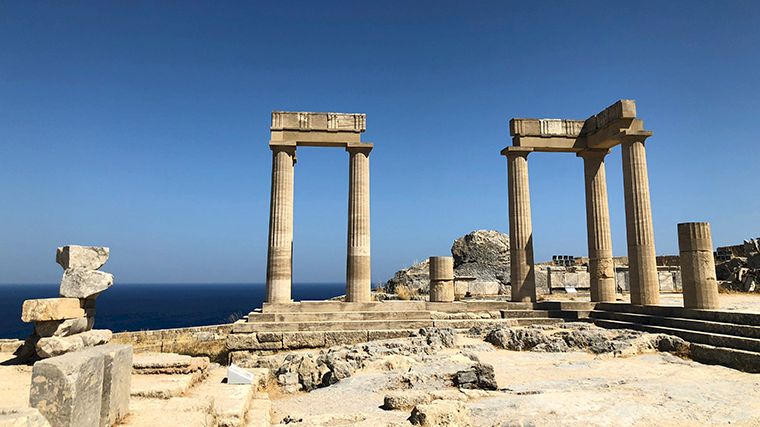
Between 10 a.m. and 4 p.m., Lindos is flooded with day-trippers, so it’s worth staying for a day or two to enjoy the quieter town and the beautifully lit acropolis in the evening. During the day, head to one of the beautiful nearby beaches, such as Lindos Beach or the adjacent Pallas Beach. These beaches can get very crowded, but the sea caves near Pallas are much less visited and make for a fantastic spot to snorkel. Other options include the beach in St. Paul’s Bay (Agios Pavlos) and Navarone Beach.
10. Lardos
Lardos is best known for its beautiful nearby beaches, but it also has a very charming and informative folklore museum. This small, privately owned museum is located on the road between the town and Lardos Beach and offers a glimpse into the lives of the people of Rhodes in days gone by. The owner knows a great deal about the island’s folklore and is passionate about keeping history alive. During the guided tour of the extensive collection of household items and old tools, he explains how and for what purposes they were used.
11. Prasonisi
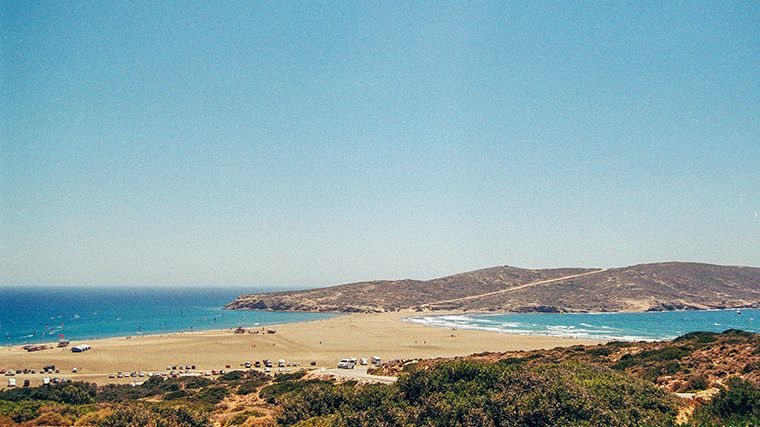
At the southernmost tip of Rhodes lies the (peninsula) islet of Prasonisi. Why do we put “peninsula” in parentheses? Because it’s connected to Rhodes only by a narrow strip of sand, and that sandbar is submerged by the sea at high tide in the winter. Or should we use the plural “seas” here? Because on the west side lies the Aegean Sea, and on the east side, the Mediterranean Sea. It’s a paradise for windsurfers and kitesurfers, with some seriously high waves on the west side. The relatively calm waters on the east side are better suited for beginners.
Not a surfer? Then walk to the very tip of Prasonisi, where there’s a lighthouse. It’s a beautiful spot to enjoy the sunset. Be sure to bring a powerful flashlight, because the path back is hard to find in the dark.
12. Skiadi Monastery
For a scenic route to the Skiadi Monastery, take the eastern coastal road and turn toward the village of Lachania. Even if you don’t plan to visit the monastery, it’s a pleasant, winding road with beautiful views. The monastery was built in the fourteenth century, but the current monastery church dates from the nineteenth century. The icon of the Virgin Mary, Panagía Skiadiní, is kept here. According to legend, three shepherds saw a spark in the darkness and found a silver icon of Mary at the spot where the light had appeared. Although they took the icon with them, it had disappeared by the next morning and was found again in the same spot as the night before. They took this as a sign that the Virgin Mary wished to remain at this site and that a monastery should be built around her. This most precious icon of Rhodes goes on a tour of various villages on the island during the week before Easter.
The monastery offers a beautiful view, but it can get crowded. For an even higher and quieter vantage point, you can climb the mountain east of the monastery.
13. Apolakkia Dam
After descending from the monastery to the coast, turn right toward Apolakkia. In that village, follow the signs marked “Dam.” This refers to the dam that created Lake Limni Apolakkias. Once you reach the dam, you can choose between the scenic route along the left side of the lake to the village of Siana or turn right toward Rhodescape Park, where you can rent kayaks and pedal boats, glide across the lake on a zip line, or simply enjoy the view from the terrace. Please note: the road to Siana is unpaved, and no rental car insurance covers damage incurred on such a road. You’re therefore driving there entirely at your own risk. Tip: below, we describe an even more scenic route that follows paved roads and also takes you to Siana.
14. Monolithos Rock
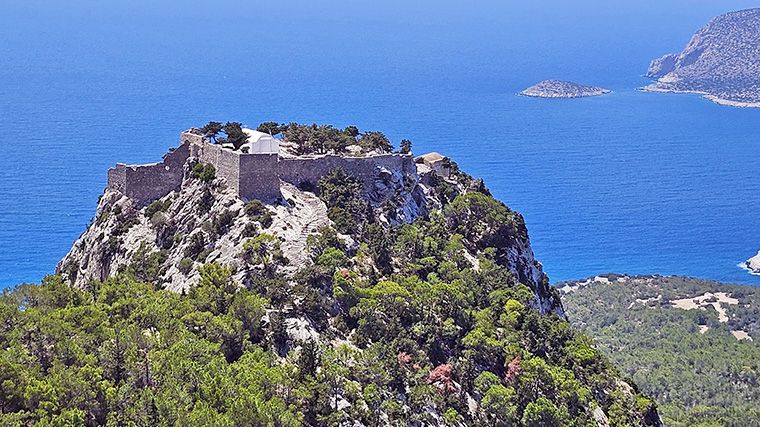
The literal highlight of the village of Monolithos is the ruin of the medieval castle. It’s located just outside the village on top of a solitary rock, which is why the place is called Mono + Lithos (Single Rock). From the parking lot for your rental car, a stone staircase leads up to the top. Little remains of the castle, and for most people, that’s not the reason to hike to the summit. It’s all about the magnificent view of the surrounding hills and the Aegean Sea!
As you drive back to the village, there’s a small side road halfway up. From there, you’ll have a beautiful view of the rock (as shown in the photo above). Many more stunning vistas await you as you drive north along the coast.
15. Rhodes’ Most Beautiful Road
Between Monolithos and Kamiros lies Rhodes’ version of the Pacific Coast Highway. OK, that’s a bit of an exaggeration, but this western coastal road is certainly one of the most beautiful routes you can drive on the island in a rental car. If you start from Monolithos, you’ll first drive along the slopes of Rhodes’ second-highest mountain, Akramitis. The aforementioned village of Siana lies on the slope of this mountain and is your first stop. Along the road, there are several small shops selling local products, including the region’s often-praised honey and olive oil. Culture lovers will want to see the village church, dedicated to Saint Pantaleon.
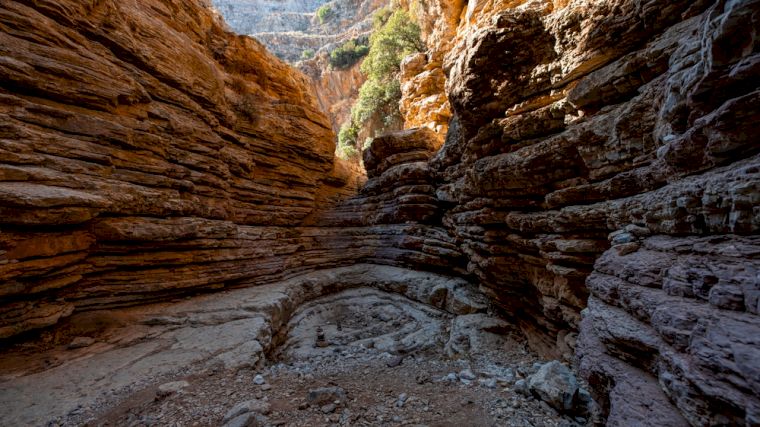
At the first serious hairpin turn (seven kilometers from Siana), you’ll drive past the Koufos Gorge, also known as Jacob’s Canyon. This is the most impressive gorge on Rhodes, but hiking through it is only for experienced hikers, as it involves a lot of climbing and scrambling. You’ll be rewarded with towering rock faces, beautiful layered rocks, and strangely shaped pools.
A little further on, there’s a food truck by the roadside where you can buy a refreshing drink. The place is called Kantina Panorama, and the name certainly lives up to its reputation. As you sip your drink, you’ll enjoy a fantastic view of the mountains and the sea. Just over five hundred meters further on, there’s a similar kiosk where the owner sells local wines. You’re actually at the turnoff for the wine village of Embonas (see below). Four kilometers further on, there’s a horizontal bar on the right side of the road. This way, you can enjoy the view while doing some calisthenics. Or take that classic Instagram photo…
From the village of Kritinia, it’s another four kilometers through this beautiful green part of Rhodes to the castle of the same name.
16. Kritinia Fortress
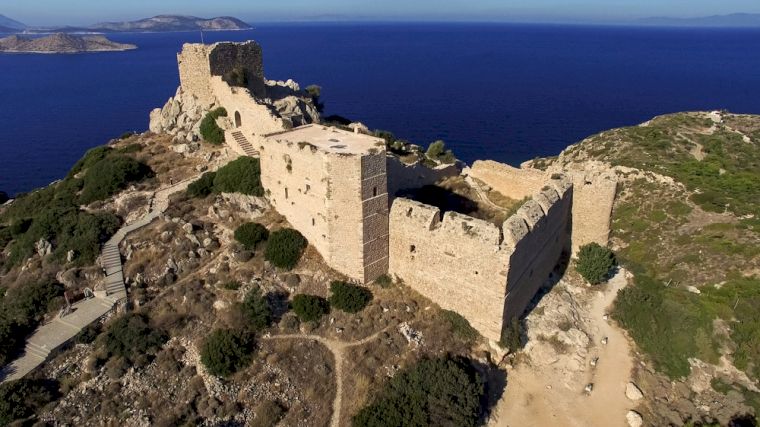
The Kritinia Fortress was built in 1472 as a defense against the constant Ottoman attacks. It was the largest fortress of the Knights Hospitaller along the west coast of Rhodes. It controlled the western passage and was in direct line of sight with the fortresses on the islets of Chalki and Alimia. Thanks in part to this fortress, the Knights managed to hold off the Ottomans for fifty years. This fortress, too, lies in ruins, but more of it has been preserved than at other fortresses along the west coast, and restoration work is well underway.
From the spot where you can park your rental car, it’s a short climb to the top. The view of the sea and the islets off the coast is spectacular, especially at sunset.
17. Embonas Wine Village / Mount Attavyros
At an elevation of 850 meters, Embonas is the highest village on Rhodes and the island’s most important wine region. It’s no surprise that this is the highest village, as the vineyards are situated on the slopes of Mount Attavyros (1,215 m). Enjoy a wine tasting at one of the twenty wineries in and around the village. During the annual Wine Festival, which takes place in late August, it’s not just about the wine. The village is then bustling with traditional dance and music.
From Embonas, you can follow a trail to the summit of Attavyros. This trail on the northwest side is quite steep, and some sections are suitable only for experienced hikers. From the southern village of Agios Isidoros, there’s a less steep trail to the summit. At the summit stand the ruins of a temple dedicated to Zeus, built by a descendant of the Cretan King Minos. He chose this spot because it was the only place on Rhodes from which he could see his homeland, Crete. And indeed, on a very clear day, with some effort, you can make out the outline of that island.
18. Ancient Kamiros
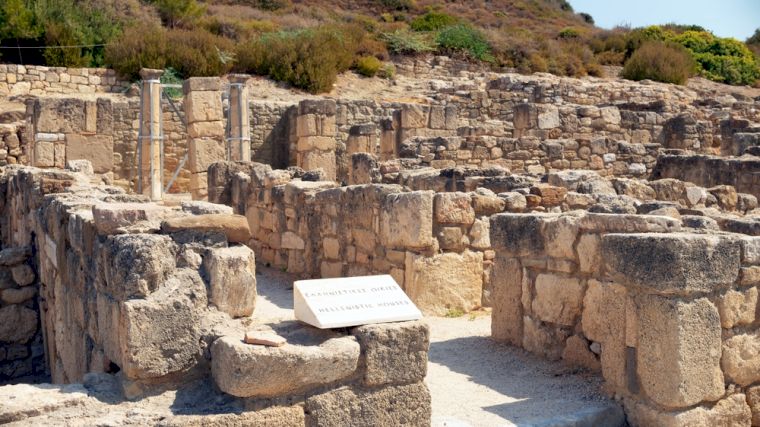
History buffs will be in their element in ancient Kamiros, one of the best-preserved classical Greek cities. The ruins offer a fantastic insight into the layout of Doric cities and the lives of their inhabitants. Although you mainly see the foundations, it’s easy to imagine what it looked like.
Kamiros was built on three levels. At the top of the hill stood a temple dedicated to the goddess Athena. There was also a water reservoir there, surrounded by an arcade with two rows of Doric columns. Residential houses were located on the middle level, while the lowest level housed a temple to Apollo. The agora—the place where political matters were discussed—was also located here.
In ancient Greece, the city served as a center for trade in agricultural products from the surrounding area. The need to store and transport these products spurred the rise of the local pottery industry, which continues to this day.
19. Profitis Ilias
With a rental car, you can reach (almost) the summit of Rhodes’ third-highest mountain, Profitis Ilias. At 798 meters, it isn’t particularly high, but it’s a pleasant destination to drive to. First, you’ll drive through beautiful, wooded countryside, and second, once at the top, you’ll feel more as if you’re in an Alpine village than on Rhodes. In the 1920s, the Italians built a villa here for their dictator Mussolini, along with a hotel. The hotel has been restored, but Villa de Vecchi has not. You can wander through the rooms, but watch your step, as the building is in terrible condition. To reach the actual summit of the mountain, you’ll need to walk a short distance, passing a bunker where Mussolini could take shelter in the event of an attack.
20. Butterfly Valley
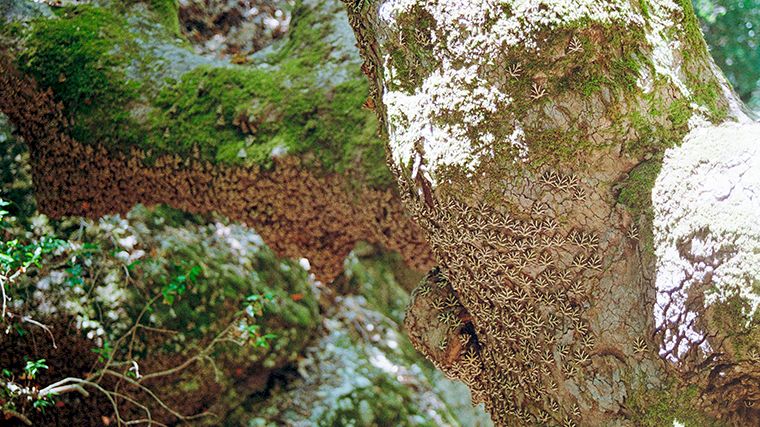
Between June and September, the Butterfly Valley in northern Rhodes comes to life, when multicolored butterflies (in Greek: petaloudes) are drawn to the Oriental sweetgums in this stream valley. Don’t expect to see different species, though. The butterfly in question here is the Jersey Tiger, with striped black and cream-colored front wings and orange-red hind wings. Those bright colors serve as a warning to predators that they might not taste very good. Even if you don’t see many butterflies, this is a delightful walk through a dense forest along paved paths and over steps and little bridges. The only sounds you’ll hear are the chirping of crickets and the murmur of the cool water.
From Butterfly Valley, you can drive your rental car along a scenic route to the Seven Springs (Epta Piges) in about forty minutes.
21. Bee Museum
Southeast of the village of Pastida lies the fascinating Bee Museum. The tradition of beekeeping dates back to ancient Greece. Inside the museum, you’ll notice the ceiling, which is designed to resemble a honeycomb, with a giant bee hanging from it. But that’s not the only highlight—this museum teaches you everything about how bees live and why they’re so important. The two bee colonies behind transparent glass are fascinating. The museum isn’t large, but children won’t get bored easily, thanks to the many interactive exhibits. Of course, you can also sample the different types of honey produced on Rhodes.
Why Renting a Car in Rhodes Is a Good Option
Rhodes has a huge variety of beaches: with golden sand or pebbles, surrounded by bare rocks or lush scenery, gently sloping or deeper for snorkeling, fully equipped or very quiet and secluded. It’s fun to drive to a different beach every morning in a rental car and then use that same car in the afternoon to explore one of Rhodes’ many attractions.
Some of the best beaches are accessible only if you have your own transportation. Paralia Apolakkia, also known as Limni Beach, is located on the west side of Rhodes and is over three kilometers long! Just north of it lies Fourni Beach, which you can reach from Monolithos Castle. This beach with fine pebble sand is ideal for those seeking peace and quiet, but you don’t need to bring your own food or drinks—there’s a food truck there!
Even quieter is Atavyros Beach, also close to the ruins of Monolithos, but you’ll have to walk a bit to get there, as we don’t recommend driving a rental car down the rocky, steep road. Park your car at the start of that trail and walk down to the beach. With a little luck, you’ll have it all to yourself. Be sure to bring plenty of water and snacks.
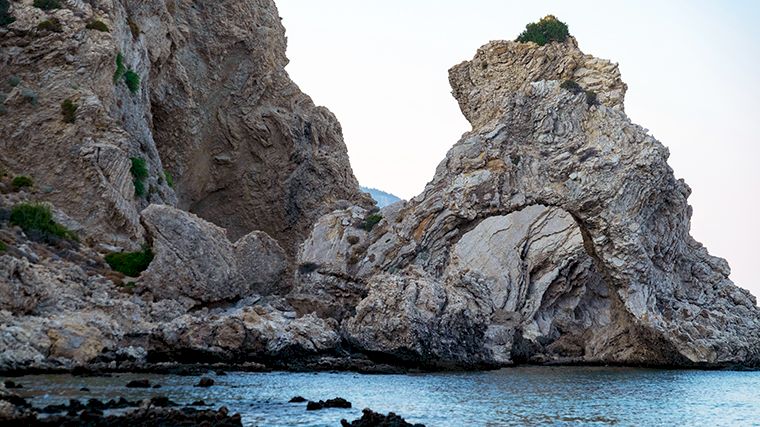
On the east coast, Stegna Beach is certainly no longer unknown. Right next to it lies the intimate Grande Blue Bay. It’s not undeveloped either (there are umbrellas and lounge chairs), but it’s quieter, and the jagged rock formations alone are reason enough to drive out here at least once.
If you want to explore Rhodes at your own pace and with complete freedom, a rental car is essential. While there is public transportation on the island, it doesn’t go nearly everywhere and has other drawbacks as well. The biggest drawback is that you have to plan every activity you want to do. What time does that bus arrive (or does that organized tour start), what time does it leave, and when do I need to be where? Phew—you’re on vacation to relax, so rent a car at Rhodes Airport and enjoy yourself without worrying about the time.

Where would you like to rent a car?
- 24000+ pick-up locations
- Free cancellation
- Independent comparator

Useful tips for a well-prepared trip
Which insurance should I choose, and what's the deal with the deposit? Read our articles with useful information and tips to ensure you choose the right rental car for you.


