- Popular countries
- Popular regions
- Popular cities
- Popular airports
- Car hire United Kingdom
- Car hire Italy
- Car hire Spain
- Car hire United States
- Car hire Portugal
- Car hire Greece
- Car hire France
- Car hire Poland
- Car hire Ireland
- Car hire Cyprus
- Car hire Netherlands
- Car hire South Africa
- Car hire Switzerland
- Car hire Croatia
- Car hire Canada
- Car hire Malta
- Car hire Germany
- Car hire Hungary
- Car hire Norway
- Car hire Australia
- Car hire England
- Car hire Sicily
- Car hire Scotland
- Car hire Florida
- Car hire Sardinia
- Car hire Malta
- Car hire California
- Car hire Crete
- Car hire Lanzarote
- Car hire Majorca
- Car hire Menorca
- Car hire Tenerife
- Car hire Rhodes
- Car hire Fuerteventura
- Car hire Corsica
- Car hire Kefalonia
- Car hire Madeira
- Car hire Corfu
- Car hire Ibiza
- Car hire Gran Canaria
- Car hire London
- Car hire Faro
- Car hire Malaga
- Car hire Milan
- Car hire Lisbon
- Car hire Rome
- Car hire Alicante
- Car hire Dublin
- Car hire Manchester
- Car hire Porto
- Car hire Amsterdam
- Car hire Larnaca
- Car hire Geneva
- Car hire Luqa
- Car hire Bergamo
- Car hire Athens
- Car hire Budapest
- Car hire Pisa
- Car hire Orlando
- Car hire Palermo
- Car hire London Heathrow Airport
- Car hire Faro Airport
- Car hire Lisbon Airport
- Car hire Malaga Airport
- Car hire London Gatwick Airport
- Car hire Alicante Airport
- Car hire Manchester Airport
- Car hire Dublin Airport
- Car hire Larnaca Airport
- Car hire Porto Airport
- Car hire Malta Airport
- Car hire Bergamo Airport
- Car hire Athens Airport
- Car hire Budapest Ferihegy Airport
- Car hire Rome Fiumicino Airport
- Car hire Geneva Airport (Switzerland)
- Car hire Amsterdam Schiphol Airport
- Car hire Milan Malpensa Airport
- Car hire Pisa Airport
- Car hire Orlando International Airport

The 14 Most Beautiful Destinations from Ljubljana
Rent a car and discover the incredibly diverse country of Slovenia
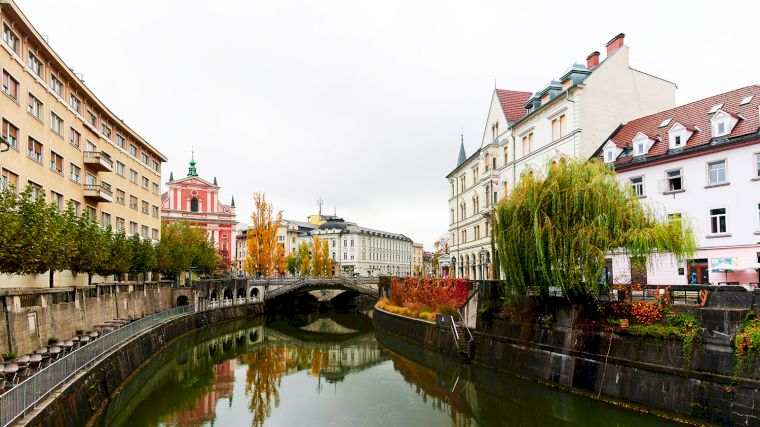
The capital of Slovenia isn’t large (about 300,000 residents), but it can hold its own against much larger cities when it comes to vibrancy and charm. There’s only one downside to Ljubljana: you’ll almost twist your tongue trying to pronounce its name. The name is derived from the Slovenian word ljub, which means “to love.” Ljubljana literally means “beloved place.” And that certainly applies to this city, which is beautifully situated on the Ljubljanica River. The city center is a delightful mix of Baroque, Art Nouveau, and Art Deco buildings. Between the river and the hill topped by a 15th-century castle runs Stari trg Street, lined with historic houses and shops.
Dragons play a central role in Ljubljana’s rich cultural heritage. According to legend, the Greek hero Jason founded a settlement here after he and his Argonauts defeated a dragon. It is much more likely, however, that the dragons are connected to the legend of Saint George and the Dragon. In any case, the mythical beast can be found everywhere. For example, this iconic creature appears on the city’s coat of arms, and on the famous Dragon Bridge, no fewer than four dragons guard the crossing over the river.
You should definitely set aside a few days to experience the city’s unique charm, but after that, it’s time to hit the road in a rental car. Ljubljana may be the capital of Slovenia, but the country’s true soul lies beyond its borders, in the villages and small towns of the countryside. That’s where you’ll find Slovenian traditions and folklore: from traditional music and dance to culinary delights and festivals with roots stretching far back in history. Below, we describe a road trip through Slovenia, but since Ljubljana is located in the geographic center of the country, you can also easily reach the most beautiful sights on day trips from the capital.
1. Novo Mesto
The soul of Slovenia is found primarily in the eastern part of the country. To get to know the friendly, hospitable Slovenians, drive your rental car from Ljubljana about 70 kilometers southeast. You’ll arrive in Novo Mesto, the cultural heart of the Dolenjska region. The city center sits on a rock surrounded by the Krka River. This area was already inhabited as early as the late Bronze Age, and many artifacts from that period have been found in and around Novo Mesto, including so-called situlae (bronze buckets and vessels). The highlights of these archaeological finds are on display at the Dolenjski Museum, which also features exhibits dedicated to the more recent history of this region.
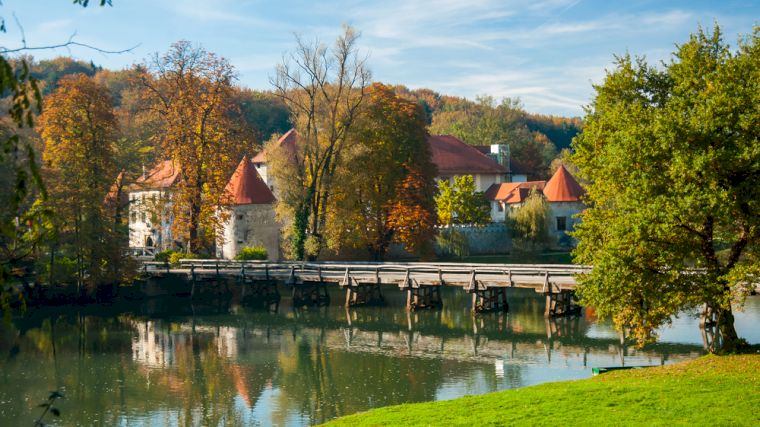
From Novo Mesto, you can follow various hiking trails, including ones along the Krka River, through villages, along rural paths, and past numerous hills covered in vineyards. About a 15-minute drive northeast of the city lies Slovenia’s only water castle, Grad Otočec, situated on a small island in the river. The 13th-century castle is now a luxury hotel and is also home to one of the country’s most renowned restaurants. There are two wooden bridges connecting the small island to the mainland, and you can simply drive your rental car across them.
2. Bela Krajina
Drive your rental car south from Novo Mesto and you’ll arrive in Bela Krajina (White Landscape), a name that refers to the stands of birch trees that grow there. It’s one of the country’s most culturally distinctive regions and a favorite weekend getaway destination for Slovenians themselves. This is mainly due to the Kolpa River, which has relatively warm water that’s perfect for swimming. The river forms the border with Croatia, so you can actually swim across the border! You can also float on tractor tires, go kayaking, canoeing, or rafting. That said, the latter won’t be exciting enough for seasoned rafters, since the river isn’t very wild here.
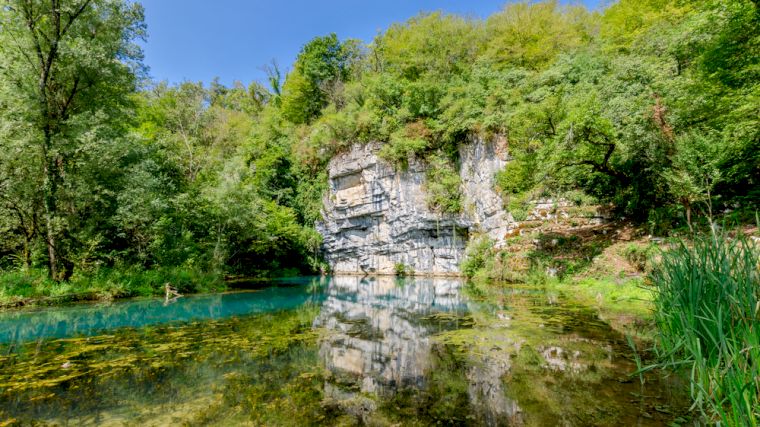
Halfway between the towns of Semič and Gradac, you’ll find the source of another river, the Krupa (izvir reke Krupe). It’s an enchanting spot where several springs bubble up near a 30-meter-high rock face. It’s the perfect place for a picnic on the shores of the emerald-green spring-fed lake. You can get a great view of the rapids in the small lake from the suspension bridge above it.
In the summer, there are various festivals in different towns throughout this region, including Slovenia’s oldest folklore festival, Jurjevanje, in the town of Črnomelj. It lasts five days and takes place in June.
3. Rajhenav Primeval Forest
Slovenia is a very green country; more than half of its land area is covered by forests. The country is also home to some of Europe’s oldest primeval forests, such as the Rajhenav Forest on a karst plateau east of the town of Kočevje. For over a century, this forest of pine and beech trees—including some enormous spruce trees—has been left completely undisturbed, allowing nature to take its course. It is home to bears, wolves, and lynx, among other animals. To protect it, the primeval forest itself is off-limits, but there is a long hiking trail through the surrounding woods totaling sixty kilometers. For the best experience, it’s best to book a guide: there are various guided hikes where you’ll learn a lot about the unique characteristics of this forest area. And you can even follow in the footsteps of wild brown bears!
From Kočevje, there are also marked trails for mountain biking, and you can go swimming in Rudniško jezero, a small lake formed from an old coal mine that has filled with water.
4. Caves (Postojna and/or Škocjan)
Slovenia also has a lot to offer underground, with thousands of caves scattered throughout the country. The best-known are the caves near Škocjan and Postojna. Most visitors to Slovenia don’t visit both, but choose one of the two cave systems. Škocjan is more rugged and requires a bit more effort: you have to climb some fairly steep stairs there. In the Postojna Caves, a small train takes you deep into the stalactite and stalagmite cave, allowing you to relax and enjoy the bizarre formations of stalagmites and stalactites in various colors, the enormous halls, and the underground lakes. This makes Postojna one of the most visited cave systems in the world; Škocjan is quieter. Whichever cave you choose, we recommend buying tickets online in advance.
5. Predjama Castle
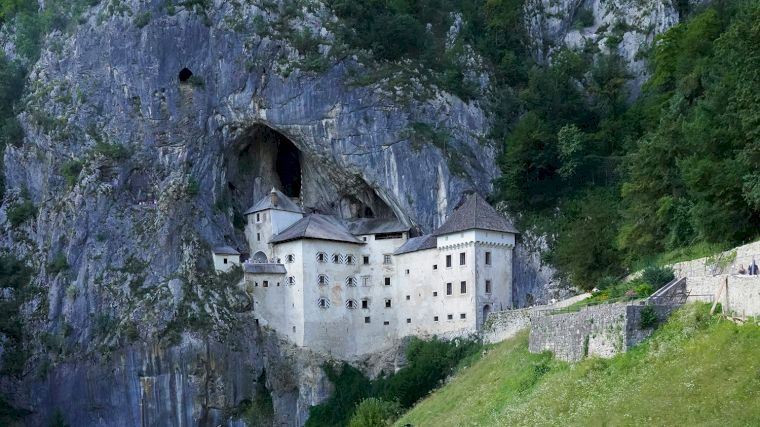
You can easily combine a visit to Postojna with a guided tour of Predjama Castle, just nine kilometers away. It’s tucked away in the entrance to a large cave, halfway up a high cliff, and was therefore an impregnable fortress. It’s the largest cave castle in the world and was home to the bandit chieftain Erazem in the fifteenth century. Behind the medieval fortress lies a network of secret tunnels, from which he set out on his raids. A colony of bats lives in the cave beneath the castle.
6. Adriatic Coast
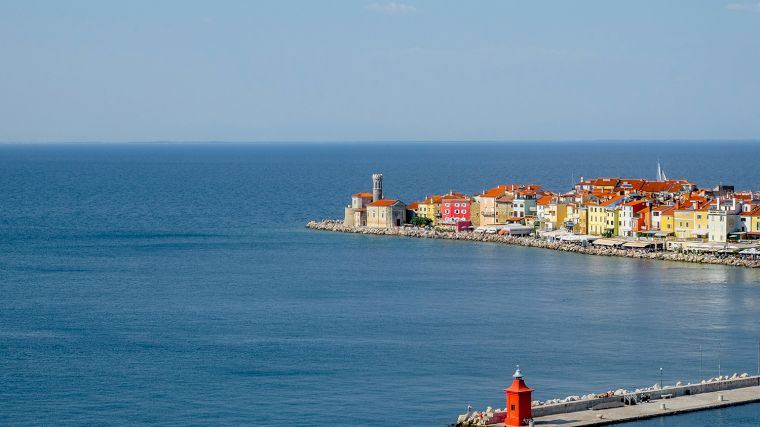
Slovenia has only a short coastline (about 45 kilometers in total), but what beautiful towns lie there along the Adriatic Sea! First and foremost is the small but stunning gem of Piran. Despite its modest size, the town has plenty to offer to keep you busy for a whole day. Tartinijev Trg, for example, is often called the most beautiful square in all of Slovenia. The square itself and the surrounding streets are teeming with restaurants, bars, coffee shops, and outdoor seating areas. Take a stroll along Piran’s city walls, the oldest parts of which date back to the seventh century. From the walls, you can clearly see the town’s triangular shape. The bell tower (a replica of the Campanile in Venice) near the Duomo di San Giorgio on the waterfront also offers a beautiful view of Piran and the sea. Park your rental car in one of the parking garages around the old town. The prices are on the high side, but there’s no other option. Parking in the old town is reserved for residents and delivery vehicles. Don’t assume you can park your rental car there, as you’ll risk getting a fine.
Close to Piran lies a modern seaside resort with the poetic name Portorož (Rose Harbor). For centuries, the thermal baths have attracted visitors. By the end of the nineteenth century, the healing properties of the local mud and saltwater baths had become widely known. You can relax wonderfully in one of the spas. You can also take beautiful walks around Piran, for example along the coastal cliffs in Strunjan Nature Park. The area near Strunjan Beach can get very crowded, but the further you follow the coastal path, the quieter (and more beautiful) it becomes. Other historic towns along the Slovenian coast include Izola and Koper.
7. Vipava Valley
If you drive north from Piran through western Slovenia, you’ll pass through the Vipava Valley. It has a mild microclimate, making it Slovenia’s fruit basket. Peaches, apricots, and figs are the main crops grown there. And let’s not forget grapes, as the valley is also known for the high-quality wines produced there. The Vipava Valley is ideal for combining outdoor activities—hiking, biking, rock climbing, or paragliding—with enjoying delicious food and drink. There’s no shortage of historic towns here either, such as Vipavski Križ, which consists of just a few houses but is surrounded by sturdy medieval walls. The Roman fort Castra in Ajdovščina is also worth a visit.
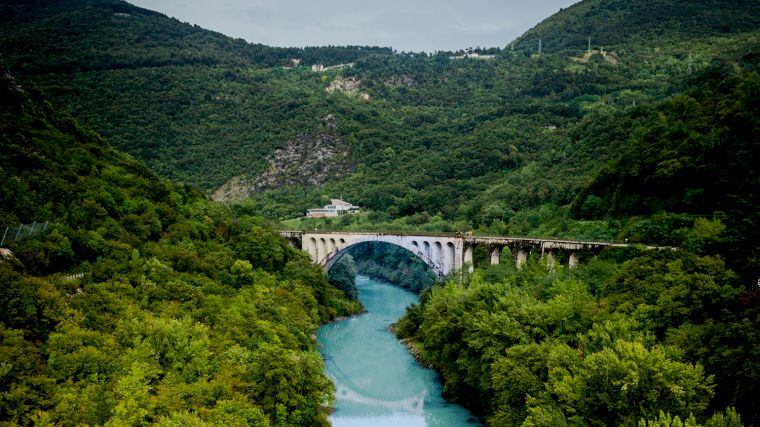
The gateway to the Vipava Valley is Nova Gorica. Just north of there, take your rental car across the bridge over the Soča River. From there, you’ll have a fantastic view of an old stone arch bridge next to it, which is still in use by the Slovenian railways. During the summer months, a steam train crosses this bridge on weekends.
8. Tolmin Gorge
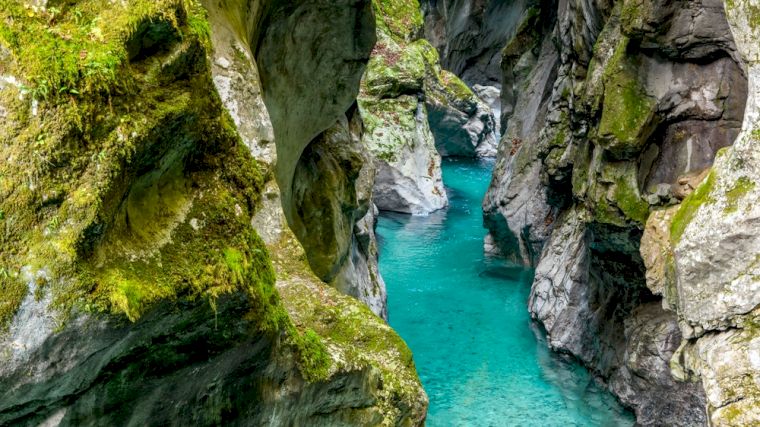
Continue driving upstream along the Soča River and you’ll arrive in the town of Tolmin, best known for the gorge of the same name. It’s not a very long gorge, but it is one of the most beautiful in Slovenia. Between the high rock walls of the Tolmin Gorge is a hiking trail that you follow in one direction via steps, small bridges, and short tunnels. Along the way, you’ll enjoy the turbulent, blue waters of the river flowing between jagged, green, moss-covered, and forested rocks, as well as unique natural phenomena. For example, a large boulder once fell down and is now wedged between two rock walls. It somewhat resembles a bear’s head and is therefore called Bear’s Head (Medvedova glava). At the end of the fairytale-like gorge, you climb up some stairs and walk across the Devil’s Bridge, sixty meters above the river. You then walk back along the public road to the parking lot.
On the west and north sides of Tolmin, you can park your rental car for free at P3 and P2. In the summer, a shuttle bus takes you to the entrance of the gorge. Outside the high season, it’s a 15-minute walk from P2. There’s also a parking lot (P1) right near the entrance, but you’ll have to pay to use it. The Tolmin Gorge is located in the southern part of a national park surrounding Mount Triglav, but after your visit to the gorge, head first to Slovenia’s land of plenty:
9. Brda Wine Region
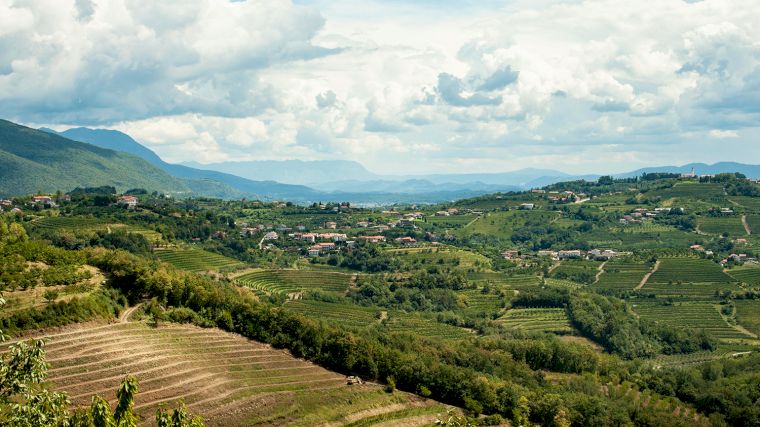
If you drive west from Tolmin on the G102, you’ll enter the Brda wine region. The idyllic hilly landscape is somewhat reminiscent of Tuscany, and just like in that Italian region, you’ll see vineyards stretching as far as the eye can see, interspersed with small villages with churches. Of course, you can visit one of the wineries to learn all about Brda’s unique wines and taste them. Want to pair a delicious glass of wine with a meal that’s so good you’ll be licking your fingers? Then Kobarid is the place to be. This modest town ranks high on the culinary map and is home to, among other things, a restaurant with three Michelin stars.
Actually, you should park your rental car for a day, because this wine region is perfect for exploring by (electric) bike. For example, start from the charming town of Šmartno, which lies in the heart of the wine region. You can still clearly see that this tiny hilltop town used to be a fortress. Just take a look at the church’s bell tower—in the late Middle Ages, it served as a watchtower.
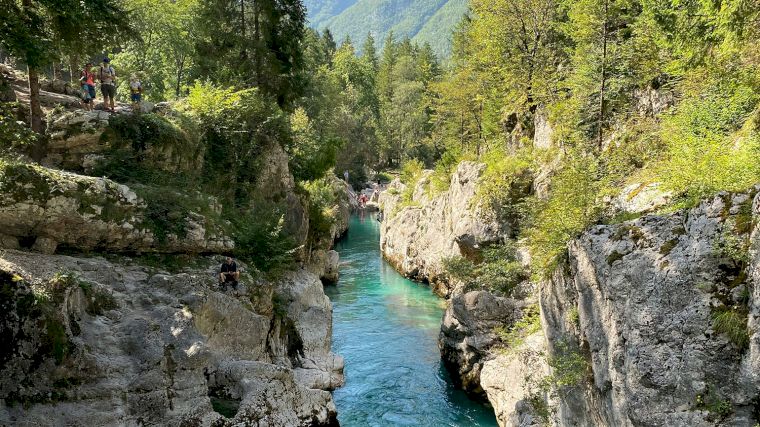
Nature lovers will find plenty to enjoy in the northern part of Brda. There you’ll find a gorge carved out by the Kožbanjček stream, featuring rapids, waterfalls, pools, and a natural bridge (naravni most) called Krčnik. Just north of the village of Hruševlje, this destination is clearly marked on signs. The road to the riverbed is quite narrow, though.
10. Soča River: Beautiful and Adventurous!
The further north you drive, the more beautiful the river and its surroundings become. The Soča Valley is Slovenia’s premier outdoor destination. You can enjoy various water sports on the emerald-green river, such as rafting, kayaking, canoeing, stand-up paddleboarding, and of course swimming and fishing. Exploring one of the many caves and gorges (canyoning) is also an option. In addition, there are zip lines across the valley, and you can go paragliding. There are also countless biking and hiking trails along the banks of the Soča. Some of these trails pass by the silent witnesses of World War I (trenches, fortifications, and bunkers), when the river served as a front line.
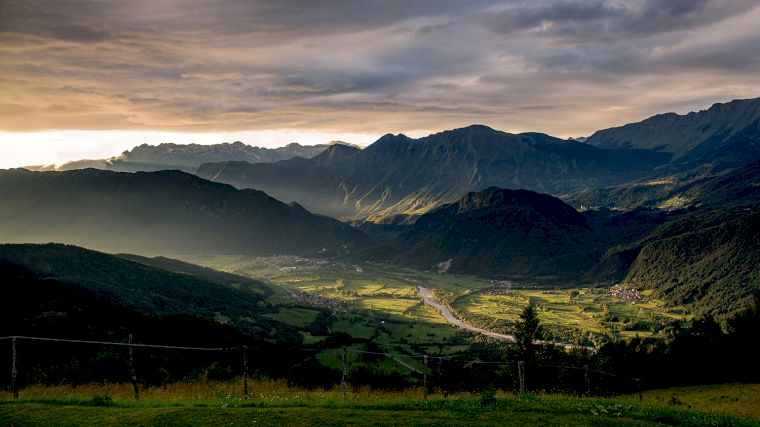
Bovec is a great base for many of these activities. Although the town isn’t located directly on the river, there are plenty of providers of water activities. Incidentally, this applies to many towns along the upper reaches of the Soča. Keep in mind, however, that for a somewhat thrilling rafting trip, the water level needs to be relatively high. Spring offers the best chance for that. For a great canyoning adventure, on the other hand, the water shouldn’t be too high, so summer and fall are better suited.
In Bovec, you’ll find one of Europe’s largest zip-line parks. Across ten zip lines, with a total length of over three kilometers, you’ll glide over a valley between two mountains that are more than 2,000 meters high: Rombon and Kanin.
11. Slovenia’s highest road: the Mangart Pass
The Soča River originates in the Julian Alps, the northern part of Slovenia bordering Italy and Austria. It should come as no surprise that this is where you’ll find the country’s highest road, at over two thousand meters above sea level. You can reach the Mangart Pass from Bovec, but you’ll have to take the same route (R902) back, as it’s a dead-end road. From Bovec, drive your rental car north on the R203. Just before the Italian border, there’s an exit for Mangart. Two kilometers past that exit, there are toll gates where you’ll need to pay an “ecotax.” This is also where the number of cars allowed on the road is regulated.
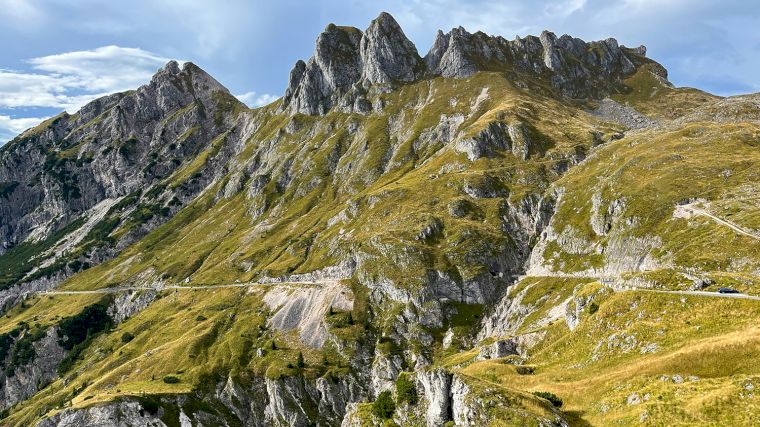
It’s a beautiful route through a narrow valley, with dense forests in the first section and bare alpine rocks as you climb higher. The road is paved all the way but very narrow, making it difficult to pass oncoming traffic. In addition to sharp hairpin turns, the road passes through three narrow tunnels. At the highest point (2,055 meters), the road loops around, offering a phenomenal view of the rugged mountains and ravines. Of course, you’ll want to get out of the car for a moment—from there, you can see the blue Lago del Predil, in Italy, far below. You can only take this trip between May and November, and even during that time, the road may be closed if weather conditions are too dangerous.
12. Waterfalls and Lake Bled
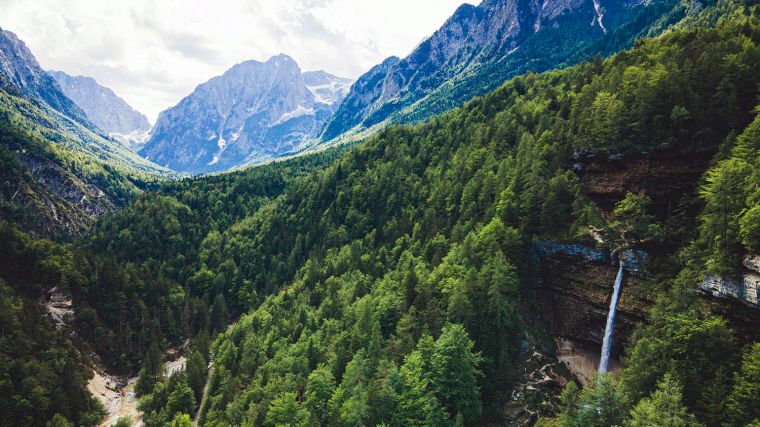
The distance from Bovec to Bled is just over eighty kilometers, yet the trip will easily take you more than two hours. That’s because you’ll be driving along a beautiful but winding mountain road (the R206) with no fewer than fifty hairpin turns. So driving fast isn’t an option, but enjoying the stunning scenery certainly is. The curves are numbered, from number 50 near Trenta (parking lot for access to Triglav National Park) to number 1 near Kranjska Gora. Just past that town, you can visit the waterfalls on the Martuljek River. There are two: the lower waterfall (spodnji slap) and the upper waterfall (zgornji slap). Park your rental car in the public section of the parking lot at the Triangel Hotel and walk one and a half kilometers to the lower waterfall. The upper waterfall is much more impressive, but the trail leading to it is more challenging and requires a strenuous climb. It’s well worth the effort, if only because far fewer people make the hike to this second waterfall. Much easier to reach is the Peričnik Waterfall, a little further on. To get there, follow the signs from the town of Mojstrana toward the Vrata Valley. After about five kilometers, there’s a parking lot, and it’s just a short walk to the waterfall. It can get quite crowded here, but it’s still a special experience because you can walk right under the waterfall. In winter, the waterfall freezes over—a spectacular sight!
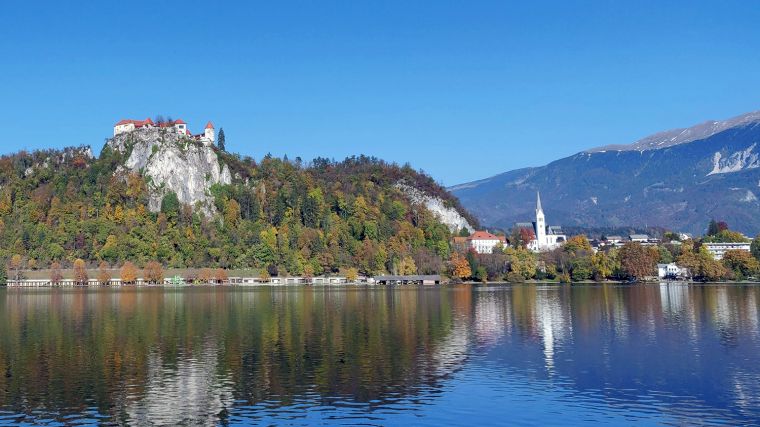
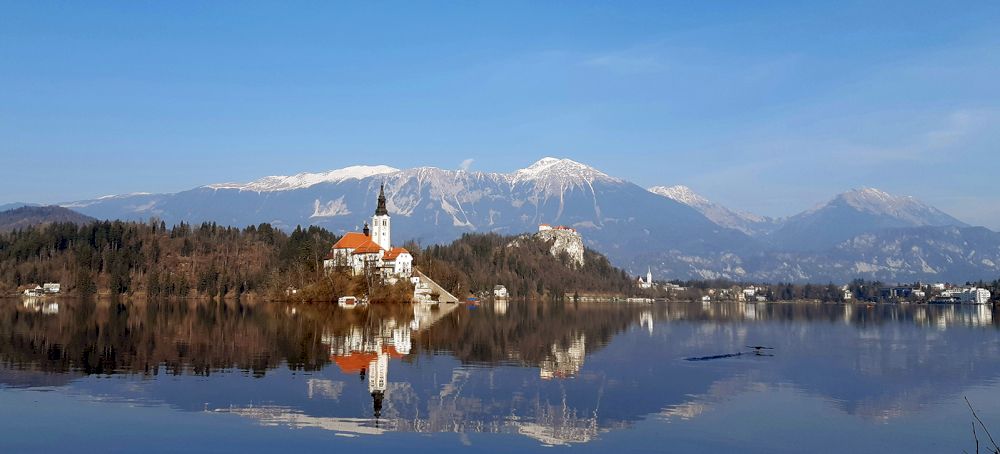
From Mojstrana, it’s just a 25-kilometer drive to Bled, on the lake of the same name, which is famous for its idyllic little church standing right in the middle of the water. The lake is a top destination in Slovenia for both domestic and international tourists, so if you’re looking for peace and quiet, you’re better off skipping it. A six-kilometer walking and biking trail runs around the entire lake. On the northern shore, you can’t miss the castle perched on a 130-meter-high cliff. Grad Blejski dates back to the 11th century and houses a museum, a chapel, and a large wine cellar. Needless to say, the view from the battlements is fantastic.
13. Vrata Valley / Triglav National Park
On the way to the Peričnik Waterfall, you’ll drive through a beautiful mixed forest of beech, spruce, and pine trees, alongside the crystal-clear Triglavska Bistrica stream. By then, you’ll already be in Triglav National Park, named after Slovenia’s highest peak, Mount Triglav (2,864 m). The name means “three-headed,” and the mountain is a national symbol, featured on the Slovenian flag, among other places.
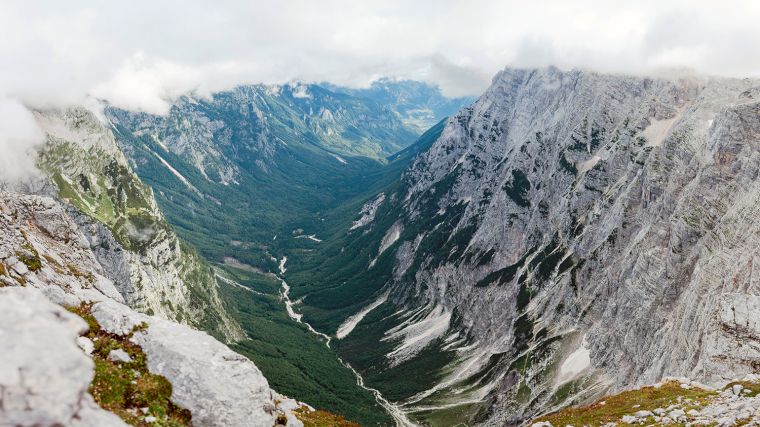
Along the road through the Vrata Valley, the valley’s rock faces rise steeply, especially on the right-hand side. As you go deeper into the valley, the left side becomes wilder, with towering, jagged cliffs. After a while, you’ll see an enormous wall through and above the forest. That’s the mighty north face of Triglav. Although by no means the highest peak in the Alps, Triglav is one of the most impressive, as it towers high above its surroundings. At the end of the paved road is a large parking lot where you can park your rental car. From here, several hiking trails lead around the mountain. For an even better view of Triglav, walk five minutes to the monument honoring fallen partisans (partizanom gornikom) who fought in the mountains: a gigantic climbing piton.
The hike to the summit of Triglav is only for experienced mountaineers in excellent physical condition. Although some routes are fairly easy at the start, the final stretch to the highest point is particularly strenuous. The climb takes at least two days, but if you want to take it easy, set aside three days. From the Vrata Valley, most people take the so-called Tominšek Route up and the Prag Route down to return to the parking lot.
To the southwest of Triglav lies the Pokljuka Plateau: a wonderfully rural area with traditional farming villages and mountain meadows, and rarely visited by tourists. You can go on beautiful hikes there, but due to the region’s remote location, you’ll definitely need a rental car to explore the forested karst plateau.
14. Lake Bohinj
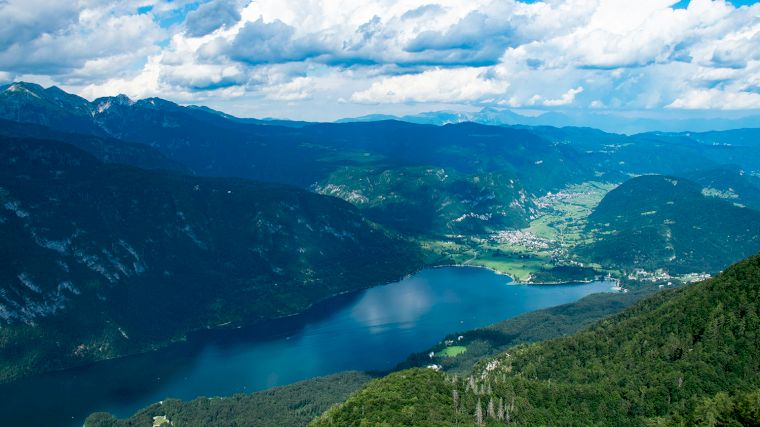
If you don’t like crowds, you’re better off skipping Bled and driving half an hour further to Lake Bohinj. It’s considerably quieter there and definitely feels more rural: there are far fewer buildings, and the water is surrounded by green forests. You can enjoy many water activities here, such as sailing, kayaking, canoeing, stand-up paddleboarding, and swimming, but in calm weather, you can also go paragliding from the surrounding mountains. If that’s a bit too adventurous for you, take a small cable car up to Mount Vogel. In the winter, it’s a ski resort. To the west of the lake, you can visit the Savica Waterfall. Park your rental car at the restaurant of the same name. From there, it’s just a twenty-minute walk to the waterfall.
The quickest way back from Bohinj to Ljubljana is via Bled, but the winding route along the R403 is more enjoyable.
Driving a Rental Car in Slovenia
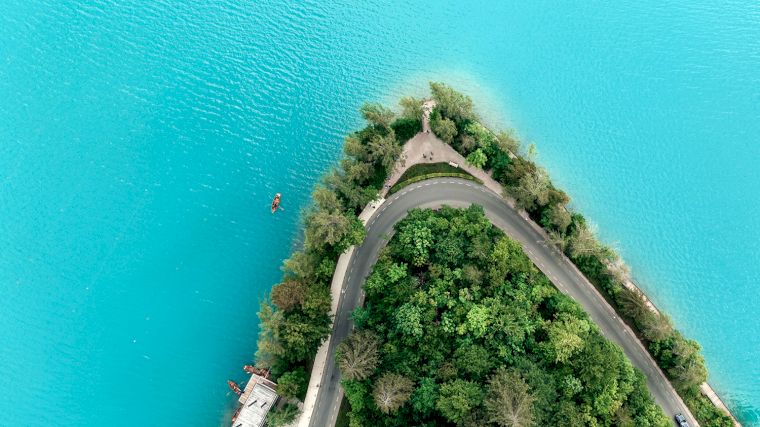
The Slovenian highway network is relatively new and well-maintained. Other major roads are also in good condition; only in a few remote areas are there some roads in poorer condition. Driving in Slovenia is generally easy and much more convenient than relying on public transportation. Traffic jams are rare, except around the capital. However, weather conditions can cause problems, especially in mountainous areas. There’s a very handy website where you can check the current road conditions: www.promet.si (in English).
Most rental cars in Slovenia already come equipped with a toll sticker, which is required to drive on the highways. To be on the safe side, check this when you pick up your rental car.
Why Rent a Car in Ljubljana
Slovenia is a stunning, picturesque, and friendly country. And although it’s fairly small (no more than about 120 kilometers from north to south and approximately 250 kilometers from east to west), the best way to explore Slovenia is by rental car. This allows you to get much more out of your vacation than if you were traveling by public transportation. For example, with a rental car, you can drive from the capital to the southeastern part of the country in just over an hour and a half, while a slow-moving train can easily take three hours.
Add to that the fact that in a rental car you can stop wherever you want along the way—and you’ll find yourself doing just that often in incredibly green and diverse Slovenia. While traveling by car, you’ll easily be surprised by all the beauty the country has to offer. Just make sure to rent a car with enough engine power, since you’ll be driving in the mountains a lot. Demand for rental cars in Slovenia is high, especially during the summer months, but spring and fall are also becoming increasingly popular. So be sure to book your rental car online well in advance.

Where would you like to rent a car?
- 24000+ pick-up locations
- Free cancellation
- Independent comparator

Useful tips for a well-prepared trip
Which insurance should I choose, and what's the deal with the deposit? Read our articles with useful information and tips to ensure you choose the right rental car for you.