- Popular countries
- Popular regions
- Popular cities
- Popular airports
- Car hire United Kingdom
- Car hire Italy
- Car hire Spain
- Car hire United States
- Car hire Portugal
- Car hire Greece
- Car hire France
- Car hire Poland
- Car hire Ireland
- Car hire Cyprus
- Car hire Netherlands
- Car hire South Africa
- Car hire Switzerland
- Car hire Croatia
- Car hire Canada
- Car hire Malta
- Car hire Germany
- Car hire Hungary
- Car hire Norway
- Car hire Australia
- Car hire England
- Car hire Sicily
- Car hire Scotland
- Car hire Florida
- Car hire Sardinia
- Car hire Malta
- Car hire California
- Car hire Crete
- Car hire Lanzarote
- Car hire Majorca
- Car hire Menorca
- Car hire Tenerife
- Car hire Rhodes
- Car hire Fuerteventura
- Car hire Corsica
- Car hire Kefalonia
- Car hire Madeira
- Car hire Corfu
- Car hire Ibiza
- Car hire Gran Canaria
- Car hire London
- Car hire Faro
- Car hire Malaga
- Car hire Milan
- Car hire Lisbon
- Car hire Rome
- Car hire Alicante
- Car hire Dublin
- Car hire Manchester
- Car hire Porto
- Car hire Amsterdam
- Car hire Larnaca
- Car hire Geneva
- Car hire Luqa
- Car hire Bergamo
- Car hire Athens
- Car hire Budapest
- Car hire Pisa
- Car hire Orlando
- Car hire Palermo
- Car hire London Heathrow Airport
- Car hire Faro Airport
- Car hire Lisbon Airport
- Car hire Malaga Airport
- Car hire London Gatwick Airport
- Car hire Alicante Airport
- Car hire Manchester Airport
- Car hire Dublin Airport
- Car hire Larnaca Airport
- Car hire Porto Airport
- Car hire Malta Airport
- Car hire Bergamo Airport
- Car hire Athens Airport
- Car hire Budapest Ferihegy Airport
- Car hire Rome Fiumicino Airport
- Car hire Geneva Airport (Switzerland)
- Car hire Amsterdam Schiphol Airport
- Car hire Milan Malpensa Airport
- Car hire Pisa Airport
- Car hire Orlando International Airport

Tips for Road Trips Through the Algarve in a Rental Car
Along the coast or inland? Rent a car!
For most people, Faro is the gateway to a vacation at one of the beaches along the Algarve’s 200-kilometer-long coastline. They tend to skip the town itself and sometimes don’t even leave the beach resort where they’re staying. Why not rent a car? That way, you can discover what else southern Portugal has to offer. And there’s plenty! Whether you want to visit different beaches, drive to the best surf spots, or explore the mountainous interior, a rental car gives you complete freedom to decide for yourself what you’ll see and experience. Below, we’ve put together some tips for day trips with a rental car, but you can also combine them into a full-fledged road trip.
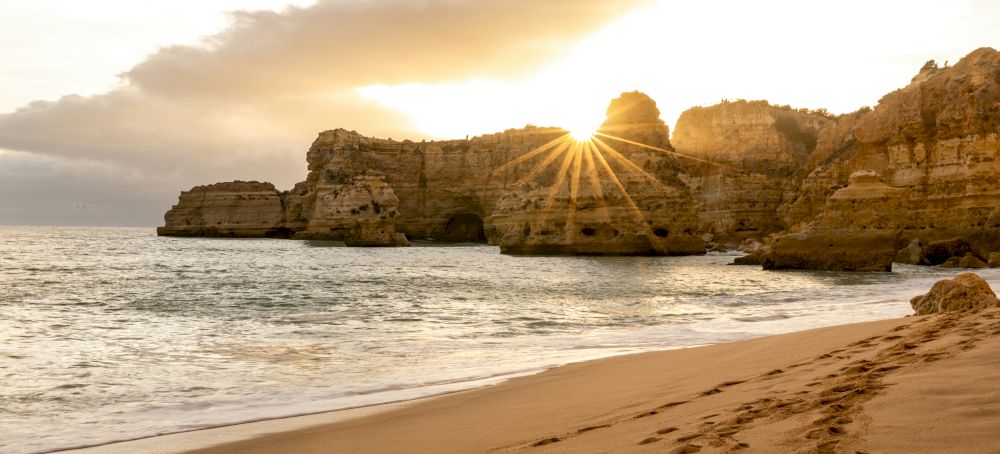
Faro
Since most people only know Faro as the name of the airport, let’s start with the sights in this charming little town, which is truly worth a visit. The old town (Cidade Velha), with its cobblestone streets, is centered around the cathedral, Igreja de Santa Maria. This church was nearly destroyed in the 16th century during an attack by England; only the bell tower was spared. During its reconstruction in the following centuries, the interior was progressively embellished, including with gilded woodwork and azulejos. From the tower, you have a beautiful view of Faro and the Ria Formosa lagoon.
The Baroque Igreja do Carmo, with its two bell towers, is more beautiful on the outside than the cathedral and is also richly decorated with wood carvings on the inside. The main attraction of this church is the rather macabre Capela dos Ossos, where the walls are covered with the skulls and bones of more than a thousand Carmelite monks.
The city walls surrounding the center (Muralhas de Faro) are still largely intact, but you’ll see a wide variety of architectural styles. The original wall was built by the Romans. The Moors extended the walls and added defensive towers and gates. Since the 18th century, the neoclassical Arco da Vila has been the main gateway to historic Faro. If you look closely, you can still see the original Arabic design.
You’ll have to leave your rental car behind for a visit to Ilha da Barreta, also known as Ilha Deserta (Deserted Island). A catamaran or speedboat will take you there from Faro. Aside from a single small restaurant, there’s nothing on this island, which is 7 kilometers long and 600 meters wide. But what a sight: the enormous, long beach of golden-yellow sand, with the Ria Formosa lagoon on one side and the Atlantic Ocean on the other.
Want to visit coastal towns? Rent a car!
Portugal’s south coast isn’t just dotted with fantastic beaches; there are also many interesting towns and villages. You should visit at least a few of them; otherwise, you haven’t truly experienced the Algarve. Some places right on the coast have lost much of their original charm and are focused almost exclusively on tourism. Seaside resorts like Albufeira, Portimão, and Vilamoura get very crowded during the summer months, but fortunately, there are still less crowded towns to be found, which you can easily reach if you’ve rented a car. Here are five highlights along the coast, listed from west to east.
Sagres
In the vicinity of this seaside town in the far southwest of Portugal are several small beaches that can be exceptionally quiet—especially outside the high season. The often-high waves are a major draw for surfers. Even if you’re not on a surfboard yourself, it’s fun to watch how skillfully the surfers maneuver their boards. One must-see is the 17th-century Fortaleza Sagres. The fort itself and the wind compass aren’t all that impressive, but the location and the view certainly are! You’ll also enjoy a beautiful view if you drive your rental car to Cabo de São Vicente, the southwesternmost tip of mainland Europe. Since they didn’t yet know about the rest of the world, the Greeks called this “the end of the world.”
Lagos
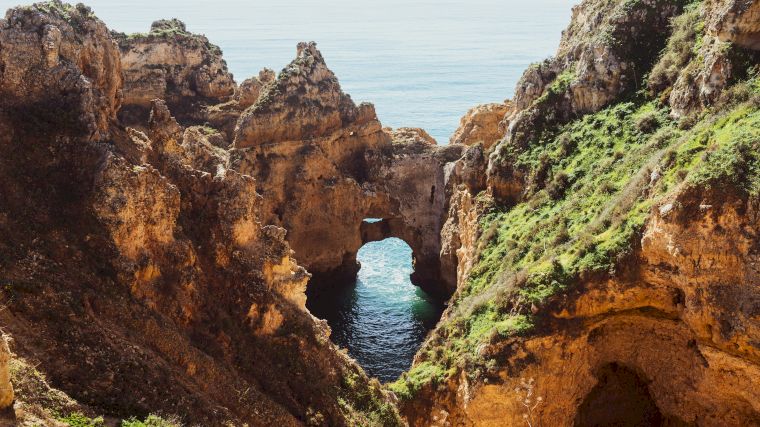
In the summer, this is a bustling city, but you shouldn’t miss Lagos, as it has a beautiful historic center. From this city, Henry the Navigator sent expeditions to places such as Madeira, the Azores, and Cape Verde. Lagos’s appeal lies in the many beaches surrounding the city, fringed by jagged rocks. The most famous rock formation is located south of Lagos. There is a walking trail (Passadiços da Ponta da Piedade), but you’ll truly enjoy the experience only when you take a boat or kayak trip past the wonderfully shaped rocks with their unique vistas.
Olhão
The bustling fishing port of Olhão is located just east of Faro. It is one of the few towns in the Algarve where tourism does not play a major role. Olhão is also a relatively new town; its oldest stone buildings date back to the late seventeenth century. Along the harbor, you’ll find the largest and liveliest market in the Algarve. For fresh fish, you’ll need to get up early, as it’s sold at daybreak. You can also buy delicious fresh fruits and vegetables from local farmers. If you drive to the town on Saturday in your rental car, the market is even more extensive. The additional stalls sell everything from baskets and smoked sausage to honey and lace. Olhão has some of the best seafood restaurants in the Algarve.
Santa Luzia
This charming fishing village in the eastern Algarve is known for its octopus. Elderly fishermen set clay pots (alcatruz) in the sea, which the octopuses find attractive as a place of shelter. They’re caught when the pots are pulled out of the water. Younger fishermen use a plastic trap (covo) with a small sardine inside. According to connoisseurs, octopuses caught using the traditional method taste the best. See for yourself! Along the Santa Luzia coastline lie pristine beaches, which are among the quietest in the Algarve.
Tavira
One of the most beautiful coastal towns in the Algarve is Tavira, and it’s a fantastic destination for a day trip by rental car. The town lies on both sides of the gently flowing Gilão River and offers an intriguing blend of traditional Portuguese heritage and deep-rooted Moorish influences. In the labyrinth of the old town, you’ll see traditionally tiled houses, remnants of the city’s defensive works—including a castle—and no fewer than 36 churches. The interior of the Igreja da Misericórdia is stunning: large tile panels depict the fourteen works of mercy.
Exploring beaches and surf spots by rental car
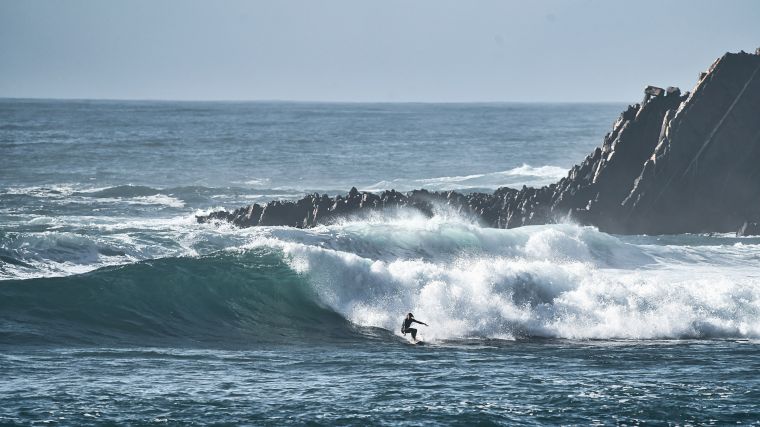
The west coast of the Algarve is completely different from the south coast: the unspoiled nature, with its high cliffs and waves, feels rougher. There are few buildings, and certainly no large houses along the beaches. If you enjoy surfing big waves, southwestern Portugal is an ideal destination. Although the best surf beaches aren’t far from each other, you’ll still need a rental car, since there’s no public transportation to these beaches. If you’re traveling with a group of surfing friends, it’s best to rent a van so you have plenty of seating and enough space for your surf gear.
Praia da Arrifana (near Aljezur) offers good surfing conditions, especially at low tide. When the waves are high, it can get quite crowded there. Praia do Amado, located slightly further south, is a beautiful and very quiet beach where you can enjoy great surfing all year round. Especially in the fall, there are big waves at Praia do Castelejo, a fairly isolated beach northwest of Vila do Bispo. The high cliffs make Praia do Beliche a spectacular beach for surfing, but you’ll need a bit of luck with the swell. Spring and fall offer the best chances for good surfing conditions.
The west coast not only has the best surf spots, but you’ll also find lesser-known (and beautiful) beaches there. On the south coast, less crowded beaches are harder to find, but they do exist. To visit them, you’ll definitely need a rental car, since there’s no other transportation available. Near Porches, the small sandy beach Praia do Barraquinho is nestled between high cliffs. Park your rental car at Albandeira Beach and walk west for five to ten minutes to reach this idyllic little beach. The name of the little beach near Carvoeiro— Praia do Paraiso —is very fitting. It’s very easy to reach, yet not crowded, because the beach becomes quite narrow at high tide. Praia dos Pinheiros is situated between two of the most visited spots near Lagos, yet it’s very quiet. It’s only accessible via a narrow path from the top of the cliff between Ponta da Piedade and Praia do Camilo. Swimwear is optional here. That’s also the case at Praia das Furnas, west of Salema. You can only get there via a dirt road. It’s perfectly passable, by the way, but do drive carefully in your rental car.
There are even more small beaches along the south coast that are unknown to many people. You can find them by zooming in closely on parts of the Algarve in Google Maps, for example. If you’ve rented a car, you can easily drive there!
Reservoirs
Did you know you don’t have to be by the sea to take a wonderfully refreshing dip? The mountainous parts of the Algarve are dotted with reservoirs (barragem). These are important for the drinking water supply in southern Portugal, and you can also enjoy swimming in them or practicing other water sports, such as canoeing or kayaking. Just like with the most beautiful beaches, the most attractive spots along the reservoirs can only be reached if you’ve rented a car, since there’s no public transportation. Plus, a rental car gives you plenty of flexibility. Is the spot a bit underwhelming? Just hop back in the rental car and find a better one!
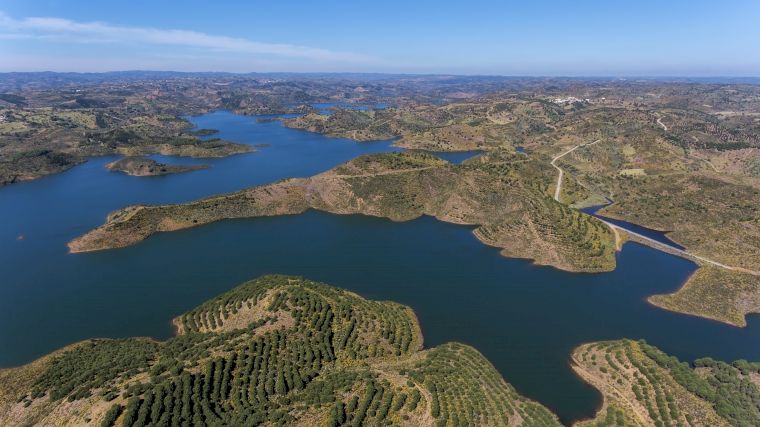
The Barragem da Bravura, just north of Lagos, is surrounded by tall eucalyptus trees and is a beautiful spot for a picnic. The higher area north of the dam is densely forested with cork oaks and offers the best views of the lake. Not far from Portimão, you can combine swimming with a walk along the Barragem do Funcho, one of Portugal’s largest reservoirs. In the mountains of the Serra do Caldeirão, in the far east of the Algarve, lies the Barragem de Odeleite, which, when viewed from the air, resembles a blue dragon and is therefore also known as Lago do Dragão Azul.
Visiting Museums by Rental Car
A rainy day is highly unusual in the Algarve. If it does happen to rain a little, if you’re just looking for a change of pace, or if you want to escape the heat, take your rental car to a museum.
The Museu de Portimão is housed in a former canning factory where freshly caught sardines were canned. A large part of the exhibition is dedicated to this once-important industry, and it’s surprising how much of the work was still done by hand back then. The museum also offers insight into the construction of wooden ships, and there are prehistoric artifacts on display.
Also at the Museu Municipal do Faro archaeological finds are on display, mostly from Roman times, but also from earlier periods (prehistory) and later periods (the Moors, the Middle Ages). The large mosaic of Oceanus, the god of the sea, is particularly impressive. The museum is housed in a 16th-century monastery. The beautiful and peaceful monastery gardens alone make a visit worthwhile.
In the eastern Algarve, near the border with Spain and north of Monte Gordo, lie the ruins of the Castelo de Castro Marim. Inside that castle, you’ll find the slightly macabre Martel Museum. Across from the castle stands a 17th-century fortress, Forte de São Sebastião. It is not open to the public, except during the festive Dias Medievais (Medieval Days) in August.
Not a museum, but equally fascinating: a visit to a factory where traditional craftsmanship is still practiced. Just outside the town of São Brás de Alportel, about twenty kilometers north of Faro, stands the Eco-Fábrica de Cortiça Francisco Carrusca. During a guided tour of this cork factory, you’ll learn how cork is processed from bark into finished products.
A visit to the salt mine Mina de Sal-gema in Loulé. This is literally a hidden attraction, as there’s little to see above ground—but wait until you take the elevator down more than two hundred meters. You’ll find yourself in a wide and high network of tunnels that stretches a total of about 45 kilometers. During a two-hour guided tour, you’ll learn all about rock salt mining, its uses, and the geological formations that are millions of years old.
Rent a car and discover the most beautiful villages
You’ll discover that the Algarve is more than just sun, sea, and sand when you explore the hinterland in a rental car. Hills covered in dense forests, interspersed with olive groves and charming, rural villages. These hills sometimes give way to mountains, such as the highest peak in the Serra do Caldeirão north of Faro and the Serra de Monchique north of Portimão.
Odeceixe
Just within the Algarve lies the village of Odeceixe, along the winding Seixe River that forms the border with Alentejo. It’s a popular base for surfers who brave the big waves on the west coast. The green cliffs provide a beautiful backdrop. A small beach nestled among those rocks is reserved for naturists. Along the road from the main village to the beach (Praia de Odeceixe), there’s a lookout point overlooking the river, which is especially beautiful at sunset.
Monchique
From Lagos or Portimão, it takes about forty minutes by rental car to reach Monchique in the mountain range of the same name. That is, if you take the main road. Although it takes longer, it’s more enjoyable to take the narrower, winding secondary roads heading north. These roads are well-maintained in the Algarve, so driving your rental car on them is no problem at all. Monchique is a charming little town surrounded by green mountains. The highest peak, Mount Fóia (902 m), lies southwest of the town, while the second-highest peak, Picota (774 m), lies to the southeast. The summit of Fóia offers the most beautiful view; Picota is steeper and more densely forested. A little further south lie the Caldas de Monchique. There are many hot sulfur springs there that have been known for their healing properties since Roman times.
Silves
Today, Faro is the capital of the Algarve, but until the mid-sixteenth century, that title belonged to Silves. This beautiful little town is very old; the first settlement was likely founded by the Phoenicians, long before the beginning of our era. The main attraction is the Castelo de Silves , built of red sandstone. The origins of this fortress also date back to long before the Moors conquered Silves and expanded the castle. It is one of the best-preserved Moorish fortifications in Portugal, featuring typical Arabic arches and decorations. That Moorish history also comes to life at the Museu Municipal de Arqueologia, where, among other things, a Moorish house has been reconstructed. There are two large, free parking areas for your rental car in Silves: just north of the castle and in the southern part of town, along the river.
Loulé
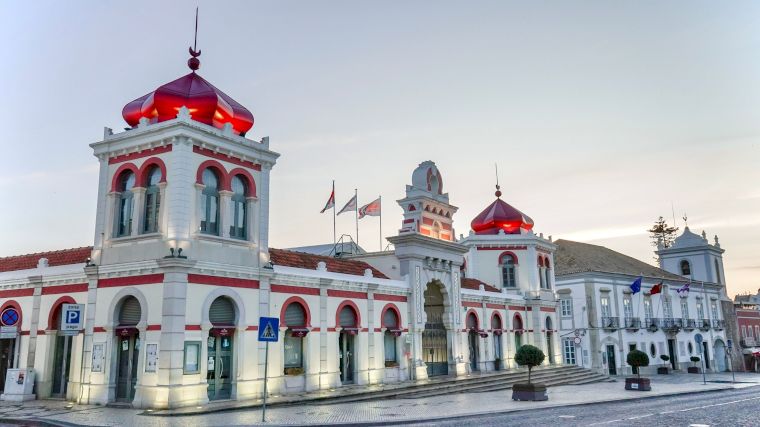
Although the Moors had long since been driven out by the early 20th century, the market hall from that era does feature Moorish (or Eastern) elements. Turrets with decorative domes, spheres, and crescent moons at every corner, and arches above the doors and windows. The combination of cream-colored walls and dark salmon-pink frames around the doors and windows, on the other hand, is typically Portuguese. The Mercado Municipal is bursting with fresh produce: vegetables, fruit, spices, herbs, and fish vie for shoppers’ attention, as do delicious jams, honey, cheeses, and cakes made with figs or almonds. The market is closed on Sundays. The day before, there are also stalls outside the market hall, known as the Mercado de Sábado (Saturday Market). Right in the center of town stands the Castelo de Loulé. The castle isn’t very large, but it houses an interesting archaeological museum, and the towers offer a beautiful view of the city.
Alcoutim
The far eastern part of the Algarve isn’t visited by many people, making it a perfect destination to drive to in your rental car if you want to avoid crowds of tourists. The town of Alcoutim on the Guadiana River is a completely different world from the busy southern coast. On both sides of the border river, castles and forts bear witness to centuries of war between Spain and Portugal. These days, relations are friendly, and there’s even a zip line between Sanlúcar, Spain, and Alcoutim: the only cross-border zip line in the world! You can park your rental car in Alcoutim, take a small boat across the river, and then zip back across on the over 700-meter-long zipline. Feel like taking a dip? Along a tributary of the Guadiana is a real little city beach: Praia Fluvial do Pego Fundo.
Alcoutim is the starting point of the Via Algarviana long-distance trail. Since you’ve rented a car, you probably won’t want to walk or bike the entire trail, but you can easily explore a section of it. The trail runs from the east to the far west of Portugal and is 300 kilometers long in total.
Visiting National Parks with a Rental Car
If you want to visit national parks in the Algarve, having a rental car comes in very handy. The most beautiful spots are usually quite remote, and you simply can’t reach them by public transportation.
Ria Formosa
The Nature Park Ria Formosa is widest south of Faro, but it stretches along nearly the entire coast of the eastern Algarve: from Ancão to Manta Rota Beach. Due to its incredible biodiversity, it’s often called one of Portugal’s natural wonders. It’s a highly diverse ecosystem, featuring islands, salt marshes, sand and mud flats, tidal flats, dunes, small rivers, forests, and lagoons with brackish water as well as freshwater pools. Right along the coastline, you’ll find very quiet beaches, as they’re often accessible only by boat. The combination of all these elements creates an idyllic landscape and a natural habitat for many species of birds. With a little luck, you’ll spot flamingos, purple swamphens, kingfishers, blue herons, great egrets, and storks. For the best experience, book a guided tour, as the guide knows where to find the most beautiful flowers, plants, and animals.
Costa Vicentina
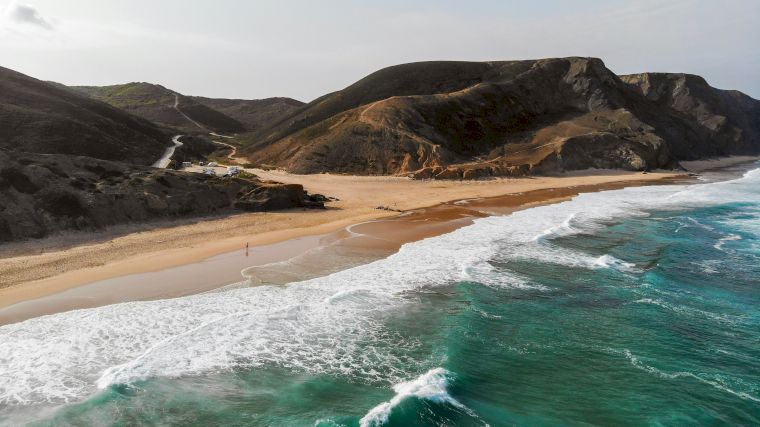
The Parque Natural do Sudoeste Alentejano e Costa Vicentina is quite a mouthful, but as you can see from the last part of the name, this is also a coastal park. The entire coastline of the western Algarve lies within the boundaries of this wild and rocky nature reserve, which stretches from the southwestern tip of Cabo de São Vicente all the way to Sines. There’s so much to see and discover that you could easily spend a week just in this part of Portugal. Don’t just drive through it in your rental car—be sure to go on hikes and bike rides as well. A very useful website for this is Rota Vicentina, where you can find circular hikes through this stunning area that bring you right back to where you parked your rental car.
Vale do Guadiana
On the very other side of the country, in the east, the Guadiana River Valley is also a nature park. Most of this park, by the way, lies in Alentejo, the region north of the Algarve. Plan a beautiful route from the charming, hilltop town of Mértola to Alcoutim, on the border with Spain. Along the way, park your rental car regularly to explore part of the Rota do Guadiana on foot. Did you know that many of the trails along the river were originally smugglers’ routes? In Alcoutim, there’s even a statue of a smuggler, and a hundred meters further south, one of the tax guard…
Dolphin Spotting
It’s not exactly a nature park, and you can’t drive your rental car there, but dolphin watching is a really fun activity. Various species of these intelligent mammals swim off the entire southern coast of the Algarve: bottlenose dolphins, striped dolphins, and common dolphins, and sometimes porpoises and harbor porpoises. Boats depart from various beach towns for dolphin-watching tours, often combined with a visit to coastal rock formations, such as the Benagil Cave (near Albufeira) or Ponta de Piedade (near Lagos).
Drive a rental car to the best golf courses
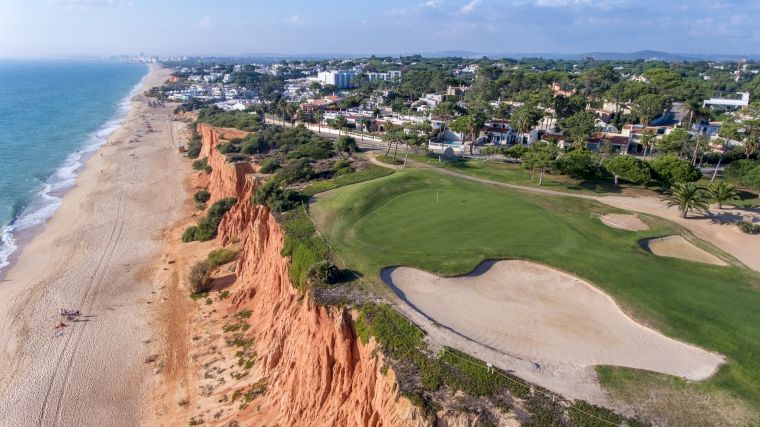
p>With some of the best golf courses in Europe, southern Portugal is one of the most popular destinations for a golf vacation. Whether you’re a beginner or an experienced golfer, you can choose from dozens of golf courses. Between Faro and Albufeira alone, there are several world-famous resorts that have put the Algarve on the map as one of the world’s best golf destinations, such as the “Grande Dame” of golf courses: the Dom Pedro Old Course in Vilamoura. Since then, the number of golf courses has grown tremendously, not least because golfing in the Algarve takes place amidst stunning natural beauty. The golf courses at Vale de Lobo offer breathtaking views of the Atlantic Ocean, and the Pine Cliffs Resort is also located right on the coast. In recent years, several golf courses have been built in the eastern Algarve. In that eastern region, you’ll find Quinta da Ria and Quinta de Cima, among others, which were developed by the famous designer Rocky Roquemore. The Monte Rei and Castro Marim clubs are also popular spots to play a round of golf. The longest golf course in the Algarve is Morgado do Reguengo (6,399 meters), located north of Portimão.
To visit various golf courses in the Algarve, you’ll need to rent a car. Make sure it has enough space for your golf clubs—consider renting an SUV, for example.
Rent a Car in the Algarve
Portugal has a wealth of destinations that are ideal for exploring by rental car. If you’re staying in one of the coastal resorts, it’s a great base for day trips to other towns, beaches, or the inland areas. Because the coastal region is getting increasingly crowded, more and more people are opting for a quinta or finca, further away from the beaches. These rural homes are often situated in beautiful surroundings, but renting a car is a must in that case.
Which car is most suitable depends largely on your itinerary. If you’ll mainly be visiting different towns, compact, maneuverable rental cars are ideal for navigating the narrow streets. If you’ll (also) be taking trips through the mountains, it’s better to rent a slightly larger car, as these usually have more powerful engines.
One-Way Car Rental from Faro
Have you ever considered a one-way car rental? With this option, you pick up the rental car in Faro and drop it off at a different location, such as Lisbon. That way, after exploring the sights in the Algarve, you can continue driving inland or along the coast to the Portuguese capital. If you have even more time, you can even continue on to Porto and follow a route that takes you past 8 must-see highlights. Renting a car for a one-way trip is very easy with EasyTerra: simply enter a different drop-off location, and we’ll show you only the rental cars available for that route. There’s almost always a one-way surcharge, but it’s actually quite reasonable—especially in Portugal.

Where would you like to rent a car?
- 24000+ pick-up locations
- Free cancellation
- Independent comparator

Useful tips for a well-prepared trip
Which insurance should I choose, and what's the deal with the deposit? Read our articles with useful information and tips to ensure you choose the right rental car for you.


