- Popular countries
- Popular regions
- Popular cities
- Popular airports
- Car hire United Kingdom
- Car hire Italy
- Car hire Spain
- Car hire United States
- Car hire Portugal
- Car hire Greece
- Car hire France
- Car hire Poland
- Car hire Ireland
- Car hire Cyprus
- Car hire Netherlands
- Car hire South Africa
- Car hire Switzerland
- Car hire Croatia
- Car hire Canada
- Car hire Malta
- Car hire Germany
- Car hire Hungary
- Car hire Norway
- Car hire Australia
- Car hire England
- Car hire Sicily
- Car hire Scotland
- Car hire Florida
- Car hire Sardinia
- Car hire Malta
- Car hire California
- Car hire Crete
- Car hire Lanzarote
- Car hire Majorca
- Car hire Menorca
- Car hire Tenerife
- Car hire Rhodes
- Car hire Fuerteventura
- Car hire Corsica
- Car hire Kefalonia
- Car hire Madeira
- Car hire Corfu
- Car hire Ibiza
- Car hire Gran Canaria
- Car hire London
- Car hire Faro
- Car hire Malaga
- Car hire Milan
- Car hire Lisbon
- Car hire Rome
- Car hire Alicante
- Car hire Dublin
- Car hire Manchester
- Car hire Porto
- Car hire Amsterdam
- Car hire Larnaca
- Car hire Geneva
- Car hire Luqa
- Car hire Bergamo
- Car hire Athens
- Car hire Budapest
- Car hire Pisa
- Car hire Orlando
- Car hire Palermo
- Car hire London Heathrow Airport
- Car hire Faro Airport
- Car hire Lisbon Airport
- Car hire Malaga Airport
- Car hire London Gatwick Airport
- Car hire Alicante Airport
- Car hire Manchester Airport
- Car hire Dublin Airport
- Car hire Larnaca Airport
- Car hire Porto Airport
- Car hire Malta Airport
- Car hire Bergamo Airport
- Car hire Athens Airport
- Car hire Budapest Ferihegy Airport
- Car hire Rome Fiumicino Airport
- Car hire Geneva Airport (Switzerland)
- Car hire Amsterdam Schiphol Airport
- Car hire Milan Malpensa Airport
- Car hire Pisa Airport
- Car hire Orlando International Airport

Car Rental with Collision Damage Waiver (CDW)
And what to do if your rental car is damaged
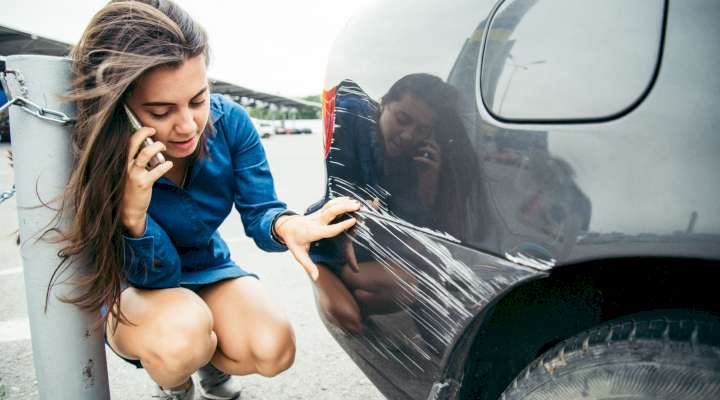
Accidents happen, and it’s easy to overlook a small pole. Fortunately, virtually all of our rental cars come standard with collision damage waiver (CDW) coverage, which covers minor dents or scratches. Below, we explain exactly what this coverage includes and what you should do if the car you’ve rented is damaged.
Renting a Car: What Does Comprehensive Insurance Cover?
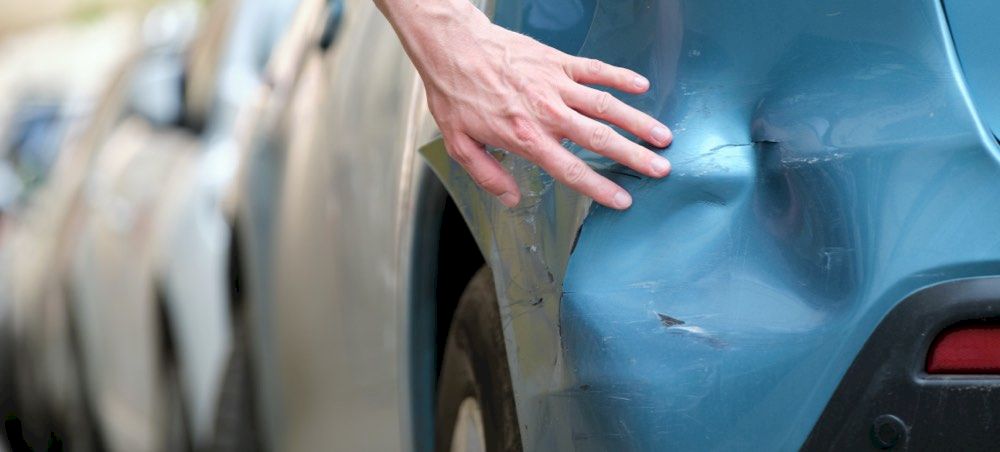
Collision insurance, also known as comprehensive insurance, covers damage to the vehicle’s body. It doesn’t matter whether you caused the damage yourself (unless it was intentional or while under the influence) or whether it was caused to the rental car by an unknown third party. Examples include damage caused by doors swinging open in tight parking spaces or careless parking, where the person responsible did not leave their contact information. Damage to the vehicle’s body caused by other factors, such as bad weather, is also covered by comprehensive insurance.
Please note: Damage to the roof, the underside of the rental car, windows, and tires is usually excluded from comprehensive insurance, but is often included for cars with our Worry-Free label (see below).
Rental Car Damage Insurance: What Is the Deductible?
The amount of the deductible for rental car damage insurance can vary widely. There are significant differences between car rental companies, but the amount also depends on the type of car you rent and the country in which you rent it. In some cases, the deductible is a few hundred euros; in others, it can run into the thousands of euros.
Once you’ve selected a car, you’ll see the excess amount listed in the rental terms and conditions. Of course, you should always read through these terms and conditions before booking a rental car. To do so , click the “Rental Terms and Conditions” link at the bottom of the reservation form .
Damage When You Pick Up the Rental Car
Before you drive away from the rental company, be sure to take plenty of time to inspect the rental car. Walk slowly around it (together with a rental company employee) and take photos. Modern digital cameras always record the date and time of photos taken, and sometimes the location as well. Don’t forget to check the interior of the car you’ve rented. Ideally, any pre-existing damage will already be listed on the so-called check-out form. If that’s not the case, make sure the damage is noted. Only then should you sign the form.
When you return the rental car, an employee of the rental company will check whether any damage occurred during your rental period. Again, you’ll walk around the car together and take photos. If there’s no additional damage, the rental company must provide you with a signed statement confirming this.
Damage to Your Rental Car—What Now?
You’d rather not have to deal with this during your rental period, but it does happen—and it’s by no means always your fault: your rental car sustains damage. What should you do in different situations?
In the event of a collision with another driver, do the same thing you would do if you were driving your own car: fill out the accident report form together with the other party. Never sign a document with vague descriptions, because before you know it, you’ll be admitting fault for the accident. Always take photos of the scene and the damage, but make sure you do so safely.
If you cause damage to your rental car yourself, you’ll obviously be responsible for the damage. But that also applies if you suddenly notice an unexplained dent caused by an unknown person. Take photos of this right away as well.
Always report damage immediately to the local rental company and explain what happened. The phone number is listed on the rental agreement. The rental company may require a police report, sometimes even for minor damage. In the case of major damage, you may be entitled to a replacement rental car.
Many car rental companies charge administrative fees for damage to the rental car, and these can be quite high. You may find them unreasonably high, but in addition to the cost of repairing the damage, you’ll also have to pay these fees.
Rent a car worry-free with the Worry-Free label
You may have experienced this yourself or heard stories from others: at the counter, the local rental agent gives a very persuasive pitch about additional insurance that’s “actually quite necessary,” because “just look at that deductible.” And you start to wonder if you shouldn’t get that extra insurance after all.
Stay one step ahead of the local rental agent and take care of all this in advance. You almost always pay top dollar for anything you arrange at the rental counter. So rent a car from us with the Worry-Free label. Then the deductible for damage to the rental car’s body is covered. That means that in the event of damage, you’ll have to pay the costs upfront, but we’ll reimburse you. Most rental cars with the Worry-Free label also have comprehensive coverage, which includes damage to the roof, undercarriage, windows, and tires. So you can confidently turn down the rental company’s “special offers,” because there’s no need for extra insurance if you’ve rented a car with the Worry-Free label.
Rent a car worry-free with Worry-Free: no more tedious discussions at the counter and no hidden costs. Clear and transparent!
Abbreviations and Terms in Rental Car Damage Insurance
There are countless abbreviations when it comes to rental car insurance. On top of that, different languages use yet other terms and abbreviations. Here are some of the most common ones.
CDW(
) Collision Damage Waiver: We mentioned this at the beginning; it’s the English abbreviation for collision damage waiver.
SCDW(
) Super Collision Damage Waiver: CDW with more comprehensive coverage. Rental companies often try to sell this, but it’s unnecessary if you rent a car from us with the Worry-Free label, as that includes comprehensive coverage.
LDW(
) Loss Damage Waiver: CDW supplemented with coverage for theft and vandalism. We offer rental cars with:
TP(
) Theft Protection: See theft insurance.
TPI(
) Third-Party Insurance: This covers you if you’re liable for damage to third parties—in other words, liability insurance. It’s included as standard with our car rentals.
PAI(
) Personal Accident Insurance: passenger insurance that the rental company sometimes tries to sell you. Usually unnecessary, as this is a standard part of your travel insurance (which we hope you have). In some cases, it may be advisable in the United States and Canada, depending on what your travel insurance covers.
SLI
Supplemental Liability Insurance: this increases the maximum amount paid out by third-party liability insurance. Within the EU, our standard third-party liability insurance is more than sufficient; outside the EU, you may need this supplement, particularly in the U.S. and Canada.
The deductible is usually referred to as“excess”(in the United States, it’s calleda “deductible”).“Zero excess”means you have no deductible.

Where would you like to rent a car?
- 24000+ pick-up locations
- Free cancellation
- Independent comparator

Useful tips for a well-prepared trip
Which insurance should I choose, and what's the deal with the deposit? Read our articles with useful information and tips to ensure you choose the right rental car for you.