- Popular countries
- Popular regions
- Popular cities
- Popular airports
- Car hire United Kingdom
- Car hire Italy
- Car hire Spain
- Car hire United States
- Car hire Portugal
- Car hire Greece
- Car hire France
- Car hire Poland
- Car hire Ireland
- Car hire Cyprus
- Car hire Netherlands
- Car hire South Africa
- Car hire Switzerland
- Car hire Croatia
- Car hire Canada
- Car hire Malta
- Car hire Germany
- Car hire Hungary
- Car hire Norway
- Car hire Australia
- Car hire England
- Car hire Sicily
- Car hire Scotland
- Car hire Florida
- Car hire Sardinia
- Car hire Malta
- Car hire California
- Car hire Crete
- Car hire Lanzarote
- Car hire Majorca
- Car hire Menorca
- Car hire Tenerife
- Car hire Rhodes
- Car hire Fuerteventura
- Car hire Corsica
- Car hire Kefalonia
- Car hire Madeira
- Car hire Corfu
- Car hire Ibiza
- Car hire Gran Canaria
- Car hire London
- Car hire Faro
- Car hire Malaga
- Car hire Milan
- Car hire Lisbon
- Car hire Rome
- Car hire Alicante
- Car hire Dublin
- Car hire Manchester
- Car hire Porto
- Car hire Amsterdam
- Car hire Larnaca
- Car hire Geneva
- Car hire Luqa
- Car hire Bergamo
- Car hire Athens
- Car hire Budapest
- Car hire Pisa
- Car hire Orlando
- Car hire Palermo
- Car hire London Heathrow Airport
- Car hire Faro Airport
- Car hire Lisbon Airport
- Car hire Malaga Airport
- Car hire London Gatwick Airport
- Car hire Alicante Airport
- Car hire Manchester Airport
- Car hire Dublin Airport
- Car hire Larnaca Airport
- Car hire Porto Airport
- Car hire Malta Airport
- Car hire Bergamo Airport
- Car hire Athens Airport
- Car hire Budapest Ferihegy Airport
- Car hire Rome Fiumicino Airport
- Car hire Geneva Airport (Switzerland)
- Car hire Amsterdam Schiphol Airport
- Car hire Milan Malpensa Airport
- Car hire Pisa Airport
- Car hire Orlando International Airport

8 Adventurous Road Trips from San Francisco
With a rental car, you can discover just how beautiful Northern California is
People who rent a car in San Francisco often do so to drive one of the most beautiful routes in California: the Pacific Coast Highway to Los Angeles. But did you know there are many more options for fantastic road trips starting from San Francisco? For example, you can head in the opposite direction along the coast to the north, to Yosemite National Park to the east, or through Napa Valley.
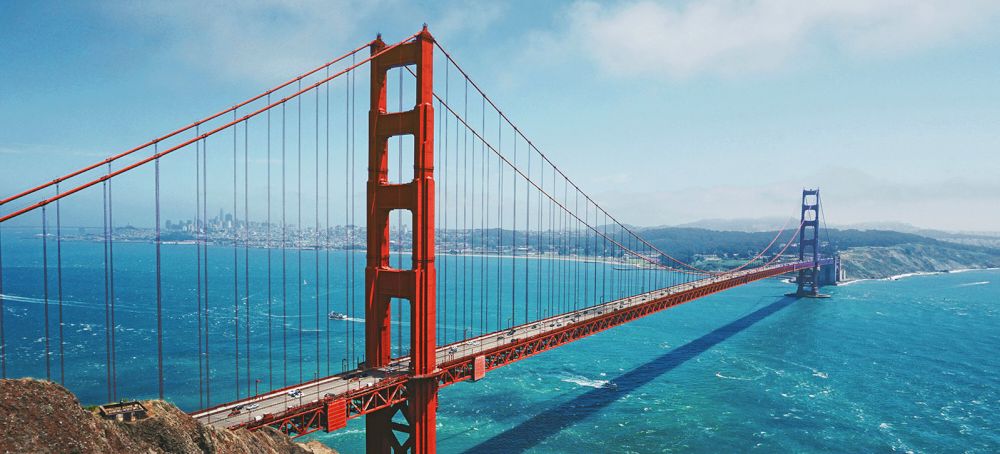
Below, we describe several road trips by rental car to attractions around San Francisco. First, seven shorter road trips (up to five days), followed by a long road trip along the Pacific Coast to the Oregon border. The first stops on that trip are great destinations for a shorter road trip. If you’ve rented a car, you can plan the trip exactly as you like. Whether you have a few days or more time, these routes will help you get started.
1. Point Reyes National Seashore
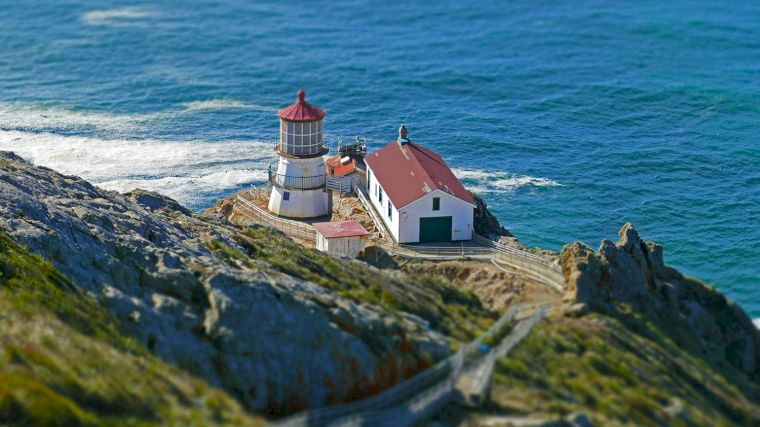
Ask a San Francisco resident what you should visit in the area, and there’s a good chance they’ll say: Point Reyes. It’s a vast coastal region where the ocean’s high waves crash against rocky headlands and expansive sandy beaches. The landscape is very diverse, ranging from open grasslands to densely forested hills. The Point Reyes Lighthouse is a popular spot at the end of a high headland. You’ll also enjoy beautiful views from the Chimney Rock Trail. From December through May, gray whales migrate past Point Reyes, and you can spot them there during that time. Keep in mind that it can be very windy and quite cold. There are many trails through the nature reserve, varying in length and difficulty. The Abbott Lagoon Trail leads from freshwater to brackish water and eventually to the ocean. If you’re reasonably fit, you can hike to the 426-meter summit of Mount Wittenberg in an hour. Another hike leads to Alamere Falls, right by the ocean. To decide which trail(s) you’d like to hike, it’s best to stop by the Bear Valley Visitor Center.
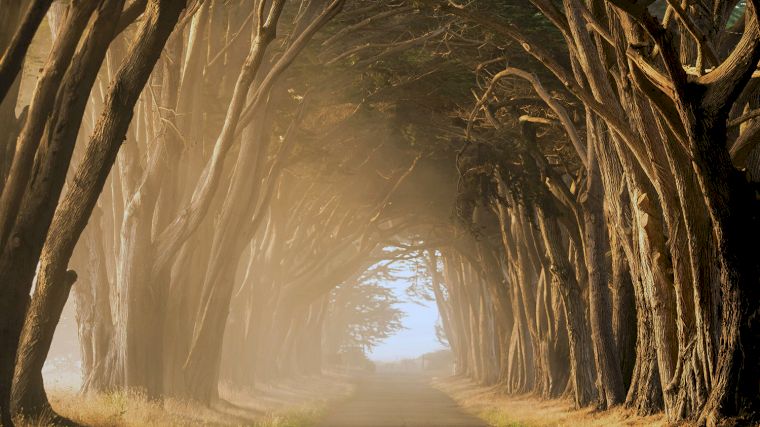
In addition to the hiking trails, you can explore large parts of the Seashore in your rental car. However, roads are sometimes closed, for example, to protect elephant seal pups. The access road to the former KPH maritime radio station is often closed to cars, but it’s a must-see: it’s the famous Cyprus Tree Tunnel. The radio station at the end of that road is also worth a visit. There, you’ll learn more about the history of communication with ships, and volunteers give live Morse code demonstrations.
2. Mount Diablo State Park
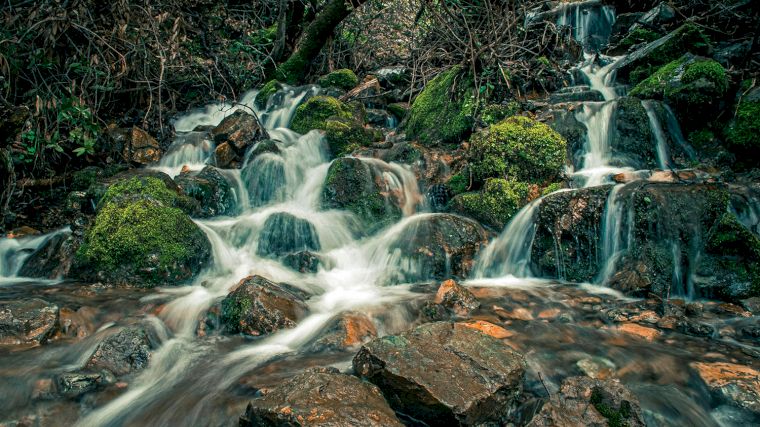
Mount Diablo State Park is located east of San Francisco, surrounding Mount Diablo (1,173 m). Most visitors head straight to the summit to enjoy the spectacular panoramic views, especially after a rain shower when the sky is clear. You can drive your rental car all the way to the top. To truly enjoy this park, don’t skip the hiking trails. You’ll walk through dense forests, past waterfalls, and unique rock formations. Along the mountain’s southern slope, for example, you’ll find sandstone cliffs where erosion has carved out caves and tunnels. Young children find this area, known as Rock City, thrilling. You can also spot peregrine falcons, especially in the western part of Mount Diablo. The park is so large that you can easily spend an entire weekend exploring it and discovering something new every time.
From San Francisco, it’s about fifty kilometers by car to the park’s northern entrance. You’ll drive across the Bay Bridge and through Oakland and Walnut Creek to North Gate Road.
3. Napa Valley and Sonoma
Everyone has heard of Napa Valley, since it’s home to some of California’s finest wines. Imagine lush, rolling hills, vineyards stretching as far as the eye can see, generous wine tastings, and a number of fantastic (if often pricey) restaurants. The Sonoma wine region lies west of Napa Valley and is slightly larger. A visit to Northern California isn’t complete without sipping some wine in Napa Valley or Sonoma. Keep in mind, though, that you usually need to make reservations to visit tasting rooms. The same goes for dining at the finer restaurants. By the way, even if you’re not a wine drinker, it’s a delightful drive through this beautiful area.
Sonoma Valley
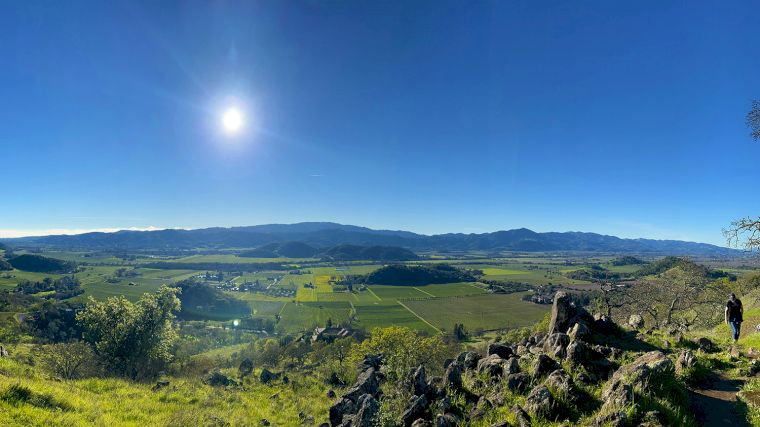
Depending on exactly where you’re leaving from in San Francisco, it takes about an hour and a half to drive to Petaluma via the Golden Gate Bridge in a rental car. The downtown area of this little town exudes old-world charm; you’ll feel as if you’ve stepped back in time to the 1950s or 1960s. For many filmmakers, this was the ideal setting. Petaluma was once the poultry capital of America, but these days there’s much more to do there than just eat an egg sandwich. For a town with fewer than 60,000 residents, it boasts a large number of excellent restaurants. North of town, you can visit the large, 200-year-old main building of a ranch dating back to the Spanish era.
From Petaluma, it’s less than a half-hour drive to the town of Sonoma, which also boasts beautiful historic buildings, including a Catholic mission from the early nineteenth century and old storefronts on Spain Street. You’ll also find some of the oldest wineries there: Buena Vista, Gundlach Bundschu, and Sebastiani.
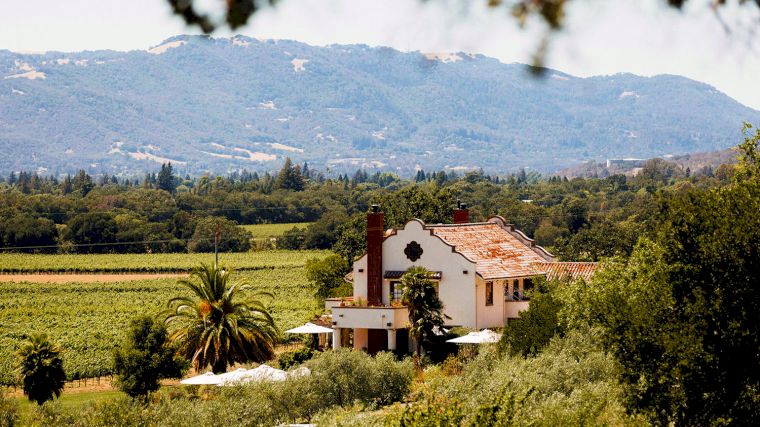
The main attraction in Glen Ellen, twelve kilometers north of Sonoma, isn’t wine, but the house where the writer Jack London lived and worked. The museum offers a glimpse into his life and passions. The small wooden house where London wrote his later works has been beautifully restored. Not so interested in this writer? You can also take beautiful walks through the Beauty Ranch estate.
A little further north lies the small town of Kenwood, nestled between Sonoma Creek and Sonoma Highway. Right along that main road, you’ll find some of the best wineries, including En Garde, where you can drop in without an appointment.
Napa Valley
Most wine routes continue north from Kenwood toward the wine towns along the Russian River, but just before Santa Rosa, we take the exit toward Calistoga. You’ll then drive through beautiful forests of redwoods. In prehistoric times, a different species grew here, but it disappeared after a volcanic eruption 3.5 million years ago. You can see fossilized remains of those giant trees in The Petrified Forest—also a great spot for a nice picnic!
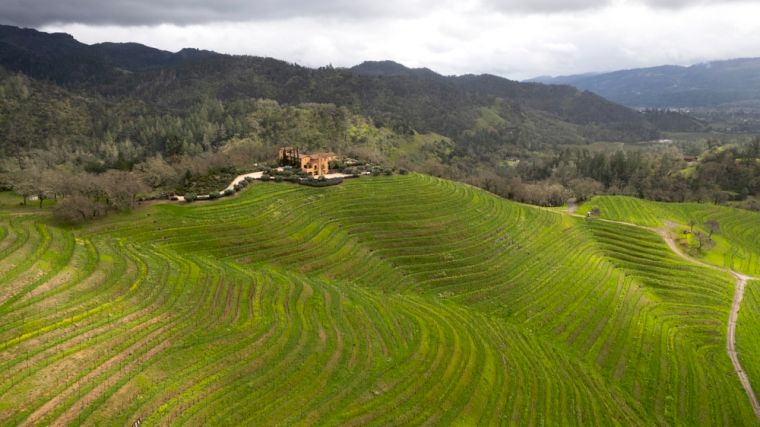
Calistoga isn’t just about wine. You might catch a whiff of it as you walk down Main Street: the sulfuric scent rising from the mineral-rich waters of the many spas. In addition to soaking in the healing waters, you can enjoy a therapeutic mud bath treatment. On the northwest side of town is a unique winery, Chateau Montelena, housed in a castle-like building. From the back, you can look out over a Chinese garden with a pond and vineyards stretching all the way to the foot of Mount St. Helena.
In Calistoga, you can choose between two routes through Napa Valley. Most people take the main road, CA-29, but the parallel Silverado Trail is much quieter. On this narrower road, you drive closer to the Napa River, and the valley’s beautiful landscape really comes into its own. As for the towns you can visit, it doesn’t matter which route you choose, since the roads are no more than four kilometers apart and there are many connecting roads.
It’s a bit confusing that the next town, fifteen kilometers from Calistoga, shares the same name as the mountain: St. Helena. Just before that town, high on a hill along the Silverado Trail, lies the Rombauer winery. While wine tasting in the beautifully landscaped garden, you’ll enjoy a lovely view of the Mayacamas Mountains. Rutherford Hill Winery also has an elevated terrace with panoramic views.
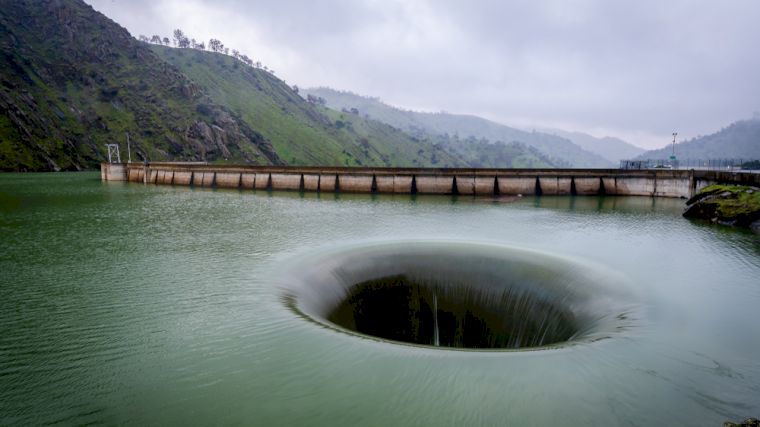
Near the town of Rutherford, you can take a brief detour off the Silverado Trail and follow the scenic Sage Canyon Road to Lake Berryessa. The emergency spillway on that lake is known as the Glory Hole, but you’ll only see it in action when the water level is high. Not working? The drive there is beautiful on its own!
Throughout Napa Valley, excellent wines are paired with high-end cuisine, but this is especially true in the Stags Leap District around Yountville. Here you’ll find the renowned restaurant The French Laundry, which has been awarded three stars by the Michelin Guide. Reservations well in advance are essential—and so is a well-stocked wallet. Just outside Napa, it’s much cheaper to grab a sandwich at the Soda Canyon Store, which started out as a small shop at a gas station along the Silverado Trail.
In Napa itself, don’t miss the Oxbow Public Market: a covered market hall with an amazing selection of fresh produce, including a variety of regional cheeses.
Can you really combine renting a car with wine tasting? Only if you’re traveling with a group and can designate one person to skip the tasting. It’s a good idea to add a second driver when you make your reservation so you can take turns in that role. Alternatively, you can follow the Cheese Trail: in Sonoma and Marin counties, there are no fewer than twelve cheese farms you can visit.
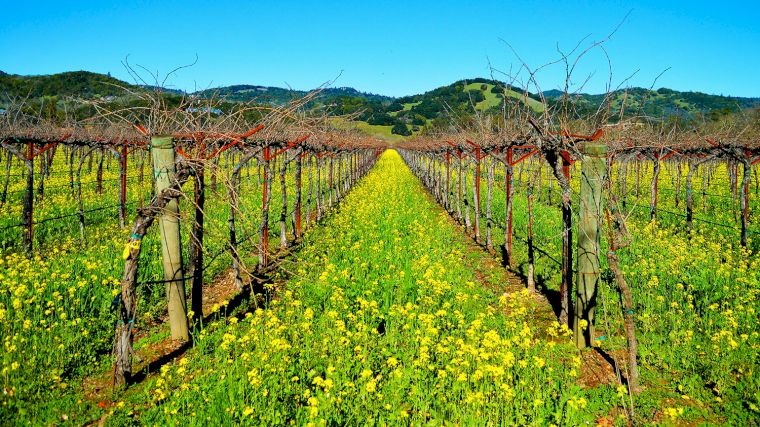
Late summer and early fall are the best times to visit Napa and Sonoma. The temperature is pleasant then, and the grape harvest is in full swing. The changing colors of the leaves in the fall make for beautiful scenery. The downside is that lodging prices are at their highest during this time. Early spring also offers a beautiful spectacle. At that time, many vineyards turn shades of yellow, orange, and gold due to the blooming mustard plants.
4. Russian River
You probably know that Alaska was once purchased by the United States from Russia, but did you know that the Russians also had a colony in northern California? That’s why the river that flows into the ocean at Jenner is called the Russian River. There’s plenty to see and do along this river. For example, you can rent canoes or kayaks at various locations, even for longer trips downstream.
From Jenner, drive via Duncan Mills to Monte Rio, where you can have a barbecue on a small beach along the river. This is also the starting point of another route: the 15-kilometer-long, picturesque Bohemian Highway. Just before the town of Occidental, you’ll see the parking lot for Sonoma Canopy Tours. There, you can zip through the woods on zip lines and suspension bridges.
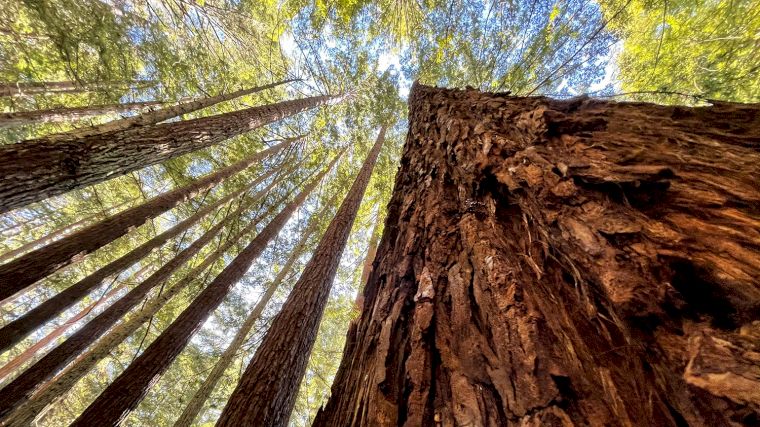
Back in Monte Rio, it’s another seven kilometers to Guerneville, the hub of activities on and around the Russian River. It’s a popular weekend destination for San Francisco residents, which is partly why the main street is lined with a large number of eclectic (and sometimes eccentric) art galleries. Just north of Guerneville, you can hike among ancient trees in the Armstrong Redwoods State Natural Reserve. Some of the towering redwoods, with their reddish-brown bark, are over a thousand years old.
So far, you’ve been following State Route 116, but in Guerneville, take River Road along the north bank of the Russian River. A short while later, you’ll cross the Forest Hills-Hacienda Bridge, which offers a beautiful view. After that, the river turns north, and the valley is dotted with vineyards.
5. Lake Tahoe
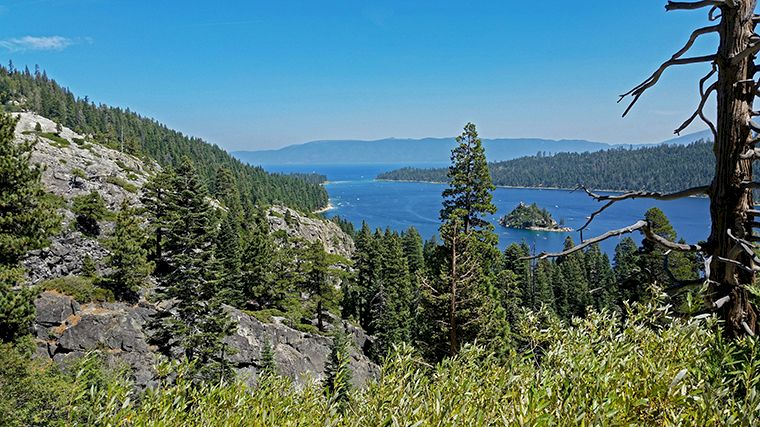
Depending on traffic, it takes about three and a half hours to drive from San Francisco to Lake Tahoe, one of the most beautiful lakes you’ll ever see. The road around the lake is 135 kilometers long and definitely worth taking if you’ve rented a car. Can you easily do it in a day? Well, it’s possible, but you’ll miss out on most of the things you can do and see along the way. Set aside at least two days for it.
Along the lake’s western shore, Emerald Bay is the first stop. As the name suggests, the views here are breathtaking, right along the road: Inspiration Point, Vista Point, and Lookout. From that last point, a fairly steep trail leads to Vikingsholm, a summer residence built about a hundred years ago. You can also rent kayaks, canoes, and pedal boats there. Note: the water in Lake Tahoe is very cold, even in the summer. Between this bay and D.L. Bliss State Park, further north, there’s a beautiful hiking trail that runs right along the water: the Rubicon Trail.
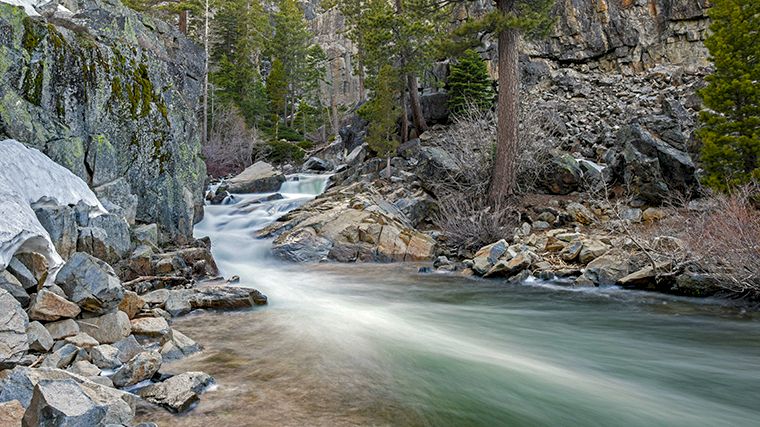
A little further on, you can take a shorter hike on the Eagle Rock Trail. Park your rental car along the road and walk about twenty minutes to the top of the rock. Once again, you’ll be rewarded with a spectacular view of the turquoise lake and the green forests surrounding it.
Incline Village, on the north side of the lake, is the starting point of the East Shore Trail, a five-kilometer bike path to Sand Harbor. You don’t have to bike—it’s also a great hike, passing by no fewer than sixteen lookouts. You can park your rental car at the Bullwheel Parking Lot. After walking about one kilometer, you’ll reach Hidden Beach: massive rocks and boulders in crystal-clear water with views of the mountains surrounding Lake Tahoe. Sand Harbor State Park at the end of the bike path is just as spectacular, but much more crowded.
The contrast between the beautiful lake and the hideous casinos and hotels of Stateline (in Nevada) couldn’t be greater. Drive through it quickly and, just across the California border, take the gondola up to see the lake again in all its glory.
6. Yosemite National Park
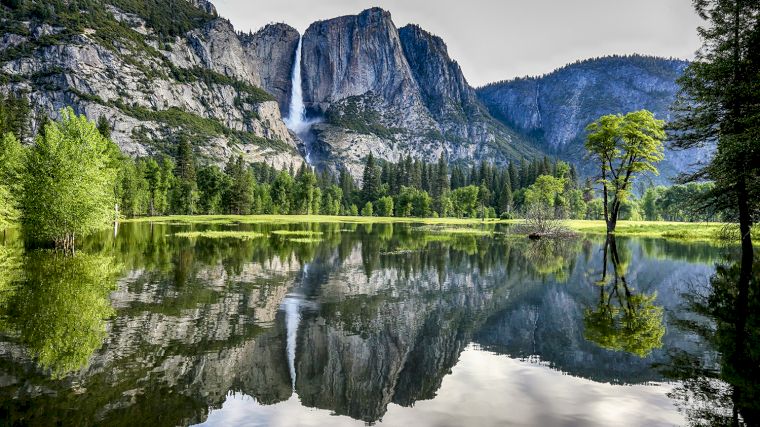
If traffic is light, you can drive from San Francisco to Big Oak Flat—the western entrance to the renowned Yosemite National Park, the very icon of America’s natural beauty. The park covers no less than 3,000 square kilometers and is famous for its steep granite cliffs, majestic waterfalls, giant sequoias, awe-inspiring cliffs, and abundant wildlife. And there’s something for everyone: whether you’re looking for adventure, want to retreat into the silence of nature, or want to tackle challenging hikes, you’ll find it all there.
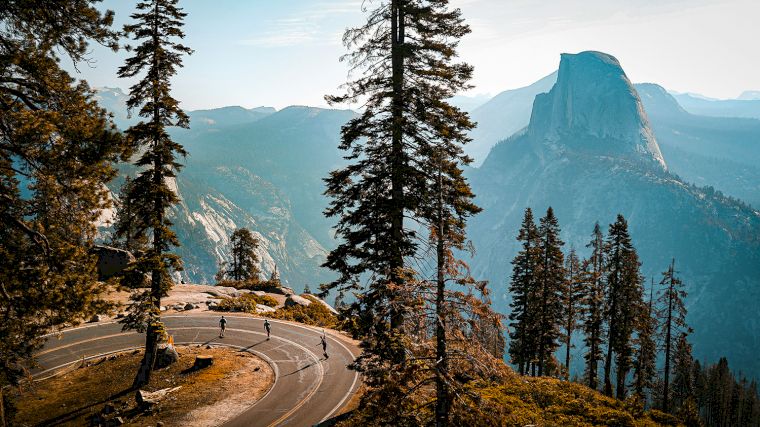
The best way to explore Yosemite (pronounced: JoSÈmitie) is by car. Unfortunately, the park gets very crowded during the summer months, which means that parking lots at the trailheads fill up quickly and traffic jams sometimes even occur. It’s best to drive to the various attractions in the park very early in the morning. This means you’ll need to stay overnight, but hotels and campgrounds also fill up quickly during the summer months. Therefore, if possible, avoid the peak season. May and June are the best months to see the waterfalls, and September offers cooler temperatures, ideal for hiking.
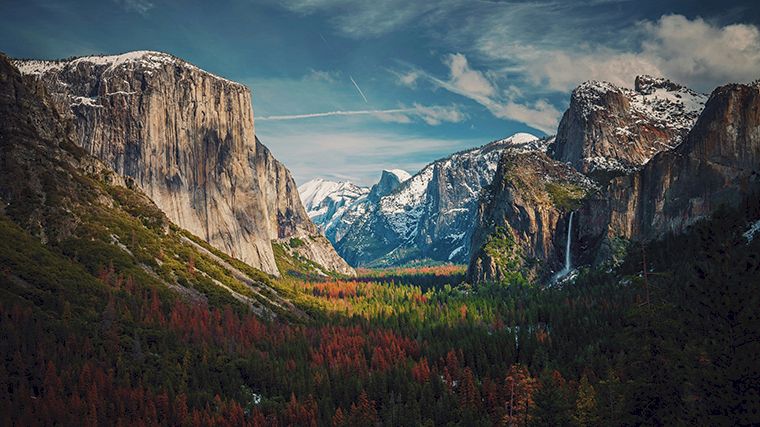
It would be going too far to list all the sights in Yosemite, because there is an incredible amount to see and do, but we’ll mention a few highlights. The Mist Trail to the top of Vernal Fall is highly recommended in the spring and early summer. In the fall and winter, the waterfall may have dried up. Other famous waterfalls include Ribbon Fall, which plunges nearly five hundred meters, and Yosemite Falls, where the water drops a staggering 740 meters—though in three separate sections. Tioga Road, which climbs to over three thousand meters, and Glacier Point Road, offering beautiful views of Half Dome, are both stunning. However, these roads are closed in winter. They generally reopen between late May and mid-June. One of the most challenging hikes in the park is to Half Dome, and you can only hike it if you’ve won a permit in the annual lottery. Don’t underestimate the size of the park. For example, it takes over an hour to drive from Yosemite Valley to Tuolumne Meadows in your rental car.
7. Mono Lake
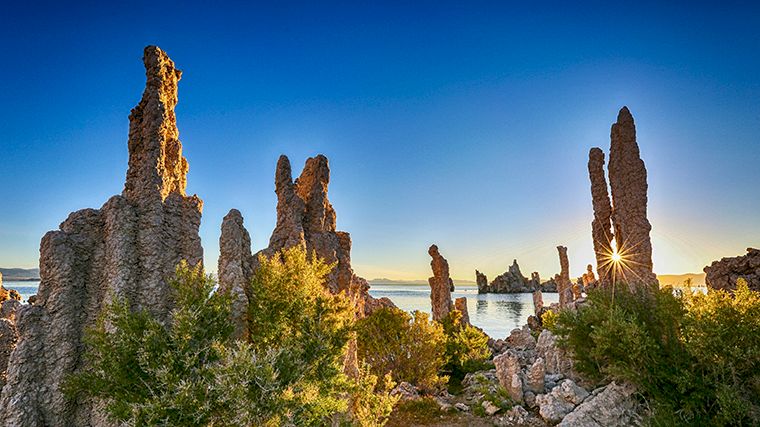
If you’re visiting Yosemite, it’s well worth the short drive to the remarkable Mono Lake. The water in this lake is very salty, and combined with the high-altitude desert climate, it provides a rare habitat. Due to the high salinity, no fish live in the lake, but brine shrimp do. It’s also an important resting place for many migratory birds. The lake is best known for the strange limestone formations, called tufas, on its southwestern shore. Kayak and canoe tours are organized from Navy Beach.
8. Road Trip from San Francisco to Crescent City
Fancy a fantastic road trip along the breathtaking west coast of Northern California? One that can rival the much better-known coastal drive to Big Sur? Then take a road trip from San Francisco to Crescent City on the border with the state of Oregon.
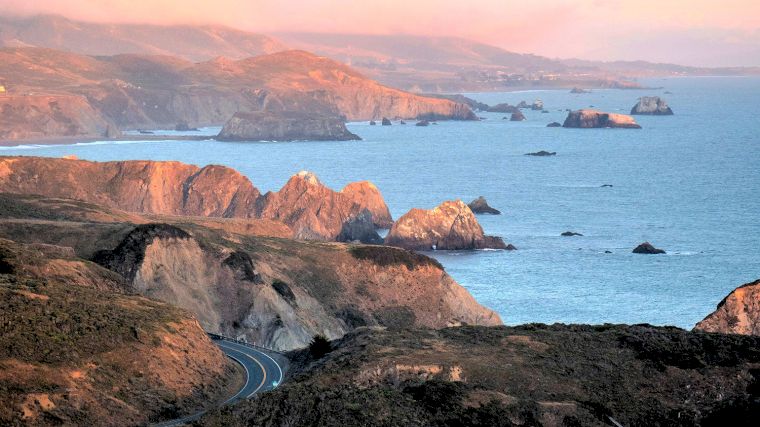
First, a little explanation: the coastal highway heading north is designated CA-1, just like the section that runs south. To distinguish it from the Pacific Coast Highway to Los Angeles, the northern section is called the Shoreline Highway. From the Golden Gate Bridge, the road is also designated US-101, but just past Sausalito, these roads split. Follow CA-1 as it curves toward the coast. (Psst: the perfect song to play in your rental car here: Sausolito Summernight.)
A little further on, turn off CA-1 and follow the signs to Muir Woods, a forest area with ancient giant sequoias, some of which are over a thousand years old. Unfortunately, it’s so crowded there that you can only visit the towering trees along Redwood Creek if you’ve made a reservation. There are quieter spots to see ancient sequoias later on this road trip. Still, you can enjoy them here as well by following the Panoramic Highway, which rejoins CA-1 at Stinson Beach.
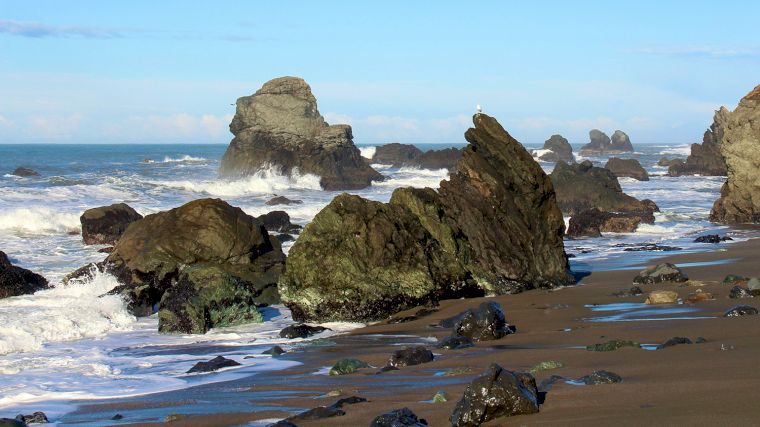
A little further on, you’ll see the turnoff for Point Reyes Seashore, but we’ve already described that separately above. The Shoreline Highway lives up to its name as you drive right along Tomales Bay. In addition to beautiful views of the water, you can enjoy fresh oysters, crab, or clams at one of the many specialty restaurants here. On a nice summer day, you can relax on the long sandy beach at Bodega Bay, but the town is best known for the rocky coastline at Bodega Head.
After crossing the Russian River, you’ll drive along a stunning road toward Fort Ross. In the early nineteenth century, this was the southernmost Russian colony in North America. In Fort Ross State Historic Park, the colony has been reconstructed with great attention to detail; only the Russian commander’s house is original.
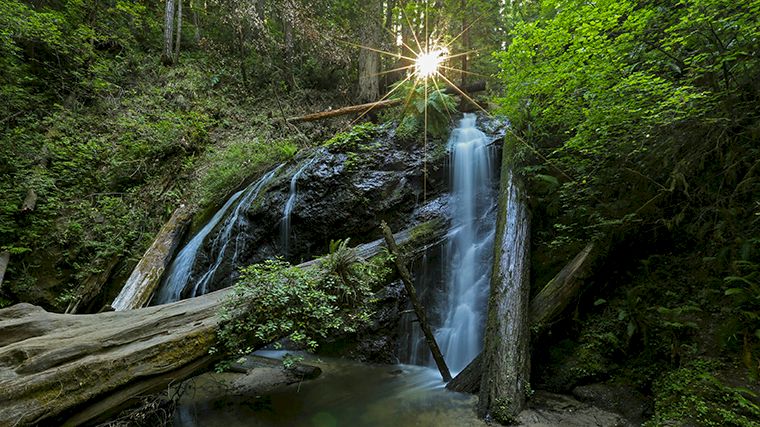
Stop just before Mendocino to take photos of the boulders at Bowling Ball Beach. In Mendocino itself, you’ll find charming wooden houses, and the Point Cabrillo Lighthouse to the north is also very photogenic. Here, the road crosses the Russian Gulch Bridge, and in the park of the same name, you can enjoy a pleasant walk and admire a small waterfall. If you arrive a little early, there’s a good chance you’ll be the only one walking along the trail leading to it.
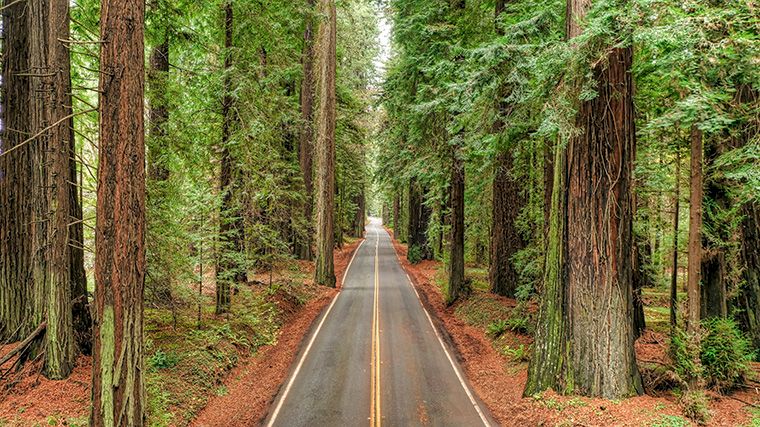
At Leggett, CA-1 and US-101 merge again. Further north, the Avenue of the Giants begins. This famous road is often called the most beautiful forest road in the world and is fifty kilometers long. On US-101, the exit is marked as the Humboldt Redwoods Visitor Center. Right at the start of the Avenue, you can drive or walk through a tree, but it’s actually more fun to just follow the road alongside the giant trees. You’ll pass through remote villages, picnic areas, and access points to the Eel River with idyllic spots for swimming, fishing, and paddling. There are also several spots where you can park your rental car to explore the magical redwood forest on foot.
From Eureka, US-101 runs right along the California coast again. The town center features beautiful Victorian homes, and concerts are often held along the waterfront in the summer. North of Eureka, you’ll also find plenty of beautiful roads. It’s no coincidence that the road running right along the coast is called Scenic Drive. To get there, take the exit for Westhaven Drive on the 101. At the bottom of that exit, turn left and follow a picturesque road to the stunning State Beach near the village of Trinidad.
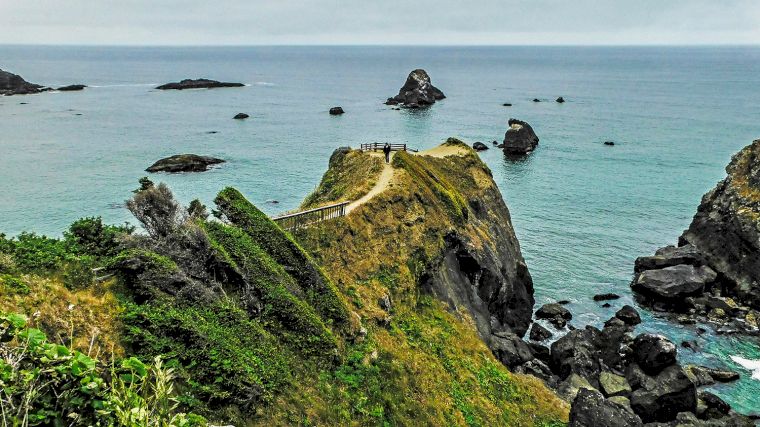
A few kilometers further along Highway 101, there’s another turnoff onto a beautiful road: the Newton B. Drury Scenic Parkway, which winds through Redwoods State Park. In that park, you can visit Fern Canyon, which you may recognize from the second *Jurassic Park* movie. The atmosphere here is magical, but you’ll need a permit to visit, which you can apply for online. Please note: this road is closed to motorized traffic on the first Saturday of every month from October through May.
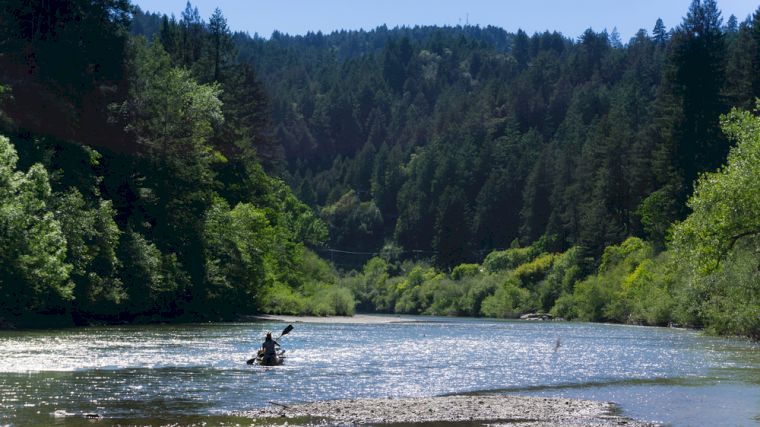
Just before Klamath, you can’t miss the entrance to Trees of Mystery. There, you’ll walk along skywalks past the tops of awe-inspiring trees, and there’s also a small cable car. Kids will love the oddly shaped sequoias, such as the Elephant Tree and the Upside Down Tree. East of Crescent City lies another stunning forest: Jedediah Smith Redwoods State Park. There, guided by a ranger, you can go kayaking on the fantastic Smith River.
One-Way Car Rental
This route is ideal for one-way car rentals. This allows you to pick up the rental car in one location and drop it off somewhere else. For example, you can leave the coast behind from Eureka and drive inland. The road to Redding on the Sacramento River is also stunningly beautiful. And if you want to turn this into a really long road trip? Then continue along the Oregon coast and return your rental car in Portland or even further north, in Seattle. Did you know that American car rental companies often charge little to no extra fees for this service? So go for it!

Where would you like to rent a car?
- 24000+ pick-up locations
- Free cancellation
- Independent comparator

Useful tips for a well-prepared trip
Which insurance should I choose, and what's the deal with the deposit? Read our articles with useful information and tips to ensure you choose the right rental car for you.


