- Popular countries
- Popular regions
- Popular cities
- Popular airports
- Car hire United Kingdom
- Car hire Italy
- Car hire Spain
- Car hire United States
- Car hire Portugal
- Car hire Greece
- Car hire France
- Car hire Poland
- Car hire Ireland
- Car hire Cyprus
- Car hire Netherlands
- Car hire South Africa
- Car hire Switzerland
- Car hire Croatia
- Car hire Canada
- Car hire Malta
- Car hire Germany
- Car hire Hungary
- Car hire Norway
- Car hire Australia
- Car hire England
- Car hire Sicily
- Car hire Scotland
- Car hire Florida
- Car hire Sardinia
- Car hire Malta
- Car hire California
- Car hire Crete
- Car hire Lanzarote
- Car hire Majorca
- Car hire Menorca
- Car hire Tenerife
- Car hire Rhodes
- Car hire Fuerteventura
- Car hire Corsica
- Car hire Kefalonia
- Car hire Madeira
- Car hire Corfu
- Car hire Ibiza
- Car hire Gran Canaria
- Car hire London
- Car hire Faro
- Car hire Malaga
- Car hire Milan
- Car hire Lisbon
- Car hire Rome
- Car hire Alicante
- Car hire Dublin
- Car hire Manchester
- Car hire Porto
- Car hire Amsterdam
- Car hire Larnaca
- Car hire Geneva
- Car hire Luqa
- Car hire Bergamo
- Car hire Athens
- Car hire Budapest
- Car hire Pisa
- Car hire Orlando
- Car hire Palermo
- Car hire London Heathrow Airport
- Car hire Faro Airport
- Car hire Lisbon Airport
- Car hire Malaga Airport
- Car hire London Gatwick Airport
- Car hire Alicante Airport
- Car hire Manchester Airport
- Car hire Dublin Airport
- Car hire Larnaca Airport
- Car hire Porto Airport
- Car hire Malta Airport
- Car hire Bergamo Airport
- Car hire Athens Airport
- Car hire Budapest Ferihegy Airport
- Car hire Rome Fiumicino Airport
- Car hire Geneva Airport (Switzerland)
- Car hire Amsterdam Schiphol Airport
- Car hire Milan Malpensa Airport
- Car hire Pisa Airport
- Car hire Orlando International Airport

Car Rental in Namibia: Tips for the Perfect Road Trip
From Etosha to Sossusvlei: How to Enjoy a Relaxing Road Trip Through Namibia
A road trip through Namibia is an unforgettable experience, and renting a car in Namibia is the best way to explore the country. With a rental car, you’ll drive past enormous sand dunes, wild African animals, indigenous tribes, bizarre mountain formations, impressive nature reserves, and many other incredible sights. A rental car in Namibia gives you maximum freedom during your road trip.
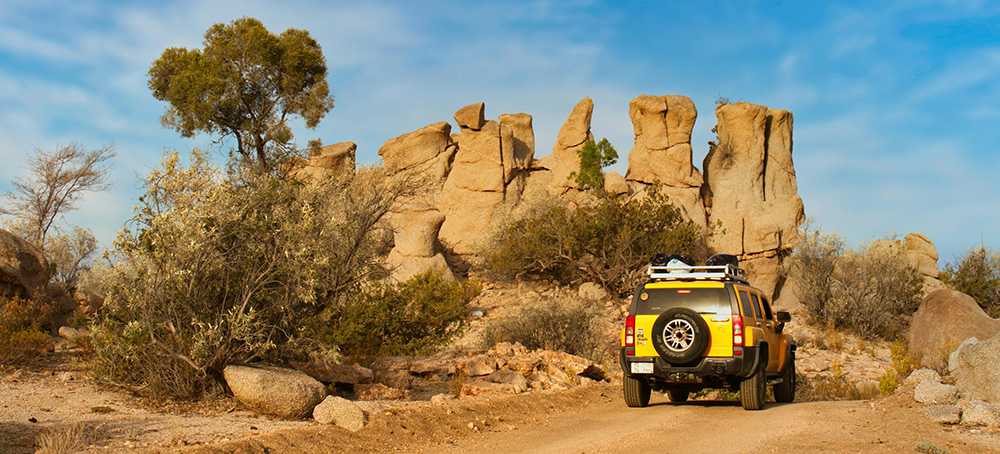
Many travelers spend only two weeks in this country. In that case, you’ll really have to choose between northern and southern Namibia, since the distances between the attractions are considerable. Below, we describe a one-month road trip by rental car, but it’s divided into a northern route and a southern route, so you can easily cover just one part of it.
Windhoek – starting point for your road trip through Namibia
Renting a car at Windhoek Airport is the most practical option, but you’ll likely be tired upon arrival after a long flight. You probably won’t feel like taking a long drive in your rental car right away. Even if you land late in the afternoon, you’ll have no choice but to spend a day in Windhoek. Find a good hotel where you can relax by the pool before starting your trip, because the capital itself has very little to offer.
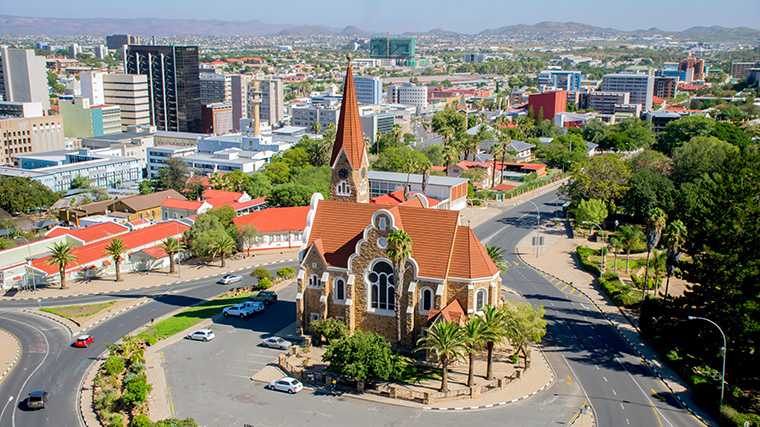
There are a few buildings from the German colonial era, of which the Christuskirche is the most striking. It’s especially beautiful at sunset, when the sun bathes the church in a red glow. Nearby is the German fort Alte Feste, which was beautifully restored in 2026. The influence of German culture is still clearly visible in many places. There are German restaurants, well-stocked supermarkets, and German bread, sausage, and beer.
If you’ve rented a car at Windhoek Airport, you can also choose to stay at one of the farm inns located between the airport and the capital.
Northern Route: Safari and Waterfalls
Okonjima Nature Reserve
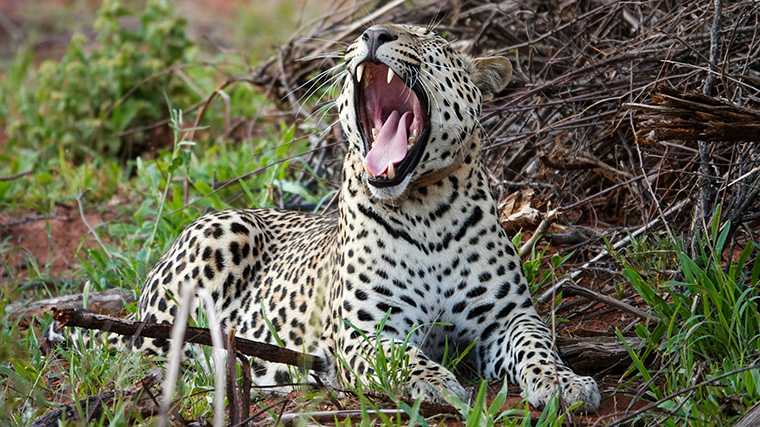
Leopards are incredibly fast land animals and one of the so-called Big Five, but they are often hard to spot. The Okonjima Nature Reserve, located more than two hundred kilometers north of Windhoek, used to be a cattle ranch. The owner regularly shot leopards because they were preying on his livestock. That is, until two of his children came up with the idea of transforming the vast ranch into a protected habitat for leopards and, in doing so, generating an income.
Leopards and cheetahs are taken in here when they’re injured and released back into the reserve after treatment. If you stay overnight, you can choose from various guided tours, but for day visitors, only one tour is available. The guide will tell you about the behavior of these wild cats and the measures farmers take to protect their livestock from predators. If you want a guaranteed chance to spot a leopard in Namibia, be sure to add Okonjima to your list of destinations.
Waterberg Plateau
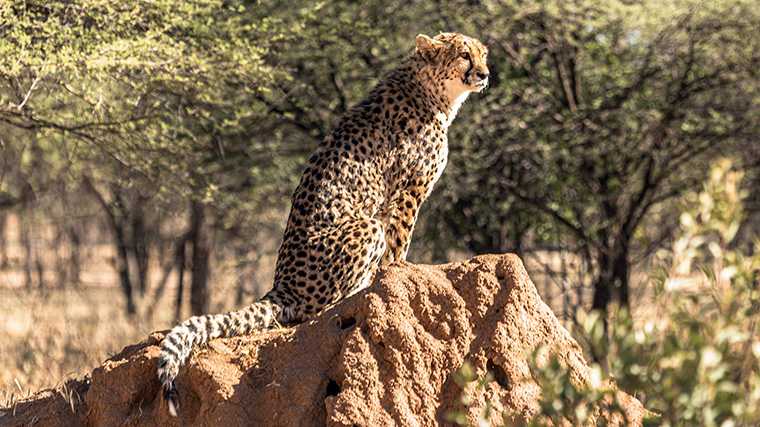
From Okonjima, you can drive a rental car further north through the breathtakingly beautiful landscape of the Waterberg Plateau. The Waterberg has a flat summit that towers high above the surrounding plains. The plateau overlooks several game farms with private lodges, all of which work together to protect the cheetah. The result? You can spot cheetahs from your own veranda or, if you’re lucky, even from your bed! A room with a view takes on a very special meaning here. In Otjiwarongo (which means “beautiful place” in the local language) is the visitor center, where you can learn all about the work of the Cheetah Conservation Fund. When you stay at one of the lodges, you’re supporting the fund’s excellent work.
Etosha National Park
A trip through Namibia isn’t complete without a visit to Etosha National Park, one of the country’s biggest tourist attractions. On the way there, you can stop briefly at Lake Otjikoto, one of only two natural lakes in Namibia. It’s located right off the B1 highway. The other natural lake— Guinas —is not far away, but is more difficult to reach. The two lakes are likely connected underground and linked to various waterholes in Etosha.
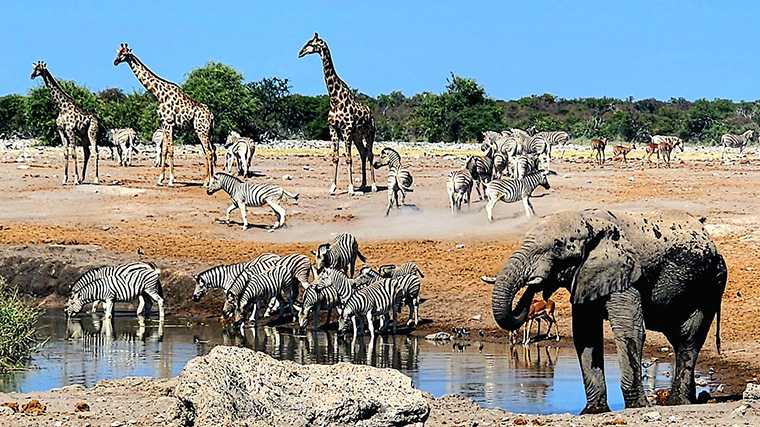
The national park is a fantastic place to observe wildlife; thousands of animals roam freely across an area of more than twenty thousand square kilometers. The diversity of mammals and birds in Etosha is impressive. Here you can see four of the famous Big Five: elephants, rhinos, lions, and leopards. Buffalo are not found here, but you can see them elsewhere in Namibia (see below: Caprivi Strip). You’ll also see plenty of other mammals: giraffes, wildebeests, zebras, various species of antelope, hyenas, cheetahs, warthogs, jackals, foxes, and much more.
The best time to see these mammals is during the dry season, between May and October, when they’re easy to spot at the waterholes. If you’re more interested in birds, the rainy season (November through April) is actually a better time to visit.
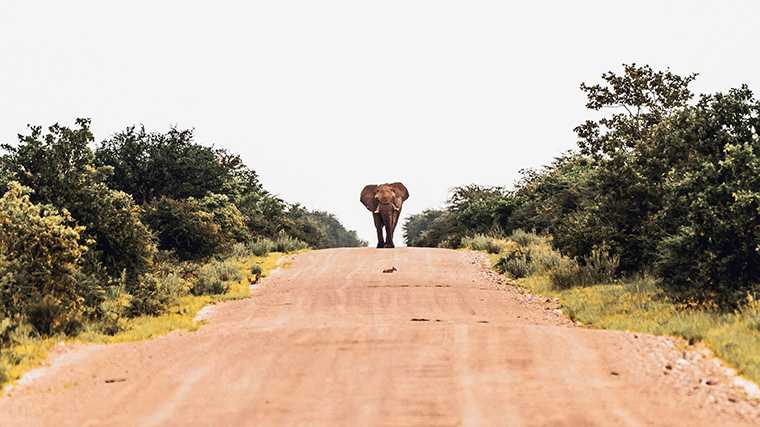
You’ll need at least two days to explore Etosha, but a longer stay is definitely recommended. You can easily explore Etosha Park on your own with a rental car, which makes the park ideal for a self-guided safari. Accommodations inside the park are pricey; the lodges just outside the park are much more affordable.
Epupa Falls
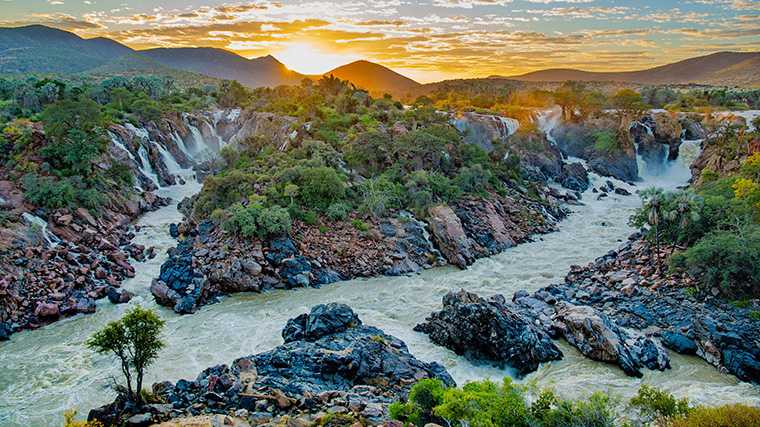
In the far northwest of Namibia, the Epupa Falls are rarely visited, even though they’re fairly easy to reach by rental car. The C43 regional road leads directly to Epupa. Drive slowly when approaching a settlement, as there’s a good chance that animals and children will be walking near the road. Epupa consists of several waterfalls stretching over one and a half kilometers along the border with Angola. The highest single drop is nearly forty meters. The area around the Cunena River is spectacular: large fig trees, tall palm trees, orange boulders, dramatic changes in elevation, and roaring waterfalls.
You can combine a visit to these waterfalls with a visit to a Himba village. The Himba became isolated during German colonization and have preserved many of their traditional customs.
Skeleton Coast
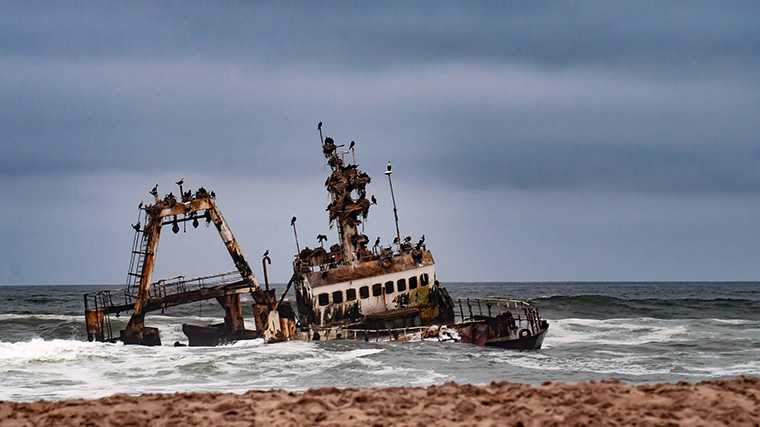
The Skeleton Coast has a fascinating history. The Portuguese first explored the area in the fifteenth century, and later this coast became notorious for its treacherous conditions. If a ship sank, it still meant a certain death sentence for the survivors. The crew died of hunger and thirst in the Namib Desert. In addition to the shipwrecks off the coast, many human bones were found in this area.
These are chilling stories, but we’re not really sure if they justify a visit to this coast. It’s mostly endless sand with the occasional shipwreck.
Damaraland / Twyfelfontein
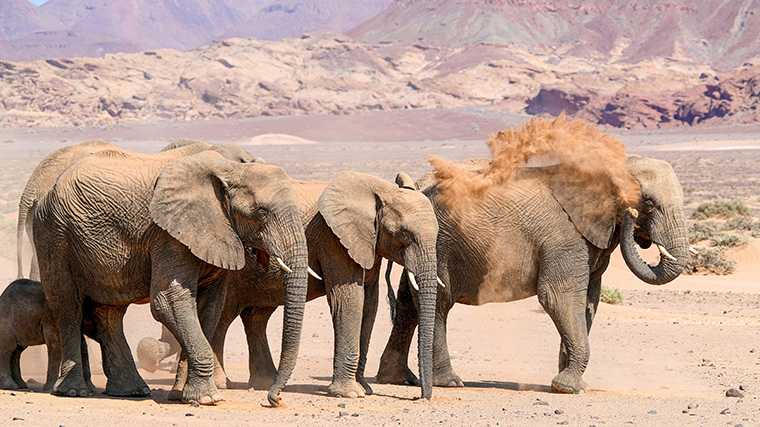
Just south of the Skeleton Coast, you’ll drive your rental car through the rugged landscape of Damaraland. There are some interesting geological formations to see, such as the Organ Pipes and Burnt Mountain, but the most remarkable sight here is the elephants. The desert elephants have fully adapted to the harsh conditions, and you’ll wonder how they manage to survive, since there seems to be virtually no food for them. Book a guided tour, and your guide will tell you all about them. In addition to elephants, you can spot black rhinos in this region.
On the edge of Damaraland lies Twyfelfontein, famous for the prehistoric rock engravings you can admire there.
Brandberg / Königstein
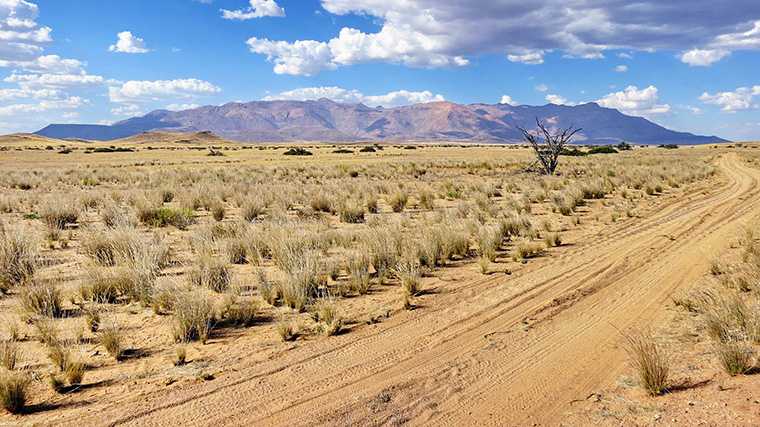
The Brandberg Massif is a circular granite formation covering an area of 650 square kilometers, and its highest peak, the Königstein, rises 2,573 meters above the surrounding landscape. It is an important habitat for high-altitude savanna species.
These peaks are no walk in the park, which is why a hike through this mountain range is only possible with a guide. The guide will tell you all about the rocks, plants, and animals. The trails can be difficult to navigate, and the terrain is rugged—your knees will take a beating from jumping over rocks and scrambling over boulders.
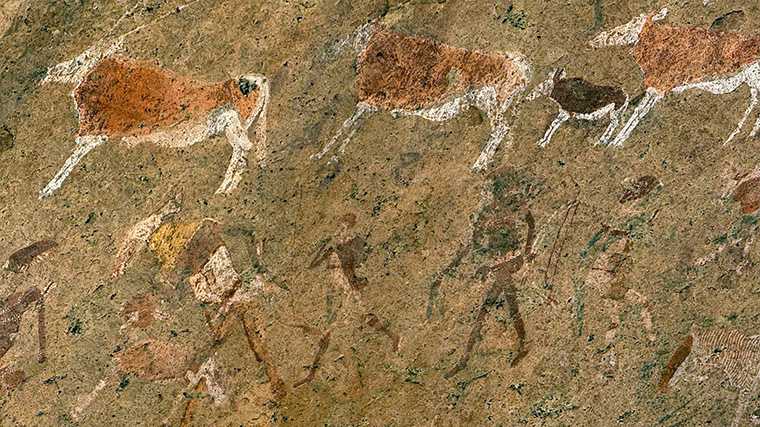
Thousands of rock engravings have been discovered in the Brandberg Massif, so you’ll definitely want to spend some time admiring these natural works of art. The most famous are the rock engravings of The White Lady. The trail leading to them is relatively easy, but the same rule applies here: you can’t go there without a guide.
Cape Cross
At the southern tip of the Skeleton Coast lies Cape Cross, home to tens of thousands of seals. It’s an impressive sight, but such a massive colony also gives off an impressive odor—or rather, a stench. Still, it’s an enchanting experience: the seals frolic in the water or lounge comfortably on the beach. You can walk fairly safely among the seals on the wooden boardwalk. Just be careful not to get too close to young seals, because the mother will defend her young tooth and nail.
Spitzkoppe
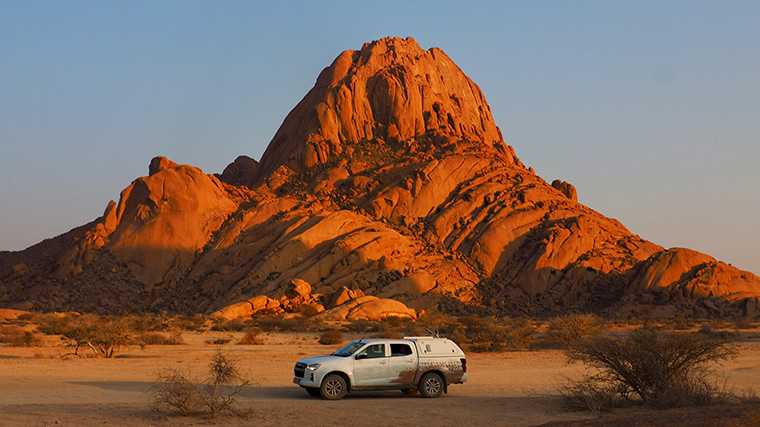
During your road trip through Namibia in a rental car, the Spitzkoppe is a must-see. This mountain is nowhere near as high as the Königstein, but it really captures the imagination because it rises so prominently above the surrounding desert. Because of its shape, the mountain is often called the Matterhorn of Namibia. The Spitzkoppe attracts climbers from all corners of the world. Conquering this mountain is by no means easy. However, the Rock Arch is easily accessible, and from this rock arch you have a beautiful view of the Spitzkoppe. For the indigenous San people, the mountain is a sacred site, and here, too, they have left behind a number of beautiful, well-preserved rock paintings on the cliffs.
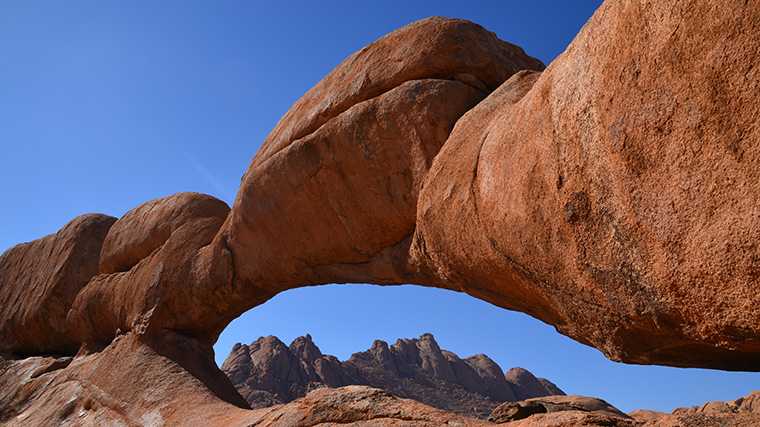
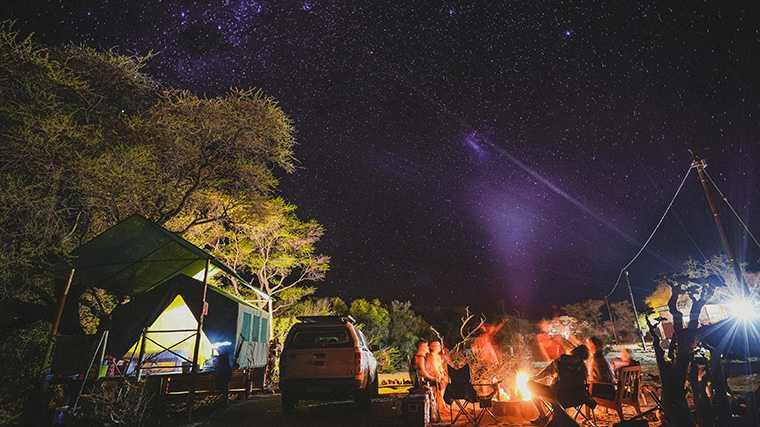
Birdwatchers will be on the lookout for the black eagle or the Lanner falcon, two birds of prey that call this area home. For an amazing experience, spend a night at one of the campsites around Spitzkoppe. The light on the mountain at sunset is already stunning, and as darkness falls, you’ll be amazed by the beautiful starry sky with the Milky Way clearly visible.
Swakopmund
One of the nicest places in Namibia is Swakopmund, a charming coastal town and a great starting point for desert excursions and other activities. The town has many restaurants, cafés, and bars where you can enjoy fresh fish and seafood, craft beer, and traditional German specialties. The beaches are close to downtown and are ideal for relaxing, jogging, walking, or even swimming, although the seawater is quite cold.
Swakopmund is known as Namibia’s premier activity hub. You’ll definitely never be bored in this town! Racing through the desert on a quad bike is very popular. Other desert activities in Swakopmund include sandboarding, riding dune buggies, or riding fat bikes through the sand. For a real adrenaline rush, go skydiving. Not so keen on breathing in sand? From Swakopmund, you can head out to sea on a guided boat tour or paddle out in a kayak on your own.
In the city itself, the Snake Park is home to all kinds of snakes, including the deadly black mamba, the impressive Cape cobra, and the highly venomous puff adder. The Swakopmund Museum is located right on the beach and covers a wide range of topics, including Namibia’s natural history, archaeology, colonial history, and the traditional lifestyles of indigenous groups such as the San, Herero, and Himba.
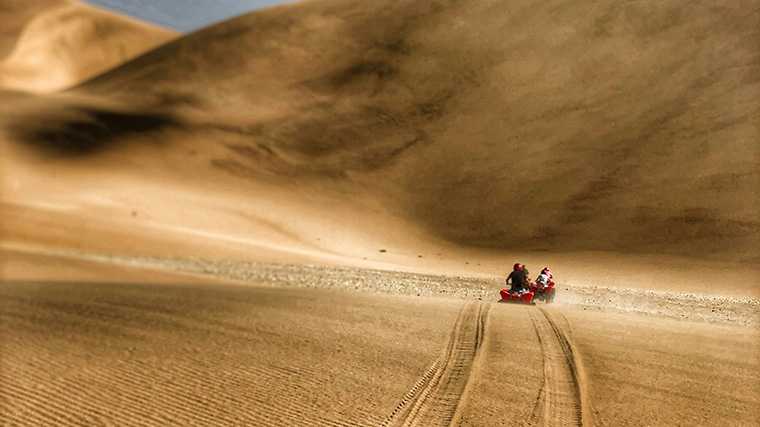
Although the desert seems lifeless, it’s teeming with all kinds of life. One of the best ways to discover this is by joining Tommy’s Living Desert Tour. The sand, both on the surface and beneath it, is teeming with all sorts of creatures: chameleons, snakes, scorpions, lizards, geckos, and other small animals.
The route we describe below, starting in Windhoek and traveling through southern Namibia, also ends in Swakopmund. So you can combine these two routes into one big road trip through the country. Keep in mind that you’ll need at least a month for a road trip like this through all of Namibia if you want to do justice to all the sights.
Southern Route: Deserts and Canyons
Kalahari
After perhaps spending a night in or around Windhoek, drive your rental car to the red dunes of the Kalahari, about a two-hour drive from the capital. The Kalahari is a semi-desert, where, after good rainfall, large areas transform into excellent grazing lands. As a result, it is home to many more animals than a true desert. There are several lodges around Mariental, all of which offer safaris through the Kalahari, which is especially beautiful at sunset when the sun beautifully illuminates the golden-yellow grasses.
Quiver Tree Forest
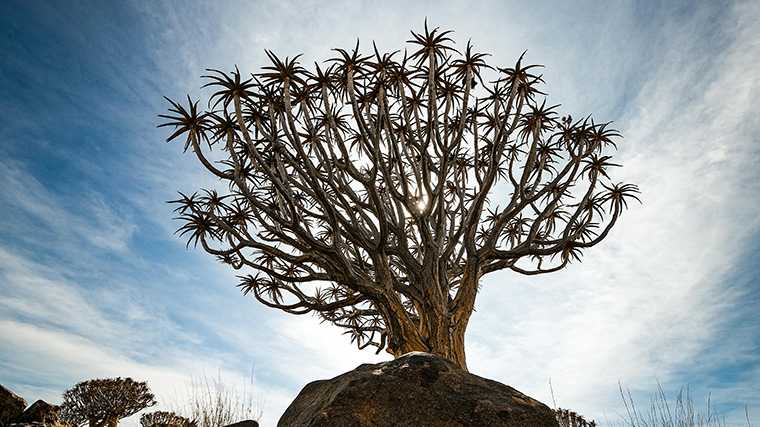
In your rental car, you can drive from Mariental to Keetmanshoop in about two and a half hours along the well-maintained paved B1 road. Just before you arrive in that town, there’s a turnoff to Quiver Tree Forest, which is home to unique quiver trees. Don’t imagine a traditional forest—the trees are quite far apart. They look strange, with root-like branches. These branches are hollow, and indigenous tribes used them to make arrow quivers, hence the name. The tallest trees in the forest, about two and a half meters, are a few hundred years old.
Close to the Quiver Tree Forest is an area with enormous boulders lying haphazardly on top of or next to one another: The Giant’s Playground.
Fish River Canyon
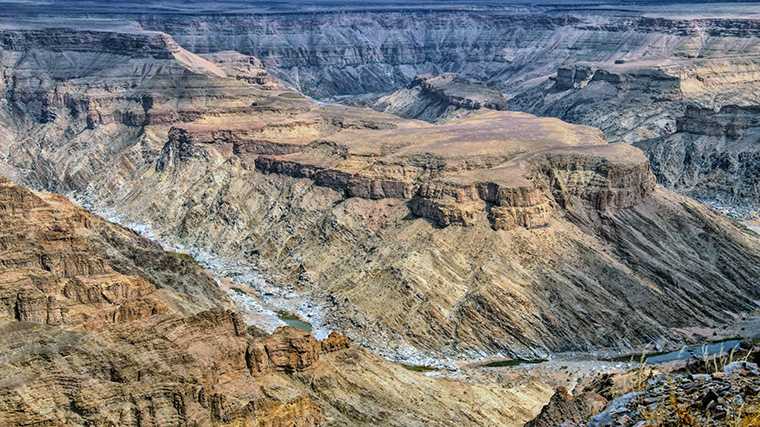
The Fish River Canyon is the largest canyon in Africa and the second-largest in the world, after the Grand Canyon in the United States. It’s a must-see attraction, yet the canyon receives very few visitors. That’s because the Fish River Canyon is a bit off the beaten path, in the far south of Namibia.
The canyon is 160 kilometers long and up to 550 meters deep. The entrance is at Hobas, south of Keetmanshoop, and you can drive your rental car to the most famous viewpoint, located about ten kilometers from the entrance. There are tables and benches here, so you can enjoy a picnic with breathtaking views! From that point, you can reach other viewpoints on foot or drive your rental car down a dead-end road that ends at Sunset Viewpoint.
Tours through the gorge itself are only possible with a guide and exclusively during the winter. This is because it gets unbearably hot at the bottom of the gorge during the summer months.
Orange River
The Fish River flows into the picturesque Orange River, the border river between Namibia and South Africa, where you can wash the sand off your feet. Various canoe trips are organized on this picturesque river, ranging from a half-day self-guided tour to intensive multi-day canoe trips where you camp along the banks. During a river safari, you’ll see countless waterbirds and birds of prey, klipspringers, otters, and blue monkeys.
Kolmanskop Ghost Town
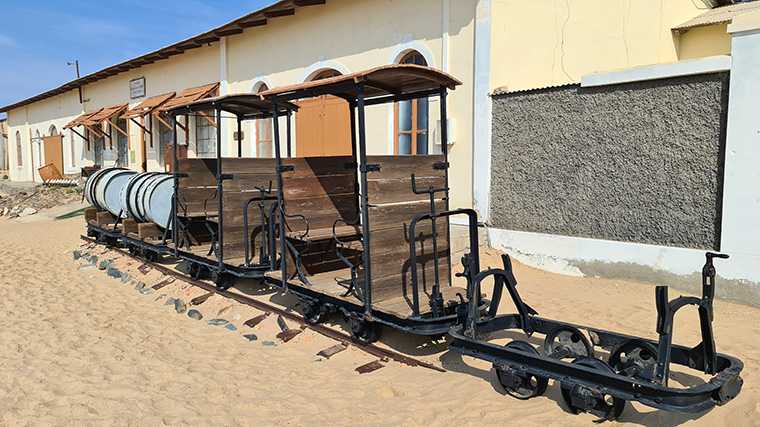
In the early twentieth century, diamond deposits were discovered just outside Lüderitz. The diamond miners became fabulously wealthy and built a German-style village with extensive amenities, including a hospital, ballroom, power plant, school, bowling alley, theater, sports hall, casino, and the first tram line in Africa. The village even had the first X-ray machine in the Southern Hemisphere. Kolmanskop was very prosperous until World War II, but after that, things went rapidly downhill. The last family left in 1956, and Kolmanskop has been abandoned ever since. It is now an open-air museum.
On your way to Kolmanskop in your rental car, you’ll see wild horses roaming freely in the desert near Aus. These are descendants of horses left behind by the German cavalry.
Tiras Mountains
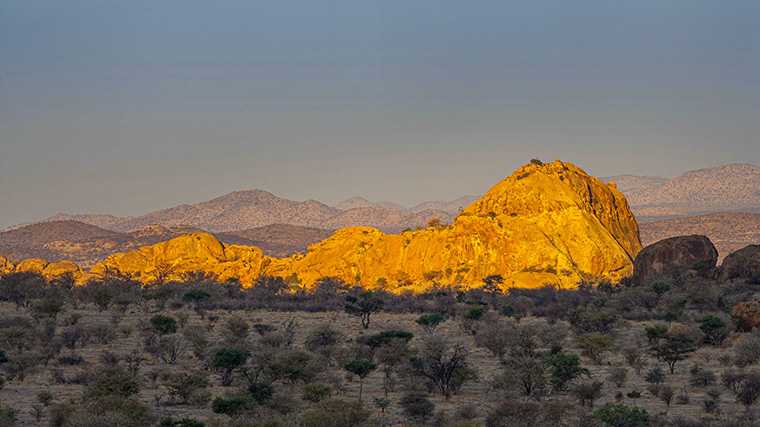
The Tiras Mountains lie on the edge of the Namib Desert and are characterized by a striking contrast between crimson desert sand and granite rock formations. This picturesque region is home to a variety of animals adapted to the desert, including Hartmann’s mountain zebra, the oryx, and the leopard. Most tourists drive right through it on their way to Sesriem. If you’re looking for peace and quiet, a lodge in this area is an ideal place to stay. At night, you can enjoy an incredible starry sky in absolute silence.
Sossusvlei / Deadvlei
The Namib-Naukluft National Park is enormous: nearly fifty thousand square kilometers. It encompasses part of the Namib Desert (the world’s oldest desert), the Naukluft Mountains, and the lagoon at Sandwich Harbor. A large part of this nature reserve is inaccessible to humans.
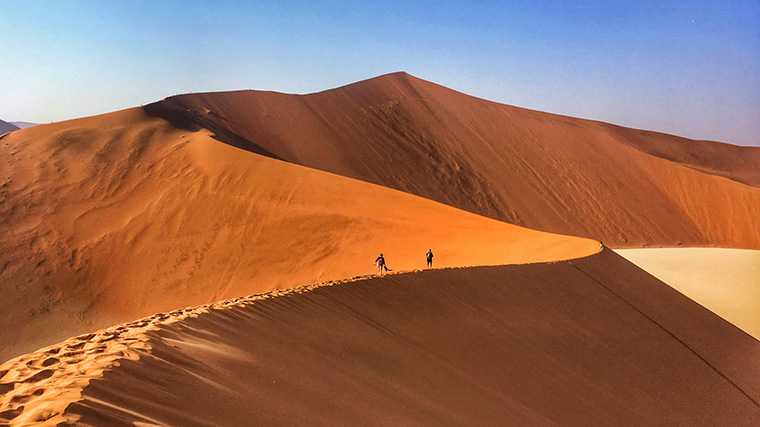
You’ve probably seen photos of the bare, leafless trees that stand out against the bright orange sand dunes of the Namib Desert. In the heart of this desert, you’ll find several dried-up salt and clay flats (vleis), each with its own charm. One iconic spot is Deadvlei, where the white clay soil and scorched trees contrast beautifully with the surrounding sand dunes. It’s as if you’re looking at a surrealist painting. Climb to the top of one of the dunes for a fantastic view of the plain.
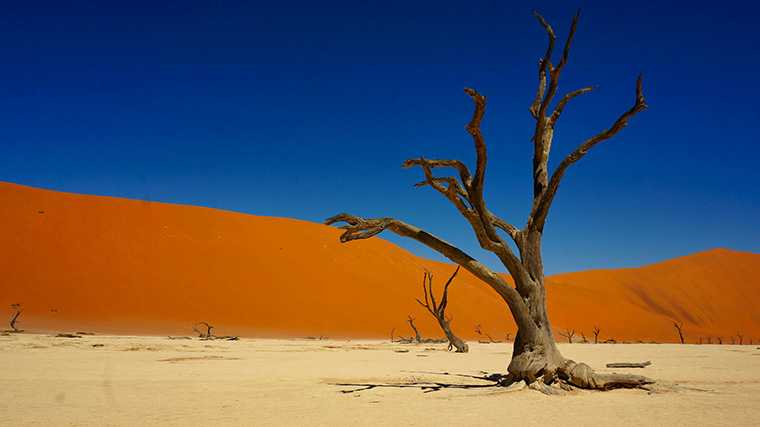
Sesriem is the gateway to the most famous and popular plains in this park. It is not a town or village, but consists of a number of lodges and countless campgrounds. From Sesriem, it’s about an hour’s drive to the Sossusvlei and Deadvlei area. Don’t forget to head back in plenty of time, as wild animals like to linger along and on the roads, especially as the sun sets. Therefore, never drive in the dark in Namibia—for the sake of the animals and your rental car!
Sesriem Canyon
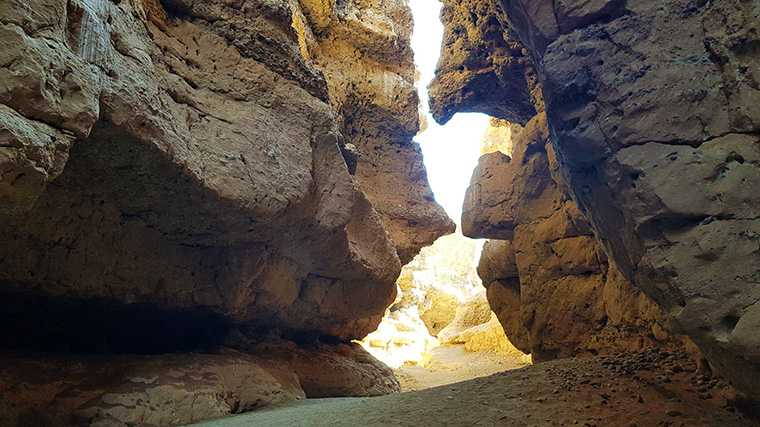
The name Sesriem is derived from the water that early African explorers drew from the gorge just south of the present-day town. They had to tie six (“ses”) ropes (“riem”) together to lower buckets into the gorge and fetch water. The Tsauchab River has carved a ravine into the rocks. In some places, it is thirty meters deep and only two meters wide. It’s a great place to hike and photograph the beautiful rock formations.
Sandwich Harbour
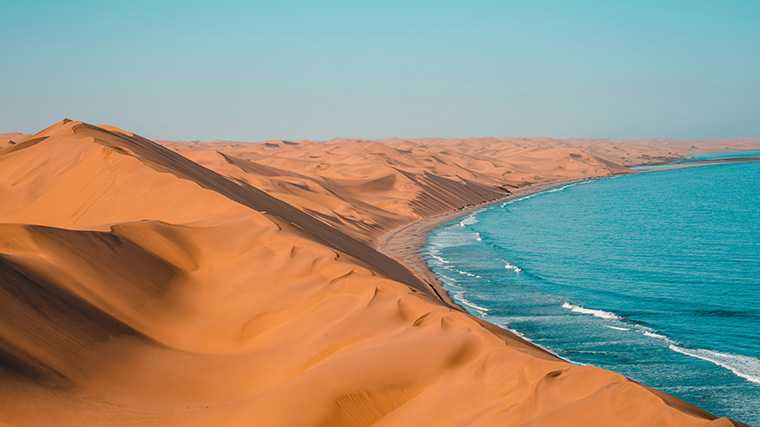
The dunes in Namibia are impressive everywhere, but the contrast between the sand and the sea is particularly fascinating along the coast. At Sandwich Harbor, towering dunes meet the Atlantic Ocean. You can’t drive there yourself in your rental car, though. Due to the challenging terrain, the viewpoints are only accessible via guided tours. There are several tour operators in Walvis Bay that offer these tours.
Walvis Bay / Dune 7
Walvis Bay is one of the few places in this part of Africa where you can see thousands of flamingos up close. A major advantage of the flamingo colony in Walvis Bay is that it’s very easy to reach: you can view the birds right from the boardwalk. The best time to spot flamingos is between December and March. During another season, between July and September, you have a good chance of seeing whales on a catamaran tour.
Haven’t had your fill of Namibia’s dunes yet? Walvis Bay is home to the country’s tallest dune, standing at a whopping 383 meters. There’s a parking lot at the base of this so-called Dune 7, but climbing it is no easy feat. The best time for the climb is early in the morning, when the sand is still cool and relatively firm.
From Walvis Bay, drive your rental car to Swakopmund (see the last stop on the northern route).
Off the Beaten Path: Caprivi
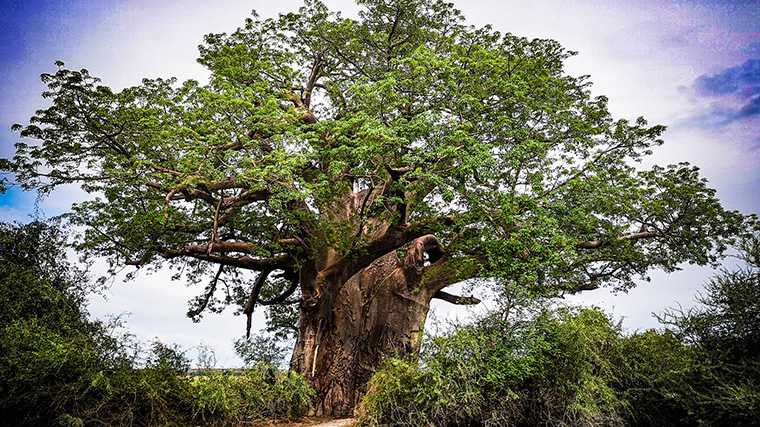
If you look at a map of Namibia, you’ll see a narrow strip of land in the far northwest, wedged between Angola, Botswana, and Zambia. That’s the Caprivi Strip, and few travelers visit it because it’s quite a drive. But it’s definitely worth it! It’s a marshland region with a landscape and climate that differ greatly from the rest of the country.
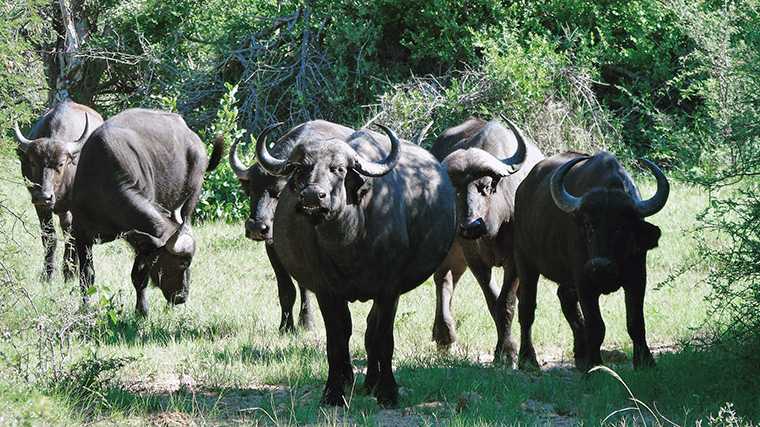
Five major rivers flow through Caprivi, creating a unique environment for birdwatching and safaris. There are several national parks there, which are much less visited than the popular Etosha. Caprivi is also the only place in Namibia where you can encounter African buffalo. In addition, you’ll see elephants, hippos, crocodiles, antelopes, lions, and the endangered African wild dog. During the rainy season, between December and April, you’ll see many freshwater birds there.
Practical Tips for Renting a Car in Namibia
Driving a Rental Car in Namibia: Roads & Safety
The main roads in Namibia, both paved and unpaved, are generally in good condition. Some sections of unpaved roads can be bumpy, but they are wide and there is little traffic. However, you do run a high risk of getting a flat tire on those roads. Most car rental companies therefore provide you with two spare tires. Be sure to check this when picking up your rental car, and also verify that the repair kit is complete. Make sure you know how to change a tire, as there isn’t always a repair shop nearby in the remote countryside.
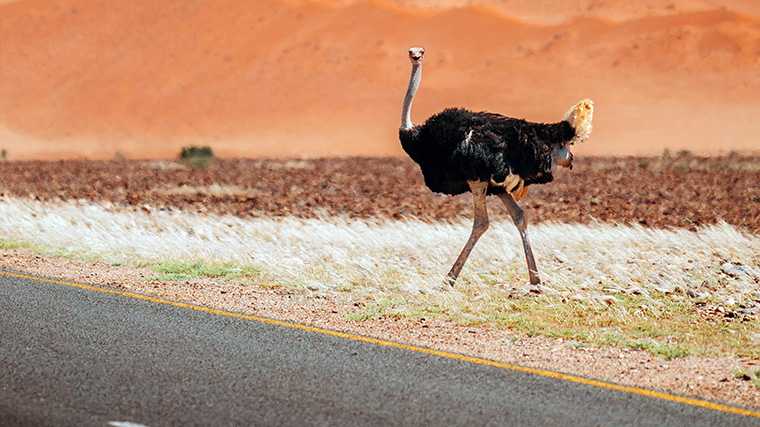
In Namibia, they drive on the left. The distances in the country are enormous, and that can be quite tiring for a single driver. It’s better to rent a car with a second driver. Make sure your gas tank is full at the start of your day and check how far you are from the next gas station. You don’t want to run out of gas in the middle of the desert.
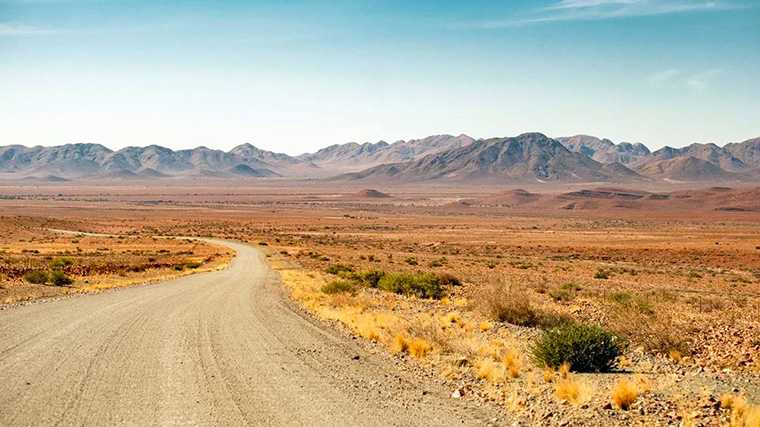
The biggest danger is driving too fast on unpaved roads. It’s tempting to speed toward your next destination when there isn’t much to see along the way, but resist that urge. It’s best to take it easy. Don’t drive faster than 60 to 80 kilometers per hour, and even slower on rough sections.
Renting a 4×4 in Namibia: When Is It Necessary?
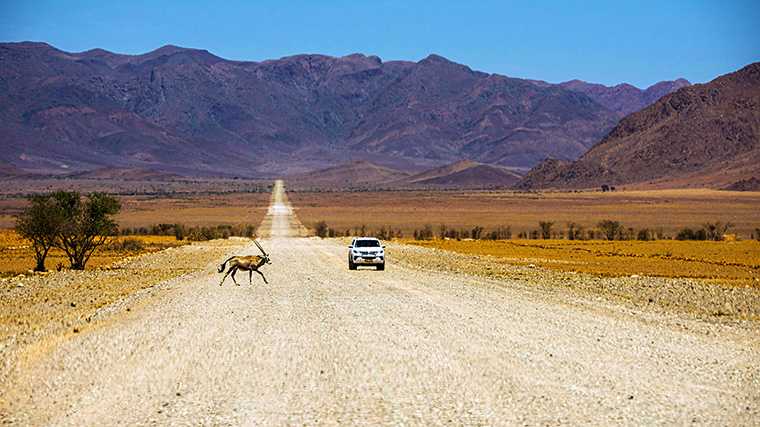
If you’re only driving on main roads—whether paved or unpaved—you don’t need a 4×4. For unpaved roads, a rental car with extra ground clearance—in other words, an SUV—is sufficient. In Sossusvlei and Deadvlei, you’ll drive to the parking lot and then take a shuttle to the dunes. If you want to drive there yourself in a 4×4, you’ll need to be quite skilled at adjusting tire pressure for driving on sand. Almost all parts of Etosha National Park are easily accessible with a standard rental car. Check the maps on the park’s website to get an idea of the road network and where you can drive.
Best Time to Visit Namibia
The best time to visit Namibia is during the dry season, between May and October. This is winter, when rivers and water sources are dry, causing animals to gather around the remaining watering holes. This is an excellent time for wildlife viewing. January and February are the height of summer. In most of Namibia, temperatures are high during this time, and in some regions, afternoon rain is common. While Etosha National Park is beautifully green during this time, the dense vegetation makes it harder to spot wildlife.
Why Renting a Car in Namibia Is the Best Choice
Namibia is the perfect destination for a road trip in a rental car. It gives you maximum freedom to explore remote nature reserves, national parks, and unique attractions that are inaccessible by public transportation. Whether you choose a comfortable SUV or a rugged 4×4, a rental car makes your road trip through Namibia flexible, safe, and relaxing.
Want to drive worry-free on both paved and unpaved roads? Then choose a rental car in Namibia with our Worry-Free label and comprehensive insurance, so that damage to the glass, tires, roof, and undercarriage is fully covered. By renting your car at Windhoek Airport, you can start your road trip immediately upon arrival, without wasting any time. Reserve your rental car in advance and hit the road well-prepared for an unforgettable road trip through Namibia.

Where would you like to rent a car?
- 24000+ pick-up locations
- Free cancellation
- Independent comparator

Useful tips for a well-prepared trip
Which insurance should I choose, and what's the deal with the deposit? Read our articles with useful information and tips to ensure you choose the right rental car for you.