- Popular countries
- Popular regions
- Popular cities
- Popular airports
- Car hire United Kingdom
- Car hire Italy
- Car hire Spain
- Car hire United States
- Car hire Portugal
- Car hire Greece
- Car hire France
- Car hire Poland
- Car hire Ireland
- Car hire Cyprus
- Car hire Netherlands
- Car hire South Africa
- Car hire Switzerland
- Car hire Croatia
- Car hire Canada
- Car hire Malta
- Car hire Germany
- Car hire Hungary
- Car hire Norway
- Car hire Australia
- Car hire England
- Car hire Sicily
- Car hire Scotland
- Car hire Florida
- Car hire Sardinia
- Car hire Malta
- Car hire California
- Car hire Crete
- Car hire Lanzarote
- Car hire Majorca
- Car hire Menorca
- Car hire Tenerife
- Car hire Rhodes
- Car hire Fuerteventura
- Car hire Corsica
- Car hire Kefalonia
- Car hire Madeira
- Car hire Corfu
- Car hire Ibiza
- Car hire Gran Canaria
- Car hire London
- Car hire Faro
- Car hire Malaga
- Car hire Milan
- Car hire Lisbon
- Car hire Rome
- Car hire Alicante
- Car hire Dublin
- Car hire Manchester
- Car hire Porto
- Car hire Amsterdam
- Car hire Larnaca
- Car hire Geneva
- Car hire Luqa
- Car hire Bergamo
- Car hire Athens
- Car hire Budapest
- Car hire Pisa
- Car hire Orlando
- Car hire Palermo
- Car hire London Heathrow Airport
- Car hire Faro Airport
- Car hire Lisbon Airport
- Car hire Malaga Airport
- Car hire London Gatwick Airport
- Car hire Alicante Airport
- Car hire Manchester Airport
- Car hire Dublin Airport
- Car hire Larnaca Airport
- Car hire Porto Airport
- Car hire Malta Airport
- Car hire Bergamo Airport
- Car hire Athens Airport
- Car hire Budapest Ferihegy Airport
- Car hire Rome Fiumicino Airport
- Car hire Geneva Airport (Switzerland)
- Car hire Amsterdam Schiphol Airport
- Car hire Milan Malpensa Airport
- Car hire Pisa Airport
- Car hire Orlando International Airport

Car Rental in Suriname: Routes, Nature Parks, and Practical Tips
Traveling through Suriname in a rental car is easier than you think
Colorful Suriname is a fantastic travel destination for a vacation filled with culture, adventure, and breathtaking nature. The laid-back capital, Paramaribo, boasts a rich cultural heritage where the influences of various ethnic groups converge: indigenous peoples, the descendants of African slaves, Dutch colonists, Hindustani, and Javanese. This cultural diversity is evident throughout the country. Suriname is, par excellence, a melting pot of cultures living peacefully side by side.
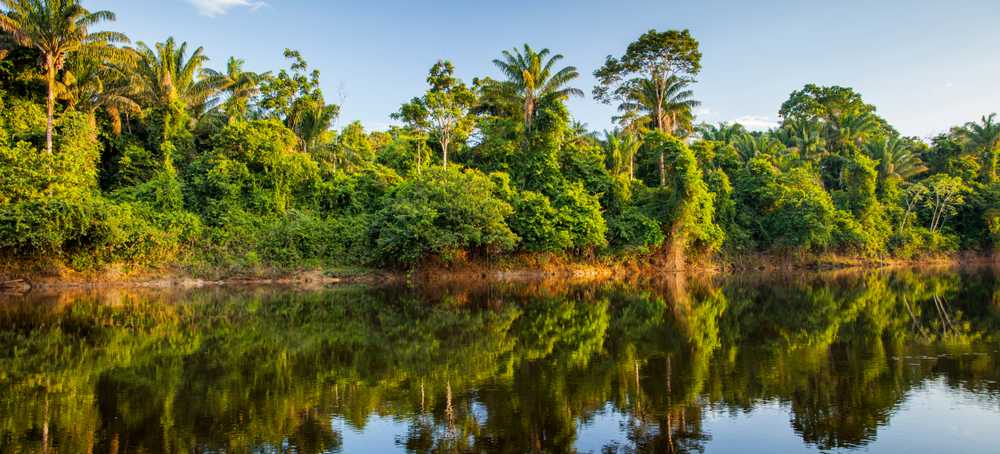
Suriname’s natural landscape is vast and surprisingly accessible when you rent a car. By renting a car in Suriname, you can explore not only Paramaribo but also national parks, plantations, and remote nature reserves. There are so many beautiful places to see, and the best part is: the country hasn’t (yet) been discovered by hordes of tourists. Get inspired by our tips for a road trip through Suriname!
1. Paramaribo
For most international travelers, Suriname’s capital is the starting point of their trip, as they arrive at Zanderij National Airport. It’s a city you shouldn’t miss during your vacation in Suriname. If you’ve rented a car at the airport, it’s just an hour’s drive to Paramaribo.
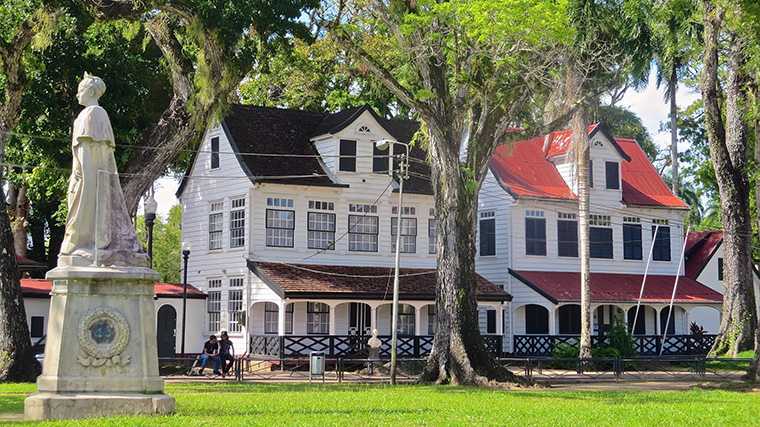
The historic center is brimming with colonial architecture. The old town is listed as a UNESCO World Heritage Site. Thanks to this recognition, funds were made available for the restoration of the beautiful wooden houses and other buildings. As symbols of different cultures, the mosque and the synagogue stand side by side on Keizerstraat. Another notable landmark is the monumental St. Peter and Paul Cathedral, which is built entirely of wood. In another part of the city, you’ll find a Hindu temple that is no less impressive.
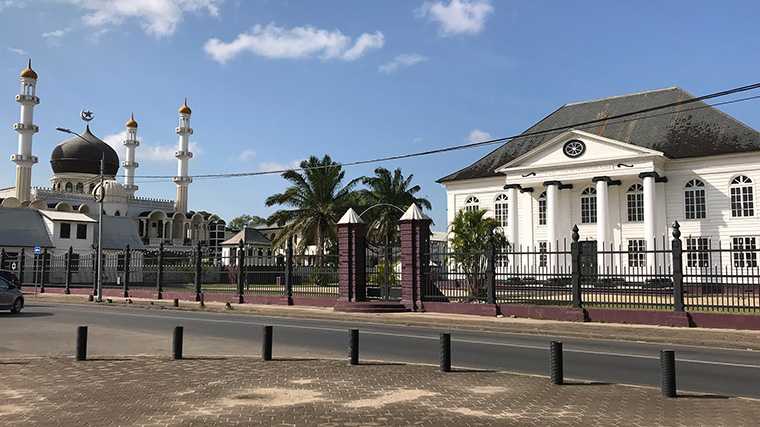
Stunning mansions belonging to merchants and military officers line the Waterkant, Paramaribo’s oldest and most beautiful street, which runs along the Suriname River. Markets are held here daily, including the Craft Market, but to be honest, it’s quite touristy. For beautiful, high-quality souvenirs, you’re better off waiting until you head into the countryside in your rental car. The Djoeka Wojo (Witches’ Market) is a fun place to visit, where you can buy herbal medicines and ritual objects to ward off evil spirits. The banks of the Suriname River are a popular spot to enjoy a bite to eat and a drink at sunset.
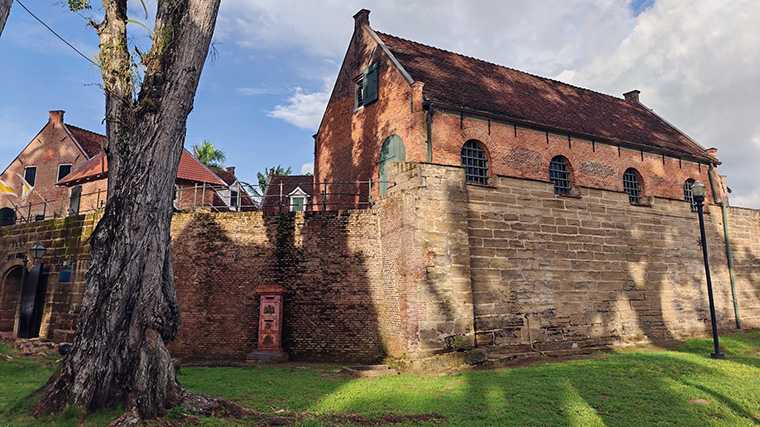
In the early seventeenth century, the Dutch built Fort Zeelandia to defend the settlement. This was not always successful, as the English managed to capture the fort twice. In Suriname, it is best known for the December Murders, during which fifteen opponents of Desi Bouterse were executed in the fort in 1982. Part of the beautifully restored fort has been converted into a museum. You’ll also find an old-fashioned pharmacy there with antique ceramic medicine jars.
One of the most colorful days in all of Suriname is Keti Koti, the celebration of the abolition of slavery in 1863. In Paramaribo in particular, the occasion is marked by lively parades in which people dress up exuberantly in traditional costumes. Of course, dance and music are a given. The center of the festivities in the capital is the Palmentuin, normally an oasis of tranquility—but not on July 1. Incidentally, there are parades organized by various ethnic groups throughout the year.
2. Peperpot Nature Park
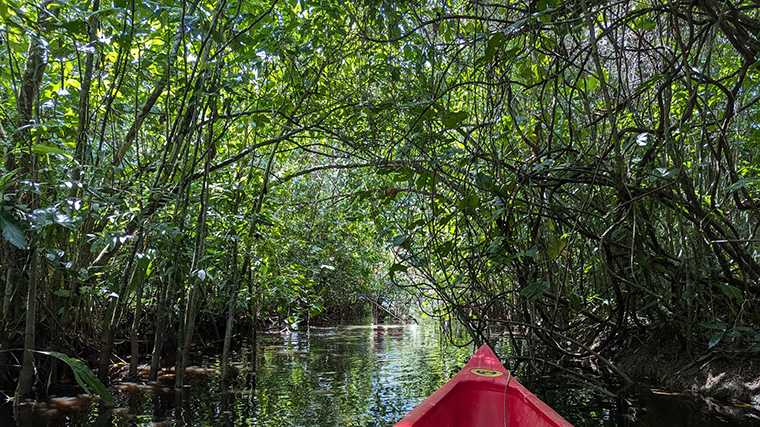
A major advantage of driving in Suriname is that nature is never far away. Just a half-hour drive away in your rental car lies Peperpot Nature Park, right along the east-west highway. It was established in the 18th century as a coffee and cocoa plantation. In the 1980s, the plantation was abandoned and the area fell into disrepair. Fortunately, people recognized its potential, and it was transformed into a 700-hectare park with easy hiking, biking, and canoeing trails through lush nature and wetlands. If birdwatching is your thing, be sure to bring binoculars to get a good look at toucans, woodpeckers, and more than 250 other bird species. You’ll also spot sloths, caimans, giant anteaters, agoutis, and various primates, including squirrel monkeys, howler monkeys, and capuchin monkeys. The animals are most active early in the morning, but evening and night hikes are also organized in this nature park.
3. Fort Nieuw-Amsterdam
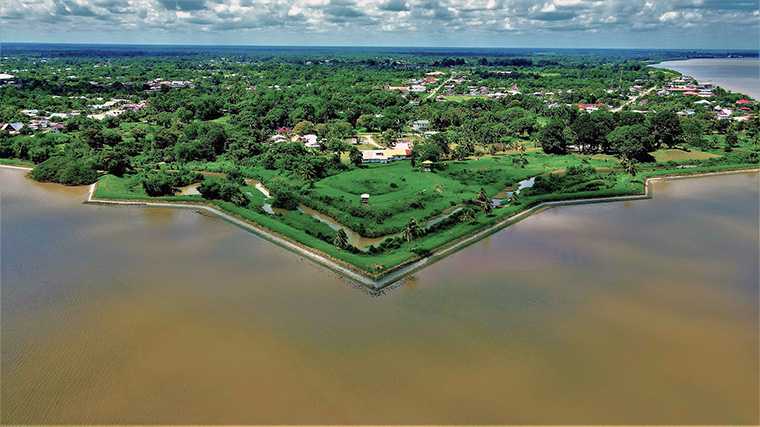
From Peperpot, it takes less than twenty minutes by rental car to reach the 18th-century Fort Nieuw-Amsterdam. The Dutch built it here, at the confluence of the Suriname and Commewijne Rivers, to protect the colony from attacks from the sea. Later, it was used as a prison. Today, the grounds within the star-shaped ramparts serve as an open-air museum dedicated to the history of Suriname, with a particular focus on the brutal system of slave oppression. Enslaved Africans who resisted or attempted to escape were held here before being subjected to brutal punishments or executed—often as a warning to others.
4. Dolphin (and bird) watching
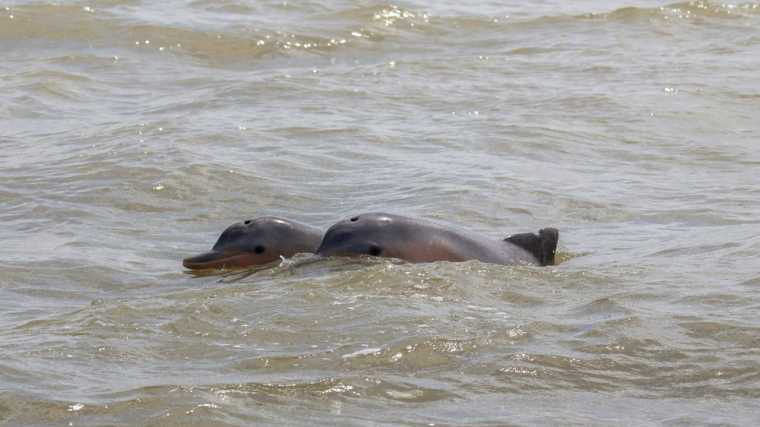
You can join a dolphin-watching tour from Paramaribo, but if you’re in Nieuw-Amsterdam, you can easily arrange it yourself. Ask around at the pier near the Het Bastion terrace, and you’ll soon find someone who can arrange a boat for you. At the confluence of the two rivers, there are many Guiana dolphins, known locally as “profosu.” They’re smaller than ocean dolphins and have a blue-gray color with a light pink underside. They’re a joy to watch, as they’re fast, active, and acrobatic swimmers. Just a few meters from the boat, they love to show off their skills and leap high into the air. In addition to dolphins, you’ll see many birds during a boat trip: red ibises, kingfishers, herons, woodpeckers, flycatchers, and other species.
5. Former Plantations
During the colonial era, sugar, coffee, cocoa, and cotton were produced on a large scale in Suriname. These plantations played a major role in the country’s history, and visiting one or more of them is a must when traveling through Suriname.
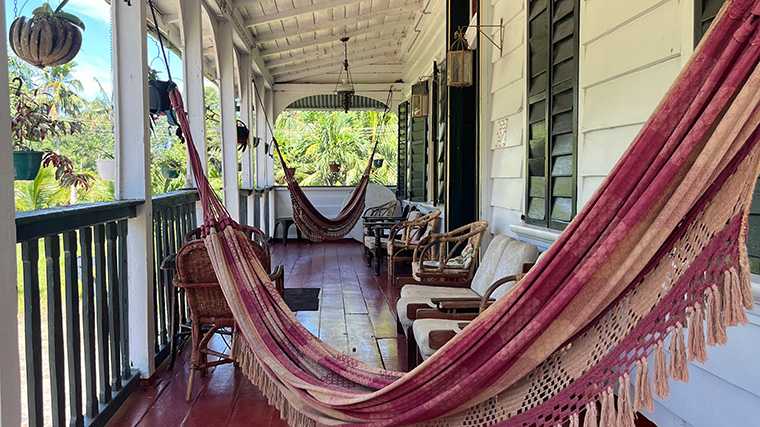
You can visit some of the plantations on the south bank of the Commewijne River by rental car, but to reach the plantations on the north bank, you’ll need to rent a boat. You can do this in Paramaribo, but also in Nieuw-Amsterdam. Among the attractions on the north bank is the authentic Mariënbosch plantation. The plantation house has been beautifully restored, and you can stay overnight there. Sitting on the veranda with a drink in hand, you’ll feel like a planter. Not that they had such a great reputation, as you’ll learn when you follow the Boni Trail at the adjacent Frederiksdorp plantation: the story of a slave who resisted the harsh regime. You can rent vacation cottages on this plantation. A little further upstream along the Commewijne River lies the Reynsdorp plantation, where the Bakkie Museum houses an impressive collection of original books, prints, maps, and artifacts, including slave chains.
6. Domburg / Beach
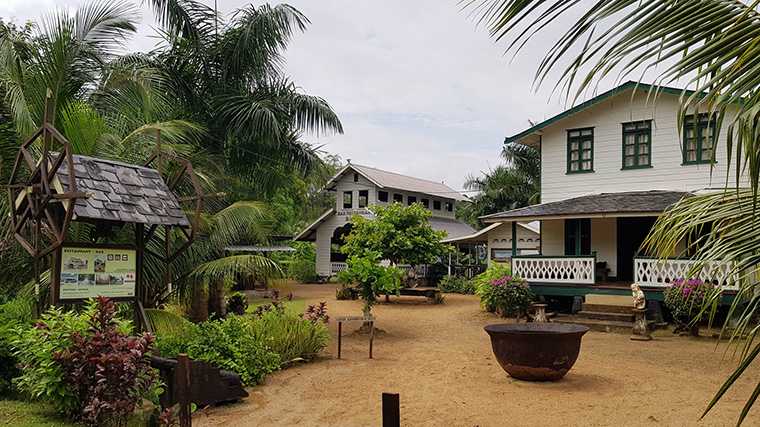
On Sundays, many residents of Paramaribo head to Domburg to visit the weekly market in this village, located more than twenty kilometers southeast of the capital. Domburg is beautifully situated on the Suriname River and was once a large coffee plantation. The entrance to that former plantation is a charming square, surrounded by beautiful mahogany trees, small cafés, and restaurants with outdoor seating.
From Domburg, you can take a small boat across to the former Laarwijk sugar plantation, which is bisected by a beautiful creek where you can spot various birds and snakes—and possibly even giant otters or a manatee.
Want to take a refreshing dip in the Suriname River? Then drive your rental car a little further south. Just before the village of Smal-Kalden, you’ll find the White Beach Resort with a beautiful sandy beach.
7. Galibi Nature Reserve
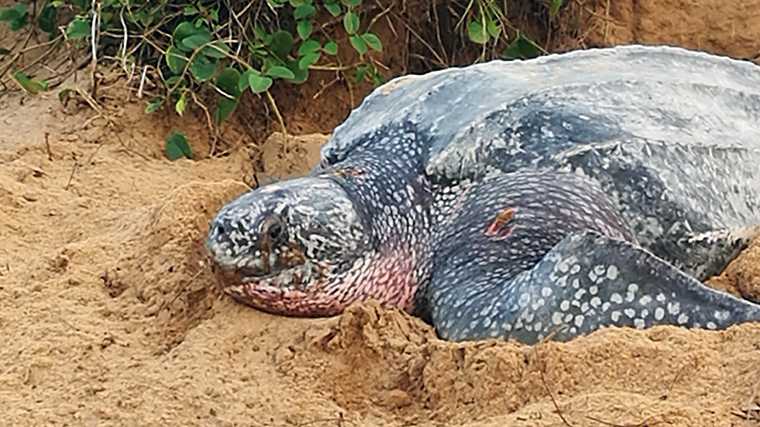
One of the best places to see sea turtles lay their eggs is the Galibi Nature Reserve, located 150 kilometers east of Paramaribo. It’s especially famous for the impressive leatherback turtle, the largest sea turtle in the world, but other species also nest there: loggerhead, olive ridley, and hawksbill turtles. During the high season (April–August), you can take guided canoe trips from Albina to observe nesting turtles or watch the hatchlings waddle toward the sea. The confluence of the Marowijne River and the Atlantic Ocean offers spectacular views and unique ecological conditions that are well worth exploring.
Galibi is also the name of a village on the edge of the nature reserve, inhabited by the indigenous Kari’na (also known as the Karaïben). There, you can learn more about traditional crafts and customs, and dance and music performances are also held.
Another must-see is the Tijgerbank, a sandbar off the coast accessible by boat. It is one of the few sandbars in Suriname; other banks consist mainly of mud. It’s a beautiful spot for swimming and birdwatching.
Although not accessible by rental car, the indigenous villages along the Marowijne River are well worth a visit. From Albina, you can rent boats with a guide to cruise up the river. You can also take a ferry from Albina to Saint Laurent du Maroni in neighboring French Guiana. The main attraction there is the prison, which became famous through the book and movie *Papillon*.
8. Bigi Pan
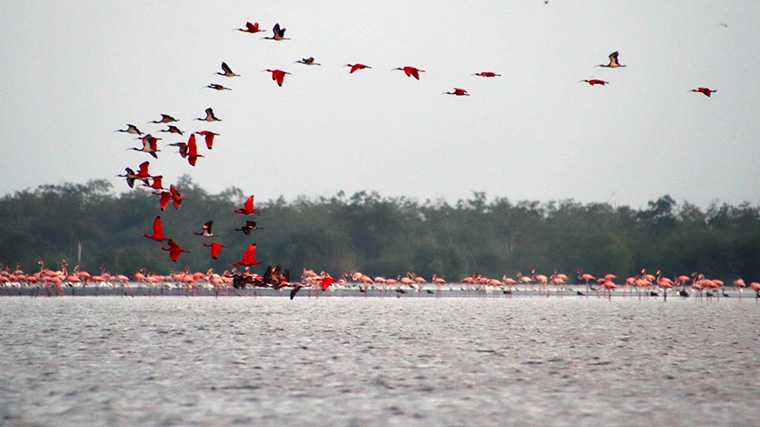
Bigi Pan (“big lake”) is a vast nature reserve with creeks, swamps, mangrove forests, and jungle, home to more than a hundred different species of (migratory) birds. From Paramaribo, you’ll drive through farmland (with roadside stalls selling delicious fruit!) to Wageningen or Nieuw-Nickerie. Boat tours to the nature reserve depart from both locations. Alternatively, you can drive your rental car to one of the lodges along the Nickerie River, which also organize tours.
The Bigi Pan wetlands are home to birds such as red ibises and flamingos, which forage in the shallow lagoons. The mangrove forests serve as nurseries for young fish and shrimp. The reserve is also a refuge for caimans, manatees, and giant otters. Thanks to this diversity, Bigi Pan has become one of the most important areas in Suriname for wildlife viewing.
9. Colakreek
Are you traveling with children and want to let them splash around in the water carefree and safely? Then head to Colakreek, about an hour’s drive by rental car from Paramaribo, right next to Zanderij Airport. The creek is named for the brown color of the water, which, incidentally, is caused by the underlying soil. The water itself is clean. There are small pavilions where you can sit out of the bright sun, and you can rent pedal boats and swim rings. For a simple lunch, head to the cafeteria, but there are also spots for barbecuing.
10. Brownsberg Nature Park
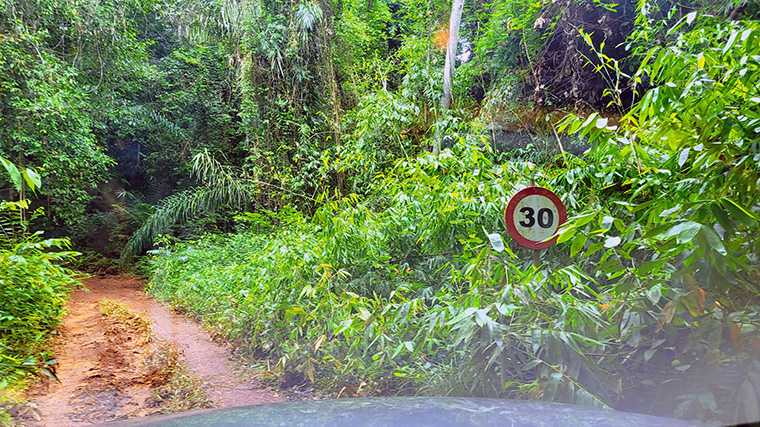
Brownsberg Nature Park is a paradise for nature lovers and is located 120 kilometers south of Paramaribo. From the capital, it takes about two and a half hours to drive there in a rental car. The final 13 kilometers to the top of the mountain is an adventurous route that really requires a 4×4 rental car.
Once you reach the plateau, there are countless jungle trails—some short and fairly easy, while others require more effort, such as the hike to Wittie Creek. The trails are well-marked, and in some places, ropes have been strung up for you to hold onto. You’ll be surrounded by the sounds of colorful birds, such as toucans. You’ll also encounter growling howler monkeys and red-backed sakis.
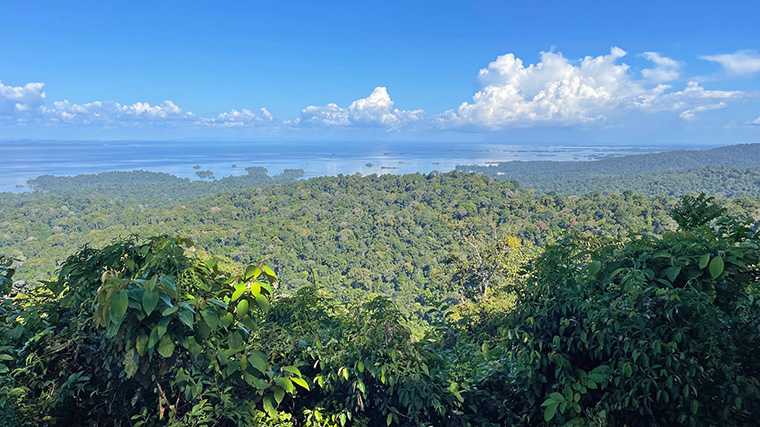
The park is known for its idyllic waterfalls. The most famous ones are called Leo and Princess Irene, and you can visit both in a single day. At the latter waterfall, you can take a refreshing dip in a clear pool. Less easy, but a true rainforest experience, are the muddy trails leading to the Mazaruni and Kombu waterfalls. The Mazaruni Peak is fairly easy to reach and offers a fantastic view of the vast jungle and the Brokopondo reservoir. It’s also a great spot for birdwatching.
You can spend the night in the park at rustic lodges, but it’s advisable to reserve them in advance at the office of the Suriname Nature Conservation Foundation (STINASU) in Paramaribo. There are also cabins where you can hang your own hammock. Additionally, there’s a simple restaurant in the park.
11. Brokopondo
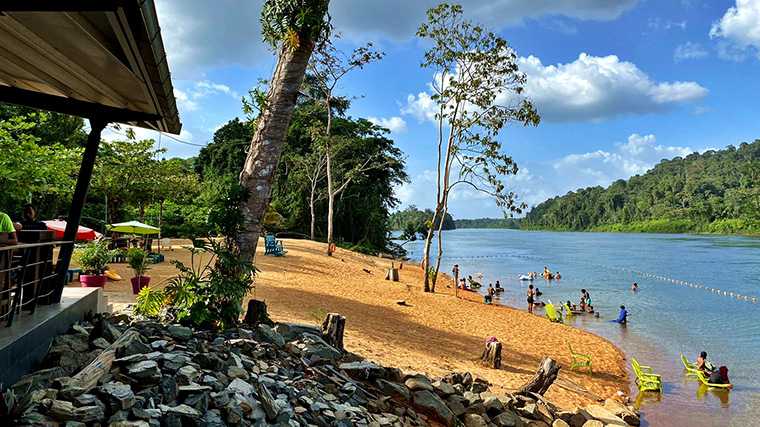
As mentioned above, Brownsberg borders the large Brokopondo reservoir, which was created by damming the Suriname River. You can still see that a vast expanse of rainforest was sacrificed for this project from the dead tree trunks protruding above the water’s surface. Tens of thousands of people were also forced to leave their homes.
Brokopondo is surrounded by rainforest, and the many small islands in the lake are also densely forested. This makes it an ideal habitat for various animals, including squirrel monkeys, sloths, macaws, parrots, and other colorful bird species. On several of the islets, you can rent simple accommodations, and kayaks are almost always available for scenic paddling trips. Another popular activity is fishing, especially for tukunari (peacock bass).
12. Traditional villages along the Suriname River
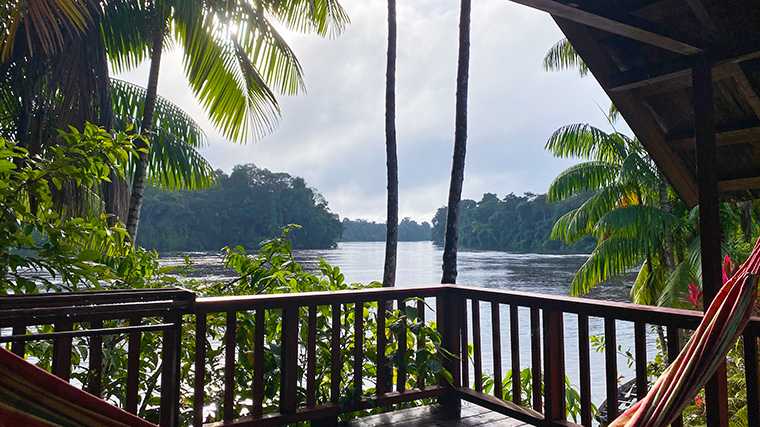
Brokopondo is the gateway to Suriname’s rainforests, but to explore them, you’ll have to leave your rental car behind. You can drive as far as Atjoni, but from there on, transportation is only by water. In the small harbor, there are countless traditional wooden boats (korjaals) that carry passengers to the various villages and islands along the upper reaches of the Suriname River.
Along the banks, you’ll find settlements of the indigenous people, as well as those of the so-called Maroons. These are descendants of African slaves who managed to escape from the plantations. They fled into the dense jungle and founded villages there. You can only take these trips under the guidance of a guide, who will not only introduce you to traditional customs but can also tell you all about the flora and fauna you see along the way.
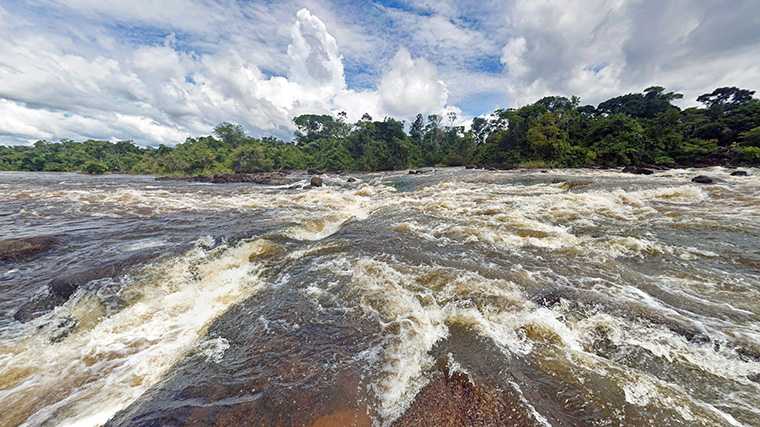
13. Raleigh Falls / Voltzberg (4WD required)
Take the southern east-west road to drive to the village of Witagron. Please note: this is an unpaved road, and you’ll need a 4×4 rental car. Be sure to check with the local rental company to confirm that you’re allowed to drive on this road. From Witagron, the Raleigh Falls can only be reached by boat. It’s a trip of about three hours, and on both sides of the Coppename River you’ll enjoy the tropical forest and its sounds. The ecolodge, located on a small island in the river, offers overnight stays in cabins, but you can also hang a hammock or pitch a tent on a large, covered rooftop terrace. This lodge organizes trips to the waterfalls and rapids, where you can cool off in the rushing water.
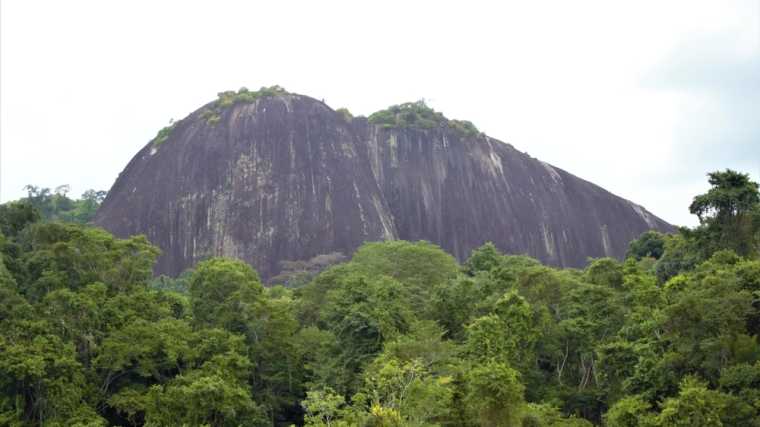
The ascent of the Voltzberg also begins on the banks of the Coppename River. This is a fairly strenuous hike, during which you’ll climb steep and sometimes slippery trails through dense rainforest. There are also sections where you’ll need to pull yourself up using a rope. Be prepared for this: you’ll need good hiking boots and to be in good physical condition! The dense vegetation eventually gives way to the steep ascent of the granite Voltzberg, which rises 240 meters above the canopy. Your efforts will be rewarded with a panoramic view of the jungle from above.
Various animals inhabit this area: giant otters, tapirs, armadillos, sloths, jaguars, all eight species of monkeys found in Suriname, the falcon-like harpy eagle, and the colorful orange rock cock. The sounds you hear at night in this paradise are unforgettable.
14. Blanche Marie Falls (4×4 required)
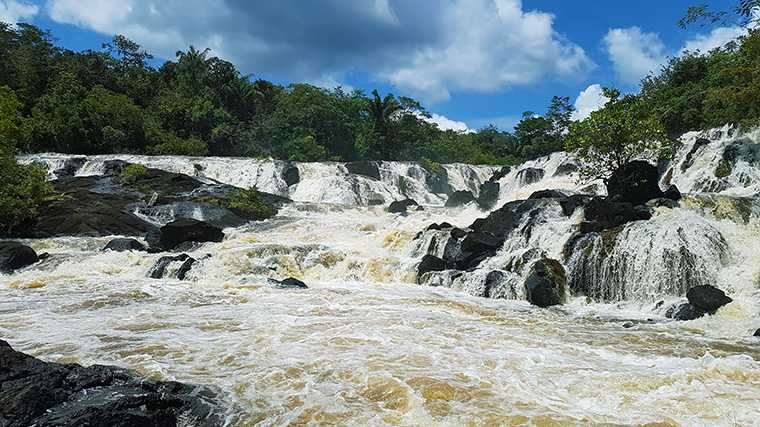
If you drive further west from Witagron in your 4×4 rental car, you’ll come to the turnoff for the Blanche Marie Falls on the Nickerie River. The rapids and waterfalls stretch for more than a hundred meters. Trails through the surrounding rainforest lead to smaller spots like Eldorado and Edenval, where you can swim and fish. You’ll also find natural hot tubs—spots where the current forms gentle whirlpools. And of course, you’ll be surrounded by the sounds of the jungle everywhere you go!
Driving on the Left
You might not expect it, but in Suriname, people drive on the left. This was formally introduced during British rule (from 1804 to 1816) and has never been changed since. Not even when the colonizing power, the Netherlands, decided to introduce right-hand traffic in its own country in 1906. Follow our tips on driving on the left, and you’ll find that you get used to it very quickly. The vast majority of rental cars in Suriname have automatic transmissions, so you don’t have to worry about shifting gears.
Roads in Suriname
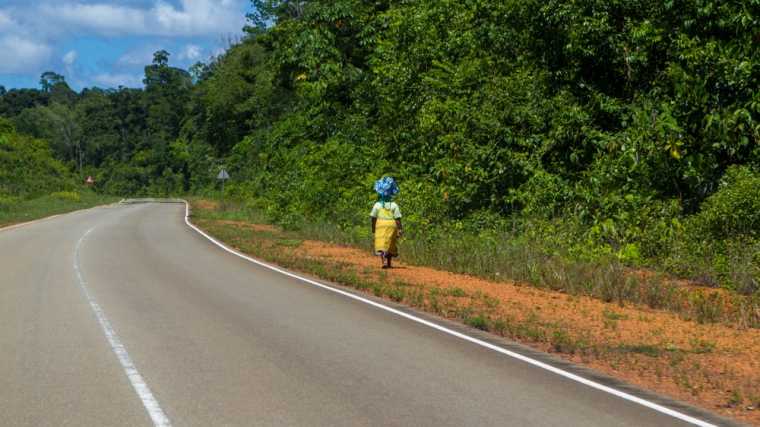
Renting a car is one of the best ways to explore the country, but be sure to check the road conditions in Suriname. Traffic can be heavy in the capital, Paramaribo, but outside the city you can often drive along smoothly. You should, however, watch out for potholes, especially in more remote areas. Suddensinkholes can form, especially during the rainy season. Large holes can become invisible on both paved and unpaved roads after heavy rainfall. Stay alert and obey the speed limits.
The main road is the east-west route that runs from Albina, on the border with French Guiana, through Paramaribo to Nieuw-Nickerie, on the border with Guyana. There is also a more southerly east-west route through the interior of Suriname, from Zanderij Airport to the border village of Apoera, but this road is largely unpaved. The Afobaka Road is a major route connecting Paranam on the Suriname River with the Afobaka Dam. This road has two branches: one leading to Brokopondo and the other to Brownsweg and Atjoni, which lies on the southern shore of the reservoir. Suriname’s only stretch of highway is less than ten kilometers long and connects the international airport with the Afobaka Road.

For driving in and around Paramaribo and along the main road between east and west, a regular car is sufficient. If you want to drive into the interior, a four-wheel-drive rental car is a better choice. You’ll encounter many unpaved roads there, and they get very muddy during the rainy season.
Best Time for a Road Trip in Suriname
Suriname has a warm and humid tropical climate. It rains year-round, but the country has two relatively dry periods: from late February to mid-April and from late August to early December. These are the best months to take a road trip in Suriname. May, June, and July are the months with the most rainfall.
Why Rent a Car in Suriname
Suriname is a country with a unique blend of natural beauty, cultural diversity, and exciting activities. It’s a fantastic destination if you’re looking for something exotic, but public transportation is limited. That’s why renting a car is the most practical way to explore Suriname. Plus, you can stop wherever and whenever you want. Passing through a charming little village? Just pull over! Want to go birdwatching early in the morning or enjoy the sunset somewhere in the evening? Renting a car gives you maximum freedom, comfort, and flexibility.
On unpaved roads, you’ll need a 4WD, and be sure to buy a good map in Paramaribo to find your way, since not all roads are marked on Google Maps.
We hope our tips on places to see in Suriname have inspired you to visit this beautiful country. Reserve your rental car in Suriname today—at the airport or in Paramaribo—and discover this diverse country on your own terms!

Where would you like to rent a car?
- 24000+ pick-up locations
- Free cancellation
- Independent comparator

Useful tips for a well-prepared trip
Which insurance should I choose, and what's the deal with the deposit? Read our articles with useful information and tips to ensure you choose the right rental car for you.