- Popular countries
- Popular regions
- Popular cities
- Popular airports
- Car hire United Kingdom
- Car hire Italy
- Car hire Spain
- Car hire United States
- Car hire Portugal
- Car hire Greece
- Car hire France
- Car hire Poland
- Car hire Ireland
- Car hire Cyprus
- Car hire Netherlands
- Car hire South Africa
- Car hire Switzerland
- Car hire Croatia
- Car hire Canada
- Car hire Malta
- Car hire Germany
- Car hire Hungary
- Car hire Norway
- Car hire Australia
- Car hire England
- Car hire Sicily
- Car hire Scotland
- Car hire Florida
- Car hire Sardinia
- Car hire Malta
- Car hire California
- Car hire Crete
- Car hire Lanzarote
- Car hire Majorca
- Car hire Menorca
- Car hire Tenerife
- Car hire Rhodes
- Car hire Fuerteventura
- Car hire Corsica
- Car hire Kefalonia
- Car hire Madeira
- Car hire Corfu
- Car hire Ibiza
- Car hire Gran Canaria
- Car hire London
- Car hire Faro
- Car hire Malaga
- Car hire Milan
- Car hire Lisbon
- Car hire Rome
- Car hire Alicante
- Car hire Dublin
- Car hire Manchester
- Car hire Porto
- Car hire Amsterdam
- Car hire Larnaca
- Car hire Geneva
- Car hire Luqa
- Car hire Bergamo
- Car hire Athens
- Car hire Budapest
- Car hire Pisa
- Car hire Orlando
- Car hire Palermo
- Car hire London Heathrow Airport
- Car hire Faro Airport
- Car hire Lisbon Airport
- Car hire Malaga Airport
- Car hire London Gatwick Airport
- Car hire Alicante Airport
- Car hire Manchester Airport
- Car hire Dublin Airport
- Car hire Larnaca Airport
- Car hire Porto Airport
- Car hire Malta Airport
- Car hire Bergamo Airport
- Car hire Athens Airport
- Car hire Budapest Ferihegy Airport
- Car hire Rome Fiumicino Airport
- Car hire Geneva Airport (Switzerland)
- Car hire Amsterdam Schiphol Airport
- Car hire Milan Malpensa Airport
- Car hire Pisa Airport
- Car hire Orlando International Airport

Inspiration for a road trip through the Peloponnese
Ancient Greece, towering green mountains, and beautiful beaches
You have to seeAthens at least once in your life. After all, it’s a city that has played a major role in the development of Western civilization. In addition to classic sights like the Acropolis, the Theater of Dionysus, and the Temple of Olympian Zeus, Athens has charming, historic neighborhoods. But people who don’t like crowds will quickly feel uncomfortable in Greece’s capital, especially during the summer months. In the spring and fall, it’s quieter and not as hot. It’s also the perfect time for a road trip through the Peloponnese!
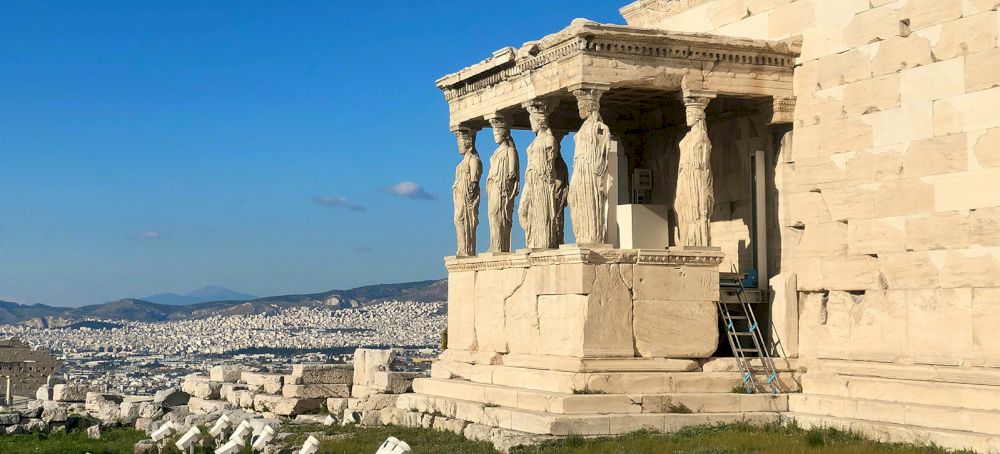
We’ll start the trip below at Athens Airport, but the route passes through Patras and Kalamata, so you can also begin your tour there. There are many seasonal flights to Patras Araxos Airport and Kalamata Airport. Most travelers head straight to a beach hotel from these airports, but trust us: you’ll enjoy it so much more if you set out in a rental car. The Peloponnese is a treasure trove of Greek antiquity, but its mountainous landscape—with peaks over two thousand meters high—is also impressive. Plus, there are stunning beaches to discover. Rent a car and go enjoy it!
1. Ancient Corinth
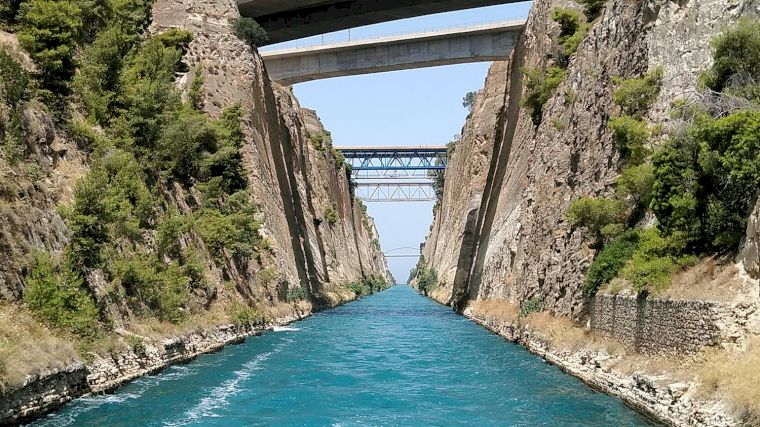
After picking up your rental car at the Athens airport, drive toward Corinth via the A6 and A8 toll roads. You will then cross the Corinth Canal, which was dug at the end of the nineteenth century to create a shorter route between the Gulf of Corinth and the Aegean Sea. Thanks to the canal, ships no longer had to sail around the Peloponnese peninsula. This route is not used much anymore, because the canal is too narrow and too shallow for modern, large ships. You might occasionally see a cruise ship, being pulled along very slowly by a tugboat. To get a good view of the canal, take Exit 9 off the highway and drive to a parking lot just before the old bridge. There are walking paths across that bridge. The depth of the canal makes it an ideal spot for bungee jumping, and that option is available here as well.
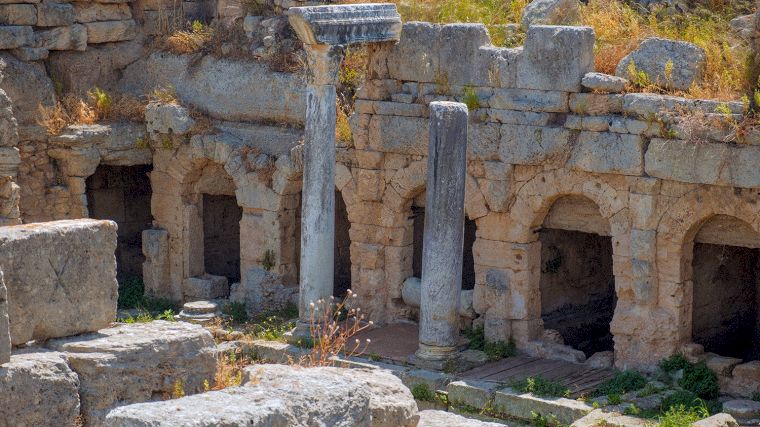
The ruins of the ancient city of Archaía Kórinthos lie seven kilometers beyond the modern city. The upper city (acropolis) of ancient Corinth is visible from a distance. At the excavation site, you can see the remains of smaller temples with Corinthian columns, the market square, fountains, and the columns of the large Doric temple of Apollo. The museum next door houses a collection of the artifacts found there, ranging from vases, pots, and statues to mosaics. To some people, this part of the city is nothing more than a pile of stones, but wait until you reach the hill south of the ancient city.
There’s a road leading to Akrokórinthos, but from the parking lot, you’ll still have quite a climb ahead of you if you want to see everything. Not much remains of the original acropolis, as this fortress was conquered and altered in turn by the Romans, Byzantines, Crusaders, Venetians, and Turks. The result is a vast, sprawling complex with buildings from different eras, where you can easily spend several hours. Among other things, there’s an ingenious system of water cellars near the Pirene spring. Kids (and adults) love exploring those ancient cellars. Just make sure to bring a flashlight! Needless to say, the view from the hill is impressive, further enhanced by the ancient stones in the foreground.
2. Mycenae
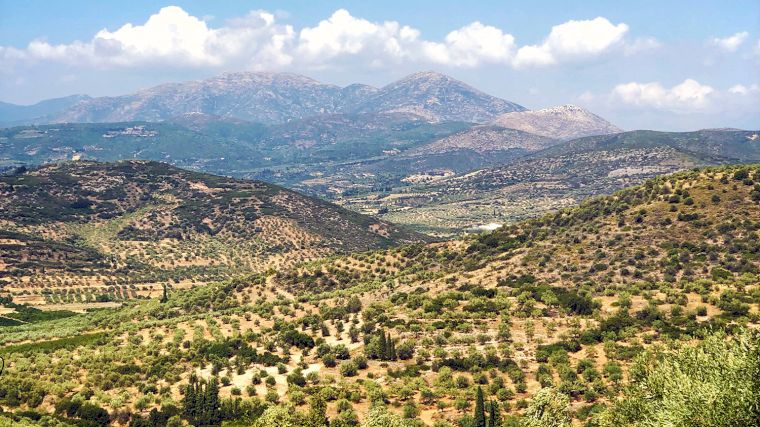
To drive from ancient Corinth to ancient Mycenae, you have several route options. The fastest route is via the A7, where you can easily take a detour to another archaeological site, ancient Nemea. If you want to fully enjoy the surroundings and aren’t in a hurry, drive through the mountainous landscape on a narrow road from Klenia via Agionori to Limnes. Then take a wider road via Prosymna to Mycenae.
The Mycenaean civilization flourished during the Late Bronze Age, some 3,000 to 3,500 years ago. The Mycenaeans were a prosperous but also warlike people. They protected their cities with walls meters thick, built of enormous stones—so-called Cyclopean walls. These were named as such because only giants (Cyclopes in Greek mythology) could have built them. The showpiece is the Lion Gate with its accompanying relief. It’s incredible that this ancient sculpture is still so clearly recognizable after thousands of years. A short distance away is a burial mound containing the Treasury of Atreus. Not that any treasures were found, since the royal tomb had already been plundered in ancient times. Inside, the tomb features an impressive dome over thirteen meters high. The fortress sits high on a cliff that is very steep in places, and you can see for kilometers, all the way to the sea.
3. Nafplio
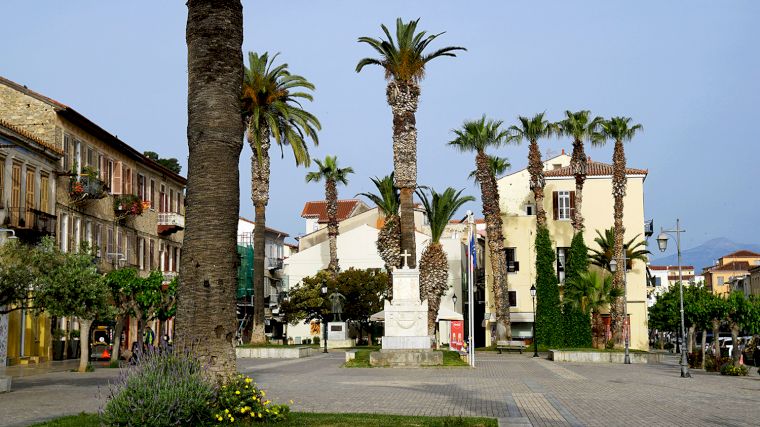
Nafplio is spelled in various ways; we use the spelling found on local road signs. It is an elegant little town featuring, among other things, a castle that seems to glide down from a high hill, a harbor with a castle shaped like a ship, and buildings in warm pastel colors. The marble-paved streets in the center are adorned with exuberantly blooming bougainvillea that cascades down from balconies, creating a tunnel of color and greenery. The area is teeming with cafés and restaurants, their tables and chairs spilling out onto the sidewalks. It’s the perfect spot for a delicious Greek salad with a glass of wine!
Nafplio was briefly the capital of modern Greece following the War of Independence against Turkey. A few mosques and the many ornate public fountains in the alleys of the old town serve as reminders of that Turkish era. The narrow streets are somewhat reminiscent of the towns along the Adriatic Sea in Croatia, which isn’t surprising, since—just like there—the Venetians ruled Nafplio for a long time. They built the Palamidi Fortress, which towers high above the city. It consists of no fewer than eight bastions. Yet the Turks managed to capture it in just one week in 1715. There are 999 steps to the top, but fortunately, you can also drive up there in your rental car. In the evening, the castle is beautifully illuminated. Spotlights are also directed at the ship-shaped fortress on the islet of Boúrdzi, just off the harbor.
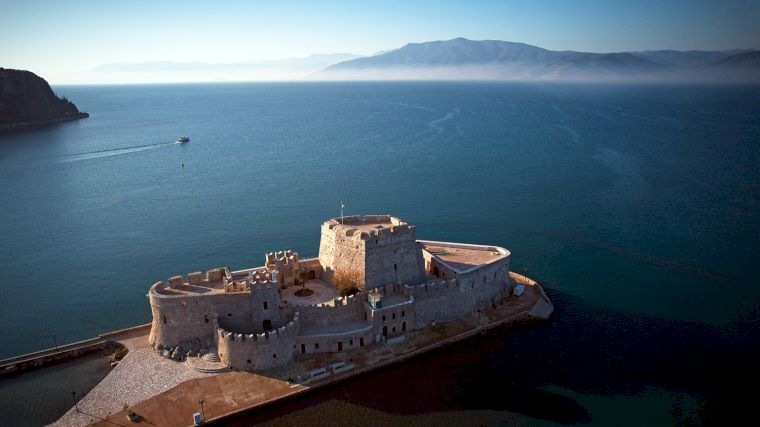
Nafplio is a very lively and charming city and offers a welcome change of pace from all the archaeological highlights. When visiting, it’s best to park your rental car in the large parking lot near the harbor. From that parking lot, you can take a walk along a beautiful footpath between a steep cliff and the sea. That path leads to the city beach of Arvanitia, but a little further south there are even more beautiful beaches. Neraki is a small pebble beach; a little further on is a larger sandy beach, Karathonas. The most popular beach is at the resort town of Toló, eleven kilometers south of Nafplio.
Nafplio is also a perfect base for day trips to other attractions, such as Epidaurus, just thirty kilometers away.
4. Epidaurus / Methana Peninsula
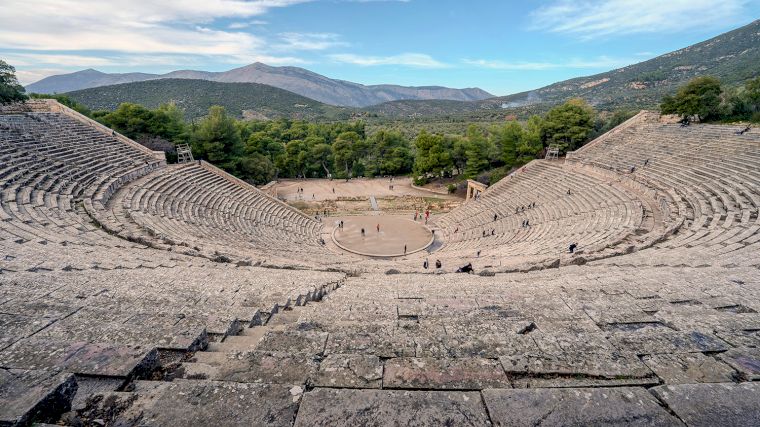
There are many amphitheaters from Greek and Roman antiquity, but you’ve never seen one as well-preserved as the theater at Epidaurus. The lower tier is the oldest part, dating from the fourth century B.C.; the second tier was added later. It could seat over 12,000 spectators. In the summer, ancient tragedies are performed here.
Just east of Epidaurus lies the lush Methana Peninsula. Until three hundred years ago, this was a highly active volcanic region, and you can visit more than thirty lava domes, hot springs, and caves there. You can see everything from your rental car, but you won’t discover the hidden treasures that way. Getting out and exploring on foot is the way to go, as there are many hiking trails. For example, you can hike to the fishing village of Agios Georgios and the Baths of Pausanias, the peninsula’s most famous hot spring. The Peristeri Cave may not seem like much at first glance, but follow the (challenging) path downhill and you’ll arrive at a magical underground lake.
5. Sparta & Mystrás
The name Sparta captures the imagination. How many sports clubs are named after what was once one of the most important cities in the Peloponnese? Spartan boys were trained to fight from an early age, in part through rigorous physical exercise. Discipline was instilled in them with a heavy hand—the “Spartan” upbringing. For centuries, Sparta was a military powerhouse, but it lost its importance due to growing tensions with Athens. By the time the Romans conquered all of Greece, Sparta was nothing more than an insignificant provincial town. Modern-day Sparta remains just that, and very little of the ancient city has survived. The acropolis is now an olive grove, and compared to Epidaurus, Sparta’s amphitheater is a disappointment. Many stones from ancient Sparta were used in the Middle Ages to build Mystrás, five kilometers away, and that is definitely worth a visit.

Mystrás is a city in ruins that was made great by the Byzantines. It was abandoned in the nineteenth century after being destroyed during the Greek War of Independence. The Byzantine governors built churches, monasteries, and palaces there, turning Mystrás into a cultural center. Afterward, the Turks ruled there for centuries, with the Venetians also ruling for a brief period in between. As a result, Mystrás offers historical insight into the cultural, political, and social upheavals in Greece.
The walled castle town is built against a foothill of the Taygetus Mountains, whose steep slopes near Mystrás reach a height of 2,100 meters. As is typical in the Peloponnese, you’ll have to do quite a bit of climbing to see everything, and the old town is also quite sprawling. It’s best to set aside a full day for this. With a handy map, you can walk past the most beautiful sights: old residences, as well as churches and monasteries from the Byzantine era, often adorned with stunning frescoes. One of the monasteries is still in use. The Palace of the Despots (as the Byzantine governors were called) stands at the top of the hill. Here, Frankish crusaders built the first fortress in the thirteenth century, which was later rebuilt and expanded by the Byzantines. If you have enough time, you can drive further south from Sparta or Mystras to explore the beautiful Mani Peninsula.
6. The Road to Kalamáta
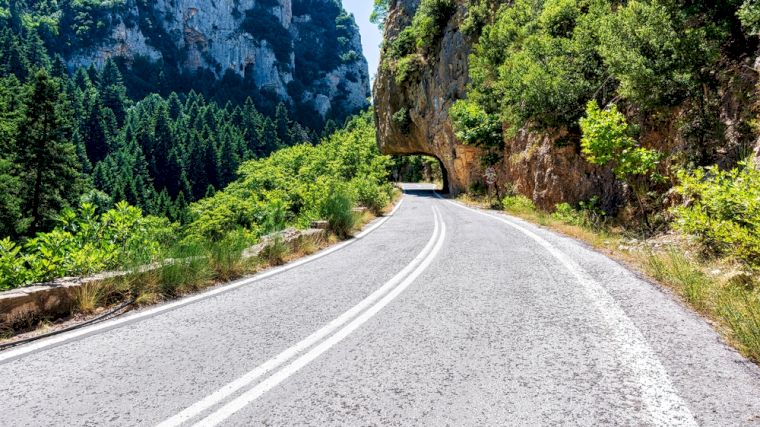
The only road from Mystras to Kalamáta is a very winding one through the Taygetos Mountains. It’s a well-paved road, but you do have to enjoy constantly navigating hairpin turns. And the scenery is beautiful! Not only the steep mountain slopes, but also the traditional villages you pass along the way. And let’s not forget the Langada Pass, where the mountain seems to “hang” over the road.
It’s no wonder that Kalamáta Airport is a busy destination during the summer months, as the town lies along a bay with some of the most beautiful beaches in the Peloponnese. And let’s be honest: after exploring the beautiful and interesting—though somewhat dusty—ruins, a dip in the sea is just what you need to refresh!
In the summer, theater, music, and dance performances are held in the amphitheater on the hill on the north side of town. During the show, you’ll also have a beautiful view of Kalamáta at night.
7. Rintomo or Ridomo Gorge
It’s only a thirty-kilometer drive from Kalamata to the village of Vorio, but it easily takes an hour. This is where most hikes through the Rintomo Gorge—also known as the Ridomo Gorge—begin. Once again, we’ll stick to the spelling on the local road signs: Rintomo Canyon. Only attempt the hike through the canyon if you’re in good physical condition, as it’s a fairly challenging route. In the middle of the riverbed, you’ll have to climb over large rocks, but that’s manageable if you’re reasonably athletic. Keep in mind, however, that weather conditions can change quickly. When it rains, the rocks become very slippery.
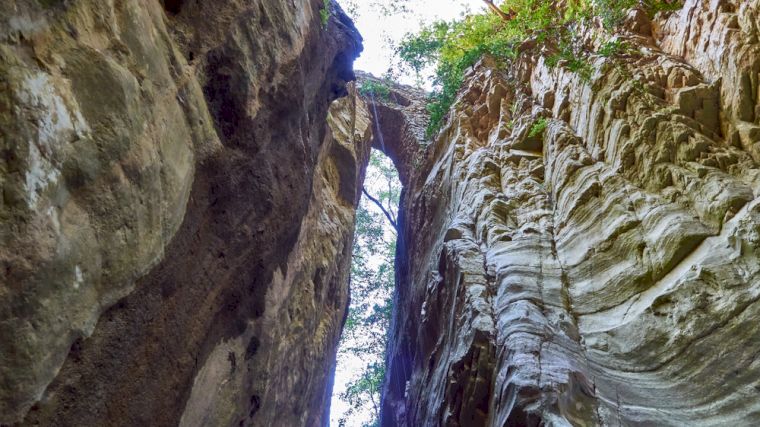
You can park your rental car at the church in Vorio and then follow the signs to the gorge. Just past a small cemetery, a path leads down to the bottom. Once you’re down, turn right, as indicated by arrows. Those arrows will come in handy a little later when you reach the larger rocks, as they show you the easiest way to climb around and over them. After that, the gorge narrows, and you’ll walk between vertical rock walls that you can touch at the same time if you stretch out your arms. A little further on, high above this narrow section, you’ll see a two-arched bridge and the start of the path leading up. Once at the top, you can continue on to the village of Pigadia or walk back to Vorio along the edge of the gorge. If you’re not particularly athletic, you can walk this upper path there and back. It’s not as spectacular as the gorge itself, but it also offers beautiful views.
8. Polilimnio Waterfalls
On your way to the bays on the southwestern coast of the Peloponnese, you’ll pass the Polilimnio Waterfalls. Your rental car will come in handy here as well, since there’s no public transportation to this area. The main road, EO82, runs through the village of Kazarma, where the turnoff to the waterfalls is clearly marked. At the end of that road is a parking lot with a small café featuring a lovely veranda. Perfect for a refreshing break!
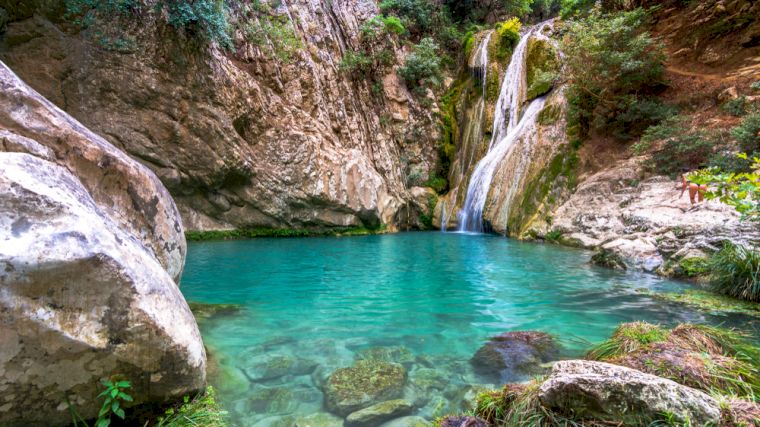
The trail to the waterfalls is quite steep. It’s not too difficult on the way there (since you’re walking downhill), but keep in mind that you’ll have to walk back as well. The name Polilimnio (poli = many, limnio = lake) means “many lakes,” and that’s exactly what these cascading waterfalls have formed: a complex of fifteen interconnected small lakes. The waterfalls and pools of crystal-clear water are set in an idyllic setting of lush green forests and rocky cliffs. The largest lake is Kadi, with waterfalls reaching a height of 25 meters. Not all of the small lakes are suitable for swimming, but you can simply enjoy the natural beauty and the fairy-tale-like surroundings.
9. Voidokilia Bay
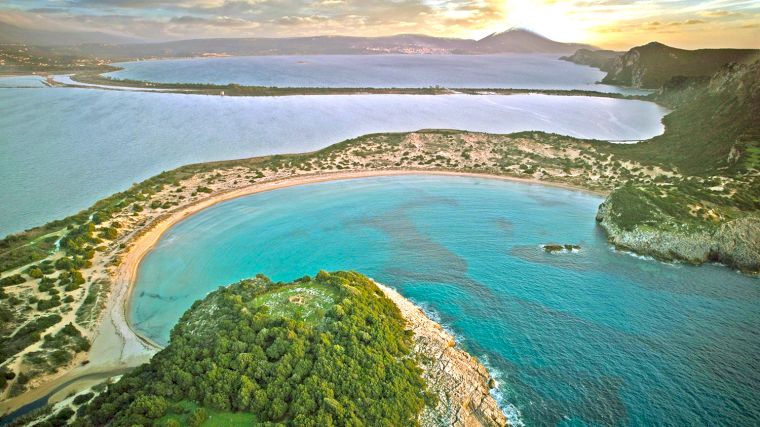
Voidokilia Bay is home to one of the most beautiful beaches in Greece. Behind it lies the Gialova lagoon, bordered by another beautiful sandy beach, Divaria. It is a protected wetland, so you won’t find any facilities on the beaches. Still, that doesn’t stop people from visiting; it can get quite crowded there, especially in August.
Besides lounging on the beach, you can take a wonderful hike to the ancient castle of Navario, which sits on the rock to the left as seen from Voidokilia Beach. However, the easiest trail up starts on the west side of Divaria Beach. You can drive to that starting point on a gravel road, so drive slowly in your rental car. There’s a clear sign indicating which path leads to the beach and which leads to the castle (Palaiokastro). It’s a beautiful trail with the fortress ahead of you and the coastline all around you. On the other side of the fortress, you’ll have the iconic view of the stunning Voidokilia Beach. Just below the fortress lies Nestor’s Cave, where you can stop for a moment before enjoying a well-deserved dip in the sea. From the beach, you can walk back to your car along a flat path.
10. Olympia
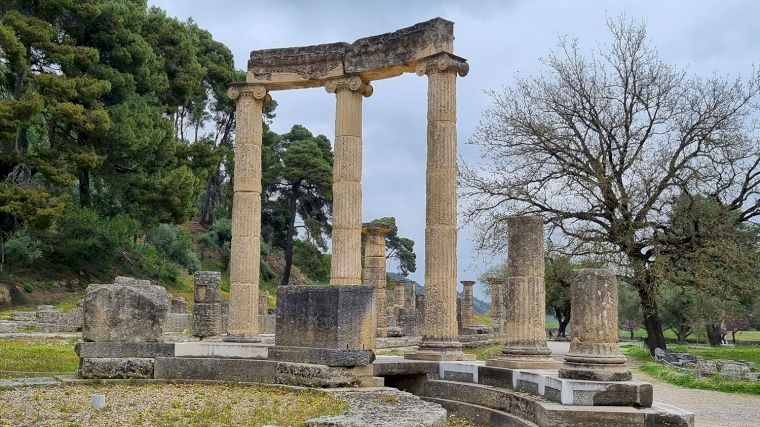
Olympia in Greece was never an inhabited settlement, but rather the site where the Olympic Games were held every four years in ancient times. All the Greek city-states—which were often at war with one another—buried the hatchet during the Games to compete against each other in a spirit of sportsmanship. To be honest, there isn’t much to see among the ruins of Olympia. The archaeological site looks neglected, and many columns lie in pieces on the ground. Still, a visit can be interesting because of the historical significance of this place. As you walk among the ruins and read the information signs, you can imagine what it was like during the ancient Olympic Games.
A few columns of the circular Philippeion are still standing. It was commissioned by King Philip II of Macedonia, who united the Greek city-states. One hundred days before the start of the modern Olympic Games, the flame is lit here and then carried in a relay to the opening ceremony.
Many cruise ship passengers travel by bus from the port of Katakolo to Olympia, which can make it quite crowded. Especially in the morning, these tourists take a quick look at the temples of Zeus and Hera and the stadium, before rushing on to their next destination for lunch. Very early in the morning or late in the afternoon, Olympia is much quieter.
11. Coastal forests and wetlands
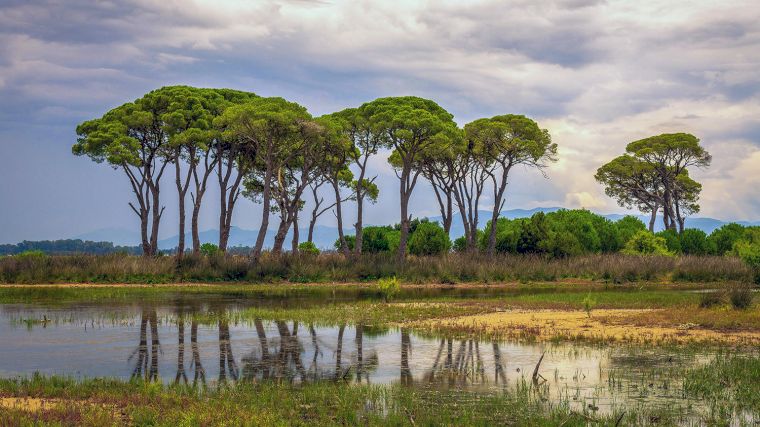
Just north of the port of Katakolo are beautiful sandy beaches, such as those near the seaside resort of Skafidia. There’s also the ferry terminal at Killini, where (car) ferries depart for the island of Zakynthos. If you want to take your rental car on the ferry, check in advance whether your rental company allows it and make sure this is specified in the contract you sign when picking up the car.
Even further north, you’ll find a protected nature reserve that very few people visit. If you drive your rental car along this west coast toward Loutra Imenis, you’ll see the start of several hiking trails through this stunning nature reserve. Trails to the right lead to a lagoon; those to the left wind through the dense forest toward the sea. You’ll need to pay close attention, though, as the signs marking the hiking routes aren’t always very clear. At the end of the road, you’ll reach a deserted sandy beach and a beautiful overlook of the coast.
The road from Metoxi to Kalogria runs through Strofylia National Park, where you can also enjoy beautiful hikes. The northwestern tip of the Peloponnese is a wetland where you can spot migratory birds, especially in winter. Fortunately, there are no flights to or from the nearby airport during the winter months.
12. Patras & the Rio-Antirrio Bridge
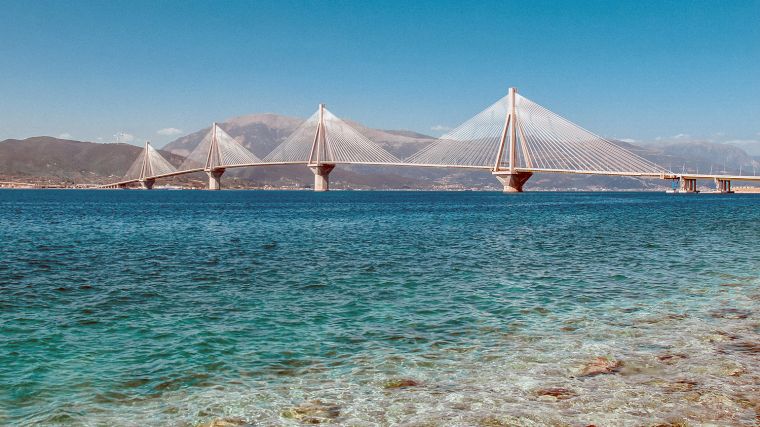
In ancient Greek times, Patras was an insignificant agricultural village. It was not until the Roman period that the city flourished and became a hub of industry and trade. That connection with Italy remains strong today, as there are ferry connections from the port of Patras to Bari, Brindisi, Ancona, and even Venice (via Igoumenitsa and Corfu). One of Patras’s attractions is the ruin of the castle on a hill. It was built by the Byzantines and later expanded by the Crusaders and Venetians. A little further down, you’ll see the beautifully restored Roman Odeon, where performances are still held today.
Old and new are closely intertwined in Patras, as just east of the city lies the imposing Charilaos Trikoupis Bridge. This two-and-a-half-kilometer-long bridge connects Rio with Antirrio.
13. Coastal Road EO48 / Monastiraki Beach
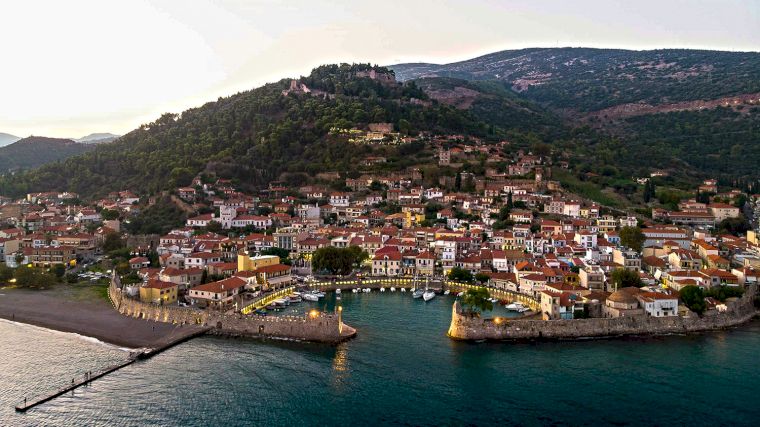
On the other side, you’ll drive east along the EO48 through a beautiful hilly landscape. The picturesque town of Nafpaktos is worth a quick stop. After that, the road runs largely along a narrow coastal strip beside the Gulf of Corinth. There are many beautiful views, but there are few spots along the road where you can safely park your rental car to photograph the scenery. Along the way, you can stop at one of the beaches: the famous Monastiraki, 12 kilometers from Nafpaktos, or the beaches of Chiliadou or Skaloma.
The EO48 veers away from the coast at Itea and then climbs toward Delphi, which lies on the southern slope of Mount Parnassus. Lovers of mountain roads will find plenty to enjoy here. About halfway up, you’ll see an aqueduct that supplies water to the villages. A steep stretch with sharp hairpin turns takes you to Delphi. If you want to stay in the region longer, Itea is a great place to spend the night. It’s about a ten-minute drive from Delphi, and in the evening you can enjoy a lovely stroll along the waterfront.
14. Delphi
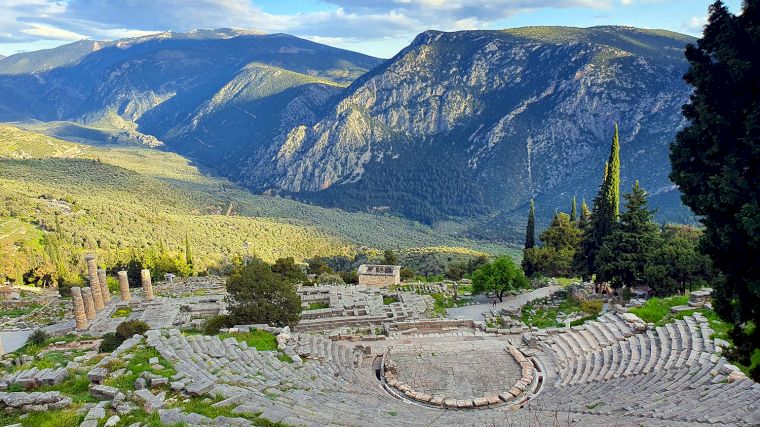
Delphi is one of the holiest places in Greece, and in Greek mythology, it is the navel of the world. The ancient Greeks built their temples in the most beautiful locations because they associated the gods with earthly beauty. Delphi is no exception; it is nestled amid stunning, green mountains. The sanctuaries, combined with the surrounding landscape, make Delphi a truly breathtaking and impressive place.
To reach the Temple of Apollo, you must climb the Sacred Way. One of the first sanctuaries you’ll encounter is that of Athena Pronaia. Most people (literally) pass this by on their left to head straight for Delphi’s “main attraction.” If you want to enjoy the temples and the surroundings in peace and quiet, this is the perfect spot. The famous Oracle of Delphi served as the mouthpiece of the god Apollo and made her prophecies in his temple. Before consulting this prophetess, visitors would wash themselves at the Castalian Spring. That spring is still active, and you can wash and drink from it just as the ancient Greeks did.
The modern Archaeological Museum here houses one of ancient Greece’s most cherished treasures in its extensive collection: the Charioteer of Delphi.
Toll Roads in the Peloponnese
In Greece, tolls are charged on most highways. You can pay with cash, a credit card, or automatically using an “e-PASS.” Not many Greek car rental companies have these electronic devices in their rental cars, so you’ll have to pay manually. Make sure to get in the correct lane and keep cash on hand in case the card machine isn’t working. You’ll also have to pay to cross the long suspension bridge between the Peloponnese and Antirrio.
Rent a Car and Explore the Peloponnese
Exploring the Peloponnese by car is a fantastic way to experience Greece. But be aware that the roads on the peninsula are often winding and narrow, which means it may take longer to reach your destination than you might expect. The route above is just an example and covers only a small part of what you can see and experience in the Peloponnese. That’s the beauty of renting a car: if you see something that intrigues you, just go check it out. You have complete freedom to go your own way and deviate from your plan or route whenever you feel it’s necessary.

Where would you like to rent a car?
- 24000+ pick-up locations
- Free cancellation
- Independent comparator

Useful tips for a well-prepared trip
Which insurance should I choose, and what's the deal with the deposit? Read our articles with useful information and tips to ensure you choose the right rental car for you.


