- Popular countries
- Popular regions
- Popular cities
- Popular airports
- Car hire United Kingdom
- Car hire Italy
- Car hire Spain
- Car hire United States
- Car hire Portugal
- Car hire Greece
- Car hire France
- Car hire Poland
- Car hire Ireland
- Car hire Cyprus
- Car hire Netherlands
- Car hire South Africa
- Car hire Switzerland
- Car hire Croatia
- Car hire Canada
- Car hire Malta
- Car hire Germany
- Car hire Hungary
- Car hire Norway
- Car hire Australia
- Car hire England
- Car hire Sicily
- Car hire Scotland
- Car hire Florida
- Car hire Sardinia
- Car hire Malta
- Car hire California
- Car hire Crete
- Car hire Lanzarote
- Car hire Majorca
- Car hire Menorca
- Car hire Tenerife
- Car hire Rhodes
- Car hire Fuerteventura
- Car hire Corsica
- Car hire Kefalonia
- Car hire Madeira
- Car hire Corfu
- Car hire Ibiza
- Car hire Gran Canaria
- Car hire London
- Car hire Faro
- Car hire Malaga
- Car hire Milan
- Car hire Lisbon
- Car hire Rome
- Car hire Alicante
- Car hire Dublin
- Car hire Manchester
- Car hire Porto
- Car hire Amsterdam
- Car hire Larnaca
- Car hire Geneva
- Car hire Luqa
- Car hire Bergamo
- Car hire Athens
- Car hire Budapest
- Car hire Pisa
- Car hire Orlando
- Car hire Palermo
- Car hire London Heathrow Airport
- Car hire Faro Airport
- Car hire Lisbon Airport
- Car hire Malaga Airport
- Car hire London Gatwick Airport
- Car hire Alicante Airport
- Car hire Manchester Airport
- Car hire Dublin Airport
- Car hire Larnaca Airport
- Car hire Porto Airport
- Car hire Malta Airport
- Car hire Bergamo Airport
- Car hire Athens Airport
- Car hire Budapest Ferihegy Airport
- Car hire Rome Fiumicino Airport
- Car hire Geneva Airport (Switzerland)
- Car hire Amsterdam Schiphol Airport
- Car hire Milan Malpensa Airport
- Car hire Pisa Airport
- Car hire Orlando International Airport

Island Hopping in Europe by Rental Car
From the Greek Cyclades to the Canary Islands
Island hopping means visiting multiple islands during a single trip, whether by passenger ferry, a short inter-island flight, or by taking your rental car on a ferry. The Greek Cyclades are the classic choice, where you can combine visits to Santorini, Mykonos, Naxos, and Paros. Split, Croatia, offers excellent ferry connections to the islands off the Dalmatian coast, while the Canary Islands are a perfect choice for sunseekers in the early season.
On this page:
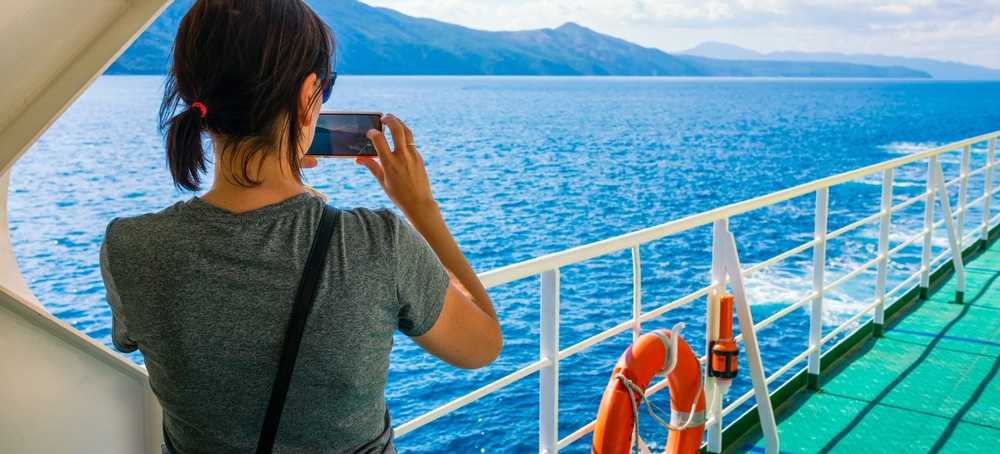
What is island hopping by rental car?
To hop from island to island, you can follow three different strategies. Each strategy has different implications for costs and logistics.
Bringing Your Rental Car
For some islands, you can easily and reasonably affordably take your rental car on the ferry. This is the case, for example, if you’re traveling to the island of Hvar in Croatia or from Naples to Ischia in Italy. Expect a fare of €40–60 one way for the rental car and passengers. During peak season, wait times can be as long as 2 hours; book online in advance whenever possible.
A Different Rental Car for Each Island
Book a different rental car for each island you visit. You’ll travel from one island to the next with the passengers on the ferry or by short flight. If you’re island-hopping in Greece, this is the best option for the Cyclades, where taking a rental car on the ferry can be quite expensive. This is also a good strategy for the Azores and the Balearic Islands (Mallorca, Menorca, and Ibiza). Renting a car on each island separately is cheaper and more convenient, since you usually have to return the car to the island where you rented it.
Not bringing a rental car
This is, of course, the cheapest option, but you won’t have your own car. That doesn’t have to be a problem if you’re taking a day trip from Mallorca to Menorca or from Madeira to Porto Santo. You can rent a scooter or ATV once you’re there.
The 10 Most Beautiful Island Routes in Europe
1. Cyclades (Santorini, Mykonos, Naxos, Paros), Greece
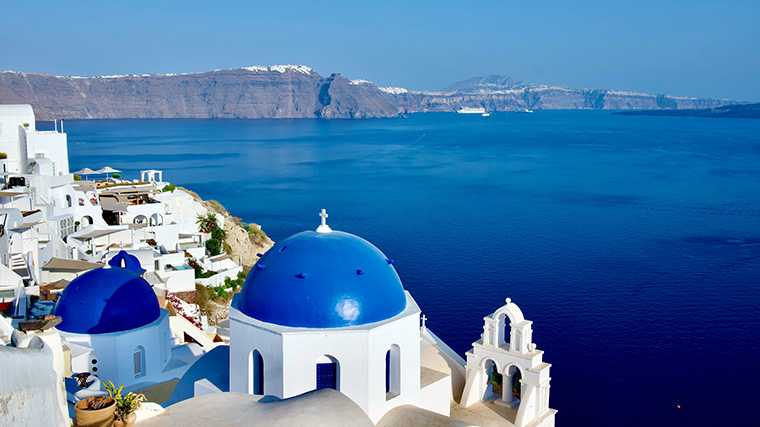
The combination of these four islands is the classic tour of the Cyclades, which are famous for their cube-shaped architecture, azure-blue domes, and arid landscapes.
Highlights:
Santorini: The vast, flooded volcanic crater offers some of the most striking panoramic views. Hike the 10-kilometer trail along the cliff’s edge from Fira to Oia.
Mykonos: known as a party island, but the real highlight is the tranquil waterfront of Little Venice in Chora, where the houses literally balance on the rocks above the sea.
Naxos: On a small peninsula off the harbor stands a massive marble gate from an unfinished temple of Apollo. At sunset, its silhouette stands out beautifully against the sky.
Paros: The authentic fishing village of Naoussa, with its narrow whitewashed alleys, a small Venetian castle, and a harbor full of traditional kaiks, is much less crowded than the capital, Parikia.
Car rental strategy: Since rental companies usually don’t allow you to return the rental car on a different island, it’s best to rent a car separately on each island.
Ferry logistics: SeaJets (high-speed catamarans) or Blue Star (large ferries).
Santorini ↔ Naxos: 1h 45m / 3h
Naxos ↔ Paros: 25 min / 45 min
Paros ↔ Mykonos: 40 min / 1 hr 30 min
Book at least 4 weeks in advance for crossings in July/August.
Please note: the village streets on these islands are unsuitable for large cars. The charming village of Halki on Naxos is one of the few places in Greece where motorized traffic is completely prohibited.
Car class: compact or mini-segment; a manual transmission is sufficient.
Best time to visit: May–June and September–October (less crowded and pleasant temperatures, 22–28°C).
Compare rental cars on Santorini
2. Ionian Islands (Kefalonia, Zakynthos, Lefkada), Greece
When people think of island hopping in Greece, they often think of the Cyclades, but don’t forget the Ionian Islands off the west coast. Lushly forested with olive trees and cypresses, they boast a distinct Venetian architectural heritage following centuries of Italian rule.
Highlights:
Kefalonia: The view from the road above Myrtos Beach is breathtaking: a perfectly semicircular bay with white pebbles and turquoise water, surrounded by steep limestone cliffs.
Zakynthos: On the white gravel of Navagio Beach lies the rusted wreck of a smuggler’s boat. Due to the risk of collapse, the beach is off-limits, but from the cliff above, the view is almost surreal in its beauty.
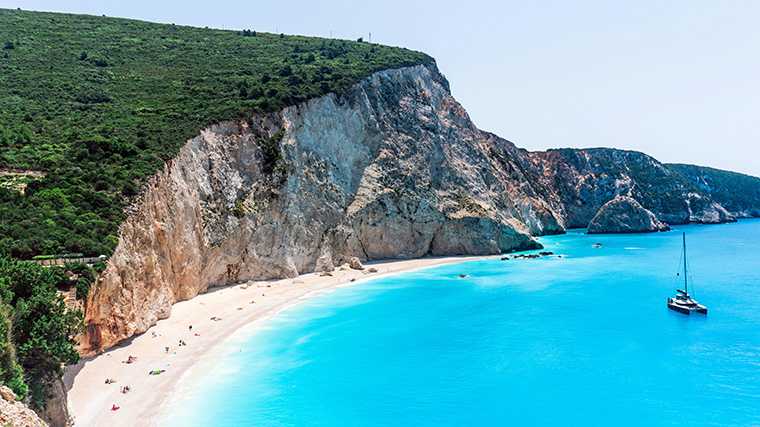
Lefkada: The wild bay of Porto Katsiki, surrounded by white limestone cliffs, closely resembles Navagio Beach—but without the wreck—and here you can actually descend to the beach.
Car strategy: It depends on which islands you’re visiting. Lefkada is connected to the mainland by a bridge, while Kefalonia and Zakynthos are accessible only by ferry: car ferries operate both from the mainland and between the islands.
Ferry logistics:
Lefkada (Nydri) ↔ Kefalonia (Fiskardo): 1h 15m
Kefalonia (Pesada) ↔ Zakynthos (Ag. Nikolaos): 1h (summer only, and limited space for cars)
Note: The roads to Myrtos (Kefalonia) and Porto Katsiki (Lefkada) are narrow, steep, and busy; travel there early or late in the day.
Car class: small or compact SUV for the mountainous interior with steep hairpin turns; avoid anything with low ground clearance.
Best time to visit: May–June and September. Kefalonia and Zakynthos are very crowded in August; Lefkada remains much quieter.
Compare rental cars in Kefalonia
Read our comprehensive guides to traveling by rental car in Lefkada and Zakynthos.
3. Crete (Heraklion – Chania – Agios Nikolaos), Greece
Crete is one large island, but it almost feels like island hopping, because the different regions each have their own distinct character.
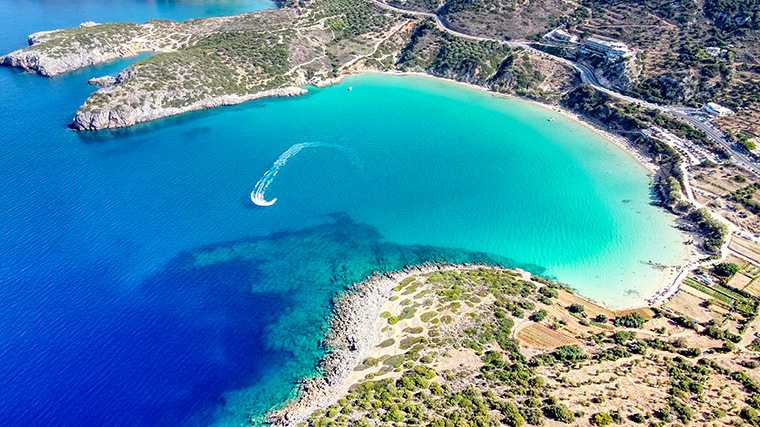
Highlights:
Knossos Palace: Just beyond the southern outskirts of Heraklion lies this famous remnant of the Minoan civilization.
Amari Valley: one of the most beautiful and least-visited areas. In this green valley surrounded by mountains, you’ll discover authentic Cretan life.
Samaria Gorge: This impressive gorge stretches 16 kilometers through the White Mountains.
Chania: built around a 14th-century Venetian harbor with a labyrinth of narrow, colorful alleys, Egyptian lighthouses, and waterfront taverns.
Car rental strategy: Decide which part of Crete you want to explore and choose your rental location accordingly. Heraklion is centrally located on the northern coast (and conveniently close to Agios Nikolaos), while Chania is much further west.
Note: When driving your rental car, always be on the lookout for stray animals on the road.
Car Class: If you’ll only be driving in the north, you can choose a rental car that suits your group size. In the south, you’ll need a car with sufficient engine power, as the roads are winding, full of hairpin turns, and sometimes narrow.
Best time to visit: April–June and September–October. July and August are perfectly fine if you avoid the busy tourist areas around Heraklion and Chania.
Read our comprehensive travel guide to renting a car in Heraklion: the starting point for the most beautiful road trips on Crete.
4. Dalmatian Islands (Hvar, Brač, Korčula), Croatia
You can take a ferry from Split to all three islands with your car, but there are no car ferries connecting the islands to each other. To travel between them, you’ll need to return to the mainland first, though you don’t always have to go through Split.
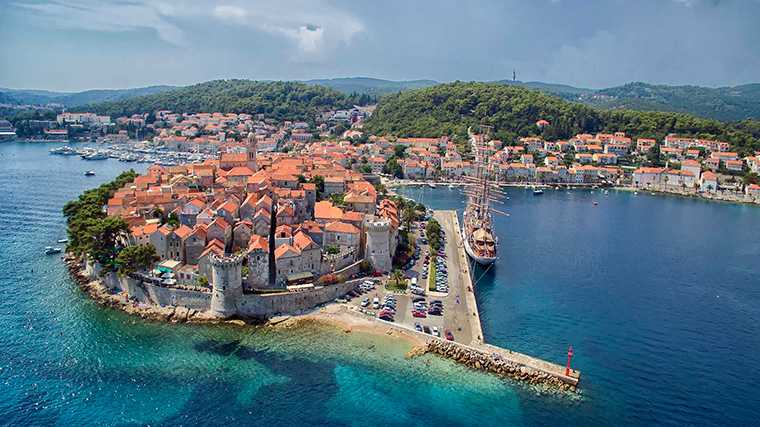
Highlights:
Hvar: Hvar Town is walled and one of the most beautiful Croatian towns, but you’ll be truly rewarded when you climb up to the fortress for the panoramic view of the terracotta rooftops, the harbor, and the scattered Pakleni Islands.
Brač: Zlatni Rat, a golden sandy beach near Bol, juts out into the sea and changes shape with the tide. It’s one of the most photographed beaches in the Mediterranean—and for good reason.
Korčula: Korčula Town is a mini-Dubrovnik on its own small peninsula, with medieval walls and streets laid out in a herringbone pattern, designed to block out the cold winds.
Read our comprehensive guide to road trips from Split along the Dalmatian coast.
Car strategy: Taking your car on the ferry is very common.
Ferry logistics: Only passenger ferries operate between the islands. Here we provide information on Jadrolinija ’s car ferries to and from the various islands.
Split ↔ Supetar (Brač): 50m
Split ↔ Stari Grad (Hvar): 2h
Split ↔ Vela Luka (Korčula): 3h 30m
Sućuraj (Hvar) → Drvenik (mainland): 35m
Korčula Town ↔ Orebić (mainland): 15 min
Note: Hvar Town is one of the most expensive places to park (€5–8 per hour); drive your rental car to the Foreti parking garage above the town and walk down from there.
Car class: compact rental car or small SUV; a little ground clearance is a plus on the trails through Hvar’s lavender fields.
Best time to visit: May–June and September. Hvar, in particular, gets very crowded in July and August.
Read all about a road trip through Dalmatia starting from Split.
5. Balearic Islands (Mallorca, Menorca, Ibiza), Spain
The archipelago off the east coast of Spain offers a remarkably wide variety of attractions: from glamorous nightclubs to prehistoric monuments and unspoiled nature.
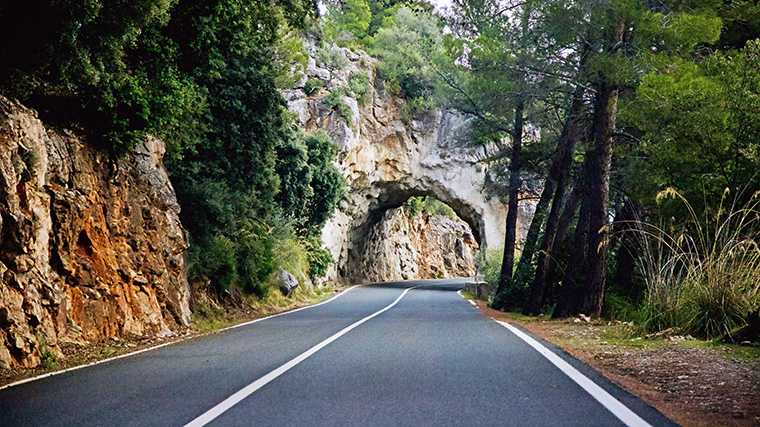
Highlights:
Mallorca: the rugged Serra de Tramuntana mountain range along the northwest coast, with olive groves, monastery villages like Valldemossa and Deià, and winding roads high above steep cliffs.
Menorca: This island has dozens of pristine coves, but Cala Macarella is the most beautiful—a semicircular bay with turquoise water, surrounded by pine forests and sand-colored cliffs.
Ibiza: the medieval fortified town perched on a hill above Ibiza Town, with massive walls and a cathedral. The view at sunset over the harbor and the salt flats is unforgettable.
Car strategy: You usually can’t return your rental car to a different island. Therefore, take the passenger ferry or a short flight and rent a car separately for each island.
Ferry logistics: The largest companies are Baleària and Trasmed. Mallorca is the hub; there is no direct ferry connection between Ibiza and Menorca.
Palma (Mallorca) → Ibiza: 2h 30m / 4h
Palma (Mallorca) ↔ Mahón (Menorca): 3h / 5h
Alcúdia (Mallorca) ↔ Ciutadella (Menorca): 1 hour / 2 hours 30 minutes
Please note: cycling teams (professionals and amateurs) like to train in Mallorca; give cyclists at least one and a half meters of space (required by law in Spain).
Car class: a compact rental car or small SUV. For the mountain roads on Mallorca, you’ll need a car with sufficient engine power.
Best time to visit: May–June and September–October. Ibiza is overcrowded with clubs and crowds in July and August; Mallorca and Menorca are a bit quieter.
Compare rental cars in Mallorca
Read our comprehensive guide to island hopping in the Balearic Islands.
6. Canary Islands (Tenerife, Gran Canaria, Lanzarote, La Gomera), Spain
Most rental companies in the Canary Islands do not allow you to take your rental car on the ferry. If a rental company does allow this, you must return the car to the island where you picked it up. That’s why it’s better to rent a car separately on each island.
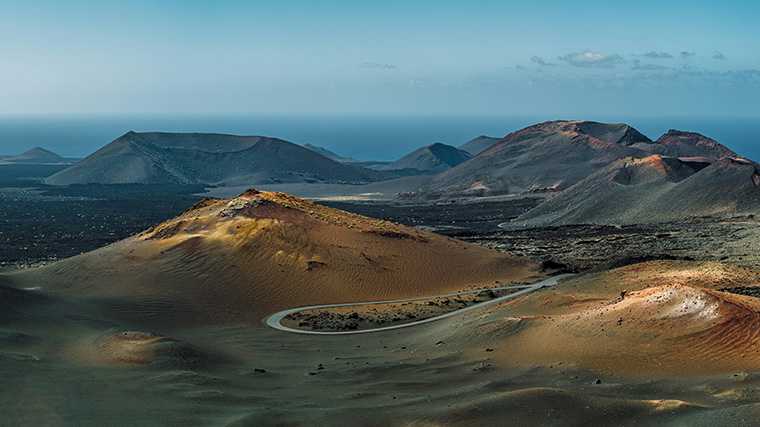
Highlights:
Tenerife: Mount Teide, surrounded by a surreal lava field. From the summit, you can look out over the other islands and, on a clear day, across the Atlantic Ocean all the way to the African coast.
Gran Canaria: the white shifting sand dunes (Dunas de Maspalomas), where you can almost feel the Sahara. The contrast with the ocean right next to them makes it truly special.
Lanzarote: the volcanic Timanfaya National Park, where the earth is still boiling beneath the surface in some places. No vegetation, no buildings—just black lava crusts and red crater walls.
La Gomera: the ancient Garajonay laurel forest at the top of the island. The combination of centuries-old trees, moss, mist, and silence makes it the most unexpected island experience in the Canary Islands.
Car strategy: a separate car on each island. On the main islands, rental cars are inexpensive, and flights between the islands (Binter Canarias, Canary Fly) are faster and often cheaper than ferries.
Ferry logistics: The largest ferry company is Baleària Canarias, followed by Fred. Olsen Express, which primarily competes on fast connections between the islands.
Tenerife (Los Cristianos) ↔ La Gomera (San Sebastián): 50m
Tenerife (Santa Cruz) ↔ Gran Canaria (Las Palmas): 1h 30m
There are no direct ferry connections from Tenerife, Gran Canaria, or La Gomera to Lanzarote.
Note: On Tenerife and Gran Canaria, you may suddenly find yourself driving through clouds at altitudes between 700 and 1,200 meters, causing visibility to drop almost to zero; use your fog lights and drive slowly.
Car class: compact car or SUV. If you’re going to La Gomera, rent a car with a powerful engine; the island has some of the steepest roads in the Canary Islands.
Best time to visit: It really feels like spring there all year round; November through March is the busiest time, as many Northern Europeans escape the winter during those months.
Compare rental cars in Tenerife
We have several comprehensive guides to the islands of the Canary Islands archipelago: La Palma, Lanzarote, and Tenerife.
7. Madeira + Porto Santo, Portugal
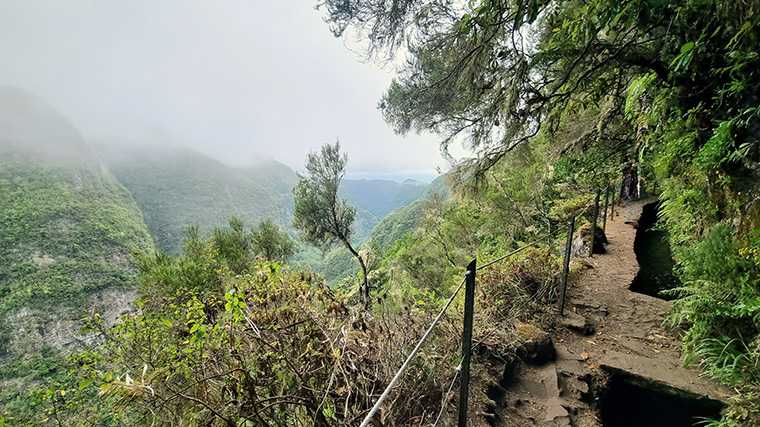
Madeira is known for its hiking trails along levadas (historic irrigation channels), exotic flowers, and a microclimate that’s completely different in the north than in the south.
Highlights:
Madeira: The Levada do Caldeirão Verde hiking trail through the rainforest is truly impressive. A narrow path along the levada winds through tunnels carved into the rock, ending at a waterfall nestled between tall, moss-covered cliffs.
Porto Santo: nine kilometers of unbroken, virtually deserted golden beach. The mineral-rich sand is known for its purported therapeutic properties.
Car strategy: Rent a car on Madeira, but take the passenger ferry for a day trip to Porto Santo.
Ferry logistics: Ferry services between Madeira and Porto Santo are operated by Porto Santo Line.
Madeira ↔ Porto Santo: 2h 30m
Note: Many roads are very narrow; use your horn at blind curves to warn oncoming traffic.
Car Class: Choose a rental car with sufficient engine power. Cars with underpowered engines will struggle on steep inclines. Not used to driving in the mountains? Opt for an automatic transmission.
Best time to visit: Madeira is a great destination year-round, but June through September are the warmest and driest months.
Compare rental cars in Madeira
Read more about fantastic road trips on magical Madeira.
8. Azores (São Miguel, Terceira, Pico), Portugal
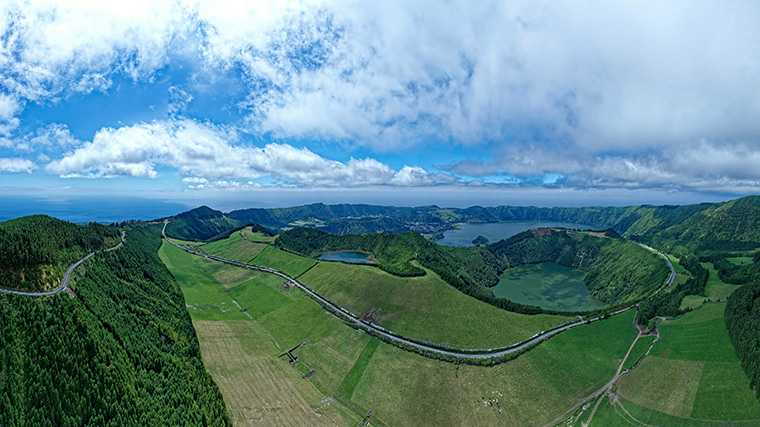
The volcanic islands of the Azores are very green, often shrouded in fog, with crater lakes and geysers. There are hardly any beaches, but the natural scenery is breathtaking.
Highlights:
São Miguel: the two crater lakes of Sete Cidades within a dormant volcano. From the lookout point, you can clearly see the difference between the two basins, which are various shades of blue and green.
Terceira: the Algar do Carvão, a volcanic chimney where you descend 90 meters into the heart of an extinct volcano, and Gruta do Natal, a 700-meter-long lava tunnel.
Pico: The volcano of the same name is Portugal’s highest mountain (2,351 m). The climb takes a day, but the view from the top—of the clouds, the other islands, and the ocean—is unparalleled.
Car strategy: a separate rental car for each island. Some car rental companies allow you to take the rental car on short ferry crossings between Pico, Faial, and São Jorge, but definitely not to or from São Miguel (which is much farther away). In addition, you must always return the rental car to the island where you picked it up. Therefore, fly to and from São Miguel and take the passenger ferry between Terceira and Pico.
Ferry logistics: The ferry services between the Azores islands are operated by Atlânticoline.
Note: In the summer, massive hydrangea hedges obstruct visibility on country roads. Also, be on the lookout for herds of cattle being driven across the road from one pasture to another.
Vehicle type: a small SUV, especially on Pico, where the lava fields of Mystérios and the access roads to Mount Pico are rugged and steep.
Best time to visit: June–September, as it often rains and is quite windy outside these months. Even in summer, the weather can change quickly; multiple layers of clothing are always necessary.
Compare rental cars in the Azores
Get inspired by our blog post on the 20 best activities on São Miguel.
9. Sicily + Aeolian Islands (Lipari, Stromboli), Italy
Sicily is the largest island in the Mediterranean and a civilization unto itself: Greeks, Moors, Normans, and Spaniards have all left their mark there.
Highlights:
Sicily: The seven Greek temples near Agrigento are better preserved than many temples in Greece itself, and in the evening they are beautifully illuminated—accompanied by the scent of almond blossoms in the spring.
Lipari: From the ruins of the Spanish fort high above the harbor, you can see the other islands, with Stromboli appearing as a plume of smoke on the horizon on clear days.
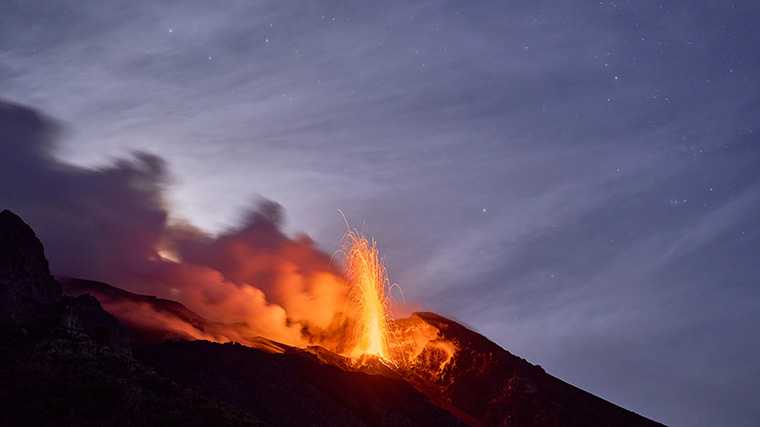
Stromboli: The active volcano regularly has small eruptions, an impressive sight especially at night. Watching glowing chunks of lava fall into the sea in the darkness is a raw display of nature’s power.
Car strategy: Of the Aeolian Islands, only Lipari and Vulcano allow cars, but from July 1 through September 30, only residents are permitted to bring their cars on the ferry from Milazzo. So, on Lipari, either rent a car separately or explore the island on foot. For Stromboli, the latter is your only option.
Ferry logistics: The most popular and fastest ferries to the Aeolian Islands are operated by Liberty Lines.
Milazzo (Sicily) ↔ Lipari: 1h 5m
Milazzo (Sicily) ↔ Stromboli: 2h 50m
Lipari ↔ Stromboli: 1h 30m
Please note: In many historic centers of Italian towns and villages, there are restrictions on driving, known as the Zona a Traffico Limitato (ZTL). Read our comprehensive guide to ZTL zones.
Car size: In historic city centers and mountain villages in Sicily, the streets are sometimes extremely narrow; therefore, rent a car that isn’t too wide.
Best time to visit: April–June and September–October. The summer months are very hot, and in winter, ferry services to the Aeolian Islands are severely limited.
For more information on attractions, check out our tips for road trips in Sicily.
10. Malta + Gozo + Comino
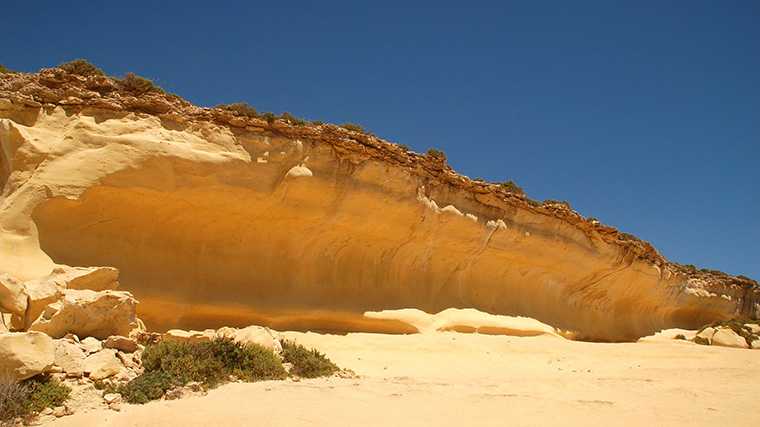
A mini-archipelago in the heart of the Mediterranean, but packed with surprises. This sunny island nation combines ancient culture with breathtaking nature.
Highlights:
Malta: The capital, Valletta, is filled with Baroque palaces, forts guarding the Grand Harbor, and St. John’s Co-Cathedral with its famous painted marble floor.
Gozo: Older than Stonehenge and the Egyptian pyramids, the Ġgantija Temples are among the oldest freestanding stone structures on Earth.
Comino: The shallow, turquoise-colored Blue Lagoon is very crowded in July and August, but outside the high season, early in the morning, it’s one of the most beautiful spots in the Mediterranean.
Car strategy: From Malta, you can easily take your rental car to Gozo, and you only have to pay once—when you take the ferry back. For Comino, you’ll need to leave the rental car behind.
Ferry logistics: There are three companies that operate ferry services between Malta and Gozo: Gozo Channel uses car ferries, while Gozo High Speed and Virtu Ferries use high-speed boats.
Ċirkewwa (Malta) ↔ Mġarr (Gozo): ~25m (car ferry)
Valletta (Malta) ↔ Mġarr (Gozo): ~45m (high-speed passenger ferry)
There are several companies that organize boat trips to Comino. The official ferry service is operated by Comino Ferries. Boats depart from Ċirkewwa or Marfa on Malta and from Mġarr on Gozo. Travel time: 10–15 minutes.
Please note: In Malta and Gozo, traffic drives on the left. Read our tips on how to get used to this very quickly.
Car class: small, compact car; ideal for navigating the narrow, winding streets and for parking the rental car in tight spots.
Best time to visit: March–June and September–October. In July and August, it’s extremely hot (35°C) and the Blue Lagoon gets very crowded.
Read all about the 25 unforgettable sights in Malta.
Hidden costs
Although island hopping is a fantastic way to combine multiple destinations in a single trip, there are additional costs you’ll need to factor into your budget.
Ferries
Ferry fares vary by route and season. Between the Greek Cyclades, passengers can expect to pay approximately €25–60 per person per crossing during peak season. Taking your rental car on the ferry costs €40–90 for a one-way trip on routes such as Split–Hvar and Naples–Ischia. Additionally, ferries sometimes charge a small surcharge if you book online in advance, but this guarantees you a spot.
One-Way Rental Costs
Returning a rental car to an island other than the one where you picked it up is usually not possible. If it is possible, you’ll often pay a high surcharge for this one-way rental, which can be as high as €200. In these cases, renting a separate car on each island is the most practical solution.
Surcharges on smaller islands
Rental car prices on smaller islands are often higher due to limited availability. Destinations such as Naxos, La Gomera, and Porto Santo can be 10–25% more expensive than larger, neighboring islands.
Parking
Finding a free parking spot in the center of popular cities like Palma de Mallorca and Funchal on Madeira is often difficult, and even if you do find a spot, it’s quite expensive. It’s better to park just outside the city center and walk to the heart of the city.
ZTL Zones
In Italian cities such as Palermo and Catania in Sicily, so-called ZTL zones have been established. Only residents, delivery vehicles, and emergency services are allowed to drive in these areas, so you’re not permitted to enter with your rental car. If you accidentally drive into a ZTL zone, you can expect a hefty fine. Make sure you’re fully familiar with local traffic rules to avoid fines.
Gas Prices
Fuel costs on islands are generally higher than on the mainland; you’ll often pay 5–15% more. This is especially noticeable in more remote destinations such as the Azores, Madeira, and La Gomera, where transportation and supply costs are higher.
Accommodation Prices
Popular islands like Santorini, Ibiza, and Hvar typically have significantly higher hotel prices than less-visited neighboring islands. Even a few nights on a popular island can significantly increase your total travel budget.
Suggested Itineraries for Island Hopping
Island hopping with a rental car is one of the best ways to explore different destinations at your own pace. We’ll give you suggestions for three itineraries, and each itinerary includes information on ferry connections, highlights per island, and estimated total costs, including car rental, ferries, and accommodations.
7 Days in the Cyclades (Greece)
2 islands · 2 ferry crossings · 5-day car rental
This is a lighter version of the classic Cyclades trip and combines two of the islands in the Aegean Sea.
Santorini (3 days)
Admire the famous sunset from the cliff edge of Oia.
Drive along the caldera road from Fira south toward Akrotiri.
Swim at Red Beach and the black-sand beach of Perissa.
High-speed ferry Santorini → Naxos (1h 45m, starting at €35)
Naxos (3 days)
Drive along the mountain road to the medieval village of Halki.
Admire the marble Portara Gate at sunset.
Drive your rental car along the coast to the long beaches of Plaka.
Estimated total cost:
Rental car for 5 days · ferry · budget to mid-range accommodations
€900–1,200
10 days in the Dalmatian Islands (Croatia)
4 stops · 3 ferry crossings · round trip from Split or one-way Split → Dubrovnik
Please note: There are no car ferries between the islands; they all depart from the mainland. Book car ferries in July and August at least 48 hours in advance.
Split (2 days)
Stroll through Diocletian’s Palace and the labyrinth of the old town.
In the evening, stroll along the Riva promenade with a view of the harbor.
Drive to Marjan Hill, a wooded peninsula overlooking the Adriatic Sea and the islands.
Car ferry Split → Stari Grad (2 hours, starting at €30)
Hvar (3 days)
Walk to the Spanish Fortress for a panoramic view of the bay.
Drive along the island’s main road to the quiet villages in the east.
Take a water taxi to the Pakleni Islands for a swim and lunch.
Sučuraj (Hvar) → Drvenik (35 min, starting at €25). Then drive via the Pelješac Peninsula to Orebić for the short car ferry to Korčula Town (15 min, €16).
Korčula (2 days)
Stroll through the medieval walled capital, said to be the birthplace of Marco Polo.
Drive along the wine route through the vineyards of Lumbarda.
Swim at the rocky coves on the south coast near Pupnat.
Note: To get from Korčula to Dubrovnik by rental car, you’ll need to return to the Pelješac Peninsula. If you’ve already visited Dubrovnik, you can take the car ferry from Vela Luka back to Split (3h 30m, €75).
Dubrovnik (2 days)
At sunrise, walk the entire perimeter of the old city walls.
Take the cable car up Mount Srđ for a stunning view of the old town.
Take a day trip to the Elafiti Islands on the local ferry.
Estimated total cost:
3 ferry crossings · car rental · mid-range accommodations
€1,100–1,500
14 days in the Cyclades (Greece)
Combining four Cyclades islands into one trip is the classic way to go island-hopping in Greece.
4 islands + day trip · 4 ferry crossings · car per island
Santorini (3 days)
Hike along the rim of the caldera from Fira to Oia with views of the sunken volcano.
Akrotiri: a Minoan city buried under volcanic ash, remarkably well-preserved.
Wine tasting in a wine cellar carved out of pumice rock.
High-speed ferry Santorini → Naxos (1h 45m, starting at €35)
Naxos (3 days)
Drive to the Tragaea Plateau: marble villages, Byzantine churches.
Portara, a 6th-century marble gate standing alone on a peninsula.
Long sandy beaches at Plaka and Agios Prokopios, rarely crowded in the morning.
High-speed ferry Naxos → Paros (25 min, starting at €15)
Paros (2 days)
Old Town of Parikia: a whitewashed maze featuring the 4th-century Ekatontapiliani Church.
Naoussa Harbor: fishing boats, waterfront taverns, and an easy day trip to Antiparos.
Golden Beach: flat water and steady winds—the best kitesurfing spot in the Cyclades.
High-speed ferry Paros → Mykonos (~1 hour, starting at €25)
Mykonos (3 days)
The whitewashed streets of Chora and the windmills above Little Venice.
Day trip to Delos: a UNESCO-protected sacred island with well-preserved Hellenistic ruins.
The beaches of Ornos and Elia for a more peaceful swim, away from the hustle and bustle of the beach bars.
Estimated total cost:
4 ferry crossings · car per island · budget-mid-range accommodations
€1,800–2,500
Frequently Asked Questions About Island Hopping in Europe
Can I take my rental car on ferries between Greek islands?
Between the islands of the Cyclades, taking a rental car on the ferry isn’t the most practical option. Tickets typically cost between €60 and €120 per crossing, and not all ferry services carry cars. For most Cyclades routes, it’s more convenient and cost-effective to arrange a rental car separately on each island. Between the Ionian Islands, such as Kefalonia and Lefkada, traveling by car is much more common because the crossings are shorter and more frequent.
How many days do I need for island hopping in the Greek Cyclades?
A classic Cyclades itinerary takes about 12–14 days, which is enough time to explore several islands at a leisurely pace. A popular itinerary includes Santorini (3 days), Naxos (3 days), Paros (2 days), and Mykonos (3 days), with an extra day for flexibility.
If you have 10 days, visiting three islands is realistic. With 7 days, it’s best to limit your trip to two islands, such as Santorini and Naxos.
Is a credit card required to rent a car?
Yes. All rental companies that EasyTerra partners with require a valid credit card in the name of the primary driver when picking up the car. Debit cards and prepaid cards are not accepted for the security deposit.
What type of rental car is best for island hopping?
For most island destinations, including the Cyclades, the Ionian Islands, the Balearic Islands, and Malta, a compact or economy car is the best choice. Smaller cars are easier to park in historic villages and can reduce ferry costs.
For mountainous destinations such as La Gomera, Madeira, Pico in the Azores, or northern Kefalonia, a midsize car or SUV offers more comfort and stability on steep and winding roads.
Can I travel between the Canary Islands with a single rental car?
No, usually not. Most car rental companies in the Canary Islands do not allow you to take the car on a ferry. The few rental companies that do allow this require that you return the rental car to the island where you picked it up. Not only is this impractical, but you also have to factor in the cost of a round-trip ferry ticket.
What’s the best time of year for island hopping in Europe?
For the Greek islands, May–June and September are the best times to travel, when temperatures are pleasant, it’s less crowded, and ferry availability is better. Read more about the best strategy for renting a car in June.
The Canary Islands enjoy a mild climate year-round, making them an excellent destination in any season. Madeira and the Azores are best visited between May and October, when the weather is drier and ideal for outdoor activities and whale watching.
July and August are the busiest months on most islands, with higher prices, crowded beaches, and limited ferry availability.
How do I book ferries between the Greek islands?
The main ferry companies are Blue Star Ferries, SeaJets, and Hellenic Seaways. During peak season, it’s advisable to book ferry tickets four to six weeks in advance, especially if you’re traveling between the islands in July and August.
SeaJets offers faster crossings but charges higher fares. For example, a trip from Santorini to Mykonos typically costs €35–55 on a regular ferry and €65–90 on a high-speed ferry, but the travel time is significantly shorter.
Can I go island hopping in Croatia with a rental car from Split?
Yes, but you’ll always have to travel via the mainland. Ferries depart from Split to Brač, Hvar, and Korčula, but there are no car ferries connecting these islands to each other—only passenger ferries. That said, stopping on the mainland isn’t a bad thing, as the drive between Brač and Hvar takes you along the beautiful Adriatic coastal road.

Where would you like to rent a car?
- 24000+ pick-up locations
- Free cancellation
- Independent comparator

Useful tips for a well-prepared trip
Which insurance should I choose, and what's the deal with the deposit? Read our articles with useful information and tips to ensure you choose the right rental car for you.