- Popular countries
- Popular regions
- Popular cities
- Popular airports
- Car hire United Kingdom
- Car hire Italy
- Car hire Spain
- Car hire United States
- Car hire Portugal
- Car hire Greece
- Car hire France
- Car hire Poland
- Car hire Ireland
- Car hire Cyprus
- Car hire Netherlands
- Car hire South Africa
- Car hire Switzerland
- Car hire Croatia
- Car hire Canada
- Car hire Malta
- Car hire Germany
- Car hire Hungary
- Car hire Norway
- Car hire Australia
- Car hire England
- Car hire Sicily
- Car hire Scotland
- Car hire Florida
- Car hire Sardinia
- Car hire Malta
- Car hire California
- Car hire Crete
- Car hire Lanzarote
- Car hire Majorca
- Car hire Menorca
- Car hire Tenerife
- Car hire Rhodes
- Car hire Fuerteventura
- Car hire Corsica
- Car hire Kefalonia
- Car hire Madeira
- Car hire Corfu
- Car hire Ibiza
- Car hire Gran Canaria
- Car hire London
- Car hire Faro
- Car hire Malaga
- Car hire Milan
- Car hire Lisbon
- Car hire Rome
- Car hire Alicante
- Car hire Dublin
- Car hire Manchester
- Car hire Porto
- Car hire Amsterdam
- Car hire Larnaca
- Car hire Geneva
- Car hire Luqa
- Car hire Bergamo
- Car hire Athens
- Car hire Budapest
- Car hire Pisa
- Car hire Orlando
- Car hire Palermo
- Car hire London Heathrow Airport
- Car hire Faro Airport
- Car hire Lisbon Airport
- Car hire Malaga Airport
- Car hire London Gatwick Airport
- Car hire Alicante Airport
- Car hire Manchester Airport
- Car hire Dublin Airport
- Car hire Larnaca Airport
- Car hire Porto Airport
- Car hire Malta Airport
- Car hire Bergamo Airport
- Car hire Athens Airport
- Car hire Budapest Ferihegy Airport
- Car hire Rome Fiumicino Airport
- Car hire Geneva Airport (Switzerland)
- Car hire Amsterdam Schiphol Airport
- Car hire Milan Malpensa Airport
- Car hire Pisa Airport
- Car hire Orlando International Airport

The Ultimate Road Trip Through Ireland in a Rental Car
Take it easy on the winding Irish country roads
Southwestern Ireland is a fascinating combination of emerald-green hills, dramatic mountains, and a rugged coastline, interspersed with centuries-old castles, churches, and monasteries. There’s no better way to experience these rugged landscapes than by renting a car and embarking on an epic road trip. We recommend avoiding the highways as much as possible and exploring the charming country roads, of which Ireland has plenty.
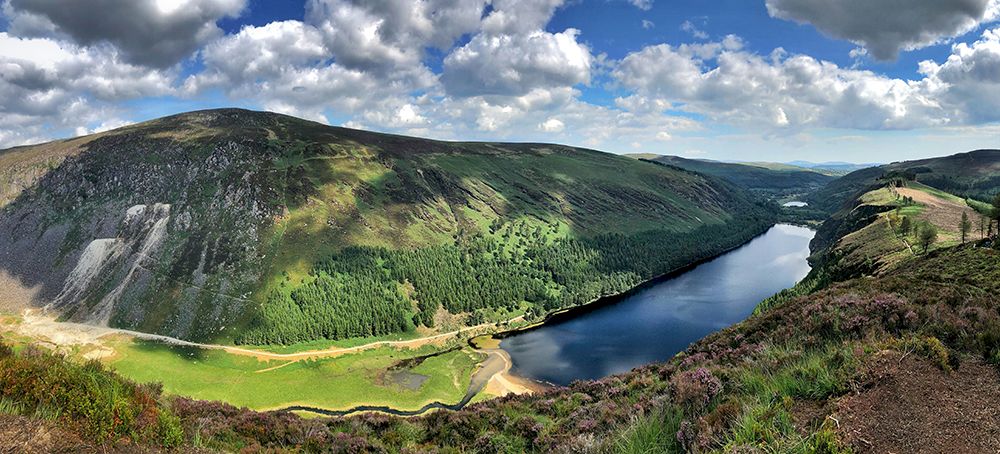
Below, we’ll discuss the sights in southwestern Ireland. You can start this road trip in the capital, Dublin, or in other cities we’ll visit along the way, including Cork, Limerick, and Galway. The vast majority of travelers arrive at Dublin Airport, but Cork Airport also handles millions of passengers each year. You can also fly into Kerry Airport and Shannon Airport. For this road trip, Ireland West Airport is a less obvious choice, but it does serve as a good gateway to the northwest of the country.
Dublin
A trip to Ireland isn’t complete without a visit to Dublin, with its lively pubs and vast array of sights in the medieval city center. Architecture and history buffs should check out St. Patrick’s and Christ Church Cathedrals; you’ll find even more history at Trinity College; fans of dark Irish beer should head to the Guinness Storehouse; and the Ha’Penny Bridge is the ultimate symbol of Dublin. And that’s by no means a complete list of what you can experience in the Irish capital.

The Temple Bar neighborhood is teeming with pubs and restaurants, but it’s mainly young English people who go there to drink, and things can get pretty rowdy later in the evening. The Irish themselves prefer to go to pubs north of the River Liffey, between Jervis Street and Capel Street. Irish pubs often feature live music, and patrons sing along at the top of their lungs. No matter where you go out, if there’s one thing that describes Dublin, it’s this: incredibly lively.
High Crosses & Round Towers
After a day or two in the Irish capital, it’s time to set out in your rental car. Halfway along the route to Kilkenny, you’ll pass through the town of Moone, where Ireland’s second-tallest high cross stands among the ruins of a medieval monastery. These high crosses are iconic cultural monuments in the Irish landscape. The eighth-century granite high cross in Moone is one of the best-preserved, featuring clear depictions of biblical stories.
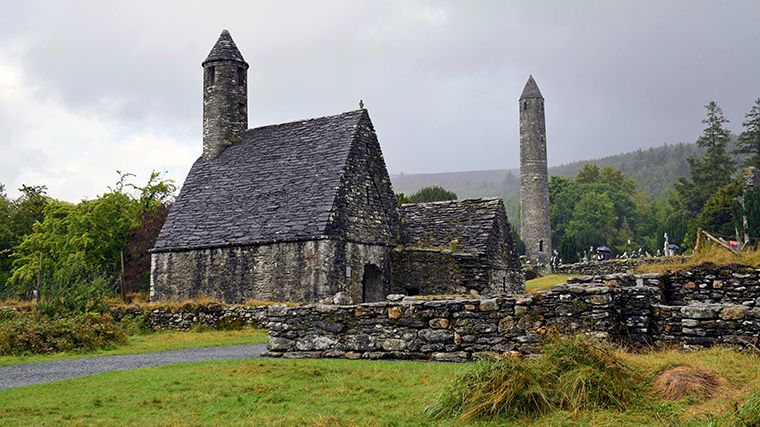
Round towers at old churches and abbeys are also iconic Irish landmarks. You’ll find an example of this a little further on, in the town of Castledermot. Round towers were likely a symbol of the prosperity of the monastery to which they belonged: the taller the tower, the more valuables could be stored there. The doorway was set high in the wall, making it difficult for unwelcome guests to enter. What’s unique about the tower in Castledermot is that its door is actually on the ground floor.
Kilkenny
Kilkenny is famous for its beautifully restored medieval center. The best place to park your rental car is at the large Market Yard parking lot. From there, you’re within walking distance of all the sights. Moreover, this lot is accessible 24 hours a day, whereas parking garages in the area close in the evening (sometimes very early). From the parking lot, it’s a five-minute walk to the imposing 13th-century Norman Kilkenny Castle. The castle’s interior dates from a later period, the Victorian era.
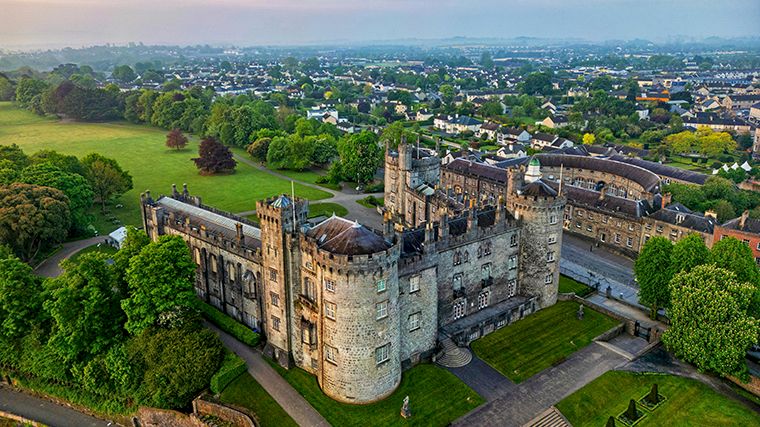
The castle stands at the beginning of what is known as the Medieval Mile. Inside the old St. Mary’s Church is a fascinating museum that brings Kilkenny’s medieval history to life. You can also book a guided walking tour here. The guide will take you to St. Canice’s Cathedral, among other places. It is the second-largest church in Ireland, surpassed only by St. Patrick’s in Dublin. The current cathedral dates back to the thirteenth century, but the round tower next to it is about four centuries older. You can climb this tower via very steep ladders. From the platform thirty meters above ground, you’ll have a panoramic view of Kilkenny and the surrounding countryside.
In the old town, there are a few very narrow streets—called “slips” —that are barely noticeable because their entrances look more like gateways. The most picturesque street is undoubtedly Butter Slip, but it has a somewhat morbid history. What exactly is it? Discover that for yourself in Kilkenny!
Tip: For another beautiful view of the castle and the cathedral, walk along the north bank of the River Nore a short distance up the hill to a lookout point with benches. This spot often appears in old paintings. Just before those benches is the start of a boardwalk path running right alongside the river, the Lacken Boardwalk.
Rock of Cashel
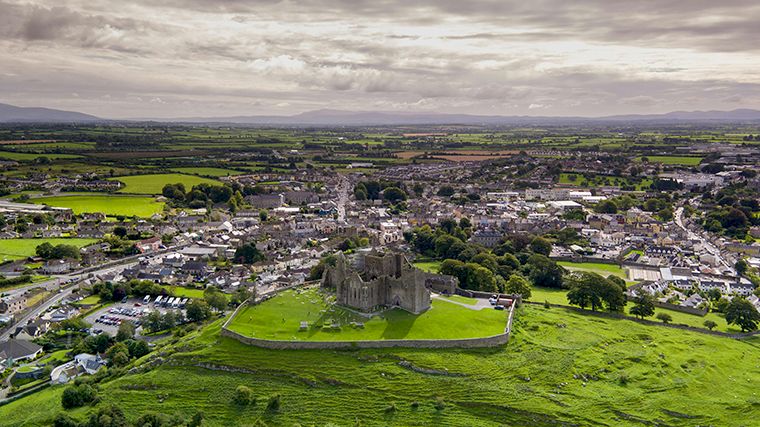
The Rock of Cashel is a limestone outcrop near the village of the same name, home to the most impressive cluster of medieval buildings in Ireland. Among other things, you’ll find the ruins of a Gothic cathedral, the Romanesque Cormac’s Chapel with frescoes dating back 800 years, an abbey, and the Hall of the Vicars Choral. There is also a round tower here, likely dating from the ninth century and thus the oldest structure on the site. Especially on foggy days, you can experience the mystical atmosphere of the buildings on this rock, which is officially called St. Patrick’s Rock.
At the base of the rock stands a typical 19th-century cottage, which houses the Cashel Folk Village historical museum. It boasts a vast collection of antique artifacts, but above all, you’ll learn a great deal about Ireland’s dramatic history.
Cobh
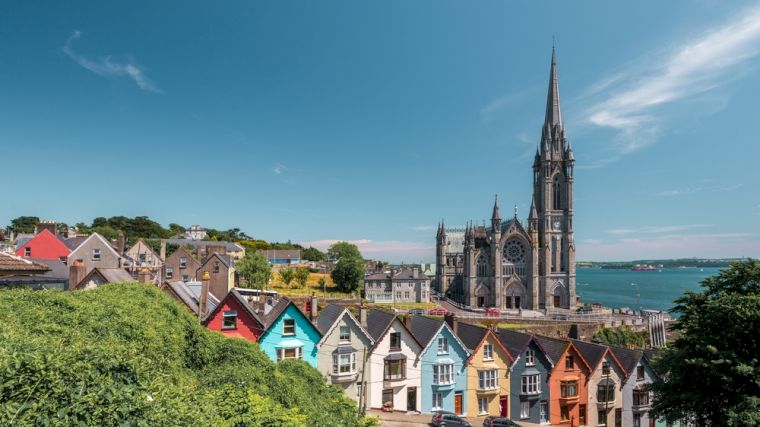
Before you enter Cork, be sure to take a detour to Cobh (pronounced “Cove”). You won’t regret it, because this port town is a gem, dotted with colorful houses and dominated by an impressive Gothic cathedral. A row of houses known as the Deck of Cards lines a particularly steep little street, and the colorful cottages seem to balance each other out. Right behind them, St. Colman’s Cathedral rises high. At first glance, it looks like an old church, but this cathedral is only just over a hundred years old. The church tower has a carillon with no fewer than 49 bells, which ring every hour.
Cobh was the last sight of Ireland for the passengers of the Titanic, as it was the ship’s final port of call before it set out on its fateful voyage across the Atlantic Ocean. The restored historic passenger terminal is now a museum dedicated to Cobh’s maritime history. It also tells the stories of Irish emigrants who dreamed of a new life across the ocean.
You’ll hear even more historical stories when you take a boat from Kennedy Pier to Spike Island, also known as the Irish Alcatraz. Just like that little island in San Francisco Bay, Spike Island was a prison with a very harsh regime. Those harsh conditions really get to you when you visit the Punishment Block.
Cork
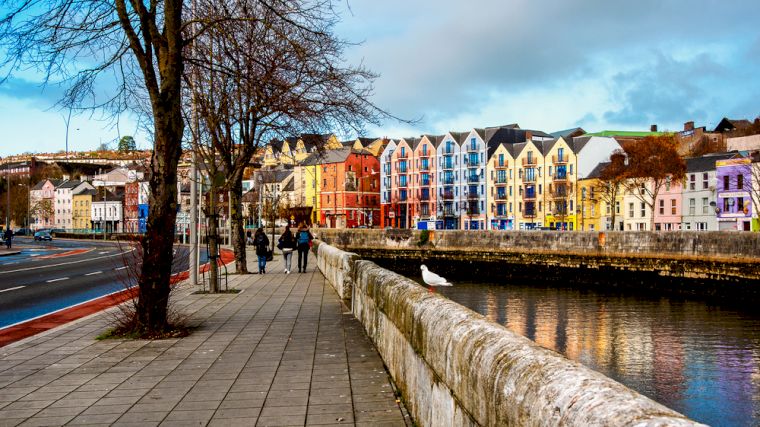
Cork’s historic center lies between two branches of the River Lee. You can park your rental car in various parking garages around the center, but the rates are on the high side. Two parking garages near the River Lee Hotel on the west side of the old city center are relatively affordable.
Foodies flock to the English Market, which has been around since 1788. The market is far from English (the name refers to its founders, English Protestants) and is the place to try local specialties. Sample your way through the various stalls or have lunch at the Farmgate Cafe, where you can enjoy dishes made entirely with ingredients from the market.
Republican women were held in the castle-like City Gaol during the Irish War of Independence. Take a guided tour through the gloomy cells and corridors to step back in time to those turbulent days. Next to the 17th-century Elizabeth Fort stands St. Fin Barre’s Cathedral, which features beautiful stained-glass windows. Keep an eye on the angel on the east side of the cathedral—according to local legend, he’ll blow his trumpet when the end of days approaches!
The Victorian Quarter north of the Lee is full of stately 19th-century homes. Practice your hill-starting skills before driving your rental car up St. Patrick’s Hill. It’s a very steep hill, and from the top, you’ll have a beautiful view of the city. Since the benches there face west, the view is especially beautiful at sunset.
Kinsale
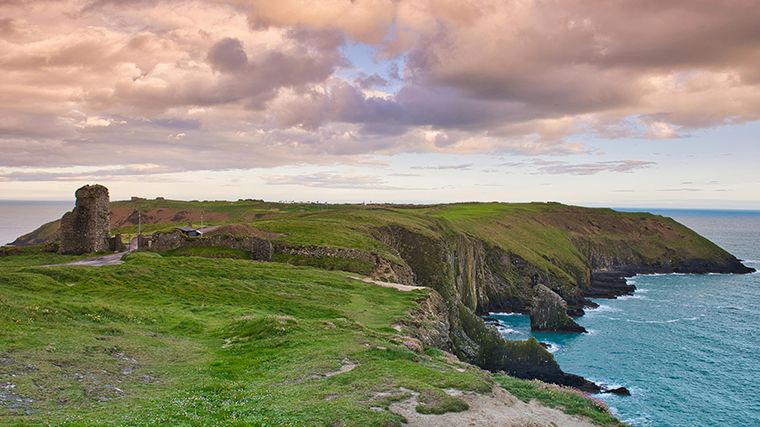
Until not too long ago, Nohoval Cove was a lovely stopover on the way to Kinsale. Unfortunately, you can no longer reach these rugged cliffs because the path leading there has been closed off. So you’ll just have to head straight to Kinsale, which—even more so than Cork—is known as the culinary capital of Ireland. It was once a somewhat sleepy fishing village, but has evolved into a gastronomic hotspot, full of restaurants for foodies, trendy cafés, and even a Michelin-starred restaurant. You’ll also find specialty shops and colorful boutiques in the narrow streets. To protect the harbor, a fort— James Fort—was built at the beginning of the seventeenth century. At the end of that century, a second, larger fortress was built, Charles Fort, which is still in fairly good condition.
Take a drive in your rental car to the Old Head of Kinsale. You’ll travel along winding, hedge-lined roads to this peninsula, which offers beautiful views of the Atlantic Ocean. Unfortunately, you can’t drive all the way to the very tip, as it’s occupied by a golf course. Incidentally, this peninsula is the starting or ending point of the Wild Atlantic Way, a 2,500-kilometer route along the entire Irish west coast. It’s no coincidence that this fantastic route ranks number 1 on our list of the Top 12 one-way road trips with a rental car.
Mizen Head / Dunlough Castle
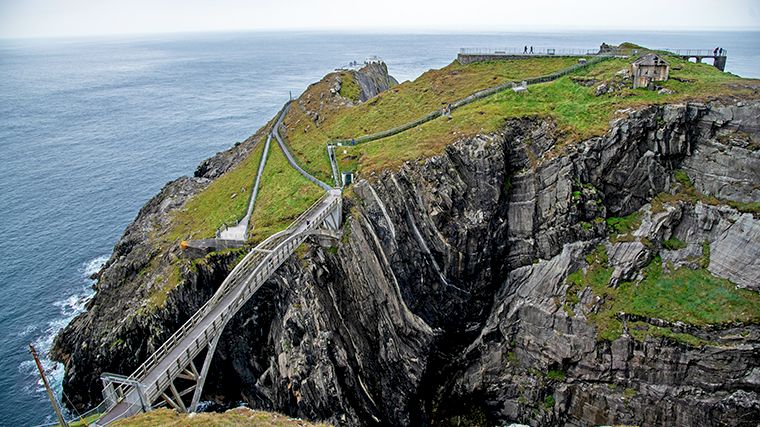
You can drive all the way to Mizen Head, the southwesternmost tip of Ireland. The fastest routes from Kinsale are via the R586 or the N71, but if you have time, we recommend veering off these main roads every now and then to explore the coastline with its small harbors, bays, and coves. You can leave your rental car there for a while to go kayaking between Lough Hyne and the sea, for example. The further west you drive, the more rugged the landscape becomes. The Mizen Head Visitor Center is perched atop a high cliff and features an interesting exhibition of maritime artifacts and a navigation simulator. The southwesternmost point itself is a small island connected to the mainland by an arch bridge. In addition to the awe-inspiring cliffs, you can sometimes spot dolphins, seals, and humpback whales there.
Just north of Mizen Head lie the ruins of Dunlough Fort. From the small parking lot at Coosacuslaun Bay, it’s about a twenty-minute walk to reach the remains of this fortress. The place has a magical quality, if only for the silence that reigns there—a silence that’s even more pronounced when it’s a bit foggy.
Beara Peninsula / Healy Pass
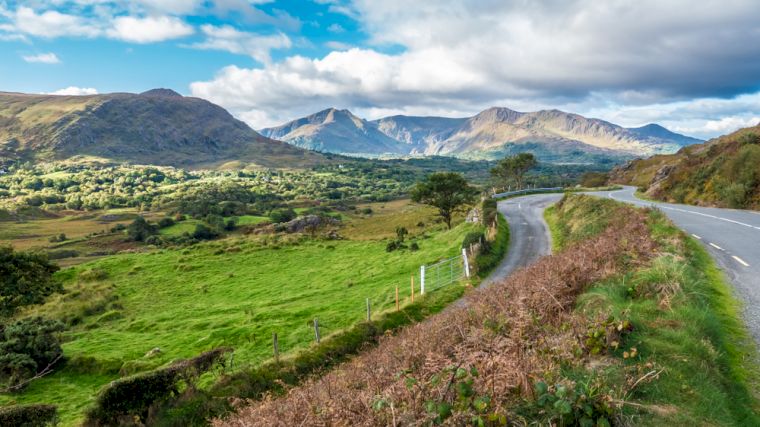
The Beara Peninsula is much less well-known than Iveragh (home to the famous Ring of Kerry). Because the winding roads here are too narrow for large tour buses, it’s much quieter. But certainly no less interesting! On this peninsula, too, you can discover the most beautiful spots by following a loop—the Ring of Beara. The drive between the colorful villages of Eyeries and Allihies is breathtaking. The narrow coastal road winds through wild scenery and right past the rugged cliffs of Cods Head.
Between Lauragh and Adrigole, you can veer off the loop and drive over the winding Healy Pass. The highest point is just 334 meters above sea level, but it feels like you’re much higher. Drive from south to north, and you’ll be amazed by the difference between one side of the pass and the other: from rocky and rugged in the south to the rolling, lovely green valley around Glanmore Lake in the north.
Castletown-Bearhaven is a perfect base for hiking trips in the area. There’s also a ferry to Bere Island, but even more beautiful is a boat trip to the rugged cliffs of Calf Rock, Cow Rock, and Bull Rock. The latter two feature spectacular underpasses.
Killarney / Ring of Kerry
We mentioned the famous Ring of Kerry above, which is popular for good reason. This route winds past ancient mountains and lakes, dreamy beaches, rugged coastal cliffs, medieval castles, and a prehistoric fort. And all of this is set amidst the iconic, emerald-green Irish landscape. Along the way, you’ll pass through small towns and villages, where there’s always a pub ready to welcome you. The loop around the Iveragh Peninsula is 180 kilometers long, so you could technically cover it in a single day, but you wouldn’t get nearly everything out of this route, which offers so much to see and experience. The most popular place to start the loop is Killarney, and it’s best to drive clockwise to avoid getting stuck behind tour buses, which usually travel in the opposite direction.
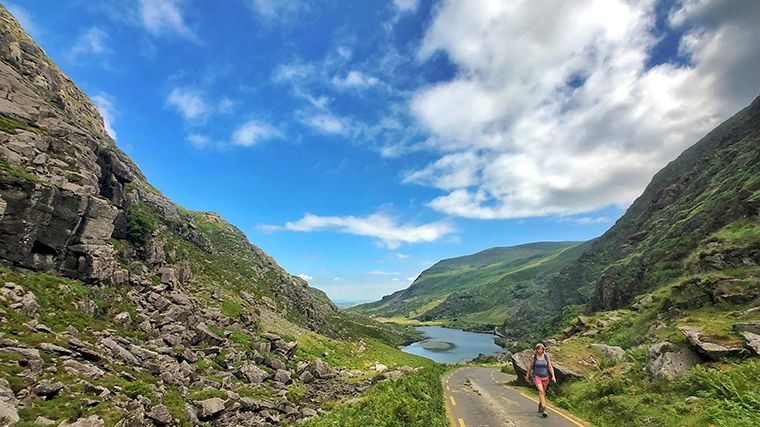
Tip: At the westernmost tip of the peninsula, there’s another loop—the Skellig Ring —that follows smaller roads and isn’t accessible to tour buses. Along the way, you’ll pass the impressive Kerry Cliffs, which are taller than the more famous Cliffs of Moher. Another place large buses can’t reach is the Gap of Dunloe. It’s a very narrow, winding road that runs past five lakes connected by the small Loe River. While there are no buses here, you’ll do come across pony-drawn carriages, cyclists, and plenty of hikers. Between two of these lakes lies an old arch bridge, and any wish you make there is said to come true… You can also take a detour from the Ring of Kerry by driving across the peninsula via the Ballaghisheen Pass, with views of Ireland’s highest mountain, Carrauntoohil (1,038 m).
Killarney National Park
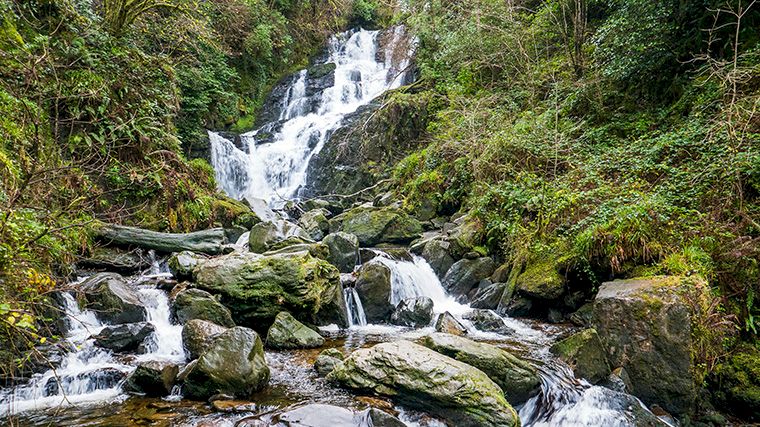
At the start and end points of the drive across the peninsula, you may Killarney National Park . This park is famous for its lakes, which are surrounded by the peaks of the McGillycuddy’s Range, Ireland’s highest mountain range. The Torc Waterfall isn’t very tall (25 meters) but is still impressive, if only for the trail leading to it, which winds through a forest where the trees are thickly covered with moss. At the waterfall, you can climb a stone staircase to the top for an even more beautiful view.
But nature isn’t the only attraction in this national park. For example, you can wander through the ruins of a 15th-century monastery, explore the remains of Ross Castle, and visit Muckross House. That mansion was extensively renovated in 1861 in preparation for a visit by Queen Victoria, but the costs were never reimbursed, forcing the owner to eventually sell the house.
Dingle Peninsula / Conor Pass
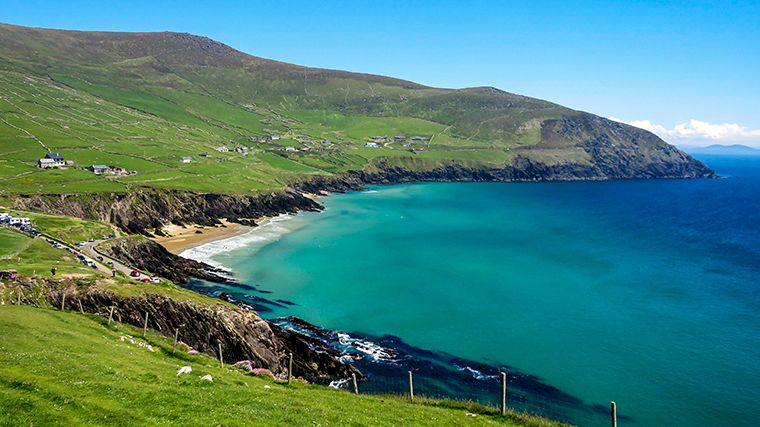
Is it worth exploring the Dingle Peninsula after visiting the other peninsulas? We say a resounding yes—at least if you haven’t had your fill of phenomenal landscapes yet. And here’s another fun thing: you can drive your rental car along Ireland’s highest road, the Conor Pass. The 456-meter-high pass connects Dingle in the south with Cloghane in the north. The picturesque road winds around steep cliffs and past mountain lakes and waterfalls. The most beautiful part is the steep descent on the north side, but the road is narrow and winding and requires your full attention.
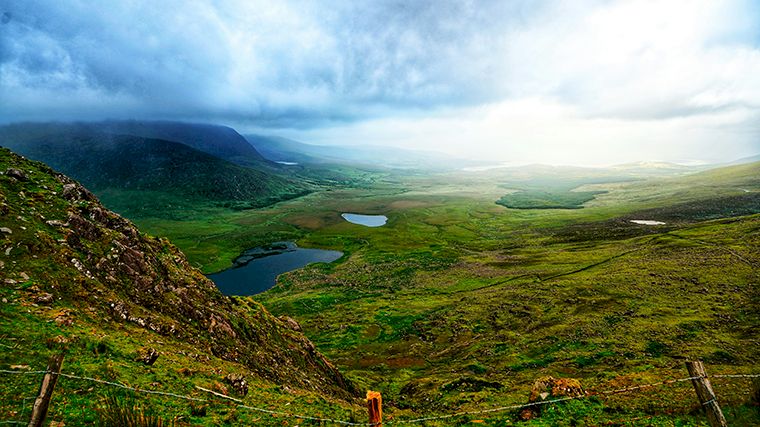
Slea Head Driveis a scenic loop of nearly fifty kilometers in the far west, perhaps the most beautiful part of Dingle. Boat tours depart from Dunquin Pier to the isolated and inhospitable Blasket Islands. Mount Brandon is a jagged mountain ridge in the north of the peninsula. The steep cliffs on the east side are popular with rock climbers, but most people take the easier approach from the west. There is ample parking for your rental car near the village of Ballybrack.
Adare / Limerick
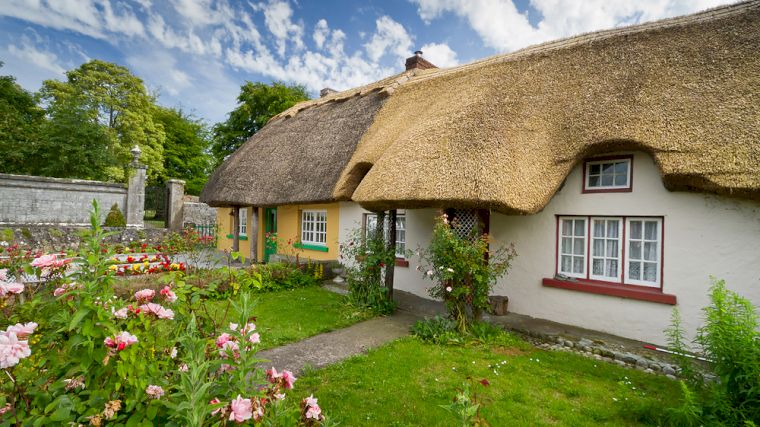
Drive from Tralee northeast along the scenic N69 coastal route and, just before Limerick, turn right toward Adare. This little village is famous for its traditional thatched-roof cottages lining the main street. Across from them stands the somewhat drab Trinitarian Abbey. Along the winding River Maigue on the north side of the village stand the ruins of a Franciscan monastery and Desmond Castle.
Like so many cities in Ireland, Limerick was also founded by the Vikings. They built a fortress on a small island surrounded by the River Shannon. That fortress was later expanded by King John of England into the present-day castle. The interactive displays and scale models at King John’s Castle teach you more about the history of the castle and the city.
St. Mary’s Cathedral was completed more than eight hundred years ago and is one of Ireland’s oldest cathedrals. St. John’s Cathedral dates from much later (the nineteenth century). The Hunt Museum, located in the historic Custom House, houses a fine collection of art and antiquities.
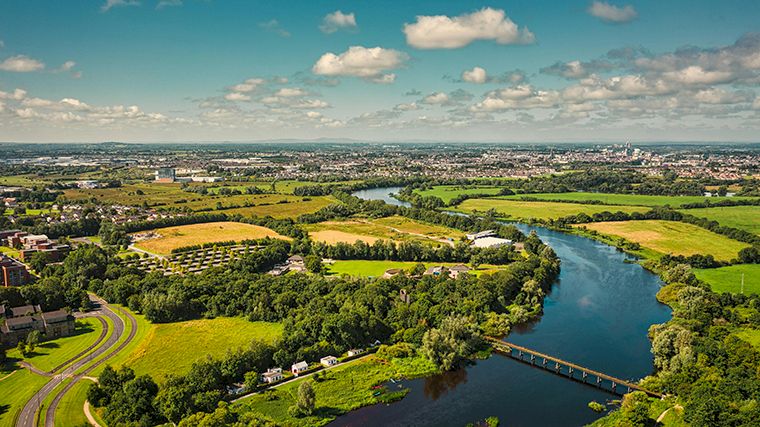
Just outside Limerick, the former railroad line between Rathkeale and Abbeyfeale has been transformed into a beautiful walking and biking trail through the countryside. The total length of the Limerick Greenway is forty kilometers, but the trail is divided into shorter sections, and there’s space to park your rental car at every access point. Another beautiful option is the Canon Sheehan Loop, which starts at a parking lot just over an hour’s drive south of Limerick. If you walk to the right from the parking lot, you’ll reach the Ogheen River; the path to the left leads first through dense forests.
Lough Gur
The beautiful Lough Gur is surrounded by rolling green hills and is located about a half-hour’s drive south of Limerick. It is one of Ireland’s most important prehistoric sites. Around this lake, you’ll find megalithic remains, including the Grange Stone Circle, the largest of its kind in Ireland. You’ll also see the remains of Stone Age dwellings (crannogs), a hillfort, several ring forts, and the ruins of a castle, Bourchier’s Castle.
The best way to begin your exploration of this magnificent area is at the visitor center. After viewing the exhibition, set out on your tour while listening to an audio guide explaining the history and mythology of the region. From the top of a hill, you’ll enjoy a stunning view of the lake. Traveling with young children? They’ll have a great time on thefairy trail.
Cliffs of Moher
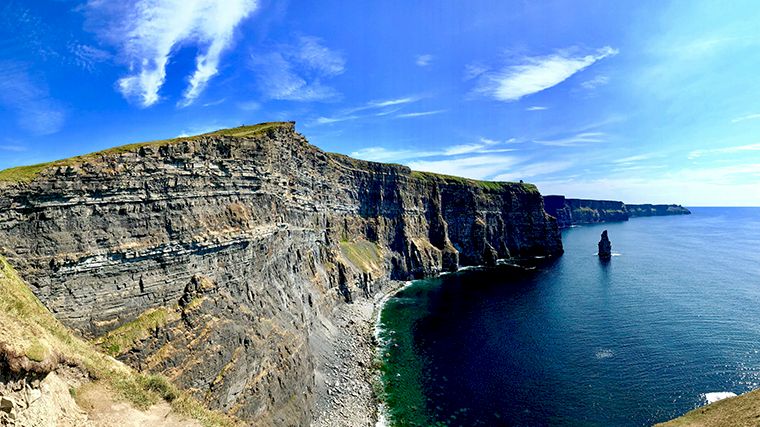
If you’re this close and have never seen them, you simply must visit the famous Cliffs of Moher. From Limerick, it’s about an hour and a half by car. The cliffs rise out of the Atlantic Ocean to a height of more than two hundred meters at O’Brien’s Tower. Various hiking trails have been marked along the 14-kilometer-long cliff coastline. Park your rental car on the outskirts of Doolin and walk along the coastal path to Hags Head. Avoid the visitor center, as it gets insanely crowded there.
Back to Dublin
You can drive from Galway to Dublin in just over two hours on the highway in a rental car. But why would you, when you’re on vacation? Avoid the highway (and tolls!) and opt for smaller roads through more beautiful landscapes and past interesting stops along the way. Don’t plan a fixed route—just turn left here, then right there, and you’ll be surprised by charming little towns and picturesque villages.
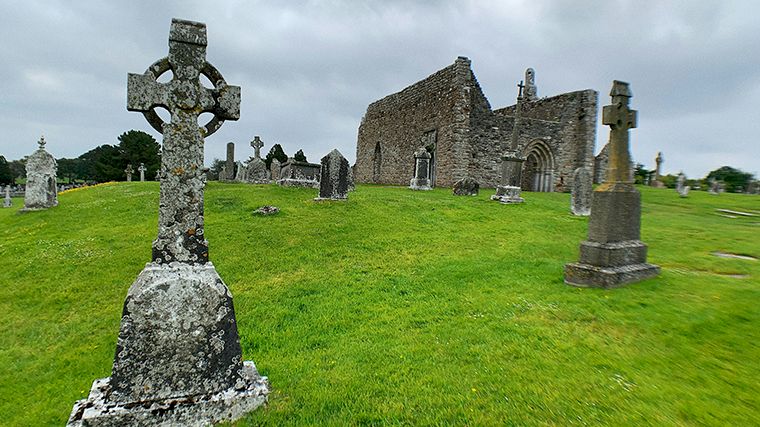
For example, drive to Lough Rea Cathedral on the lake of the same name, which, by the way, is a perfect spot for a refreshing dip on a hot summer day. Further east lie the ruins of the 6th-century Clonmacnoise monastery. It’s located at the point where the most important east-west route in the Middle Ages crossed the River Shannon. In addition to the cathedral ruins, you’ll see the remains of no fewer than seven churches, high crosses, and round towers, all overlooking the Shannon. You’re right near the charming town of Athlone, a lovely stopover halfway between Galway and Dublin. Among other things, you’ll find Ireland’s oldest pub there, Sean’s Bar.
Interested in Irish whiskey? Then you can visit the D.E.W. distillery in Tullamore. The name is an abbreviation of the man who originally made the whiskey, Daniel E. Williams. Belvedere House stands on the shores of Lough Ennell. A fun fact is the high wall that the Earl of Belvedere built so he wouldn’t have to see his brother’s much larger house!
Why Travel by Rental Car in Ireland
Public transportation between Ireland’s major cities is well-organized, but as soon as you want to travel to smaller towns or remote destinations, it’s a different story. Keep in mind that it rains quite often in Ireland: it’s not pleasant to have to wait for the bus in the rain. So, for a great vacation in Ireland, it’s best to rent a car. You can drive anywhere at your own pace and stop spontaneously at beautiful viewpoints or charming villages.
The Irish road network is well-maintained, but as we’ve mentioned several times above, we recommend using local roads whenever possible. These country roads can be narrow, and you’ll also need to watch out for sheep crossing the road.
Rent a car and discover Ireland for yourself
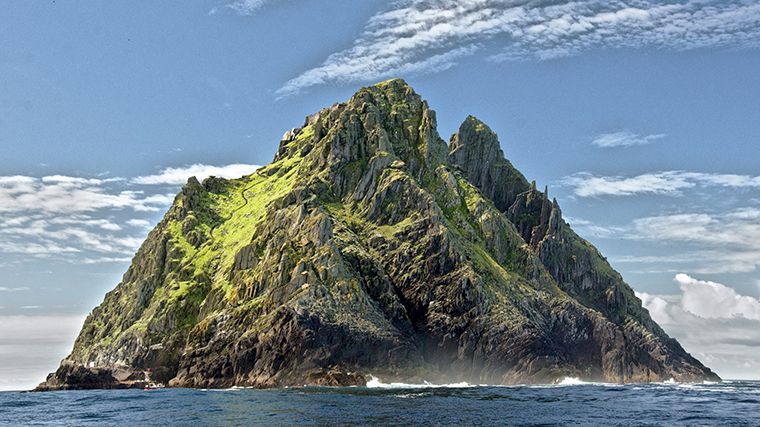
Above, we’ve only touched on a few of the sights. Ireland is brimming with beautiful landscapes and interesting attractions. There’s an endless array of things to do on the Emerald Isle. For example, we haven’t yet mentioned that you can take a boat to Skellig Michael. We’ve also left out the beautiful Connemara lake district near Galway. And what about the historic Newgrange tomb near Dublin or the Wicklow Mountains south of the capital? A trip along the impressive coast of County Mayo can rival the Ring of Kerry, but is much less crowded. County Donegal in the northwest is also well worth a visit, featuring, among other things, the impressive Slieve League Cliffs.
In short: the route above is just one of many possibilities for a fantastic road trip through Ireland. So rent a car and chart your own course through this fascinating country!

Where would you like to rent a car?
- 24000+ pick-up locations
- Free cancellation
- Independent comparator

Useful tips for a well-prepared trip
Which insurance should I choose, and what's the deal with the deposit? Read our articles with useful information and tips to ensure you choose the right rental car for you.


