- Popular countries
- Popular regions
- Popular cities
- Popular airports
- Car hire Italy
- Car hire United Kingdom
- Car hire Spain
- Car hire United States
- Car hire Portugal
- Car hire Greece
- Car hire France
- Car hire Ireland
- Car hire Poland
- Car hire South Africa
- Car hire Cyprus
- Car hire Netherlands
- Car hire Switzerland
- Car hire Croatia
- Car hire Malta
- Car hire Hungary
- Car hire Canada
- Car hire Germany
- Car hire Australia
- Car hire Norway
- Car hire England
- Car hire Sicily
- Car hire Scotland
- Car hire Sardinia
- Car hire Florida
- Car hire Malta
- Car hire Crete
- Car hire Lanzarote
- Car hire California
- Car hire Majorca
- Car hire Menorca
- Car hire Fuerteventura
- Car hire Tenerife
- Car hire Rhodes
- Car hire Kefalonia
- Car hire Madeira
- Car hire Corsica
- Car hire Gran Canaria
- Car hire Corfu
- Car hire Ibiza
- Car hire London
- Car hire Dublin
- Car hire Malaga
- Car hire Milan
- Car hire Faro
- Car hire Lisbon
- Car hire Rome
- Car hire Alicante
- Car hire Geneva
- Car hire Porto
- Car hire Bergamo
- Car hire Amsterdam
- Car hire Athens
- Car hire Luqa
- Car hire Budapest
- Car hire Manchester
- Car hire Larnaca
- Car hire Pisa
- Car hire Palermo
- Car hire Orlando
- Car hire London Heathrow Airport
- Car hire Dublin Airport
- Car hire Malaga Airport
- Car hire Lisbon Airport
- Car hire Faro Airport
- Car hire Alicante Airport
- Car hire London Gatwick Airport
- Car hire Porto Airport
- Car hire Bergamo Airport
- Car hire Athens Airport
- Car hire Malta Airport
- Car hire Budapest Ferihegy Airport
- Car hire Rome Fiumicino Airport
- Car hire Manchester Airport
- Car hire Geneva Airport (Switzerland)
- Car hire Larnaca Airport
- Car hire Amsterdam Schiphol Airport
- Car hire Pisa Airport
- Car hire London Luton Airport
- Car hire Milan Malpensa Airport

Istria Road Trip: 8 Stops by Rental Car
Practical Advice for a 5-7 Day Trip to Northern Croatia
Have you already visited Tuscany? Then it’s time to explore Istria in Croatia. This 5- to 7-day road trip by rental car takes you through Rovinj, Pula, the Brijuni Islands, the truffle capital of Motovun, and the mosaics of Poreč. Istria is a peninsula known as the “Tuscany of Croatia”: it has the same rolling hills and vineyards, but fewer tourists and is much more affordable. Ideally, you should book during truffle season (September–November) or the Malvazija grape harvest.
Would you like to visit the Dalmatian coast (as well)? We’ve listed the 5 most beautiful routes through Dalmatia for you, and for the Croatian countryside, check out 9 must-see stops between Zagreb and Dubrovnik.
On this page:
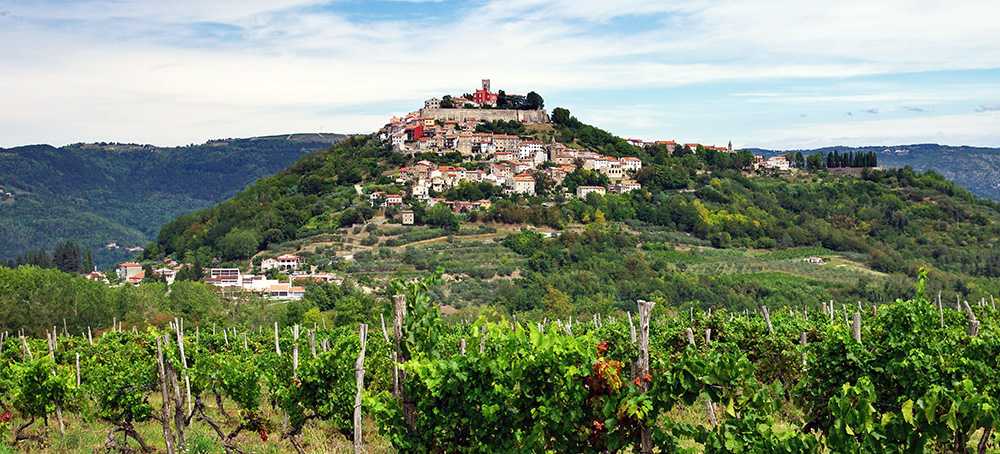
Why Explore Istria by Rental Car?
Istria is compact enough for a short, intense road trip, but the most beautiful spots are tucked away in the interior, where you can’t get to without your own car.
Advantage 1: Compact in 5 to 7 days
Istria is small, measuring about 100 by 60 kilometers. Public transportation serves the coastline between Rovinj and Pula well, but the hilltop villages inland—such as Motovun, Grožnjan, and Buzet—can only be reached by car. It’s ideal for a short but intensive adventure without rushed stops.
Advantage 2: Mediterranean-Italian character
Istria was Venetian for five centuries and Italian territory between the two world wars. You can see this everywhere: bilingual place-name signs in Croatian and Italian, and pasta, gnocchi, and prosciutto on virtually every menu. It feels like Tuscany, but is much more affordable.
Benefit 3: gastronomy and wine routes
The village of Livade, nestled in the woods near Motovun, calls itself the capital of the white truffle, with peak season falling between September and November. Combine this with tours of wineries (white Malvazija Istarska and red Teran) and olive groves. A rental car is essential for reaching the wineries. However, just like in Italy, Croatia has a blood alcohol limit of 0.5 per mille, so the driver may taste no more than one glass of wine, unless you’re staying overnight at an agriturismo.
Overview of an 8-stop road trip in Istria
| Stop | Reason | Distance from previous stop | Recommended days | Unique to |
|---|---|---|---|---|
| Rovinj | Venetian architecture | 40 km / 45 min (Pula Airport) | 1–2 | St. Euphemia’s Church |
| Pula | A beautiful blend of old and new | 35 km / 45 min | 1 | Roman Amphitheater |
| Brijuni Islands | A blend of history and nature | 9 km / 15 min | 1 | Tito’s Safari Park |
| Motovun | Medieval town perched high on a hill | 65 km / 60 min | 1 | truffles |
| Grožnjan and Buzet | old towns with a unique atmosphere | 20–25 km / 20–25 min | 1 | Galleries and Truffles |
| Poreč | A UNESCO highlight and a laid-back seaside resort | 30 km / 40 min | 1 | Euphrasius Basilica |
| Limski Fjord | dramatic landscape | 18 km / 20 min | half day | fresh oysters and mussels |
| Rovinj | culinary finale | 20–30 km / 15–20 min | half day | sunset at the harbor |
The itinerary: 8 stops along Istria’s most beautiful spots
1. Rovinj: A Venetian port town as the starting point
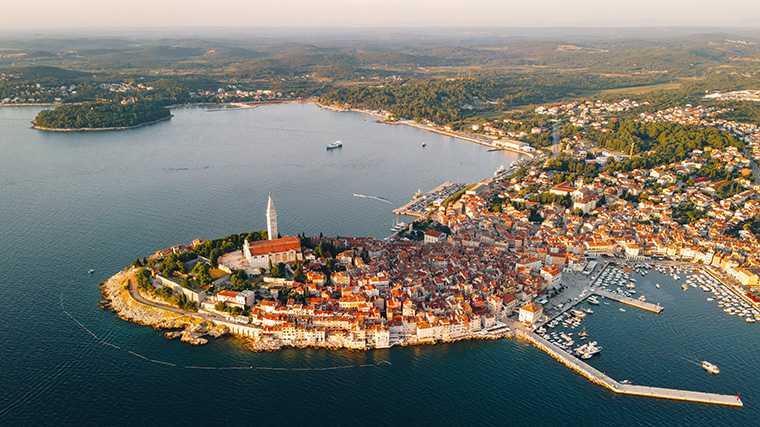
Rovinj is the perfect start to your road trip: a romantic harbor town with the iconic Church of St. Euphemia towering above the rooftops.
Wander through the narrow Venetian alleys, climb up to the church for a view of the Adriatic Sea, and end the day watching the sunset from the waterfront. The atmosphere is exactly what you’d expect from a Mediterranean town: colorful facades, fishing boats, and outdoor cafes on every corner.
Length of stay: Plan on spending 1–2 days in Rovinj.
Parking: Park outside the old town, as it’s largely car-free.
Driving distance: The 35 km to your next destination, Pula, takes about 45 minutes.
This is the starting and ending point of this road trip, so you can also rent a car in Rovinj.
2. Pula: Roman amphitheater and ancient ruins by the sea
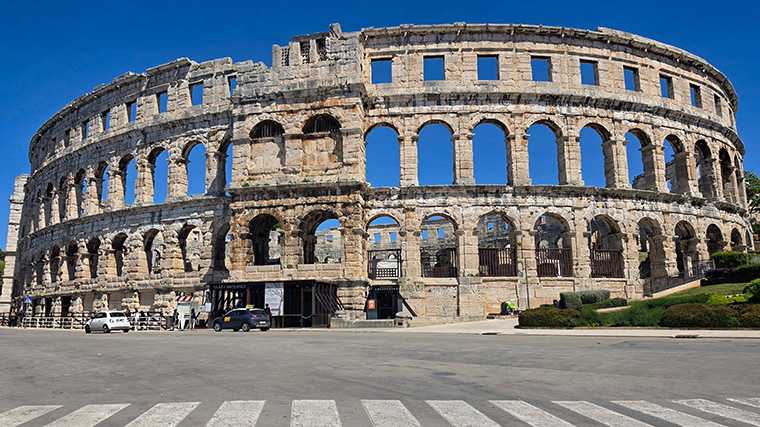
Pula’s top attraction is one of the best-preserved Roman amphitheaters in the world.
The amphitheater is the sixth largest in the world and once seated 30,000 spectators, complete with underground passages that you can explore. Afterward, walk to the Temple of Augustus on the central square and experience the blend of antiquity and everyday Croatian city life.
Duration of stay: 1 day is enough to see the main sights.
Practical info: Parking is available at the harbor, close to the city center.
Driving distance: From Pula, it’s a 15-minute drive to the pier for the Brijuni Islands in Fažana (9 km).
3. Brijuni Islands: Tito’s archipelago with a safari park
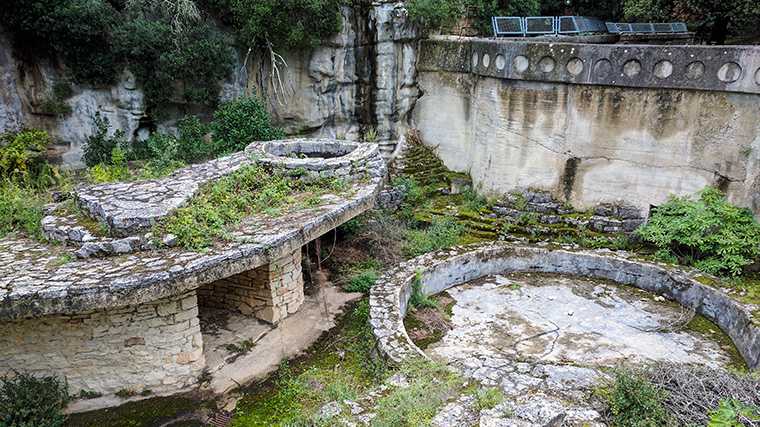
The Brijuni Islands feel like a time capsule: once Marshal Tito’s private island, now a national park featuring a surprising safari park.
You’ll take a boat from the coast and explore the archipelago on a guided tour past Roman ruins, exotic animals that Tito once received as gifts, and tranquil olive groves. It’s a unique blend of history and nature that you won’t find anywhere else in Croatia. Combine this with a visit to Pula, since the boats depart from the coast near Fažana, close to Pula.
Duration: Plan on spending half a day to a full day.
Parking: There are two spacious paid parking lots at the Fažana harbor.
Driving distance: From Fažana or Pula, it’s an hour’s drive to the parking lot near Motovun (about 65 km).
4. Motovun: a hilltop town and the center of the white truffle
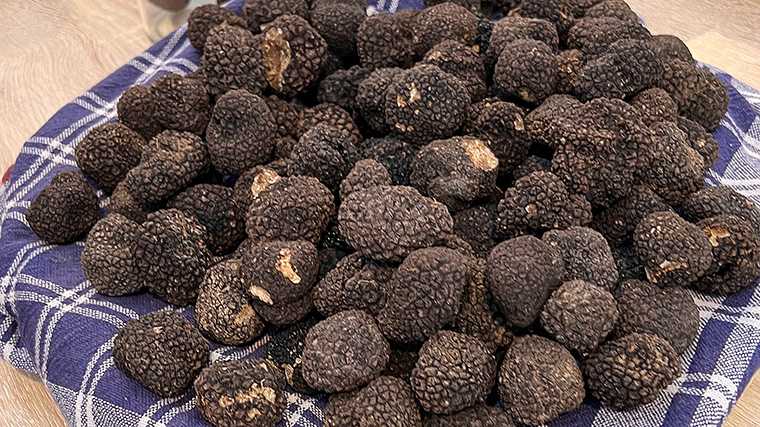
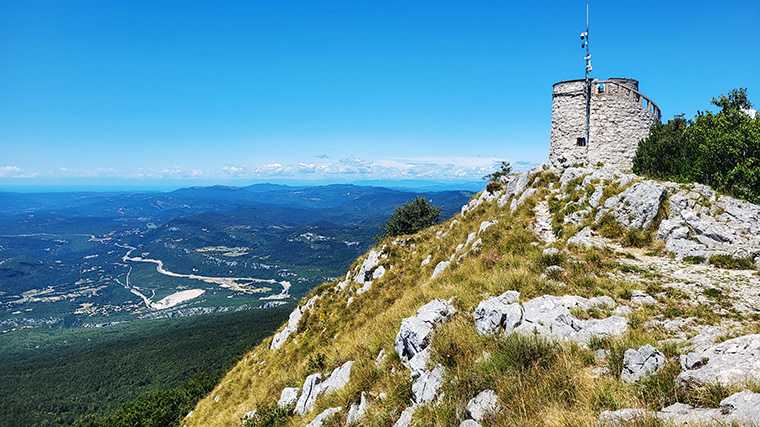
Motovun sits 277 meters above the valley and is the ultimate destination for lovers of white truffles.
The narrow hill roads leading to Motovun require careful driving. Stroll through the medieval streets to the city walls for a breathtaking view of the truffle forests below. At the local restaurants, you can sample tartufo bianco in all its forms, from pasta to omelets. The best time to visit is between September and November, when the truffle hunt is in full swing.
Length of stay: plan one day for Motovun.
Parking: at the bottom of the hill; from there, walk uphill.
Driving distance: Motovun is halfway between Grožnjan and Buzet; both towns are a 20–25-minute drive away.
5. Grožnjan and Buzet: artists’ village and truffle town
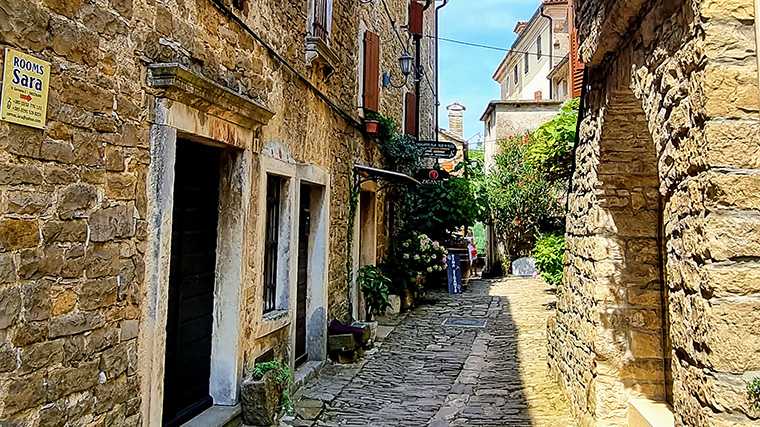
Grožnjan and Buzet make a lovely pair: one is an artists’ village, the other is officially known as the “city of truffles.”
Grožnjan sits atop a hill and is filled with galleries and studios of artists who have been settling here for decades. Buzet lies above the fertile valley of the Mirna River. The forests along this river are particularly rich in truffles, and Buzet is the beating heart of the truffle industry, with markets and restaurants entirely centered around this delicious, bulb-shaped fungus. The distance between Grožnjan and Buzet is about a 30-minute drive through rolling countryside.
Duration of stay: plan on 1 day for both villages combined.
Parking: Just outside both Grožnjan and Buzet, there is ample, free parking.
Driving distance: From Motovun, it’s a 40-minute drive to the coastal town of Poreč (30 km)
6. Poreč: Byzantine mosaics and coastal fun
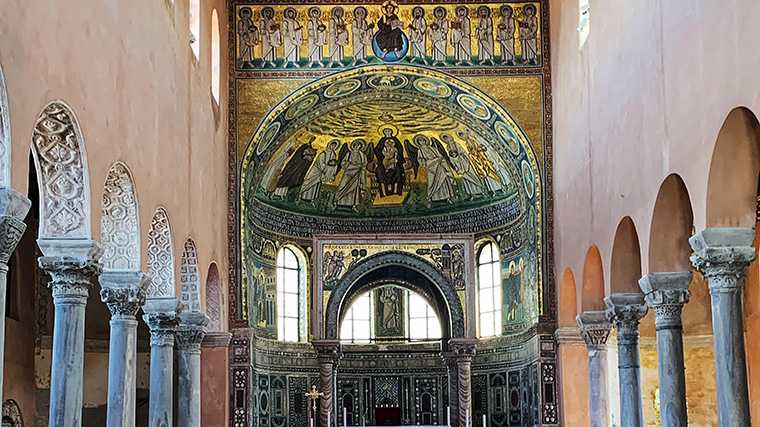
Poreč combines a UNESCO highlight with a relaxed seaside resort atmosphere.
The Euphrasius Basilica dates back to the 6th century and houses stunning Byzantine mosaics that are among the most beautiful in Europe. After your cultural visit, you can stroll right down to the coast for a refreshing dip or a walk along the beach promenade.
Length of stay: 1 day is more than enough for Poreč.
Parking: There is plenty of parking just outside the city center.
Driving distance: From Poreč, it’s a little over a 20-minute drive to the hamlet of Kloštar (18 km), where many boat tours depart.
7. Lim “Fjord”: dramatic scenery and fresh oysters
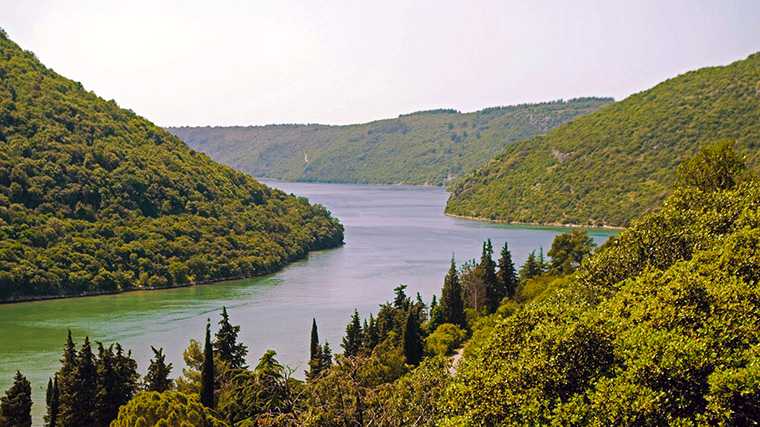
The Limski Canal is one of the most photogenic spots in Istria: a narrow waterway that is somewhat reminiscent of a Scandinavian fjord.
A boat tour takes you past overgrown rock faces and oyster and mussel farms. Along the way, you can often sample seafood fresh from the water at one of the restaurants along the shore—a culinary experience you won’t find anywhere else in Istria. The fjord is just a stone’s throw from both Rovinj and Poreč, so you can easily fit this in between two other stops.
Duration: Half a day is sufficient.
Parking: You can easily park your rental car at most departure points.
Driving distance: Depending on where you stop along the Limski Fjord, it’s a 20- to 30-minute drive to Rovinj (15-20 km).
8. Rovinj (round trip): wrap up with a fresh seafood feast
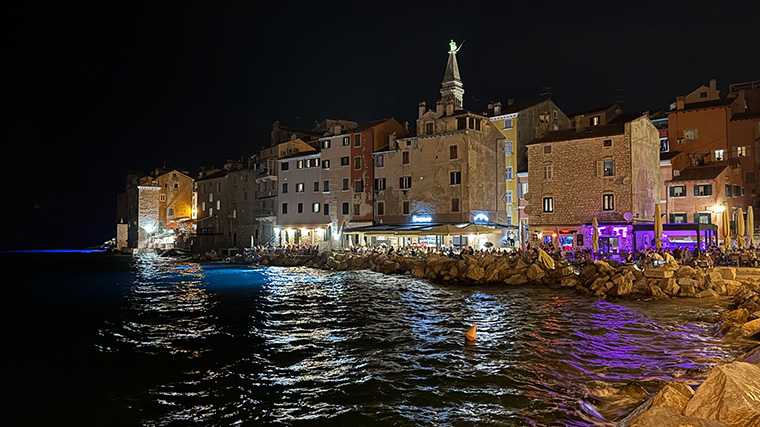
You’ll wrap up your road trip where you started: back in Rovinj for one last evening on the Adriatic coast.
Enjoy a farewell dinner of freshly caught seafood at one of the harbor restaurants, with a view of the boats bobbing in the harbor. The next morning, simply drive back to Pula or Rijeka for your return flight.
Duration: Allow half a day to wrap things up at a leisurely pace.
Parking: You’ll easily find a parking spot outside the car-free old town.
Driving distance: It’s about a 45-minute drive from Rovinj to Pula Airport; the drive to Rijeka Airport takes just over an hour and a half.
Practical information: driver’s license, tolls, traffic rules, and safety
Driver’s license: In Croatia, any driver’s license issued in an EU country is valid. Non-EU residents are sometimes asked to present an international driver’s license, especially if their license is not written in the Latin alphabet.
Toll roads: Tolls are charged on highways in Croatia. Until March 1, 2027, you can pay with cash or a credit card; after that, an electronic system will go into effect, whereby cars are registered via a toll box or their license plate number. If you’ve rented a car, the toll charges will be billed to your credit card.
Traffic rules: You drive on the right, and road signs are in Croatian using the Latin alphabet. The speed limit is 50 km/h in built-up areas, 90 km/h outside built-up areas, and 130 km/h on the highway. Low beams are required in poor visibility, such as when it’s raining or foggy.
Safety: Croatia is one of the safest countries in Europe for tourists. The blood alcohol limit is 0.5 per mille. Be aware of regular police checks on the roads leading to the Slovenian and Italian borders.
Which car class is best for a road trip through Istria?
A rental car always falls into a specific class. If your preferred car is no longer available, the rental company may provide you with a different car, as long as it’s in the same class.
Compact or mid-size: the recommended choice for 90% of the route. A smaller car maneuvers better on the narrow, winding roads to Motovun and Grožnjan and fits more easily into the tight parking spots in medieval towns and villages.
Mini or economy: great for the Rovinj-Pula coastal route, but it might get cramped with luggage for four people.
SUV or crossover: only worth it if you want to explore unpaved trails leading to remote vineyards deeper inland. This isn’t necessary for the classic route. Always ask the rental company if you’re allowed to drive on unpaved roads.
Traveling with children? Be sure to read our tips on renting a car with a child seat or infant car seat.
Compare rental cars in Croatia
Costs and Best Time to Book
Starting rates for rental cars in Croatia peak in July and August, when the country is packed with vacationers. The truffle season from September through November marks a second, milder peak period.
Starting rates: During the off-season (December–May), rates are relatively low. July–August is the busiest and most expensive period. September–November sees slightly higher prices due to truffle tourism, but not as extreme as in the summer.
Best time to book: Reserve 4 to 6 weeks in advance for the truffle season, as restaurants in Buzet and Motovun fill up quickly during this time. For July and August, it’s best to book 8 to 10 weeks in advance.
Other costs: Expect to pay about €0.08 per kilometer for toll roads. Parking in Rovinj or Pula costs €2.00 to €5.00 per hour, and a round-trip ticket on the Brijuni ferry costs €20.
Best time to visit: September–November for white truffles, the grape harvest, and mild temperatures of 15 to 20°C, or May–June for wildflowers and long days. Avoid July–August due to the crowds in Rovinj and temperatures above 32°C.
Read our in-depth analysis on the best time to rent a car and choose your ideal booking window.
Frequently Asked Questions About a Road Trip Through Istria
When is the best time to visit Istria?
Choose September through November if you want to enjoy the truffle season in Motovun and Buzet, combined with the Malvazija and Teran grape harvests and a mild climate of 15–20°C. May and June are also lovely, with wildflowers and fewer crowds than in the summer. Avoid July–August due to mass tourism and heat exceeding 32°C.
How many days do I need for Istria?
For the classic route taking in the sights of Rovinj, Pula, Brijuni, Motovun, and Poreč, plan on 5 to 7 days. Istria is compact (100 by 60 kilometers), so more days can quickly mean repeating the same sights. If you want to go truffle hunting in more depth, follow the wine route, or include Slovenia in your trip, plan for 7 to 10 days. With fewer than 4 days, the trip will feel rushed, and you’ll miss the hilltop villages in the interior.
Does Croatia have toll roads?
Yes, virtually all highways in Croatia are toll roads. In Istria, these are the A8 and A9. You can currently pay in cash or with a credit card, but a fully electronic system will be introduced on March 1, 2027. Registration of (rental) cars will then be done via a toll box or the license plate, and the amount due will be charged to your credit card.
Can I go on a truffle hunt with my rental car?
Yes, truffle hunts are organized by restaurants and farms in the Motovun-Buzet-Grožnjan triangle, and with your rental car, you’ll be there in no time. Book 4 to 6 weeks in advance for the peak season in September–November, as spots are popular and limited. A half-day tour with a dog, guide, and tasting costs €50 to €100 per person. Combine this with a wine tasting at a nearby agriturismo and stay overnight for a relaxing tasting experience.
Can I combine Istria with Slovenia or Italy?
Absolutely—both are popular additions to your road trip. Ljubljana in Slovenia is a 3-hour drive from Rovinj, while the Slovenian coastal town of Piran is just 1.5 hours away. Note: To drive on Slovenian highways, you’ll need an e-vignette, which you can order online (€16 for 1 week). Trieste in Italy is a 2-hour drive away, and Venice is about 3.5 hours away (park outside the city center and take the water bus).
If you ’re crossing the border, you must mention this when booking your rental car. You’ll usually pay a surcharge for cross-border insurance.
Which airport should I fly into for Istria?
Pula (PUY) is the closest to the center of Istria, about a 45-minute drive from Rovinj. Alternatives include Rijeka (RJK), just over an hour and a half from Rovinj, and Trieste in Italy (TRS), about a 2-hour drive and often a more affordable option to fly to. All of these airports offer a wide selection of rental cars, but please note: if you rent a car in Trieste, you’ll be crossing the border.
Book Your Rental Car for Istria
Ready to discover Tuscany’s quieter neighbor? With your own rental car, you can be among the vineyards of Motovun or on the waterfront in Rovinj in just a few hours. Compare providers and vehicle classes, and book your rental car for Istria today—during truffle season, the best models are snapped up first.
Most visitors to Istria reserve a rental car at Pula Airport or Rijeka Airport, but of course you can rent a car at any other location in Croatia.
==========================================================
Sources:
UNESCO (Euphrasian Basilica, Poreč)
E-vinjeta (Slovenia highway vignette)

Where would you like to rent a car?
- 24000+ pick-up locations
- Free cancellation
- Independent comparator

Useful tips for a well-prepared trip
Which insurance should I choose, and what's the deal with the deposit? Read our articles with useful information and tips to ensure you choose the right rental car for you.


