- Popular countries
- Popular regions
- Popular cities
- Popular airports
- Car hire United Kingdom
- Car hire Italy
- Car hire Spain
- Car hire United States
- Car hire Portugal
- Car hire Greece
- Car hire France
- Car hire Poland
- Car hire Ireland
- Car hire Cyprus
- Car hire Netherlands
- Car hire South Africa
- Car hire Switzerland
- Car hire Croatia
- Car hire Canada
- Car hire Malta
- Car hire Germany
- Car hire Hungary
- Car hire Norway
- Car hire Australia
- Car hire England
- Car hire Sicily
- Car hire Scotland
- Car hire Florida
- Car hire Sardinia
- Car hire Malta
- Car hire California
- Car hire Crete
- Car hire Lanzarote
- Car hire Majorca
- Car hire Menorca
- Car hire Tenerife
- Car hire Rhodes
- Car hire Fuerteventura
- Car hire Corsica
- Car hire Kefalonia
- Car hire Madeira
- Car hire Corfu
- Car hire Ibiza
- Car hire Gran Canaria
- Car hire London
- Car hire Faro
- Car hire Malaga
- Car hire Milan
- Car hire Lisbon
- Car hire Rome
- Car hire Alicante
- Car hire Dublin
- Car hire Manchester
- Car hire Porto
- Car hire Amsterdam
- Car hire Larnaca
- Car hire Geneva
- Car hire Luqa
- Car hire Bergamo
- Car hire Athens
- Car hire Budapest
- Car hire Pisa
- Car hire Orlando
- Car hire Palermo
- Car hire London Heathrow Airport
- Car hire Faro Airport
- Car hire Lisbon Airport
- Car hire Malaga Airport
- Car hire London Gatwick Airport
- Car hire Alicante Airport
- Car hire Manchester Airport
- Car hire Dublin Airport
- Car hire Larnaca Airport
- Car hire Porto Airport
- Car hire Malta Airport
- Car hire Bergamo Airport
- Car hire Athens Airport
- Car hire Budapest Ferihegy Airport
- Car hire Rome Fiumicino Airport
- Car hire Geneva Airport (Switzerland)
- Car hire Amsterdam Schiphol Airport
- Car hire Milan Malpensa Airport
- Car hire Pisa Airport
- Car hire Orlando International Airport

10 Attractions Around Marseille
Exploring Beautiful Provence in a Rental Car
Marseille is a lively city with a bustling fishing port (Vieux-Port) and its market, colorful narrow streets in the historic center of Le Panier, and countless cafés, restaurants, and outdoor seating areas. You don’t need a rental car in the city itself, but Marseille is also an excellent base for day trips into the breathtaking natural beauty of Provence. Or as a starting point for a multi-day road trip in a rental car through the south of France.
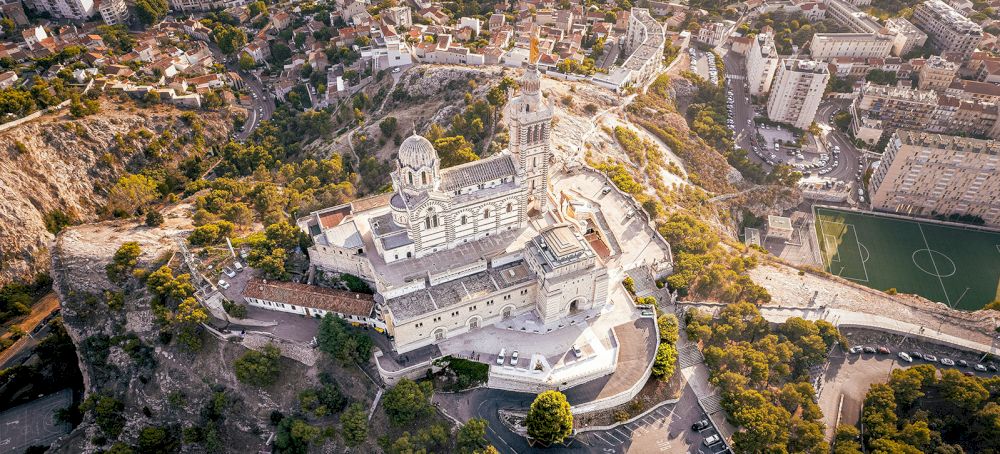
Did you know that Marseille’s area is more than twice that of Paris? Large parts of it are virtually uninhabited, such as the beautiful Calanques massif. This stunning coastal stretch makes a visit to Marseille extra special. To get there, it’s helpful to rent a car, which is why this is the first of our 10 must-see attractions around Marseille.
1. Les Calanques
Just south of France’s second-largest city lies a spectacular nature reserve, the Parc National des Calanques. It consists of rugged coves with steep limestone cliffs, interspersed with former fishing villages, where the harbors are now filled with pleasure boats. But because these villages are located within a protected nature reserve, there are hardly any tourist facilities, and the village atmosphere has been preserved. Take, for example, the picturesque village of Les Goudes, situated at the extreme southwestern tip of the national park.
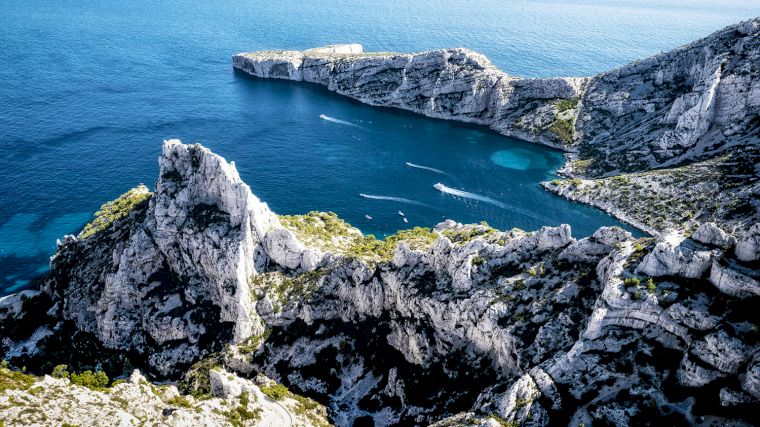
You can’t drive your car everywhere, and that’s a good thing, because it helps preserve the natural beauty of the Calanques. And why not leave the rental car behind and take a long hike through this rugged area? That, by the way, is the national park’s motto: a little physical effort is required, because Les Calanques must be earned! You have a wide selection of hiking trails to choose from, and there are more than twenty deep natural coves along this coast. Once you’ve made your way down to sea level, you can take a wonderfully refreshing dip in the Mediterranean Sea. Just watch out for jellyfish! Some of the most beautiful calanques (from west to east) are: Marseilleveyre, Sormiou, Morgiou, Sugiton, En-Vau, and Port-Pin, each with its own beauty and character. In addition to exploring on foot, you can also explore the coastline by kayak, stand-up paddleboard, or on an organized boat tour. You can also climb some of the steep cliffs, and there are diving excursions departing from various ports.
Some roads through the Calanques massif are very narrow. Also keep in mind that not all roads are open year-round. For example, in good weather and during the summer months, the roads to the villages of Sormiou, Morgiou, and Callelongue are closed to motorized traffic. The national park can get very crowded during the summer months, and parking spaces are limited. It’s therefore best to explore the nature reserve outside of peak season. The Calanque de Sugiton has become so popular that you can now only visit it after making an online reservation.
2. Route des Crêtes
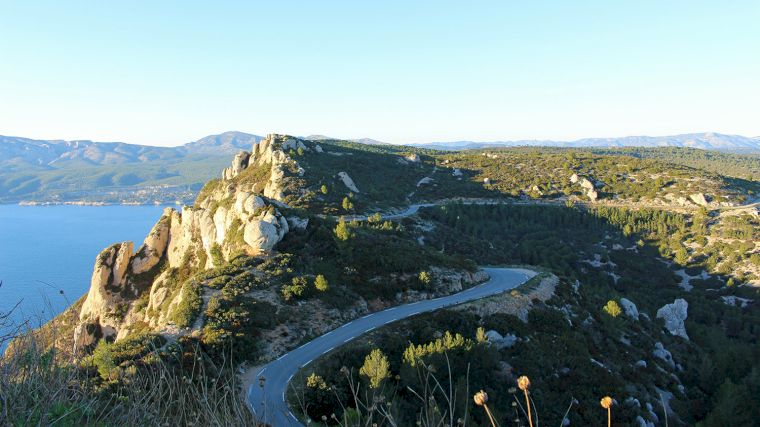
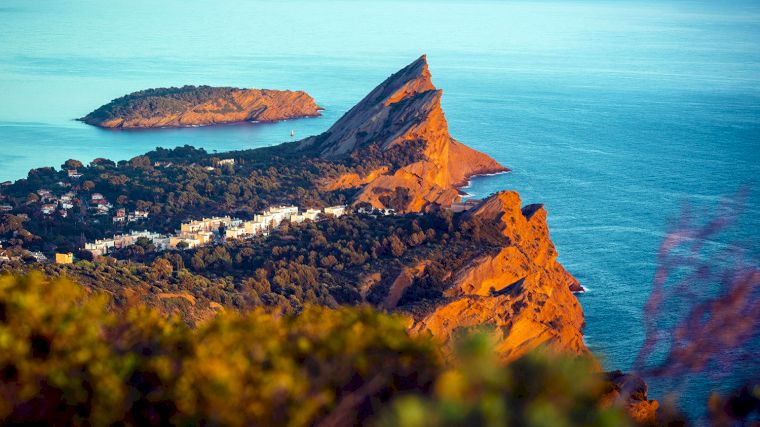
Between Cassis and La Ciotat, one of the most beautiful roads in Provence runs along the impressively high cliffs of Soubeyranes: the Route des Crêtes. This scenic route offers breathtaking views of the Mediterranean Sea, the beaches, and the limestone cliffs. You really shouldn’t miss it if you’re visiting Marseille, as it’s a great way to discover the wild beauty of Provence.
Cassis is a great place to start the route. It’s a small town with a typical Provençal atmosphere and several historic buildings, such as the Château de Cassis—whose earliest foundations date back to the eighth century—and the Église Saint-Michel, with its beautiful frescoes. The harbor is lined with cafés and outdoor seating areas.
The (literal) highlight of the Route des Crêtes is the majestic Cap Canaille, less than five kilometers from the starting point in Cassis. At an elevation of 363 meters, the view is, of course, breathtaking. You can see for miles, all the way to the islands of the Riou Archipelago.
Along the winding route, you’ll see impressive rock formations in a wide variety of shapes and colors: from bright white to dark gray, interspersed with reddish hues. If you don’t stop, you can cover the entire route in thirty minutes, but no one does that, because along the way, the panoramic views invite you to pull over in your rental car and take a moment to enjoy them. There are many parking spots along the road, though it can be difficult to find an open spot on nice days. Often, a hiking trail starts at one of these parking areas, allowing you to reach less crowded spots.
Please note: the Route des Crêtes is closed when there is a high risk of wildfires (code red) and during extreme weather conditions (such as strong winds). Additionally, the road is closed to motorized traffic on Sundays from late April through late September. However, you can rent (electric) bikes in both Cassis and La Ciotat during this time.
3. La Ciotat
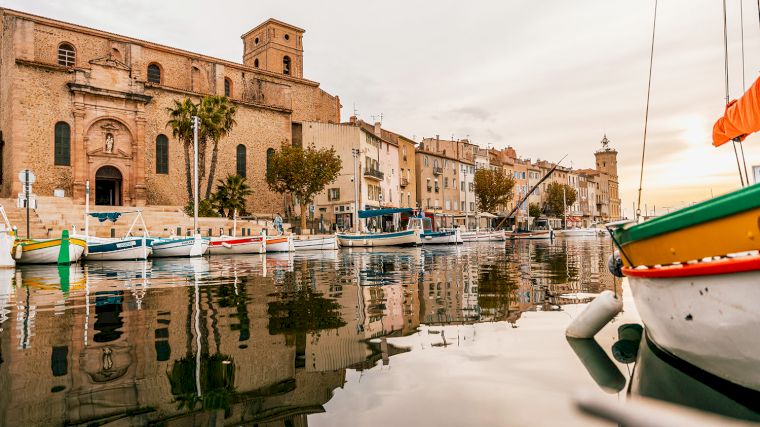
If you started the Routes des Crêtes in Cassis, La Ciotat is at the end of the route. And what a charming little town it is! You can park your rental car in the large lot next to the marina or in the Indigo Vieux Port underground parking garage. In either case, you’ll be right in the heart of town, around the old harbor. The harbor has a wonderfully authentic atmosphere—the yachts aren’t three stories tall, but there are plenty of traditional fishing boats (les pointus) moored there. Around the harbor, you’ll find a wide selection of outdoor cafes, but be sure to wander through the narrow streets behind it as well, where you’ll discover some surprising little shops.
La Ciotat played an important role in the development of cinema! The inventors of the movie camera and projector, the Lumière brothers, had a vacation home there and filmed the arrival of a steam locomotive at the La Ciotat train station. They screened that film at the Eden-Théâtre, which remains a movie theater to this day and is thus one of the oldest movie theaters in the world. More history: at the Musée Ciotaden, located in the former town hall by the harbor, you can learn more about the city’s history—including its shipbuilding heritage.
One of the nicest pebble beaches on the French south coast is located right near the town: Calanque de Figuerolles. There, you can swim in the turquoise sea, surrounded by tall, jagged cliffs. It’s less than a half-hour walk from the old harbor, but you can also park your rental car nearby. Not a fan of pebbles? There are also sandy beaches near La Ciotat, such as Plage Cyrnos, Grande Plage, and Plage Lumière, though they can get very crowded in the summer.
A ferry ride to the small island of Île Verte isn’t cheap, but it does offer a beautiful view of the jagged rock formation known as Bec de l’Aigle, which rises high out of the sea and, from a certain angle, does indeed resemble an eagle. On the island itself, you can swim in one of the small coves.
4. Aix-en-Provence
Marseille is a city where you don’t really feel like you’re in Provence. It’s a completely different story just thirty kilometers to the north, in Aix-en-Provence. This city, usually referred to simply as Aix, is exceptionally beautiful, especially in the Mazarin district, which has even been called “Little Versailles.” The city center is largely a pedestrian zone and not very large, but it offers hours of strolling through narrow streets and past imposing hôtels particuliers and other 17th- and 18th-century architecture. Aix is famous for its fountains. The largest one stands at the western end of the Cours Mirabeau, the tree-lined main street running through the center. The moss-covered Fontaine Moussue on that same street draws its water from a hot spring.
The Musée Granet is dedicated to paintings and sculptures from various periods. Of course, it also features works by the great French Impressionist Paul Cézanne, who was born in Aix and painted extensively in the surrounding area. He was particularly fond of the natural scenery in the hills of Sainte-Victoire, east of Aix-en-Provence, which he immortalized dozens of times in his art. You can visit his studio there. Just north of that studio lies the Terrain des Peintres, where you can see the views that inspired Cézanne. The Carrières de Bibémus, a little further away, was also a favorite spot of the painter
Grand Site Sainte-Victoire
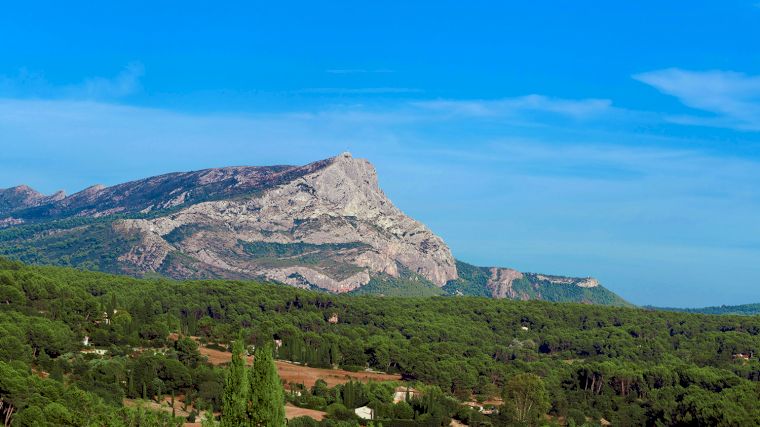
There’s even a road through the hills named after the painter: the Route Cézanne (officially the D17). Even if you’re not particularly interested in the artist, this route is definitely worth driving. The road leads to the town of Le Tholonet and the Grand Site Sainte-Victoire. You can park your rental car at one of the many parking lots in this area and go for hikes to waterfalls, caves, or to Pic des Mouches, which, at 1,011 meters, is the highest point of the Sainte-Victoire mountain range.
5. Arles
Provence has been and remains a source of inspiration for many artists. Vincent van Gogh, for example, experienced his most productive period while staying in Arles: there, he created some 200 paintings and more than 100 drawings and watercolors. The house where he lived no longer exists, but the café he immortalized in the painting *Café Terrace at Night* still stands. You can also visit the courtyard of the hospital where Van Gogh was admitted after he cut off his ear. Unfortunately, there are no works by the painter on display in the city, unless the Fondation Vincent van Gogh has a few on loan. However, paintings by other artists are on permanent display there as a tribute to Van Gogh.
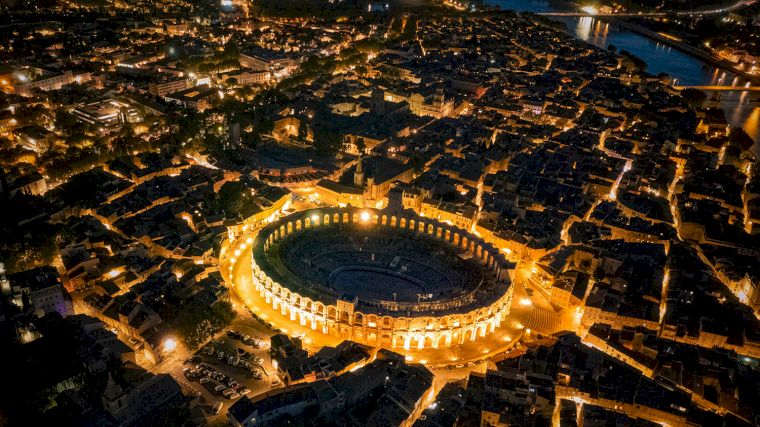
In Roman times, Arles was an important provincial capital, and many remnants from that era still remain, such as the Les Arènes amphitheater and, right next to it, the smaller Théâtre Antique. These are still in use today: in the summer, theatrical performances and concerts are held there. During the Feria d’Arles (at Easter and in September), the amphitheater serves as the venue for bullfights. On the Place du Forum, little remains to remind visitors of the original Roman central square, but beneath it you’ll find the vaults of the cryptoporticus. Near the river stand the ruins of Emperor Constantine’s Roman baths, the Thermes de Constantin. The Musée de l’Arles antique features, among other things, beautiful mosaics, richly decorated sarcophagi, and a well-preserved flat-bottomed boat found in the mud of the Rhône.
Don’t forget to visit La Roquette, the medieval part of Arles. Once a somewhat run-down working-class neighborhood, it’s now a popular district with narrow streets and picturesque little squares, where you can enjoy sitting on a terrace.
Arles is about ninety kilometers from Marseille. If you’ve rented a car, you can drive there in an hour via the highway, but the routes along smaller roads through the hills of Les Alpilles are more enjoyable.
6. Les Baux-de-Provence
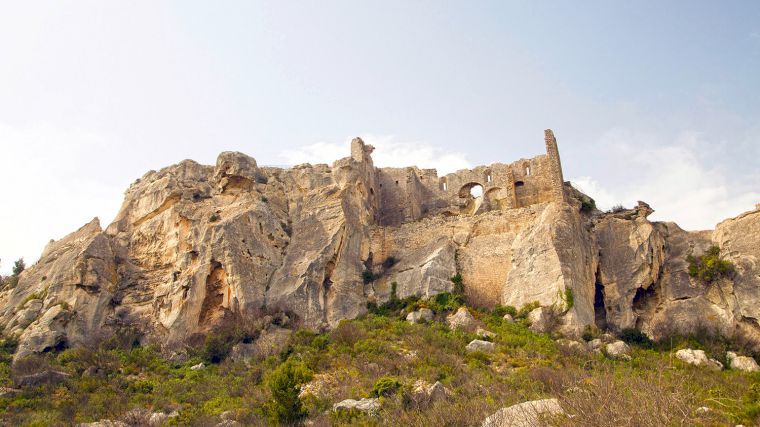
When driving through Les Alpilles, a visit to Les Baux-de-Provence is a must. This village is situated on a high plateau and was protected in the Middle Ages by a castle, of which only ruins remain today. There are three replicas of the enormous machines that were used to defend the castle and the village. Demonstrations are regularly held featuring the massive catapult (trebuchet), which could hurl heavy stones over great distances. Of course, you’ll enjoy a panoramic view of the surrounding olive groves and vineyards. The village boasts many monuments, including the keep, a Romanesque church, and the Hôtel de Manville. You can see paintings of the village and the surrounding area at the Musée Yves Brayer. The Musée des Santons features figurines from the 17th and 18th centuries, dressed in traditional Provençal costumes.
Close to Les Baux are two unique quarries: Carrière de Sarragan, where until recently high-quality wine was stored in wooden barrels, and Carrières des Lumières, where an impressive audiovisual show is projected onto the walls and floors.
Les Baux is extremely popular, especially in the summer, and the number of parking spaces nearby is limited. So be sure to drive there early in the morning to ensure there’s still a spot to park your rental car.
Saint-Rémy-de-Provence, located just ten kilometers to the north, is a quieter option. It’s also a charming little town, and it was here that Vincent van Gogh painted his world-famous work *The Starry Night* in 1889.
7. La Camargue
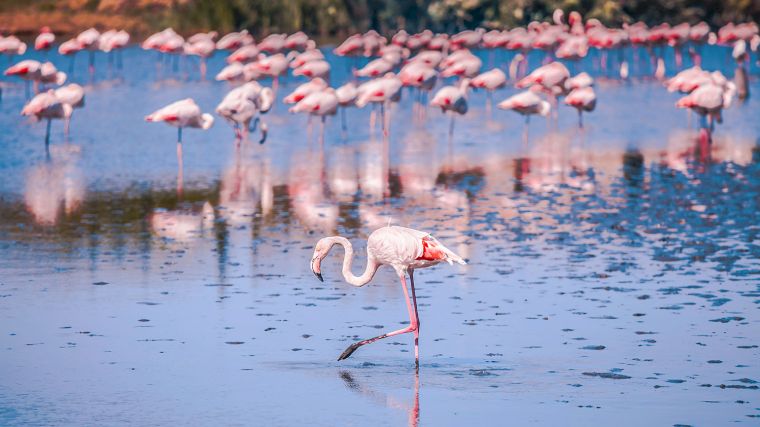
Arles is the gateway to the Camargue, one of the largest river deltas in Europe. The vast Rhône Delta consists of lakes, lagoons, marshes, reed beds, grasslands, dunes, and wooded areas. The white Camargue horses are the symbol of this region, but you’ll encounter many other unique wildlife species there as well. It is one of Europe’s most important breeding grounds for flamingos and is also home to beavers, black cattle, and hundreds of bird species. The Parc ornithologique de Pont de Gau is the ideal place to see and photograph countless birds in their natural habitat, including pink flamingos, herons, stilts, and ibises. The park’s trails wind through an oasis of silence, interrupted only by birdsong, and you can observe the birds up close.
You can explore much of the Camargue by rental car, but to get closer to the animals, it’s better to get out and follow one of the many hiking trails. Or rent a bike in the village of Saintes-Maries-de-la-Mer and ride along the car-free dike (Digue de la Mer) to the Phare de la Gacholle lighthouse. Along the way, you’ll enjoy a spectacular view of the lakes, marshes, and salt pans.
8. Aigues-Mortes and the salt lakes
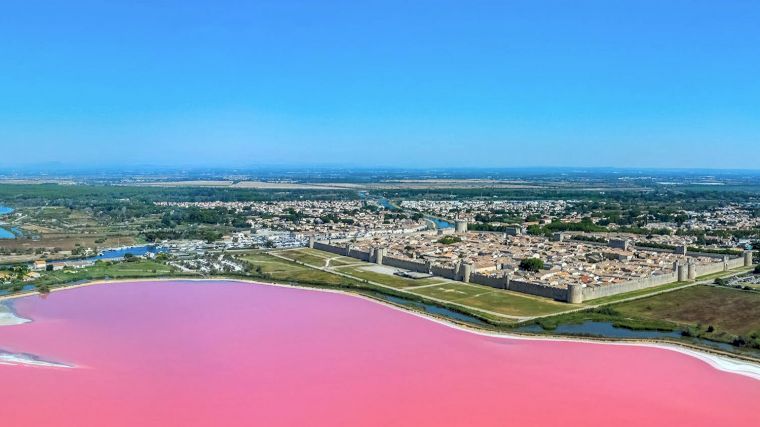
To the west of the Camargue lie vast salt flats. These are worth a visit in their own right, especially when they have a high concentration of salt and algae, causing them to turn a vivid pink. The best time to see the pink salt lakes is in June and July. Near these lakes lies a unique medieval fortified town, Aigues-Mortes (which means “dead waters”). It was founded in the thirteenth century by King Louis IX. Although Aigues-Mortes has had a turbulent history, its medieval city wall is well preserved. Some bullet holes are still visible, silent witnesses to the religious wars that raged here. You can walk the entire length of the wall surrounding the rectangular town, passing by various towers along the way. Some of the towers house exhibitions, including ones on the history of these fortifications. Of course, you’ll enjoy beautiful views of the town, the salt lakes, and the Canal du Rhône, especially from the Tour de Constance, the starting and ending point of the walk along the city wall.
9. Villages and Nature in the Luberon
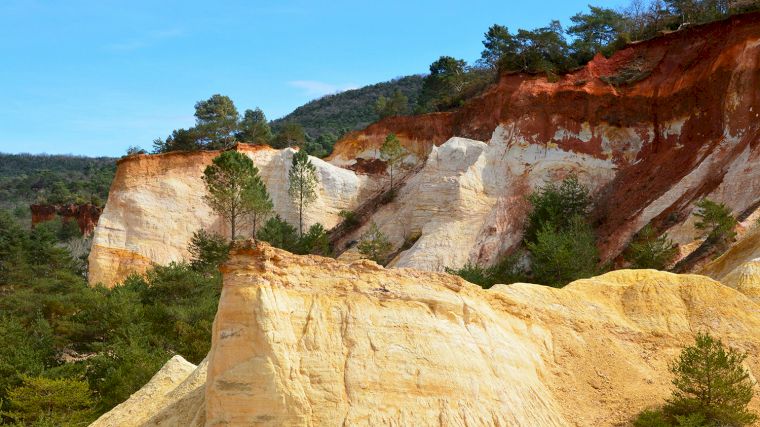
If you drive north from Aix-en-Provence, you’ll enter the Parc naturel régional du Luberon, a regional nature park featuring mountain ranges, rock formations, small rivers, picturesque villages, and a vast network of hiking and biking trails through the stunning natural landscape. If you really want to explore this area, you could easily spend several days here alone. More or less in the center of the park lies the town of Apt. To the northeast of Apt, you’ll find “Colorado Provençal,” so named because its ochre-colored landscape is reminiscent of that of Colorado in the United States. From the parking lot for your rental car, there are two routes. The blue route takes about 45 minutes, while the orange route is twice as long. You’ll be amazed by the rugged geological formations and stunning colors.
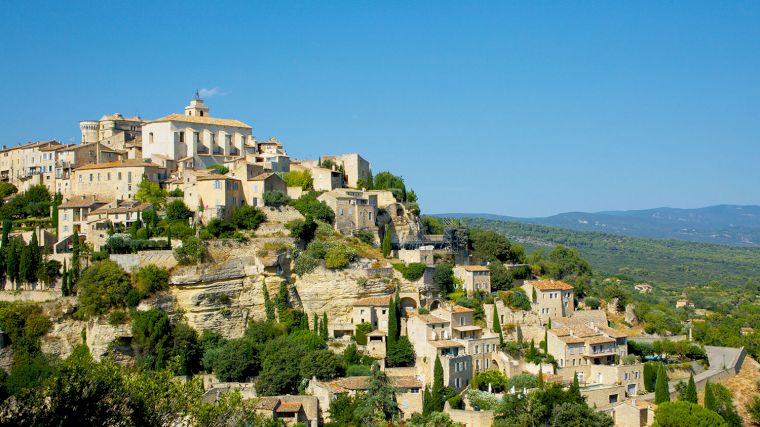
You’ll see those ochre hues on the walls of Roussillon, the most famous hilltop village in the Luberon. But you’ll also find authentic charm and traditional houses in other medieval gems like Gordes, Ménerbes, Saignon, Cucuron, and Lourmarin. The latter village is home to the oldest Renaissance castle in Provence. Near Gordes lies a restored village, Village des Bories, consisting of centuries-old stone houses and huts. It’s a great place to visit with children, because they’re allowed to build their own huts there!
Near the town of Oppedette, the Calavon River has carved deep gorges into the limestone cliffs. A two-kilometer hiking trail runs right alongside these gorges and is manageable if you’re in average physical condition. You can also descend into the Gorges d’Oppedette, but you’ll need sturdy hiking boots and shouldn’t be afraid of heights!
Manosque, on the eastern edge of the Luberon region, is the largest city in Haute-Provence. The medieval city walls surrounding the old town have largely disappeared, but the gateways— Porte de Soubeyran and Porte Saunerie —are still standing.
Lavender fields near Valensole
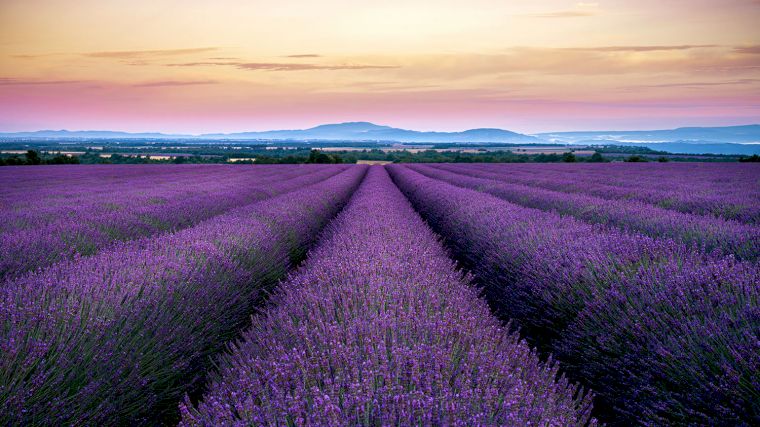
No trip to Provence is complete without a visit to the famous lavender fields. To get there, drive your rental car east from Manosque toward Valensole. The closer you get to that town, the more of those beautiful, rolling, purple-colored fields you’ll see—at least if you visit during the summer months, when the lavender is in bloom.
10. Massif de la Sainte-Baume
East of Marseille lies the Sainte-Baume mountain range, which rises 1,148 meters above the surrounding area at its highest point. Thanks to its mild climate, the massif is one of Provence’s most important water reservoirs, where numerous rivers have their source. The surrounding area is a regional nature park, and you can take beautiful hikes here along streams, rugged cliffs, and castle ruins. The drive there from Marseille (via the D2 and D80) is spectacular in itself, with many hairpin turns and fantastic views.
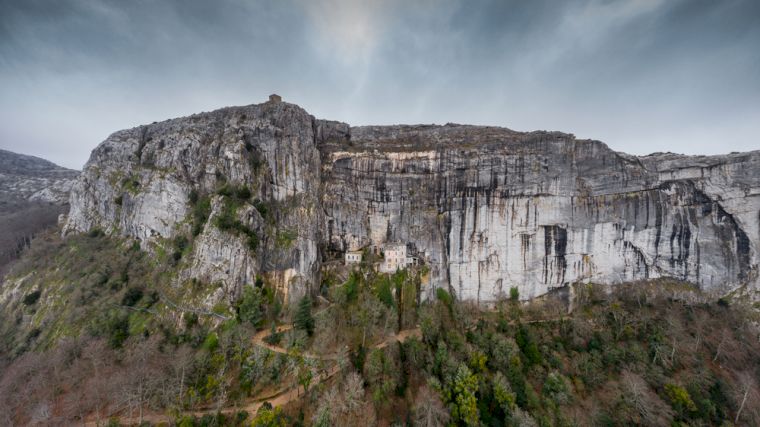
Popular hiking trails to the summit begin in the village of Plan d’Aups, near an inn run by Dominican monks and nuns. A two-kilometer trail leads to a cave where Mary Magdalene is said to have spent her final days. The hike to this pilgrimage site is not particularly difficult, but the route to the highest point, Jouc de l’Aigle, is more challenging. The contrast between the north and south sides of the ridge is striking: the northern slopes are densely forested, while the southern slopes consist of bare, jagged rocks. The latter pose a challenge for mountaineers. North of the inn, you can visit the Castelette Caves, which were formed by the underground Huveaune River.
Why Rent a Car in Provence
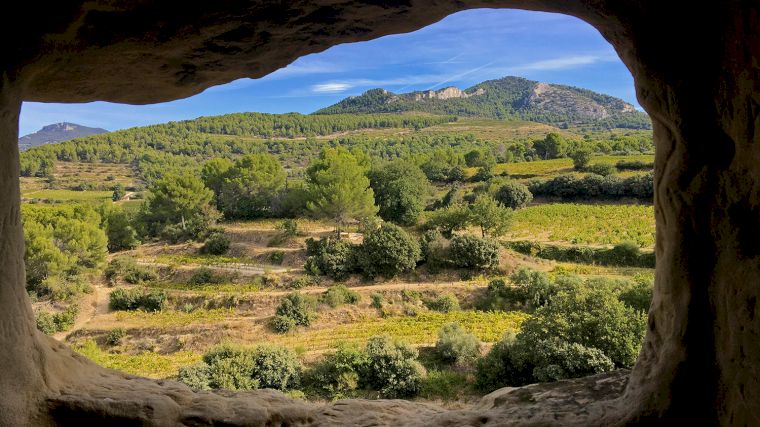
Many villages, historic sites, and the stunning natural scenery in Provence are best reached with your own transportation. Plus, you’ll have complete freedom to stop wherever, whenever, and for as long as you like. You’re probably already familiar with these benefits of renting a car, but do you know when it’s especially convenient? If you love good food! When you’re in a tourist town like Saintes-Maries-de-la-Mer or another popular hotspot, it can often be difficult to find a restaurant that serves delicious, authentic cuisine. The solution? Your rental car! With it, you can easily drive to a secluded ferme auberge, where you’ll find authentic regional cuisine. These traditional French farmhouse restaurants have joined forces, and on their official website, you can see which ones are in your area.
One-Way Car Rental from Marseille
There’s plenty to do and see in the Marseille area without having to drive very far. But if you have the time and want to take longer trips, consider renting a car for a so-called one-way rental. That means you pick up the car in one location and return it in another. This allows you to travel farther, since you don’t have to return the rental car to the starting point. Simply enter a different destination where you’d like to drop off the car, and we’ll show you only the rental cars for which that’s possible. Popular one-way routes from Marseille include Lyon, the beautiful historic city at the confluence of the Rhône and Saône rivers; Toulouse, the gateway to the Pyrenees; or even further to Bordeaux, a city that’s becoming increasingly popular.
Car Rental and the TGV
If you want to rent a car to explore Provence from Marseille, you can, of course, book one at the airport, Aéroport Marseille-Provence, or in the city itself, but have you ever considered combining car rental with the TGV high-speed train? For example: first, take a city break of a few days in Paris, then zip over to the Marseille Saint-Charles TGV station by train in three hours and pick up your rental car there. Or, if you want to avoid the city hustle and bustle, head to the Aix-en-Provence TGV station, which is located just outside the city along the D9 highway, allowing you to drive straight into the countryside of Provence. Train and rental car: a perfect combination for a wonderful vacation in France!

Where would you like to rent a car?
- 24000+ pick-up locations
- Free cancellation
- Independent comparator

Useful tips for a well-prepared trip
Which insurance should I choose, and what's the deal with the deposit? Read our articles with useful information and tips to ensure you choose the right rental car for you.