- Popular countries
- Popular regions
- Popular cities
- Popular airports
- Car hire United Kingdom
- Car hire Italy
- Car hire Spain
- Car hire United States
- Car hire Portugal
- Car hire Greece
- Car hire France
- Car hire Poland
- Car hire Ireland
- Car hire Cyprus
- Car hire Netherlands
- Car hire South Africa
- Car hire Switzerland
- Car hire Croatia
- Car hire Canada
- Car hire Malta
- Car hire Germany
- Car hire Hungary
- Car hire Norway
- Car hire Australia
- Car hire England
- Car hire Sicily
- Car hire Scotland
- Car hire Florida
- Car hire Sardinia
- Car hire Malta
- Car hire California
- Car hire Crete
- Car hire Lanzarote
- Car hire Majorca
- Car hire Menorca
- Car hire Tenerife
- Car hire Rhodes
- Car hire Fuerteventura
- Car hire Corsica
- Car hire Kefalonia
- Car hire Madeira
- Car hire Corfu
- Car hire Ibiza
- Car hire Gran Canaria
- Car hire London
- Car hire Faro
- Car hire Malaga
- Car hire Milan
- Car hire Lisbon
- Car hire Rome
- Car hire Alicante
- Car hire Dublin
- Car hire Manchester
- Car hire Porto
- Car hire Amsterdam
- Car hire Larnaca
- Car hire Geneva
- Car hire Luqa
- Car hire Bergamo
- Car hire Athens
- Car hire Budapest
- Car hire Pisa
- Car hire Orlando
- Car hire Palermo
- Car hire London Heathrow Airport
- Car hire Faro Airport
- Car hire Lisbon Airport
- Car hire Malaga Airport
- Car hire London Gatwick Airport
- Car hire Alicante Airport
- Car hire Manchester Airport
- Car hire Dublin Airport
- Car hire Larnaca Airport
- Car hire Porto Airport
- Car hire Malta Airport
- Car hire Bergamo Airport
- Car hire Athens Airport
- Car hire Budapest Ferihegy Airport
- Car hire Rome Fiumicino Airport
- Car hire Geneva Airport (Switzerland)
- Car hire Amsterdam Schiphol Airport
- Car hire Milan Malpensa Airport
- Car hire Pisa Airport
- Car hire Orlando International Airport

Belgium: The Most Beautiful Cities and Stunning Natural Beauty
Discover what this small country has to offer with a rental car
The Belgian capital, Brussels, is not only a great destination for a city break, but also the perfect base for day trips or a road trip through Belgium. The city is located right in the center of the country, and destinations in all directions can be reached within a few hours by rental car. Brussels lies almost on the language border between Dutch-speaking Flanders and French-speaking Wallonia. The city itself is officially bilingual, but French is the predominant language there.
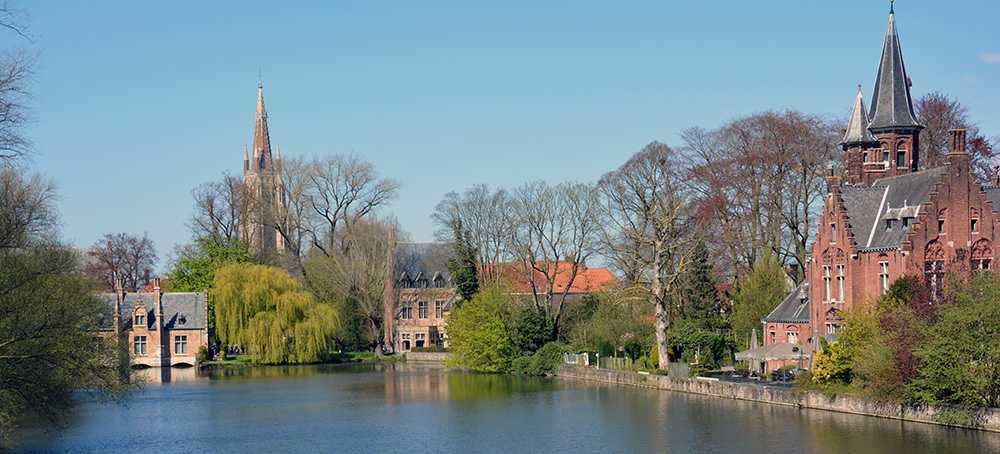
Belgium is small but surprisingly diverse: historic towns, each with its own unique atmosphere; wide sandy beaches and fashionable seaside resorts along the North Sea coast; and protected nature reserves in the Hoge Kempen and the Ardennes. You can rent a car in Brussels at Zaventem National Airport, but if you’d like to explore the Belgian capital first, it’s better to reserve a rental car in the city itself, for example at Brussels-South train station.
Brussels
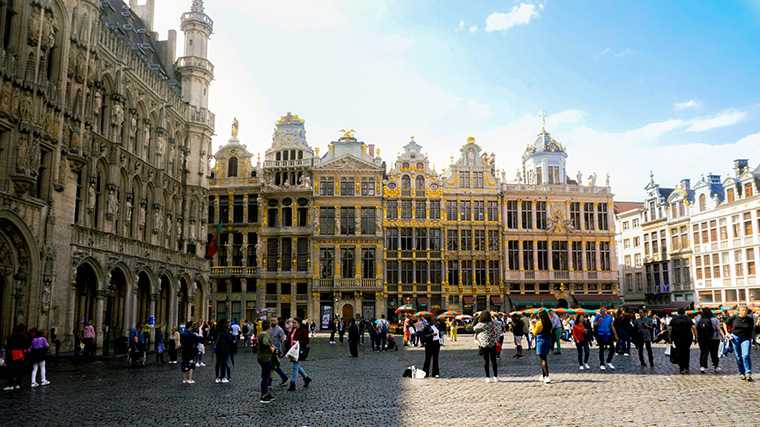
When you say Brussels, you think of the European Union, and that boring headquarters pops into your mind. But know that Brussels is much more than the “capital of Europe” and has a historic center that’s especially charming.
The heart of the city is the Grand Place, surrounded by the beautifully decorated facades of medieval guild houses and City Hall with its tall tower. It’s the perfect spot to enjoy a Belgian beer on one of the outdoor patios. Nearby stands Brussels’ most famous statue—which, incidentally, is only 65 centimeters tall: Manneken Pis.
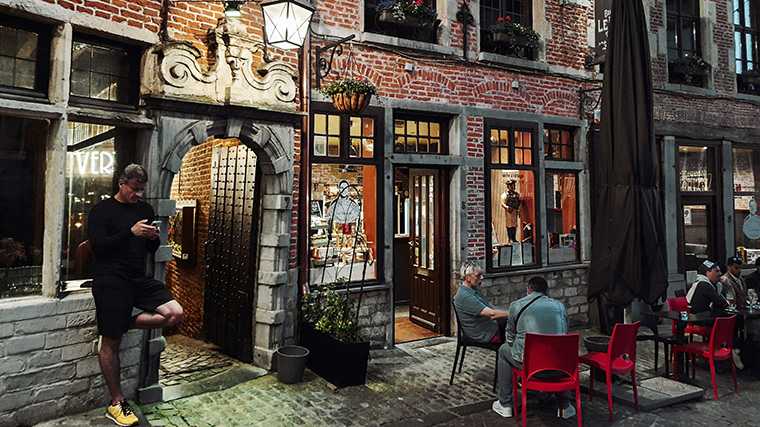
The flea market on Vossenplein is often touted as a must-see, but it has lost much of its charm. The little shops in the surrounding streets, however, are well worth a visit. Between the enormous Palace of Justice and the Royal Palace lies the chic Zavel (Sablon) district, which hosts an antique market every weekend on the square in front of the Church of the Great Zavel, with its stunning stained-glass windows. The square is surrounded by countless restaurants, cafés, and famous Belgian chocolate shops. The Saint-Hubert Galleries are a complex of three glass-covered shopping arcades in the center of Brussels.
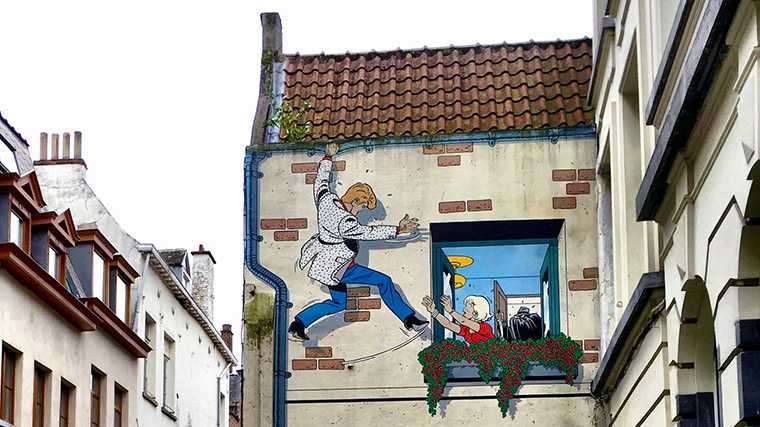
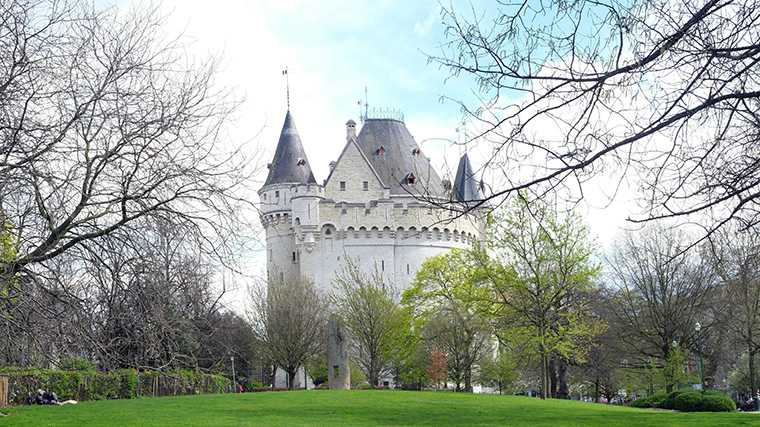
As the birthplace of Tintin, Lucky Luke, and the Smurfs, among others, Brussels celebrates comic art. There is a special comic strip walking tour that takes you past walls adorned with (often humorous) drawings. True enthusiasts will also want to visit the Comic Strip Museum. The Halle Gate is the city’s only remaining medieval gate and houses an impressive collection of antique weapons.
There is no shortage of museums in Brussels. The Royal Museums of Fine Arts umbrella organization includes various institutions, such as the Old Masters Museum, dedicated to painting from the 15th to the 18th century, and the Magritte Museum, which features surrealist works.
Mechelen
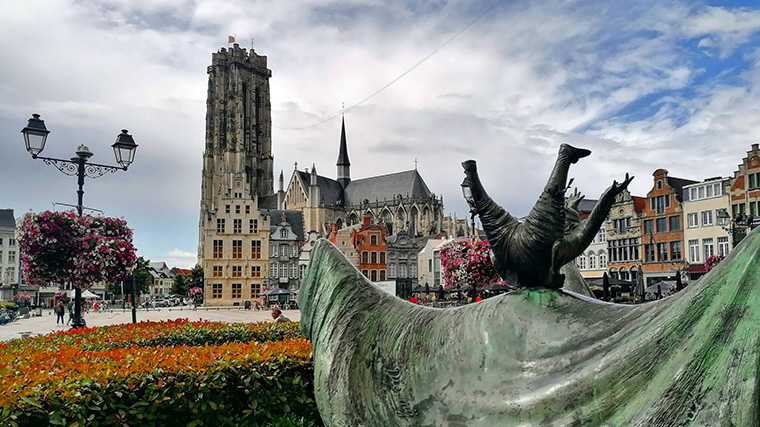
Mechelen is often overlooked, but it’s actually a really nice city to visit, just a half-hour drive from Brussels. You can park your rental car in one of the parking garages around the city center. You can even park under the Grote Markt, but you’ll pay top dollar there. That said, you’ll be right next to St. Rumbold’s Cathedral, whose construction began in the thirteenth century but wasn’t completed until two centuries later. It’s not really accurate to call the structure “completed”: the tower was supposed to reach 167 meters in height, but construction stopped at 97 meters due to a lack of funds. After climbing exactly 538 steps, you’ll be rewarded with a magnificent view of the city from the top.
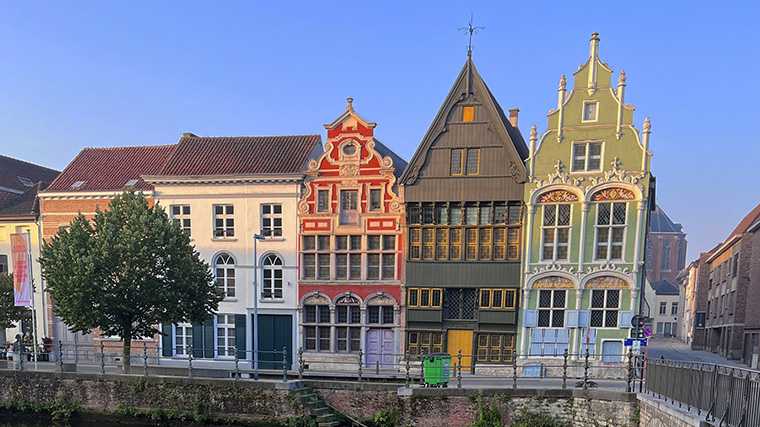
The city has a beautiful historic center, highlighted by the three 16th-century houses on Haverwerf. The audio tour through Mechelen is a real treat; through a wooden horn, you can eavesdrop on conversations between dignitaries, laborers, Beguines, prisoners, and other figures from the 15th century. At that time, Mechelen was a thriving, independent mini-state with a Burgundian flair. You can still see that today in the city’s large number of excellent restaurants.
Antwerp
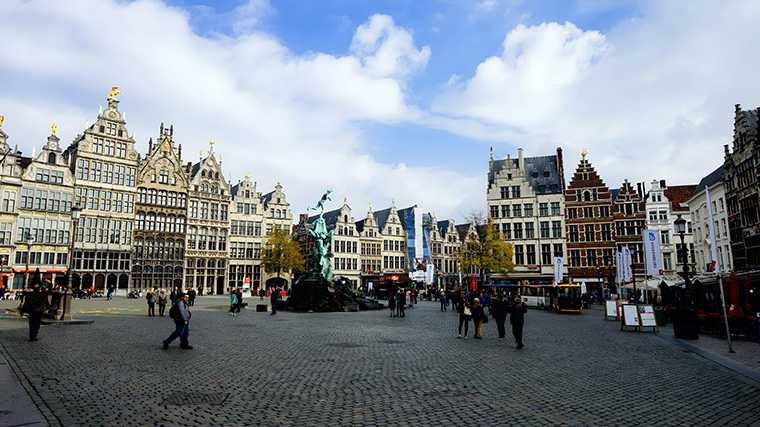
If you’re driving your rental car to Antwerp and looking for a parking spot, you should know that tourists are not allowed to park on the street in the historic center. So look for one of the parking garages in or around the center. Further from the city center, but close to public transportation stops, there are nine Park & Ride lots and garages.
In Antwerp, too, the heart of the city is the Grote Markt, featuring the statue of Brabo extending his hand. According to legend, the city was named after this gesture. Nearby stands the imposing Gothic Cathedral of Our Lady, with a tower 123 meters high. Here you can see, among other things, works by Peter Paul Rubens, who also has his own museum in the Rubens House. It’s located near the Meir, Antwerp’s most famous shopping street, though the locals themselves aren’t likely to buy their new clothes there. They prefer to go to the Fashion District, around Kloosterstraat, where you’ll also find many stores selling home decor items.
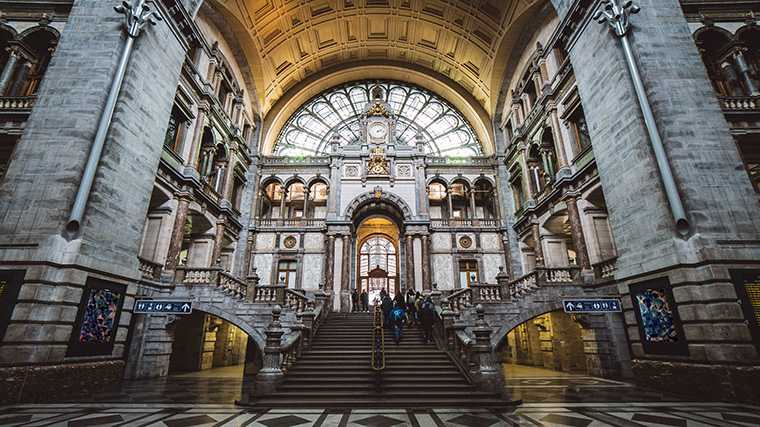
The center of Antwerp is brimming with beautiful architecture. You’ll feel completely transported back to the Middle Ages in the Vlaeykensgang, located between Hoogstraat, Oude Koornmarkt, and Pelgrimsstraat. It’s a hidden alley that’s easy to walk right past. Antwerp Central Station isn’t just a place to rent a car or catch a train—the building itself is an architectural masterpiece. The station is located on the edge of the Diamond District, where you can buy not only diamonds but also gold and jewelry.
The Zuid is a trendy neighborhood where nightlife, culture, and shopping go hand in hand. There, you’ll find trendy boutiques along the Vlaamsekaai and the Waalsekaai, no fewer than three museums (FotoMuseum, Museum of Contemporary Art, Royal Museum of Fine Arts), and countless cafés, bars, and restaurants.
Along the Scheldt
Don’t drive your rental car directly from Antwerp to Ghent; instead, take the beautiful, romantic route along the Scheldt River. The river basin of the Scheldt and its tributaries are part of the Scheldt Valley National Park. Did you know that the rhythm of the tides plays a major role here? This creates a very unique landscape of mudflats and salt marshes and attracts animals such as otters and various bird species, including the spoonbill.
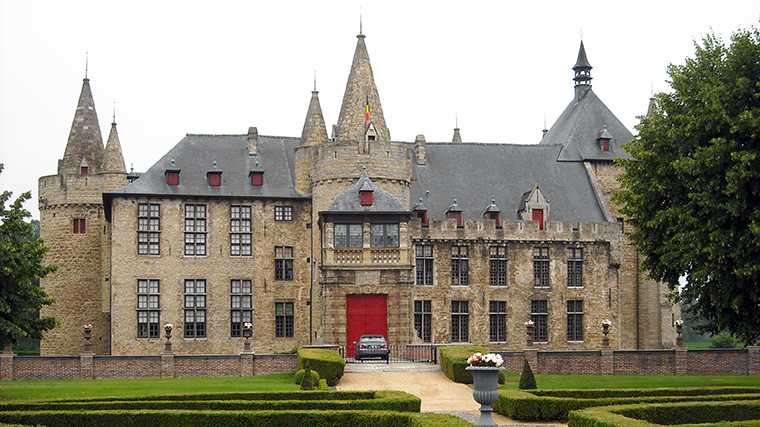
Along the way, you’ll come across several castles. The first is the moated castle of Wissekerke, situated in the middle of the Kruibeke polders. In Bornem stands the still-inhabited Marnix de Sainte Aldegonde Castle, which wouldn’t look out of place in a Disney fairy tale. Though not a castle, Dendermonde is a beautiful historic fortified town located where the Dender River flows into the Scheldt. Laarne Castle is one of the most beautiful and best-preserved moated castles in Belgium. Here, you can learn more about the witch hunts of the seventeenth century.
Ghent
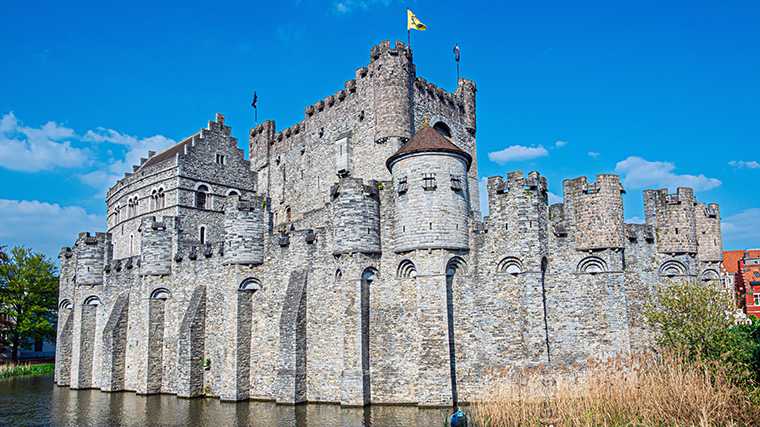
The route along the Scheldt ends in Ghent, where the river joins the Leie. Here, too, there are several parking garages around the historic center, as well as Park & Ride facilities where you can park your rental car. For centuries (roughly between the years 1000 and 1500), Ghent was one of the largest and wealthiest cities on the European mainland. That wealth is still evident in the beautifully restored city center, with the 12th-century Gravensteen Castle as its crowning jewel. The audio tour provides a fun and engaging account of the history of this imposing castle and its inhabitants. From the belfry, you’ll enjoy a stunning view of the city. You can take an elevator most of the way up.
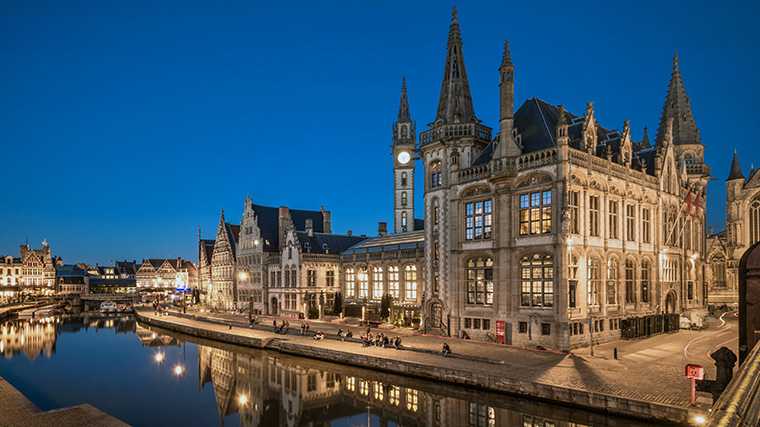
South of Ghent—between Oudenaarde, Zottegem, Ronse, and Geraardsbergen—lies the beautiful hilly landscape of the Flemish Ardennes. Hills such as the Kluisberg and the Knokteberg are regularly included in the route of the Tour of Flanders.
Poeke Castle
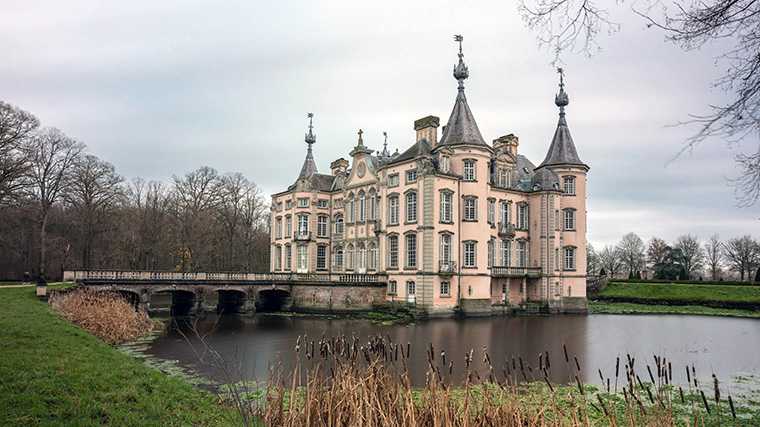
If you drive from Ghent to Bruges, you’ll pass Poeke Castle, just south of Aalter. The castle itself isn’t open to the public, but there are benches in the park surrounding it. It’s the perfect spot for a picnic lunch! You can park your rental car in a small parking lot next to the castle.
Bruges
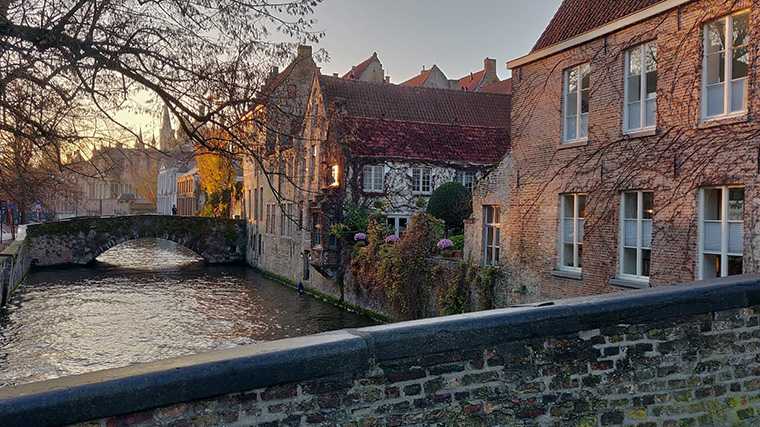
Bruges is a fairytale destination and, without a doubt, one of the most beautiful cities in Belgium. Whether you’re taking a boat tour through the canals or strolling along the cobblestone streets, you’ll find yourself taking photo after photo of the fascinating medieval architecture. Bruges has immense appeal, and especially during the summer months, the old town is teeming with tourists. The best time to visit this city is in early spring, late fall, or even in winter (except around Christmas, when it’s actually very crowded).
The canals (called “reien” in Flanders) are all beautiful, but the most stunning is the Groenerei with its romantic little bridges. The beautiful cityscape from the Rozenhoedkaai is very popular, as is climbing the belfry on the Markt. On the bridge over the Minnewater, in the southern part of the city, couples kiss to seal their eternal love.
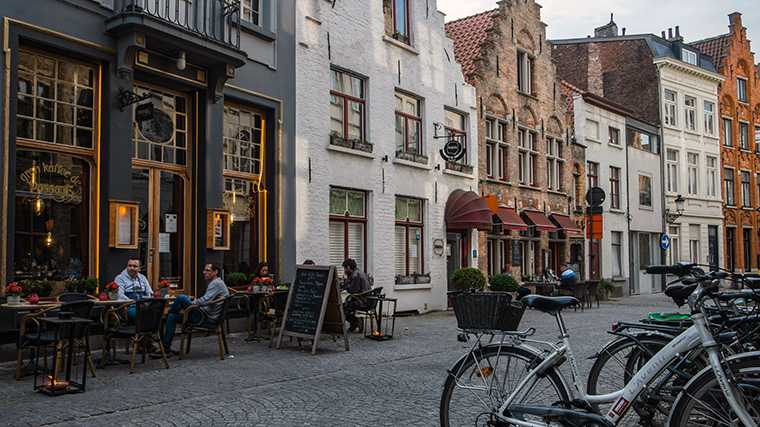
The Groeninge Museum is dedicated to the history of Belgian visual arts, and at the Historium you can experience the city’s golden age in the fifteenth century. Is Bruges too crowded for you? In the Bruges Ommeland , you’ll find quaint villages and impressive castles.
Zwin Nature Park
From the R30 ring road around Bruges, a half-hour drive in a rental car takes you to a whole different world: Zwin Nature Park. Yet the nature here is closely connected to Bruges, as the Zwin was once the estuary that linked Bruges to the North Sea. This estuary silted up and is now little more than a channel marking the border with the Netherlands. The marshy area surrounding it, crisscrossed by creeks, is a beloved resting place for various bird species, with different ones visiting each season. There are walks along boardwalks, and at the visitor center, children can learn interactively about the behavior of migratory birds.
The North Sea Coast
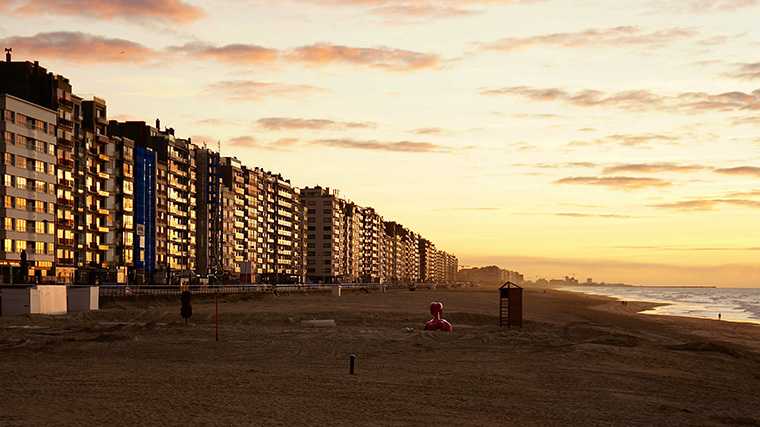
The Belgian North Sea coast evokes mixed feelings in many people. On the one hand, a day at the wide beach in the summer offers wonderful relief from the heat and plenty of fun; on the other hand, large sections of that coastline are lined with apartment complexes. This is particularly true in Knokke-Heist, Blankenberge, and Ostend. In the summer, these are lively seaside resorts with charming boulevards. You’ll also find top-notch restaurants there—and, in the case of Ostend, casinos.
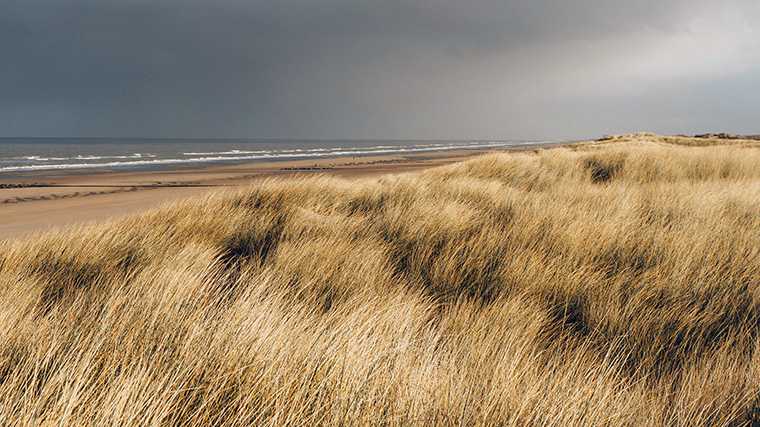
In Blankenberge, don’t miss the historic fisherman’s cottage Majutte. In Bredene, the buildings aren’t right on the beach, and in De Haan, you can admire beautiful historic villas in the Belle Époque style. Between De Panne and the French border lies a vast dune area, the nature reserve De Westhoek.
Westhoek / Ypres
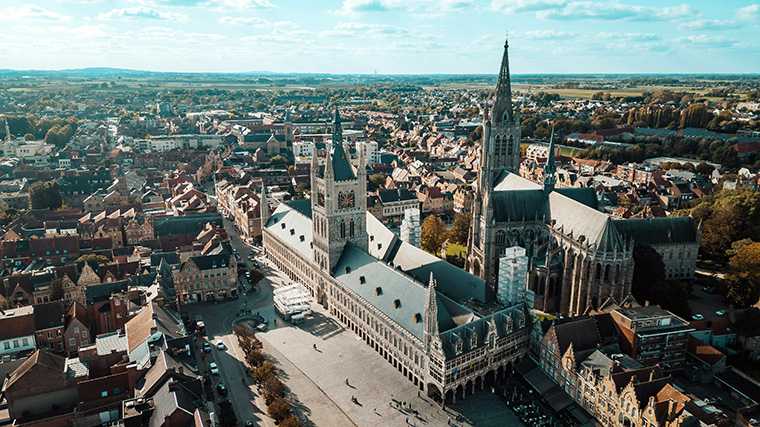
The Westhoek region covers a larger area, with Ypres as its main city. During World War I, fierce and prolonged fighting took place here between British, Belgian, and German armies, and many lives were lost in the trenches. Ypres was even almost completely destroyed, but was rebuilt brick by brick after the war. That is why you can still enjoy a magnificent monument like the Cloth Hall today. That building houses the In Flanders Fields Museum, which makes the horrors of the front lines at that time almost palpable. This is even more evident at the Passchendaele Museum in Zonnebeke, just outside Ypres, where a trench has been realistically reconstructed. North of Diksmuide, in the bend of the lovely little Yser River, lie the remains of a real trench complex from World War I, nicknamed the “Corridor of Death”…
Kortrijk
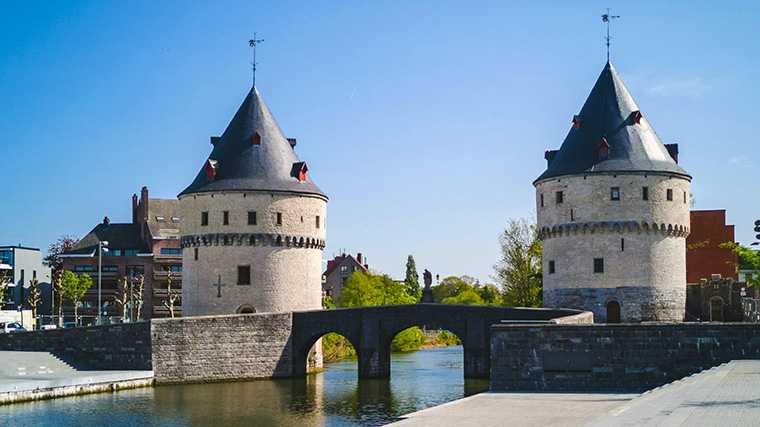
Kortrijk plays an important role in Flemish history, as it was here in 1302 that a Flemish army of foot soldiers defeated the French army of mounted knights. This battle, known as the Battle of the Golden Spurs, is still commemorated annually on Flemish Day (July 11). The medieval Church of Our Lady hosts a free light and sound show about this battle. The church is located near the Beguinage, one of the many beautiful spots in the historic heart of Kortrijk. The city’s most iconic symbols are the two identical Broel Towers, remnants of the medieval city wall. The towers stand on either side of the Broel Bridge leading to the so-called Buda Island on the Leie River, the beating heart of Kortrijk’s art scene. Tip: there are two parking lots and a parking garage on that island, where you can usually find a spot to park your rental car.
Mons
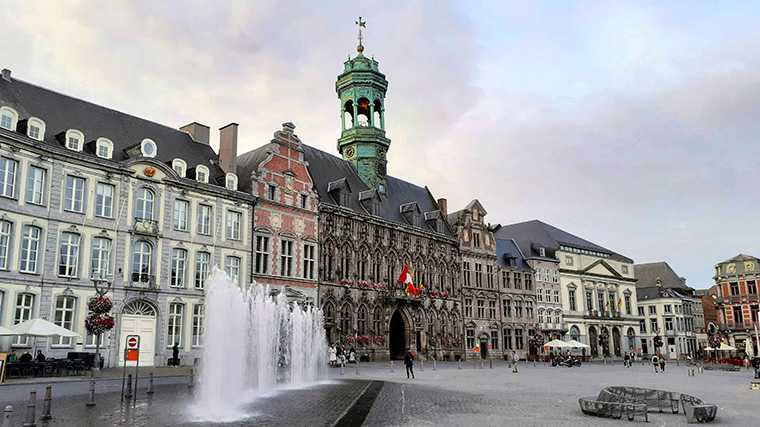
Just like in many other Belgian cities, the Grote Markt is the literal center of Mons, though in this French-speaking city it’s called the Grand Place. On summer days, the square is filled with outdoor cafes, and children have a blast getting splashed by the fountain.
The best way to reach the gardens behind the Baroque belfry (in French: beffroi) is to climb the steps of the Ruelle César alley. The Mundaneum is a fascinating museum in Mons. It houses a vast archive containing all the knowledge in the world—or at least, that was the goal when the archive was founded in 1895. A sort of internet avant la lettre. If you’re an admirer of Vincent van Gogh’s work, you’ll want to visit the house where he lived for over a year. It’s located in a park in the southwestern part of the city.
Lompret / Botte du Hainaut
Between Mons and Namur lies the rather unattractive city of Charleroi (though it does have a convenient airport). So, take your rental car south from Mons, and you’ll arrive at one of the most beautiful Walloon villages: Lompret. The old village lies along the winding Eau Blanche River in stunning surroundings. It’s a stop on the tourist route through the Botte du Hainaut region. That route also passes the source of the Oise River, south of the town of Chimay (known for its eponymous cheese). It’s the only river in Belgium that flows south.
Namur
Where the Sambre River flows into the Meuse (Maas), the Namur Citadel stands high on a hill. It’s a great starting point for exploring this beautiful city. There are a few parking spots inside the citadel, but chances are they’ll all be taken. Walk up to the top (the citadel is located in the middle of a green city park) or take the cable car from the other side of the Sambre. Children find the fortress’s underground passages incredibly exciting.
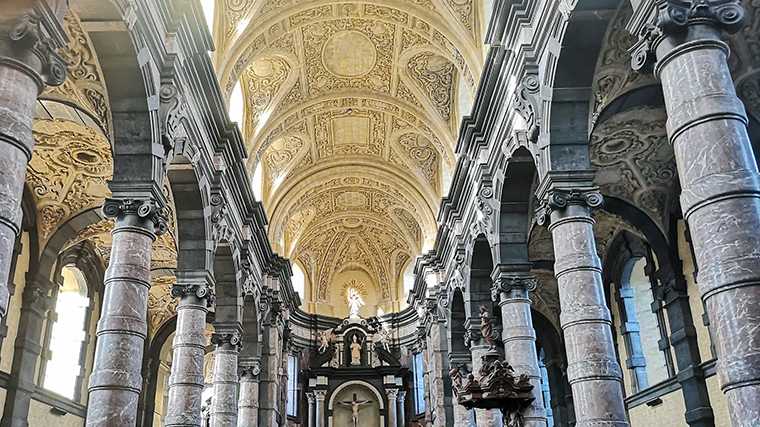
The Place d’Armes is dominated by the Namur belfry, the only remnant of the medieval city wall. If you love old churches, be sure to visit the Église Saint-Loup. The pillars inside the church are made of different colors of marble, and the carvings on the ceiling, crafted from ivory-white sandstone, are truly remarkable. The Quartier des Carmes, around Rue des Croisiers, is a lively neighborhood with a variety of local shops, cafés, and restaurants. The 45 little figures that Spanish artist Isaac Cordal placed here and there throughout the city are quite amusing. It’s fun to go on a scavenger hunt for them with the kids!
Dinant
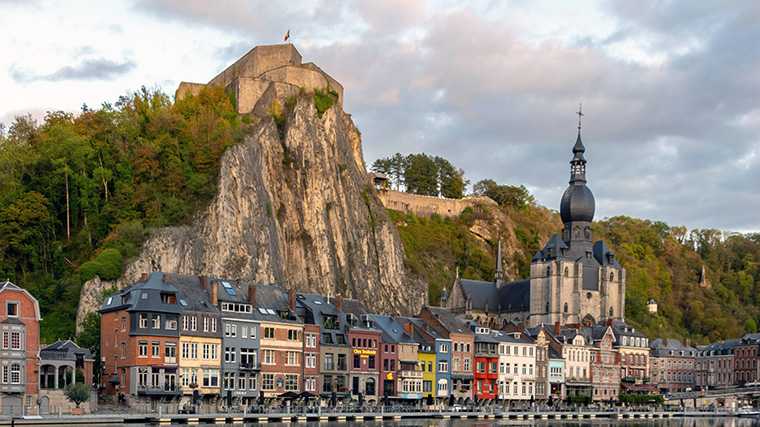
Between Namur and Dinant, you’ll drive your rental car along the winding Meuse River. A fun activity halfway through the trip is riding a rail bike along the old railroad track beside the Molignée River.
Dinant is also guarded by a citadel perched high above the town, which you can reach by cable car or via a long, steep staircase. Or you can drive there in your rental car, as there is ample parking at the citadel. The citadel houses a museum of antique weapons. The other structure that dominates Dinant is the Collégiale Notre-Dame church, which features a gigantic stained-glass window.
The inventor of the saxophone, Alphonse Sax, was born in the city, and the people of Dinant are proud of that fact. A small museum has been set up in his house, and throughout the city you’ll find enormous, brightly colored sculptures shaped like saxophones. As you drive along the right bank of the Meuse toward Anseremme, the road splits in two at the isolated Bayard Rock: the southbound lane runs right alongside the river, while the northbound lane takes you between two perpendicular rock faces.
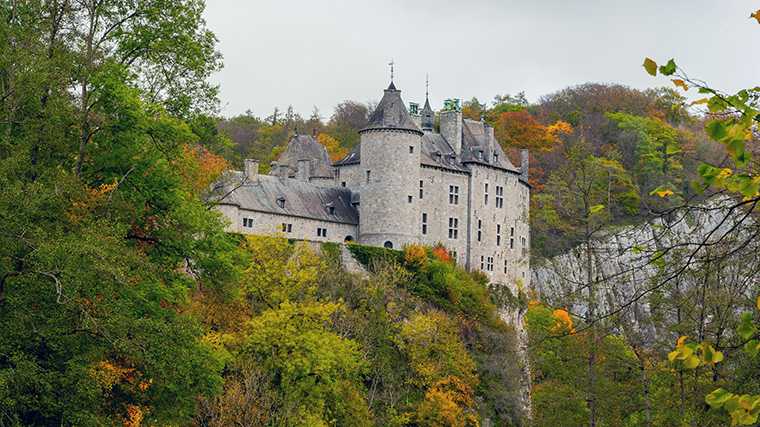
About eight kilometers south of Dinant lies the beautiful Château de Walzin, along the winding Lesse River. You can’t tour the castle’s interior, but the surrounding area is a wonderful spot for a picnic. The river also invites you to go canoeing or kayaking. A little further to the east lies the rocky nature reserve Furfooz in the Lesse Valley. It offers stunning views of the river.
Ardennes
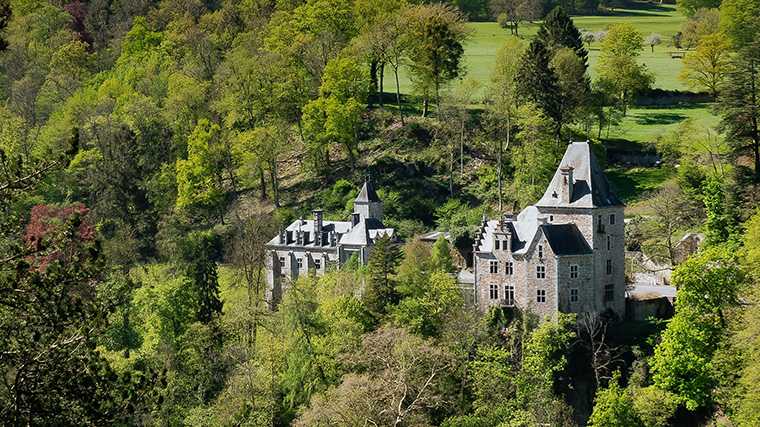
In Dinant, you’re already in the Ardennes, and this region has so much to offer that you could spend your entire Belgian road trip here. We’ve listed just a few highlights below. The Ardennes, with their dense forests, babbling rivers, and rugged cliffs, are the perfect place to explore on your own in a rental car along endless beautiful country roads. Around every bend, you’ll discover something beautiful, fun, or interesting. In addition to picturesque towns and ancient castles, the Ardennes offer plenty of outdoor activities: hiking, biking, mountain biking, canyoning, kayaking, and rock climbing. Or you can simply unwind and relax amid the breathtaking natural scenery.
Bouillon
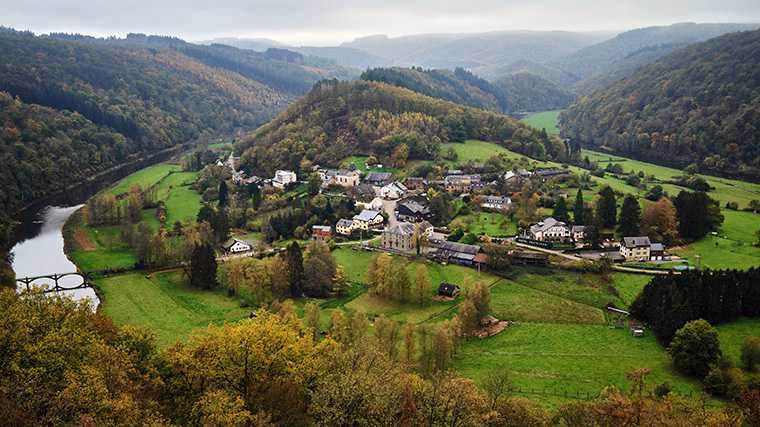
The most scenic way to drive from Dinant to Bouillon in your rental car is to take the exit for Vresse-sur-Semois just past Bièvre and then follow the course of the meandering Semois River. Each bend offers an even more beautiful view than the last, and fortunately, this has been taken into account with the creation of parking areas along the road, including at Panorama de Frahan and Tombeau du Géant.
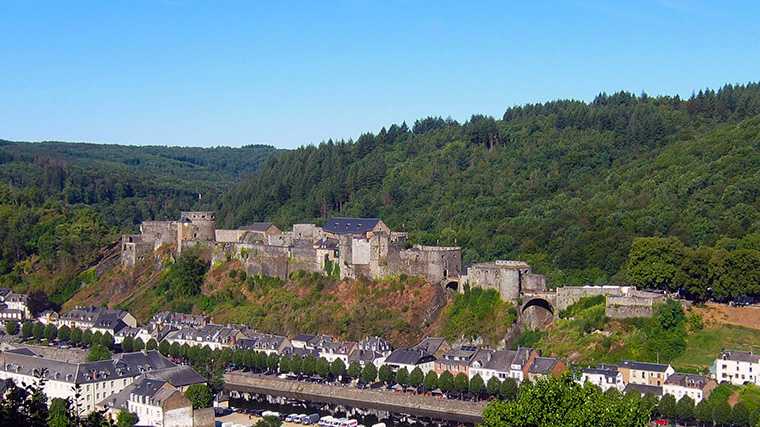
In Bouillon, the star of the show is the early medieval castle, which has overlooked a bend in the Semois River for a thousand years. It is an impressive fortress, and the torchlight tour through the underground passages is a real experience.
Houffalize / La Vallée des Fées
Just north of Bastogne lies the beautiful village of Houffalize on the banks of the Ourthe. The surrounding area is a paradise for hikers and mountain bikers. For example, a six-kilometer loop hike starts from the village of Achouffe (known for the brewery where La Chouffe beer is brewed), winding past streams, forests, and local legends about fairies said to live there. Whether that’s really true is up to your imagination, but beavers certainly do live here. Here and there you’ll see beaver dams, some several meters wide and quite impressive. From the old Wilogne watermill, you’ll have to tackle a steep climb straight through the Bois de Martin Moulin. You’ll be rewarded with a spectacular view of the surrounding area before descending back into the valley. Be sure to wear sturdy hiking boots for this hike through the Valley of the Fairies.
La Roche-en-Ardenne
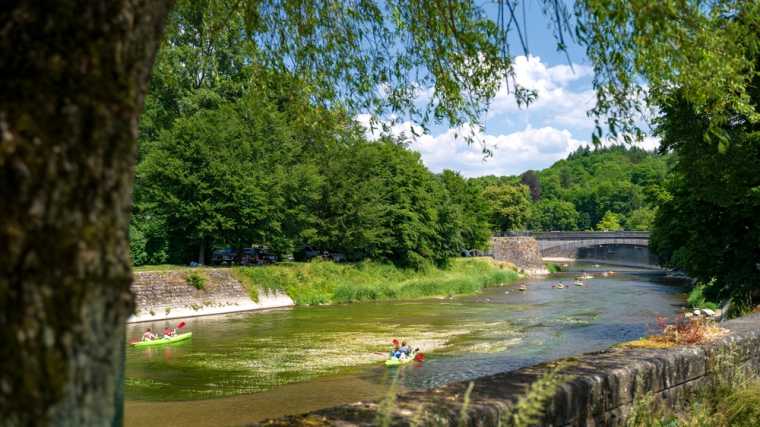
The N860 runs mostly along the Ourthe from Houffalize to La Roche-en-Ardenne, which is also known as the Pearl of the Ardennes. Take a short detour from the direct route along the way and park your rental car at the Le Hérou lookout point. It looks as if several rivers are rushing deep below you, but there’s actually only one: the Ourthe. It’s no coincidence that the little hotel here is called Les 5 Ourthes. You can descend to the river along a steep rock face using chains.
La Roche is a small town with narrow streets and cozy outdoor cafes, beautifully situated in a bend of the Ourthe. The ruins of a feudal castle tower high above the town, but it’s above all the incredible natural beauty that makes La Roche so beloved. You can go kayaking on the Ourthe, take walks along the river, or climb the steep rock faces.
Durbuy / Hotton Caves
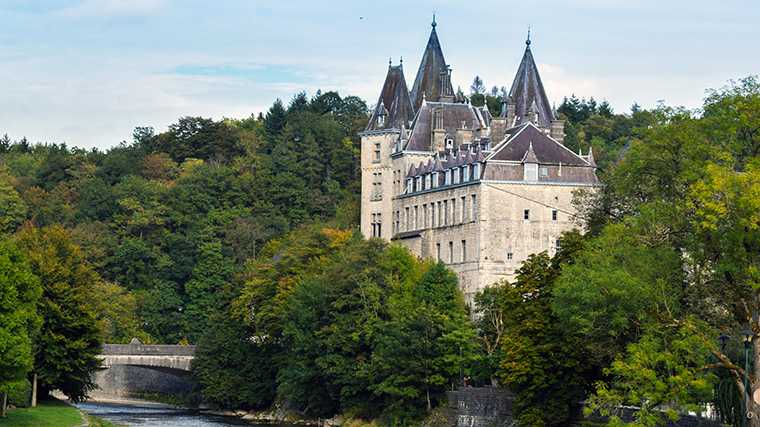
Durbuy likes to call itself “the smallest town in the world.” Although that claim is somewhat debatable, it is indeed a very pretty little town with cobblestone streets and narrow alleys. The surrounding area is popular among outdoor enthusiasts. Of course, you can go canoeing or kayaking on the Ourthe, but canyoning and rock climbing are also popular.
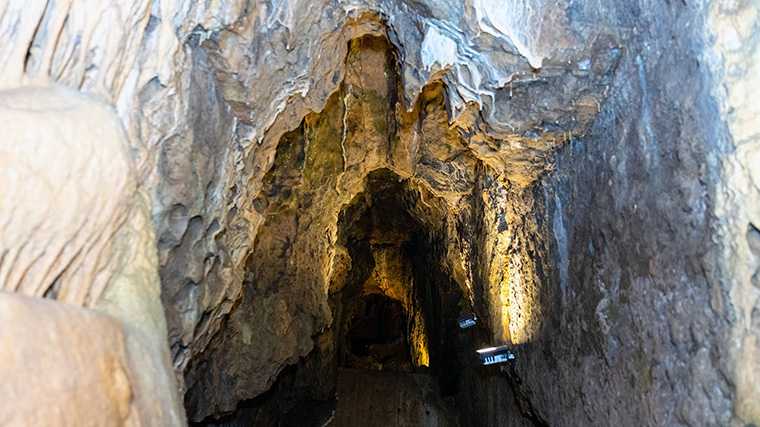
A 15-minute drive south of Durbuy, you’ll find the Grottes de Hotton. This cave system is less well-known than the caves of Han, but it’s just as beautiful. There’s plenty of parking for your rental car, and from there you descend nearly 40 meters underground. Be sure to dress warmly, as it’s cool inside the cave.
Luxembourg
If you have enough time, you can also explore the Ardennes in Luxembourg. Most Belgian car rental companies don’t mind if you cross the border, but you do need to mention it when you reserve your rental car.
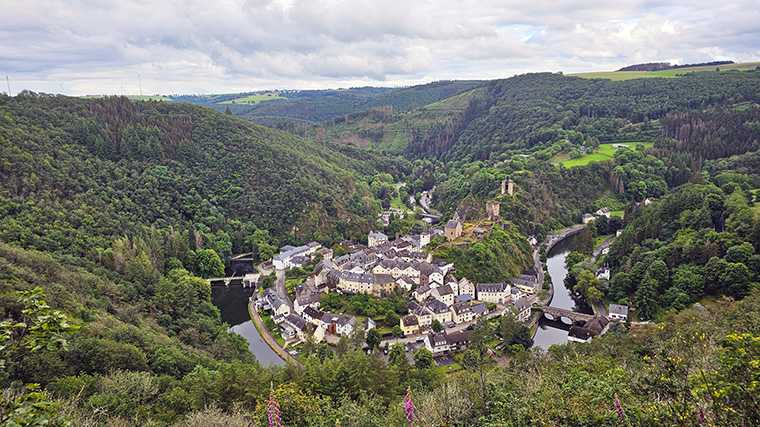
Visit the charming town of Esch-sur-Sûre, which lies at the foot of a castle ruin. The river is dammed here, and you can take beautiful boat trips on the reservoir. It’s very quiet there, as motorboats are prohibited. Vianden is beautifully situated in the valley of the Our River, surrounded by dense forests and close to the German border. High above the town stands yet another magnificent castle. It was once in a state of serious disrepair but has been magnificently restored.
Clervaux Castle, in northern Luxembourg, is much more than a medieval fortress. Part of it has been converted into a museum commemorating the Battle of the Ardennes during World War II. Another part houses the world-famous photographs from the 1950s in *The Family of Man*.
Why Rent a Car in Belgium
Belgium boasts some of Europe’s most charming and historic cities, as well as incredibly beautiful natural scenery, especially in the southeastern part of the country. If you want to see as much of Belgium as possible in a short amount of time, the best option is to rent a car. This gives you the most flexibility and allows you to stop wherever and whenever you want. If you’re only visiting the Ardennes, it’s best to rent a car in Liège, Namur, Charleroi, or Arlon (in the far southeast of the country). Want to drive around Belgium completely worry-free? Then rent a car with our Worry-Free label, which includes coverage for your deductible.

Where would you like to rent a car?
- 24000+ pick-up locations
- Free cancellation
- Independent comparator

Useful tips for a well-prepared trip
Which insurance should I choose, and what's the deal with the deposit? Read our articles with useful information and tips to ensure you choose the right rental car for you.