- Popular countries
- Popular regions
- Popular cities
- Popular airports
- Car hire United Kingdom
- Car hire Italy
- Car hire Spain
- Car hire United States
- Car hire Portugal
- Car hire Greece
- Car hire France
- Car hire Poland
- Car hire Ireland
- Car hire Cyprus
- Car hire Netherlands
- Car hire South Africa
- Car hire Switzerland
- Car hire Croatia
- Car hire Canada
- Car hire Malta
- Car hire Germany
- Car hire Hungary
- Car hire Norway
- Car hire Australia
- Car hire England
- Car hire Sicily
- Car hire Scotland
- Car hire Florida
- Car hire Sardinia
- Car hire Malta
- Car hire California
- Car hire Crete
- Car hire Lanzarote
- Car hire Majorca
- Car hire Menorca
- Car hire Tenerife
- Car hire Rhodes
- Car hire Fuerteventura
- Car hire Corsica
- Car hire Kefalonia
- Car hire Madeira
- Car hire Corfu
- Car hire Ibiza
- Car hire Gran Canaria
- Car hire London
- Car hire Faro
- Car hire Malaga
- Car hire Milan
- Car hire Lisbon
- Car hire Rome
- Car hire Alicante
- Car hire Dublin
- Car hire Manchester
- Car hire Porto
- Car hire Amsterdam
- Car hire Larnaca
- Car hire Geneva
- Car hire Luqa
- Car hire Bergamo
- Car hire Athens
- Car hire Budapest
- Car hire Pisa
- Car hire Orlando
- Car hire Palermo
- Car hire London Heathrow Airport
- Car hire Faro Airport
- Car hire Lisbon Airport
- Car hire Malaga Airport
- Car hire London Gatwick Airport
- Car hire Alicante Airport
- Car hire Manchester Airport
- Car hire Dublin Airport
- Car hire Larnaca Airport
- Car hire Porto Airport
- Car hire Malta Airport
- Car hire Bergamo Airport
- Car hire Athens Airport
- Car hire Budapest Ferihegy Airport
- Car hire Rome Fiumicino Airport
- Car hire Geneva Airport (Switzerland)
- Car hire Amsterdam Schiphol Airport
- Car hire Milan Malpensa Airport
- Car hire Pisa Airport
- Car hire Orlando International Airport

Exploring the Fantastic Basque Country in a Rental Car
11 Tips for Road Trips Around Bilbao
Bilbao, on the Bay of Biscay, was once a rather drab industrial city. Those days are long gone, and today it’s a popular destination for a city break. The opening of the famous Guggenheim Museum in 1997 has greatly contributed to the city’s popularity, but it is by no means Bilbao’s only attraction. For example, the Nervión River, which runs right through the city, has been cleaned up, and you can now go kayaking or stand-up paddleboarding there. Surrounding the Gothic cathedral is the historic center— Casco Viejo —with cozy restaurants and cafés. It’s the perfect spot to enjoy a glass of wine and snack on pintxos (the Basque version of tapas). Speaking of food: Bilbao is home to some of the best restaurants in all of Spain!
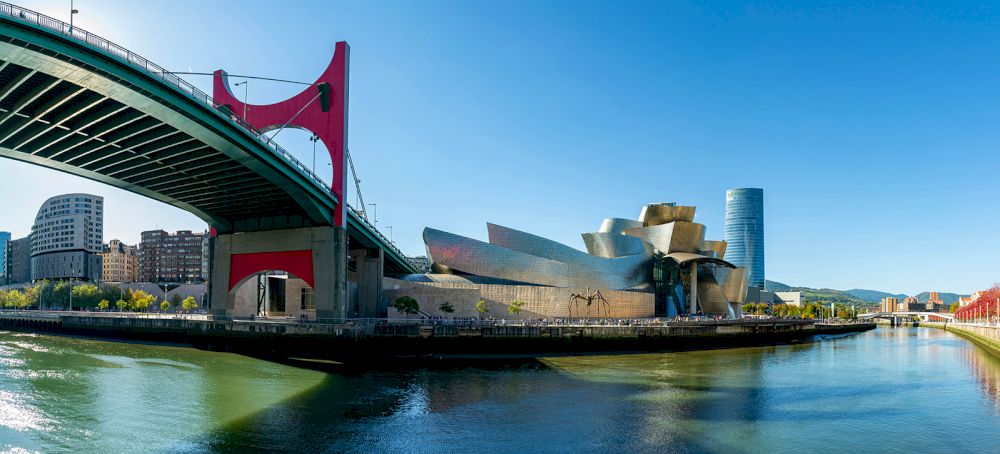
Bilbao is a fantastic starting point for a road trip through the Basque Country in a rental car. Of course, you can also use the city as a base for day trips in the surrounding area. There are adventurous roads along the coast and through the mountains; you can visit idyllic beaches on the Bay of Biscay with challenging waves for surfers; and there are beautiful, historic towns and quaint villages. What are you waiting for? Rent a car in Bilbao and choose from our suggestions below for a fantastic vacation in the Basque Country!
Be well-prepared for your road trip with a rental car in the Basque Country and read about the traffic rules in Spain.
1. Bizkaiko Zubia
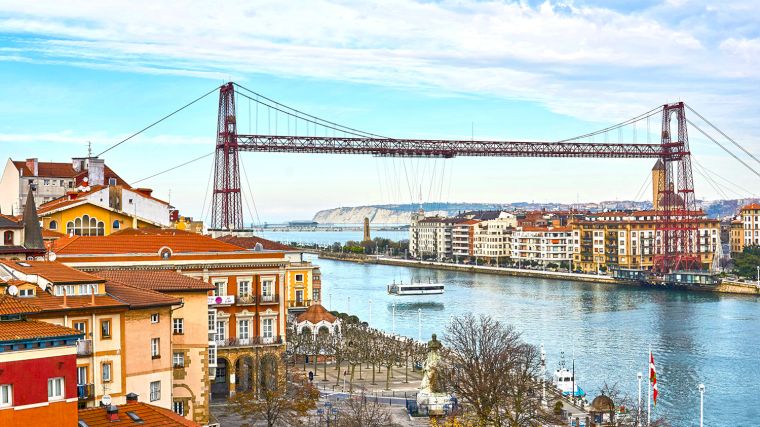
Just north of Bilbao lies a remarkable bridge, the Puente Bizkaia (in Basque: Bizkaiko Zubia), also known as the Puente Colgante (Suspension Bridge). The road leading to it along the Nervión River isn’t particularly scenic—passing old factories and dilapidated houses—but once you reach the river’s mouth, a unique structure awaits you. In the late nineteenth century, a connection was needed between Getxo on one bank and Portugalete on the other, but shipping on the river could not be obstructed. The result: a horizontal steel beam, 45 meters above the ground, spans between two tall towers on both banks. Suspended below it is a gondola that hangs from steel cables just a few meters above the water, carrying passengers and cars across. You can cross to the other side on this suspended roadway, then take an elevator up and walk back across the horizontal beam. Not for those afraid of heights!
2. San Juan de Gaztelugatxe
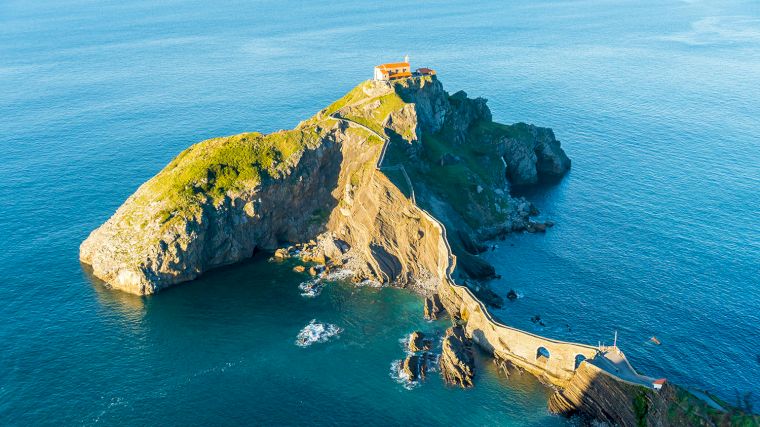
Depending on the route you choose, it’s a 40- to 60-minute drive from Getxo to the magical rocky islet of Gaztelugatxe. We recommend taking the BI-3151 coastal route: the road is in excellent condition and you’ll drive through beautiful scenery. You’ll also pass by charming little beaches like Gorlizekoand Bakioko. But the main attraction is the island with its iconic stone staircase, which you may recognize from the TV series *Game of Thrones*. Don’t underestimate the climb: from the parking lot, you’ll first descend toward the water, and from the stone arch bridge, you’ll walk up 241 steep steps to the little church at the top. And you’ll have to make your way back down, too. Be sure to wear sturdy hiking shoes, as the cobblestones on the stairs are uneven and can be slippery. Also, be sure to bring plenty of water.
At the top, you can literally follow in the footsteps of John the Baptist—at least if you believe that the footprint there is indeed his. There’s a deep-rooted tradition among the fishermen here. Before they go out fishing, they steer their boat around the island several times to port and starboard, so that John the Baptist will bless them with a bountiful catch and offer protection at sea.
Because the site attracts many visitors, the number of people allowed in is limited from late March through mid-September. During this time, you must reserve a (free) time slot online. The closest parking lot for your rental car is at the Urizarreta entrance, next to the Eneperi restaurant. If you don’t have a ticket to visit the islet itself, there’s a trail leading from this restaurant to a beautiful viewpoint.
3. Bermeo
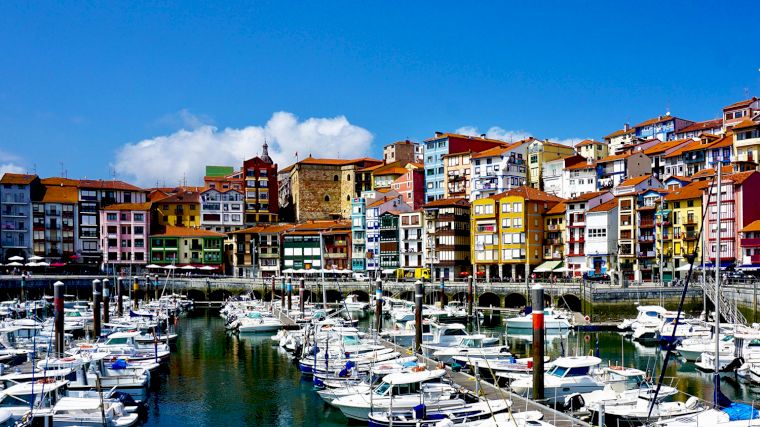
Further along the coast lies the charming fishing village of Bermeo, where the harbor is now mostly filled with pleasure boats. The historic part of the village around the Puerto Viejo is characterized by narrow, colorful houses built against the cliffs, with each row situated higher up the slope. The village cherishes its fishing and seafaring traditions at the Museo del Pescador (Fishermen’s Museum). It is housed in the Torre de Ercilla, named after the family of merchants who built it in the fifteenth century. At one time, there were about thirty of these towers in Bermeo. Of the seven original city gates, only one has survived: the fourteenth-century Puerta de San Juan. On the lively central square stand the Church of Santa María, built in 1858, and the town hall, built over a century earlier, both in the Neoclassical style. This square comes alive in the evening, as does Parque Lamera behind the old harbor, which used to be a shipyard. Today, the park’s many benches and the surrounding bars, restaurants, and outdoor seating areas make it a vibrant gathering place.
4. Mundaka, a Surfing Mecca
Along the rugged northern coast of the Basque Country lie some of the best surfing spots in Spain—and perhaps in all of Europe. The sandbar in the estuary near Mundaka is the original “Mecca” for surfers in Spain. Especially between September and December, there are often beautiful, high waves, and calmer days are ideal for perfecting your technique—or for learning to surf, since there are many surf schools in Mundaka. Depending on the tide, there are several access points to the surf zone. Most surfers start at the harbor, since it’s closest to the sandbar (and thus the big waves), but you can also enter the water via a small set of steps just behind the church.
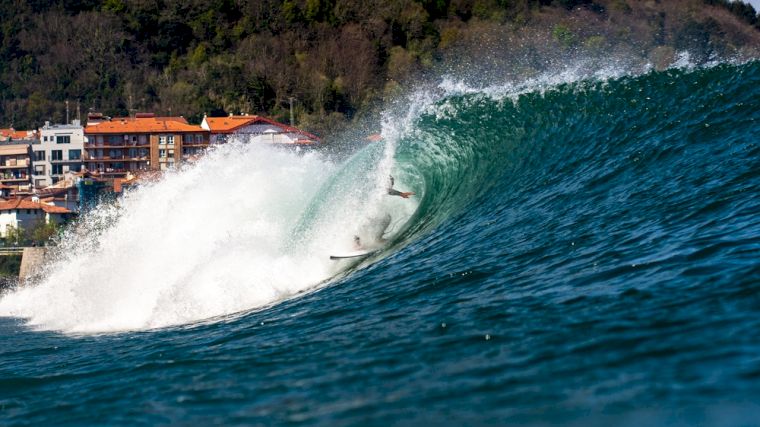
For beginners or inexperienced surfers, Playa de Laida is the best option for surfing in Mundaka. It’s located on the other side of the river estuary and is accessible at low tide from the small town beach of Laidatxu. If you’re not a surfer, you can relax wonderfully on that beach. From the Mirador de la Playa de Laida, you’ll enjoy a beautiful view of the Ocar River estuary and the Urdaibai Biosphere Reserve—home to birds of prey such as eagles, griffon vultures, and hawks, as well as a stopover for migratory birds.
5. Guernica
Just over a 15-minute drive from Mundaka lies Guernica, the heart of the Basque spirit. But stop briefly along the way at the Ekoetxea Urdaibai information center, where you’ll learn a lot about the biodiversity in the marshes around the Ocar River through interactive exhibits. On the top floor, there’s an observation deck where you can spot birds through telescopes. Between Guernica and Kortezubi, a hiking trail winds through the Urdaibai Nature Reserve, partly along wooden boardwalks right through the marshes.
Guernica (in Basque: Gernika) is best known for Pablo Picasso’s painting, which depicts the horrors of the 1937 bombing of the city. During that bombing raid in the Spanish Civil War, virtually the entire city was reduced to rubble. Two symbols of Basque identity—the Parliament building (Casa de Juntas) and the Guernica Tree (Gernikako Arbola)—were spared. For centuries, the leaders of the Basque Country have sworn allegiance to the freedoms of the Basques beneath this oak tree. The current tree is the fourth descendant of the original oak.
Due to the devastation caused by the bombing, Guernica is a modern city, particularly appealing if you’re interested in the background of Picasso’s most famous work and Basque culture. To explore this, visit the Peace Museum (Museo de la Paz) and the Euskal Herria Ethnographic Museum. For an authentic market experience, head to Guernica on Mondays, when farmers from the region sell their goods.
6. Playa de Laga & Lekeitio
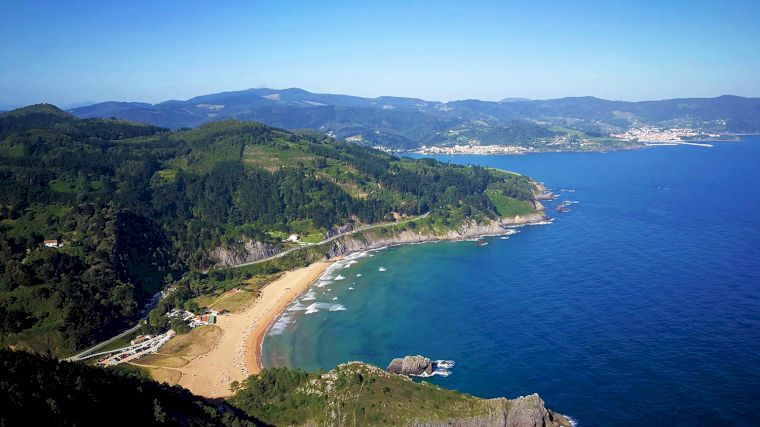
Drive your rental car from Guernica along the eastern edge of the Urdaibai Nature Reserve to one of the most beautiful beaches in the Basque Country. Along this route, you can also stop for a moment to watch the birds in the nature reserve at the Urdaibai Bird Center. Playa de Laga is a sandy beach bordered on both sides by tall, jagged cliffs. A hiking trail leads to the high cliffs of Cabo Ogoño. Although the beach slopes gently, there can be high waves and strong currents. On hot summer days, it’s usually very crowded. Don’t worry—there are plenty of other beautiful spots further along the Basque coast.
For example, if you drive along the coastal road to Lekeitio. Along the way, you’ll enjoy amazing views, and halfway there you’ll pass through the picturesque village of Ea along the river of the same name, where a small Roman bridge is the main attraction. Don’t park your rental car in the parking lot on the west side of the village, as that’s reserved for residents. On the east side, there’s an open lot where visitors can park.
The charming harbor of Lekeitio is dominated by the enormous 15th-century cathedral. What makes Lekeitio so beautiful and unique is its location at a river mouth, with a sandy beach on both sides and the small island of San Nicolás just offshore. At low tide, you can reach that island from the beach. You’ll walk across a sort of small dike that’s completely submerged at high tide and is therefore covered with seaweed. Be careful, as it can get quite slippery. Also, keep the tides in mind—don’t stay on San Nicolás too long, because you won’t be the first to be caught off guard by the rising water.
7. Mutriku & La Ruta del Flysch
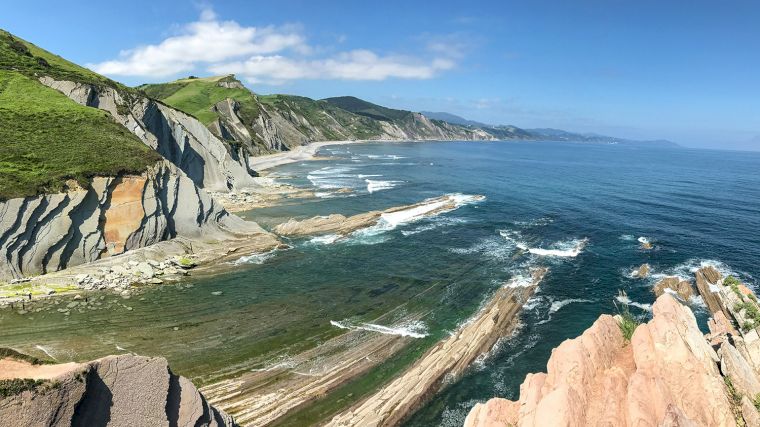
The entire Basque coast is stunning, but the Flysch Route is one of the most beautiful sections. Flysch rock formations are rocks consisting of alternating layers of shale and sandstone. These sedimentary rocks were formed millions of years ago and have been exposed to erosion over time. Today, you can see flysch in the form of jagged cliffs and unique rock formations.
The Flysch Coast begins at Mutriku, a small town you definitely shouldn’t miss if you can’t get enough of medieval mansions and narrow streets. Between Deba and Zumaia runs a 14-kilometer hiking trail, La Ruta del Flysch, right along the impressive, steep coastline. The various geological layers are not only visible in the towering cliffs, but at low tide you can also see the ridged seabed.
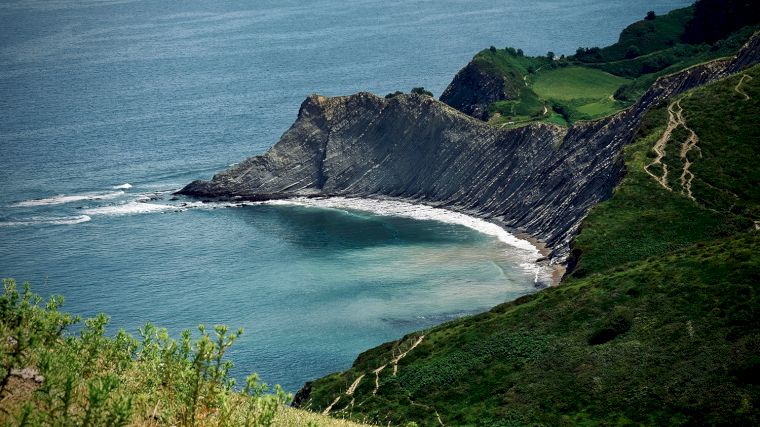
If you follow the N-634 from Deba, you’ll get a taste of what’s to come at the Hilandera and Itziargo Ama lookouts, just outside that village. Further along, there are several spots along the road where you can park your rental car to walk a short distance toward the coast and enjoy these unique rock formations from one of the lookouts. The N-634 winds through rolling, fertile hills, and you’ll understand why this part of the country is often called España Verde (Green Spain).
Boat tours are also organized from the ports of Deba and Zumaia so you can admire the cliffs from the sea.
8. San Sebastián
From Zumaia, you can continue along the N-634, which runs right along the coast and passes through, among other places, the charming fishing village of Getaria (with lovely beaches and excellent seafood restaurants, including one with a Michelin star). If you want to make good time, it’s better to take the AP-8 highway, but keep in mind that you’ll have to pay a toll on the stretch leading up to Zarautz.
Speaking of Michelin stars: San Sebastián has the most three-star restaurants per capita in Europe. Didn’t we mention earlier that the Basque Country is famous for its refined cuisine? This is where lovers of high-end culinary arts will find everything their hearts desire!
San Sebastián is called Donostia in Basque and is one of the most important cities on the Bay of Biscay. In addition to its world-class restaurants, it’s known for its long, wide beaches and the narrow streets of the historic center, Parte Vieja. This center is bordered by Urgull Hill with the medieval Motako Gaztelua Castle, the Urumea River, and the semicircular Bahía de la Concha. The heart of the city is Konstituzio Plaza, surrounded by arcades and outdoor cafes. It’s incredibly lively in the late afternoon and evening, but avoid this square in the morning, as it’s full of delivery vans. After all, those restaurants and cafes need to be restocked.
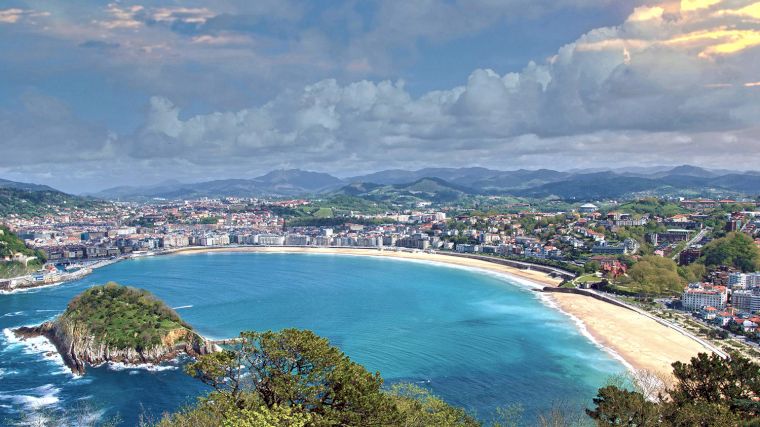
For over a hundred years, a small cable car has been running from Funicular Plaza to the summit of Monte Igueldo, on the western side of Concha Bay. Space is limited in the wooden train, which dates back to 1912, so on busy days you’ll have to wait a bit before you can ride up the mountain. In addition to a spectacular view, there’s an amusement park at the top, which also dates back to 1912 and therefore features many “old-fashioned” rides.
From Monte Igueldo, you can see the two beaches on Concha Bay: Playa de Ondaretta and Playa de la Concha. The latter is over 1,300 meters long and stretches all the way to the old town. Thanks to the bay, these beaches are fairly sheltered. The beach on the other side of the old town, Playa de Zurriola, has higher waves and is therefore popular among surfers.
There are several underground parking garages in San Sebastián where you can park your rental car, but they aren’t all easy to find and can be quite pricey. If you want to avoid a long search and park relatively cheaply, drive to the underground garage at the San Sebastián train station on the right bank of the Urumea River, within walking distance of the old town. You can park for free and continue your journey by public transportation at locations to the west (Parking Igara) and south (Parking Illunbe) of the city.
9. Vitoria-Gasteiz
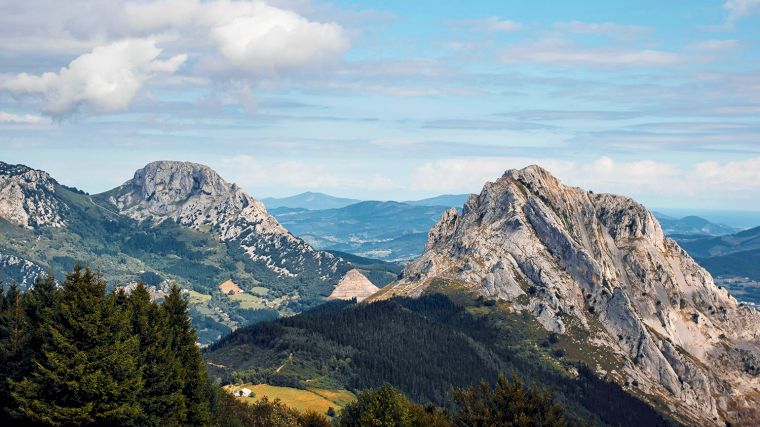
Bilbao may be the largest city in the Basque Country and its financial, cultural, and economic heart, but Vitoria-Gasteiz is the official capital of the autonomous region. The city’s name is a combination of its Spanish and Basque names. It’s about an hour’s drive from Bilbao in a rental car, but we recommend taking a little longer and driving via Urkiola, for example. The mountains are fantastic! From San Sebastián, you can make stops in the Aizkorri-Aratz Nature Reserve, which features beautiful mountain peaks and valleys. From picturesque Oñati, you can drive your rental car along a scenic road to the entrance of the Arrikrutz Caves. You’ll need to book a guided tour online in advance.
Vitoria gets far less attention than the coastal cities of Bilbao and San Sebastián, but it’s a very lively city and, moreover, one of the greenest cities in Europe. The Casco Viejo has some of the best-preserved medieval streets and squares in the region. There’s no shortage of bars in that historic center, and in the evening it’s pleasantly bustling. You do have to do a bit of climbing now and then, though, because Vitoria is built on a hill. Unless you’re heading from San Pedro Church to the Montehermoso Cultural Center—in that case, you can use a moving sidewalk, which is even covered. About twenty walls throughout the city are adorned with enormous murals, and a route has been mapped out along these works of art.
10. Rioja Alavesa Wine Route
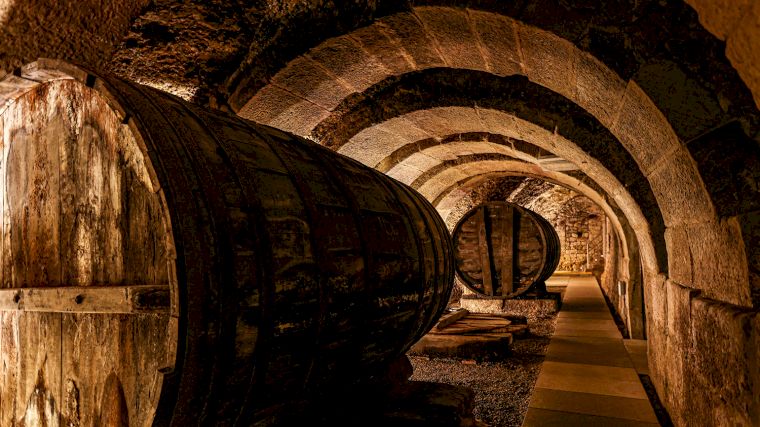
About 45 kilometers from Vitoria, just south of the Sierra de Cantabria mountain range, lies Laguardia, the capital of the Rioja Alavesa wine region. The town is perched high on a hill and is completely surrounded by a sturdy city wall that was built in the 12th century to protect the village from attacks by neighboring Castile. You can still only enter Laguardia’s historic center through one of the five city gates. You’ll need to park your rental car outside the wall. Wine cellars can be found beneath most of the houses. Remains of a massive Iron Age water reservoir have been discovered near the southern Puerta de Mercadal, and from the Torre Abacial you’ll enjoy a beautiful view of the vineyards surrounding the town.
Laguardia is the starting point of a wine route through Rioja Alavesa. Along this route, you can sample wines ranging from those aged in medieval caves to those produced using the most modern methods. In addition to Laguardia, Samaniego, Elciego, and Labastida are some of the medieval villages on this route. They have traditionally been closely linked to viticulture and wine culture. But it’s not just about the wine—some wineries have commissioned famous architects to design unique buildings. Examples include Bodegas Ysios by Santiago Calatrava and Bodegas Baigorri by Iñaki Aspiazu Iza.
11. Picos de Europa
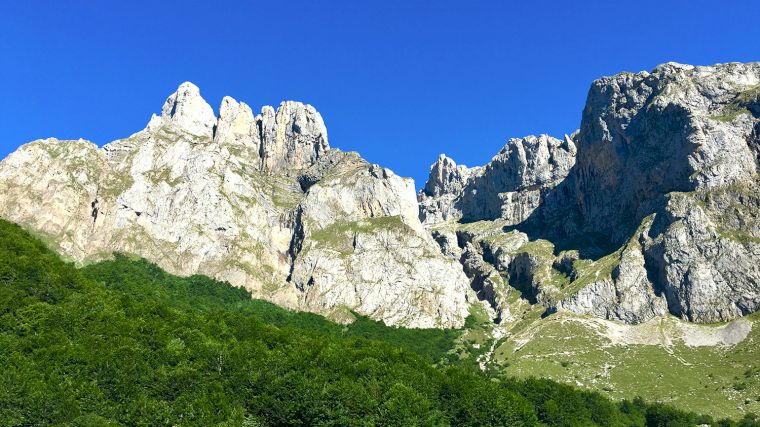
If you can’t get enough of steep, winding roads through rugged mountains and deep gorges, then you have to visit the Peaks of Europe. It is one of Spain’s most beautiful and diverse mountain ranges and is largely a national park: Picos de Europa. This isn’t a destination for a day trip—make it a multi-day road trip instead. It offers everything road trip enthusiasts could wish for: winding drives, magnificent views, and beautiful spots for pit stops. You’ll also want to leave your rental car behind every now and then, as it’s a paradise for hikers and mountaineers.
From Bilbao, take the A-8 highway for about two hours to the exit for Picos de Europa, which is clearly marked on road signs. Then take the N-621 heading southwest. Before long, you’ll pass the first jagged mountain cliffs. In Panes, you’ll have to make a choice: going more or less straight ahead leads to the eastern Picos, while turning right takes you to Cabrales and the western Picos.
Continuing straight ahead, you’ll drive alongside the small Deva River, which has carved out a deep gorge. From the village of La Hermida, there are hiking and climbing trails through this spectacular gorge with steep rock faces and Spain’s longest suspension bridge. In Potes, take the CA-185 past beautiful mountain villages such as Argüebanes and Mogrovejo. Eventually, you’ll arrive in Fuente Dé, where you can take a cable car up to an elevation of 1,823 meters for a fantastic view. From the observation deck, there are several hiking trails.
You can’t drive any further, so you’ll have to head back to Potes. Then continue south through a stunning valley, Vega de Liébana. This winding road is popular with motorcyclists, so watch out for these speed demons. This is a route where there’s so much to see that you won’t know where to look—keep your eyes on the road! It’s definitely nice if you can switch drivers here and have rented a car that includes a second driver. That way, you can take turns fully enjoying the breathtakingly beautiful scenery. There are also several scenic overlooks along the way where you can pull over briefly in your rental car.
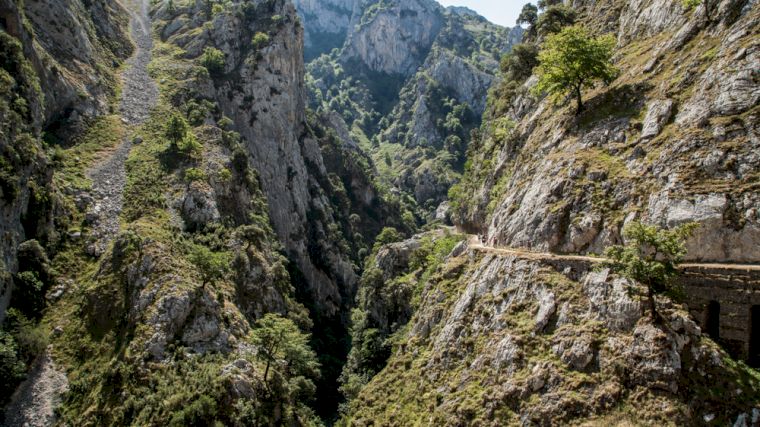
The final stretch to Riaño is fairly flat, but once you reach the village, you’ll be treated to a magnificent view of the reservoir of the same name. Heading back north, you’ll drive through the impressive Desfiladero de los Beyos gorge to the charming town of Cangas de Onís. This village is an excellent base for trips to the glacial lakes of Lagos de Covadonga, but only outside the high season. During Easter, in the summer months, and on certain weekends, it gets so crowded that the road to the lakes is closed to private vehicles. The popular hiking trails—Cares, Bulnes, Tielve, and Sotres—also attract so many visitors that during the summer months, you can only reach them by public transportation. Along the Collado Pandébano road (which leads to hiking trails including Vega de Urriellu), there are only 64 parking spaces. If they’re full, you’ll be turned away.
Don’t let the above discourage you. There are various alternative routes through the beautiful mountains, and you’ll often find yourself deciding which one to take next. This is exactly why you need a rental car: you’ll have complete flexibility and can choose the routes that seem most appealing to you at that moment. One thing we know for sure: it will never disappoint.
When to Rent a Car in Bilbao
Unlike other Spanish coastal regions, the Basque Country isn’t known for its warm weather. In fact, it has a reputation for “always” being windy and rainy, but that’s a huge exaggeration. It’s true that there’s a lot of rain throughout the year, but mostly outside the summer months. In June, July, and August, Bilbao is a great place to be, with daytime temperatures around 25 degrees Celsius, though they can sometimes rise significantly. And if a rain shower does come along, that’s a great excuse to sample some pintxos at the nearest café! In the mountains, keep in mind that the weather can change quickly.
Why explore the Basque Country by rental car
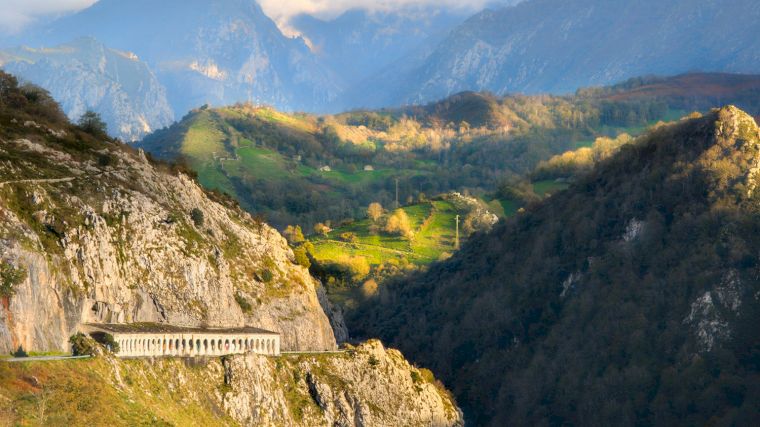
The Basque Country is known for its rich cultural heritage, unique language, and stunning landscapes featuring green mountains and rugged coastlines. You’ll be amazed by the natural beauty and enjoy charming fishing villages, historic sites, vibrant cities, and cultural traditions dating back centuries. What’s more, the entire region is renowned for its excellent and varied cuisine. The best way to experience all of this and decide for yourself where to go is to rent a car. With a rental car, you can explore the most beautiful spots in the Basque Country from Bilbao.
Tip: Rent a car for a one-way trip
Above, we’ve given you tips for day trips or road trips from Bilbao. But why return to where you started? You don’t have to—you can also rent a car for a so-called one-way trip. That way, you pick up the rental car in one place and drop it off somewhere else. This allows you to take a longer trip without returning to your starting point. A popular one-way trip from Bilbao is to A Coruña, on the far northwestern tip of Spain. But you can also go the other way, for example via Zaragoza to Barcelona. Or if you’re already driving through the Rioja wine region, why not continue further south, via Burgos to the Spanish capital, Madrid? Enter a different location on our search form to drop off your rental car, and we’ll automatically show you the cars for which that’s possible.

Where would you like to rent a car?
- 24000+ pick-up locations
- Free cancellation
- Independent comparator

Useful tips for a well-prepared trip
Which insurance should I choose, and what's the deal with the deposit? Read our articles with useful information and tips to ensure you choose the right rental car for you.


- Renting a Car with Kids: The Best Routes and Stops
- La Palma by Rental Car: Routes, Day Trips, and Tips
- Explore 18 top destinations around Girona in a rental car
- The Best Road Trips Around Madrid in a Rental Car
- 15 Tips for the Best Vacation in Menorca
- The 11 Best Day Trips in the Valencian Community