- Popular countries
- Popular regions
- Popular cities
- Popular airports
- Car hire United Kingdom
- Car hire Italy
- Car hire Spain
- Car hire United States
- Car hire Portugal
- Car hire Greece
- Car hire France
- Car hire Poland
- Car hire Ireland
- Car hire Cyprus
- Car hire Netherlands
- Car hire South Africa
- Car hire Switzerland
- Car hire Croatia
- Car hire Canada
- Car hire Malta
- Car hire Germany
- Car hire Hungary
- Car hire Norway
- Car hire Australia
- Car hire England
- Car hire Sicily
- Car hire Scotland
- Car hire Florida
- Car hire Sardinia
- Car hire Malta
- Car hire California
- Car hire Crete
- Car hire Lanzarote
- Car hire Majorca
- Car hire Menorca
- Car hire Tenerife
- Car hire Rhodes
- Car hire Fuerteventura
- Car hire Corsica
- Car hire Kefalonia
- Car hire Madeira
- Car hire Corfu
- Car hire Ibiza
- Car hire Gran Canaria
- Car hire London
- Car hire Faro
- Car hire Malaga
- Car hire Milan
- Car hire Lisbon
- Car hire Rome
- Car hire Alicante
- Car hire Dublin
- Car hire Manchester
- Car hire Porto
- Car hire Amsterdam
- Car hire Larnaca
- Car hire Geneva
- Car hire Luqa
- Car hire Bergamo
- Car hire Athens
- Car hire Budapest
- Car hire Pisa
- Car hire Orlando
- Car hire Palermo
- Car hire London Heathrow Airport
- Car hire Faro Airport
- Car hire Lisbon Airport
- Car hire Malaga Airport
- Car hire London Gatwick Airport
- Car hire Alicante Airport
- Car hire Manchester Airport
- Car hire Dublin Airport
- Car hire Larnaca Airport
- Car hire Porto Airport
- Car hire Malta Airport
- Car hire Bergamo Airport
- Car hire Athens Airport
- Car hire Budapest Ferihegy Airport
- Car hire Rome Fiumicino Airport
- Car hire Geneva Airport (Switzerland)
- Car hire Amsterdam Schiphol Airport
- Car hire Milan Malpensa Airport
- Car hire Pisa Airport
- Car hire Orlando International Airport

15 Tips for the Best Vacation in Menorca
Visit the most beautiful sights in a rental car
The two largest islands of the Balearic Islands— Mallorca and Ibiza —are well known, but the smaller Menorca is becoming increasingly popular. That’s not surprising, since many people see it as a less developed—and therefore less crowded—alternative destination. The fact that the island was developed less for tourism is “thanks” to the former dictator Franco. Menorca was, in fact, the last to resist his seizure of power, and Franco hadn’t forgotten that when tourism in Spain began to flourish in the 1960s and 1970s. A lot of money was poured into the development of Mallorca and Ibiza, but Menorca didn’t get a single peso. Today, that’s a blessing, because it’s an oasis of unspoiled beauty, further enhanced by the fact that the entire island has been a UNESCO biosphere reserve since 1993. Lush, green Menorca combines beautiful white-sand beaches with a rugged coastline, prehistoric sites, and charming old towns and villages.
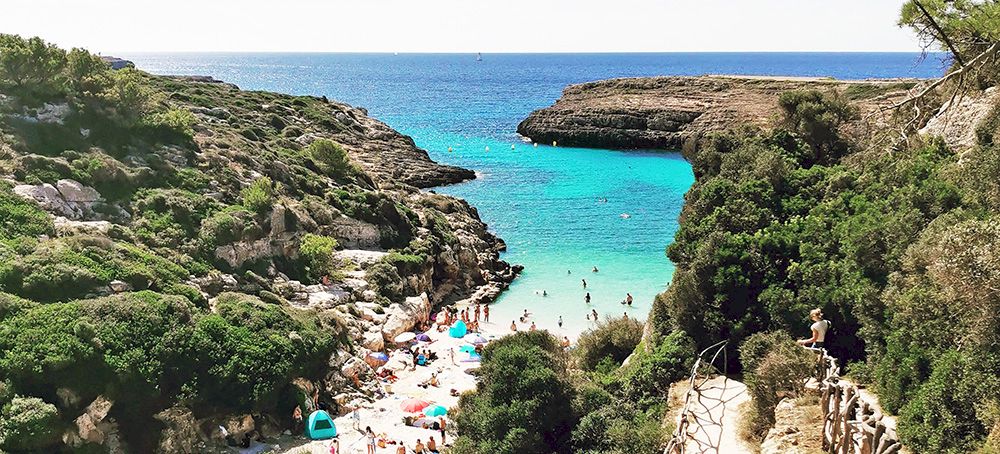
From east to west, Menorca is less than fifty kilometers wide, and the distance between the north and south coasts is no more than twenty kilometers. Do you really need a rental car for such a small island? Absolutely—especially on Menorca! The island is more or less divided in two by the Me-1 highway, which runs between the capital, Mahón, and the second-largest city, Ciutadella. Smaller roads branch off from this highway to the north and south. If you want to travel from one spot on the north or south coast to another, you’ll often have to return to this main highway first—except in the northeast, where the Me-7 runs along the coast. Obviously, that takes time—and even more so if you’re relying on public transportation. So, do you want to make the most of your vacation in Menorca? Rent a car!
1. Mahón / Maó
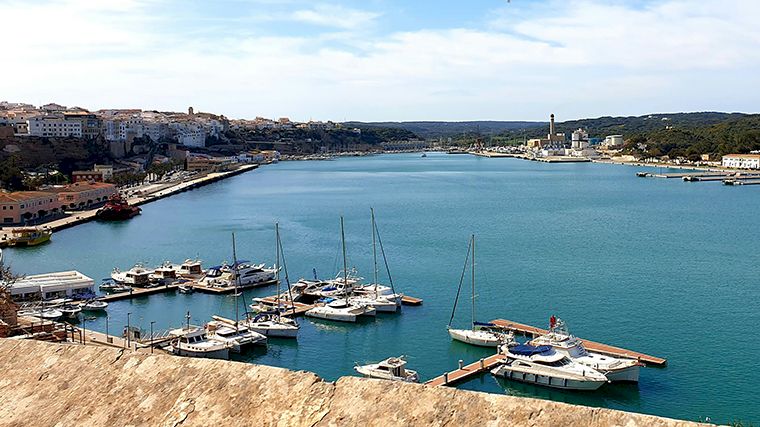
Mahón is usually referred to locally as Maó, which is the city’s Catalan name. Most tourists arrive at Mahón Airport, but did you know that the island’s capital also has direct ferry connections to Barcelona and Valencia on the Spanish mainland? It’s a fun and relaxing way to travel if you want to unwind in Menorca after a city break!
Mahón is situated on a deep inlet, which forms a natural harbor and has traditionally been the beating heart of the city. Great Britain recognized the strategic importance of the cove, and after conquering the island in the 18th century, they built a naval base there. It’s still there today, though now it’s used by the Spanish Navy. The hospital the British built on the islet of Illa del Rei has been beautifully restored. Part of it is now used as an art gallery.

The historic city center sits atop a cliff overlooking the natural harbor, while most bars, shops, and restaurants are located one level below, near the marina. The two levels are connected by various stairways, the winding street Costa de ses Voltes, and a convenient elevator near the Mercat del Claustre. The fish market next door (Mercat des Peix) has long since ceased to be the exclusive domain of fishmongers. You can also buy delicious local cheeses there or enjoy a drink accompanied by live music.
The British weren’t the only ones to set their sights on Menorca; the island has had many different rulers. You can learn more about its rich culture and history at the Museu de Menorca, housed in a beautiful former 17th-century Franciscan monastery.
2. Fortalesa de la Mola
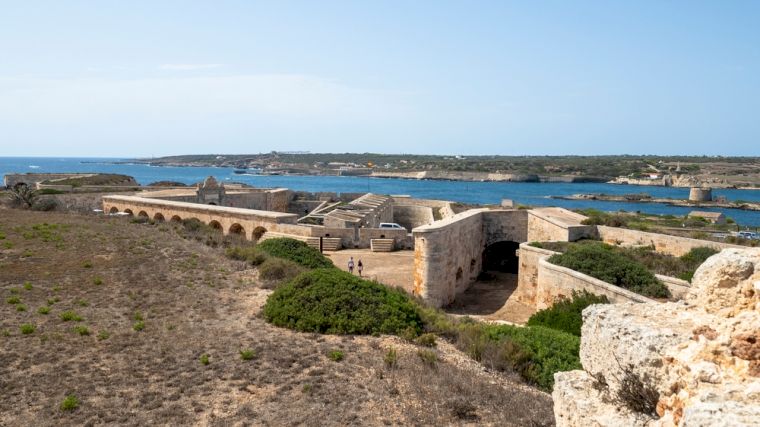
The entrance to Mahón’s natural harbor is quite narrow, and forts have been built on either side of it. The best-preserved of these is the Fortalesa d’Isabel II, which the Spanish built in the nineteenth century on the La Mola peninsula. You can park your rental car for free right in front of the fort. It’s a fairly large complex; the main route takes about an hour and a half, and the full route takes another hour. From the ramparts, you have a beautiful view of the harbor, the peninsula’s coastline, and the Mediterranean Sea. Outside the fort stands a small lighthouse at the easternmost tip of Spain.
Across from La Mola, you’ll see older forts built by the British: the ruins of Castell de Sant Felip and the remains of Fort Marlborough, which is partially carved into the rocks. Children find the dark, underground passages beneath both the fort and the castle very exciting.
3. Parque Natural de s’Albufera des Grau
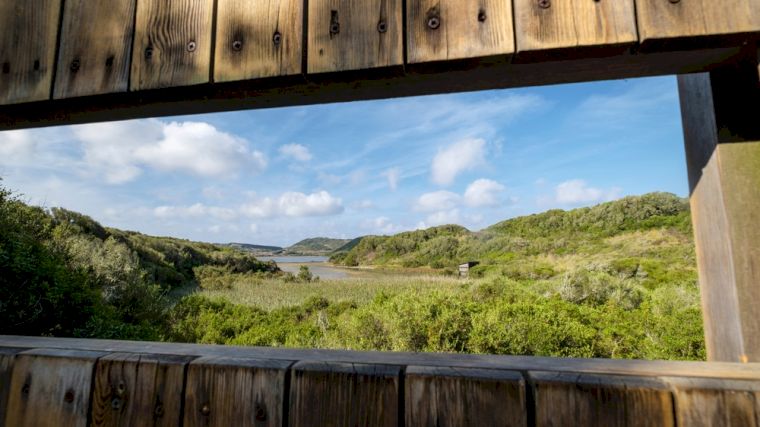
If you want to discover Menorca’s flora and fauna, head to the s’Albufera des Grau Nature Park in the northeast of the island. It consists of more than 5,000 hectares of wetlands, sections of the coastline, and a small island. The village of Es Grau is a popular starting point, but you can get more information about the nature reserve and the hiking trails at the visitor center near the main entrance. The turnoff to the park is clearly marked along the Me-5. There are three different hiking trails along the lagoon, which forms the heart of the park: two starting from the main entrance and one from Es Grau. You can even rent binoculars at the visitor center to spot some of the more than 100 bird species in the park. Among others, you’ll see cormorants, grebes, and crossbills, as well as birds of prey including ospreys, white-tailed eagles, and peregrine falcons.
Not an avid birdwatcher? Then, after a walk through the beautiful natural surroundings, relax at one of the small coves: Cala Tamarells, Cala Rambles, or Cala Morella. The island of Illa d’en Colom off the coast also has two fantastic beaches. You can get there by renting a kayak in Es Grau; the trip to the island takes about thirty minutes.
4. Cap de Favàritx
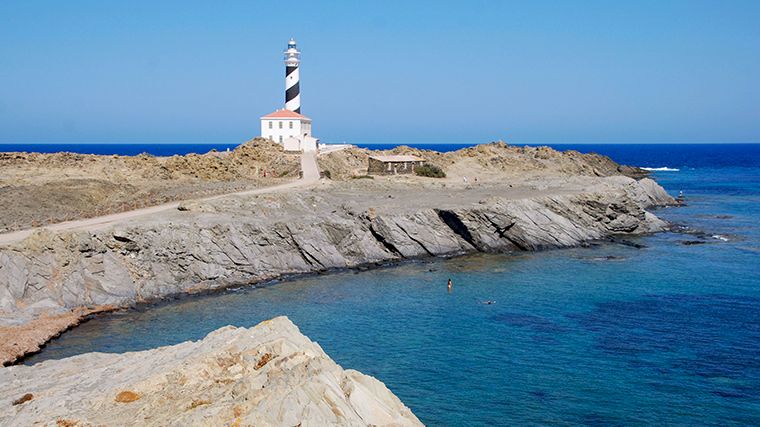
Most lighthouses on Menorca are located in remote, isolated spots, which is why they hold such a strong appeal. The Favàritx Lighthouse is no exception. The concrete shaft is painted with white and black spiral stripes and towers 28 meters above the rocky landscape. Unlike the rest of Menorca, Cap de Favàritx has little vegetation; the lighthouse is surrounded by black slate.
This area is also part of the s’Albufera des Grau Natural Park, but you’ll take a completely different road to get there. The turnoff to the lighthouse is clearly marked on a brown sign along the Me-7, between Mahón and Fornells. By the way, you’ll need to park your rental car two kilometers from the lighthouse and walk the rest of the way. But it’s worth it, as the lighthouse stands on a dramatic cliff and offers beautiful views.
A nearby trail leads to two pristine and beautiful beaches: Cala Presili, with clear, turquoise water, and the less-visited Playa d’en Tortuga, which is a fifteen-minute walk away and popular with nudists.
5. Prehistoric Menorca
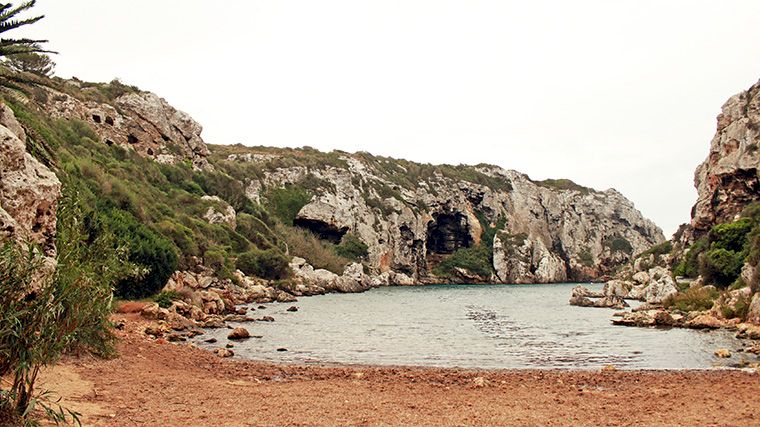
Scattered across the island, you’ll find hundreds of examples of prehistoric Menorca. To the untrained eye, these may sometimes appear to be nothing more than a pile of stones, but there are also some fascinating remnants from the era of the so-called Talaiotic culture. This culture flourished roughly from over three thousand years ago until the Roman invasion in 123 B.C.
Torre d’en Galmés
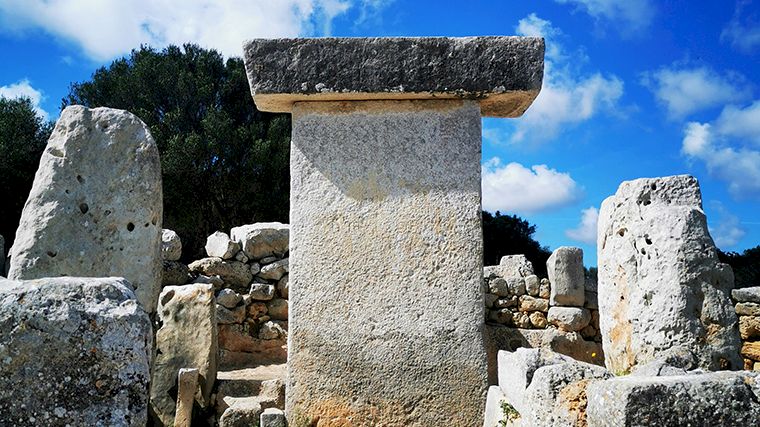
The famous Torre d’en Galmés near the town of Alaior is one of the greatest examples of Talayotic architecture. The turnoff to this prehistoric village is clearly marked on the Me-1 main road. From there, it’s a four-kilometer drive to the parking lot for this attraction. The village consists of various megalithic structures, including a so-called taula (a T-shaped stone monument), several prehistoric houses, and underground chambers (hypogea). Thanks to the drawings on the information signs, you can get an idea of what the village must have looked like.
Necropolis of Cales Coves
Just outside Cala en Porter lies the Necropolis de Cales Coves: a large number of burial chambers carved into the rugged cliffs along the bay. The Romans no longer used this necropolis as such, but they did carve inscriptions into the walls, such as in the Cova dels Jurats (Cave of the Jurors). Incidentally, this is also a wonderful bay for swimming, and you can paddle a kayak there from Cala en Porter. If you don’t opt for the kayak, it’s about a two-kilometer walk to the bay from the parking lot.
Son Morell Nou Necropolis
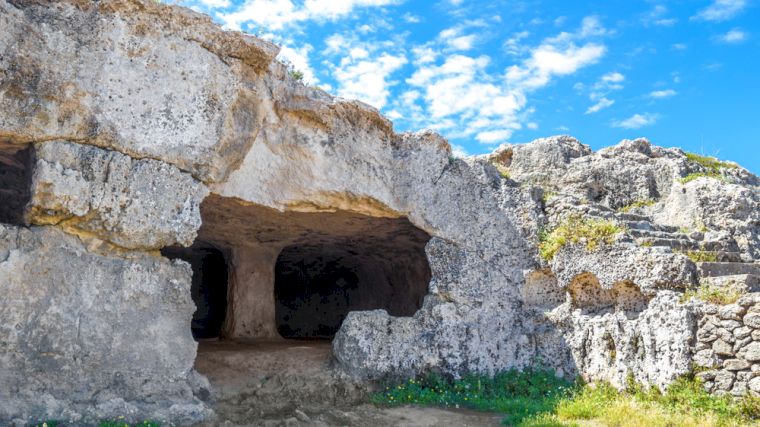
The Necropolis of Son Morell Nou, located on the north coast about ten kilometers from Ciutadella, is easier to reach. You’ll drive right past it in your rental car, just outside Cala Morell. There are only a limited number of parking spaces along that road; you’ll find more ample parking at the roundabout closer to the village. As you walk through the various burial chambers, you’ll wonder how these enormous caves were carved out of the rock thousands of years ago.
6. Alaior
Alaior is a charming old market town, full of winding streets lined with historic mansions and other landmarks such as the Església de Santa Eulàlia and the town hall, which is housed in a majestic palace. All of this is centered around the cozy little central square, Plaça de la Constitució, surrounded by outdoor cafes. Alaior is increasingly emerging as Menorca’s third-largest city and an important cultural center. For example, the cloister of the Convent de Sant Diego has been converted into a cultural space where you can enjoy musical performances. Temporary exhibitions are also held there.
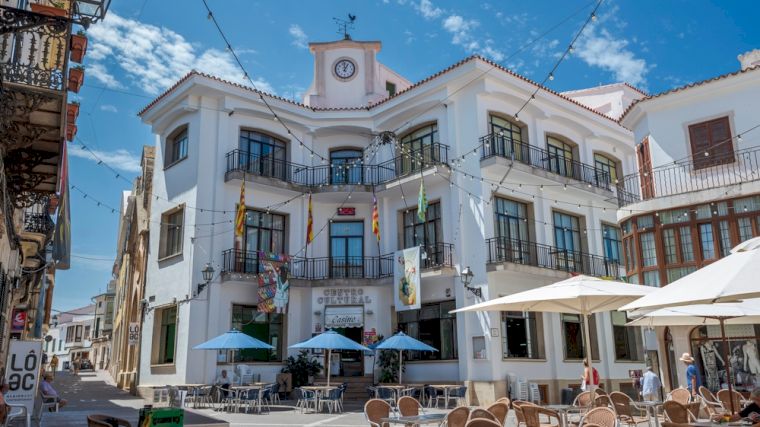
Modern art lovers should visit the LÔAC – Centre d’Art contemporani or the Pinzellades d’Art gallery. During the second weekend of August, the town celebrates Las Fiestas de Sant Llorenç, which includes a parade of floats. In front of the little church of Sant Pere Nou is a small, tree-lined square where you can enjoy the shade while taking in the view of the surrounding area. Incidentally, there’s a parking lot right near that little church where you can easily park your rental car before visiting Alaior.
7. Pedrera de Santa Ponça
Just west of Alaior lies a quarry that was in use until the 1970s and subsequently fell into disrepair. Well, is it really worth a visit? We think so, because over the past fifty years, nature has reclaimed that deep quarry. Amid the sheer limestone walls—where you can still clearly see the marks left by quarrying—trees grow, shrubs have taken root in the walls, and birds chirp merrily. There’s something surreal about it, and at the same time, it’s beautiful to see how nature is reclaiming this “wound in the earth.” A must-see!
8. Monte Toro / Es Mercadal
There are no high mountains on the hilly island of Menorca; the highest point is only 358 meters above sea level: a hill with the somewhat misleading name Monte Toro (Mount of the Bull). Still, it’s a fun hill to drive up in your rental car along a winding little road. At the top stands a shrine that, according to legend, was founded by monks who found a statue of Mary there after a bull had shown them the way. That explains the name of the “mountain.” From the summit, you have a beautiful view of Menorca, and on a clear day, you can see Mallorca in the distance.
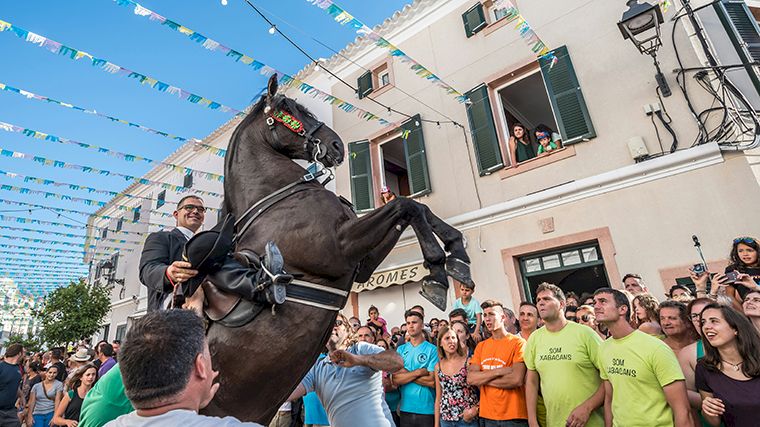
The turnoff for Santuari del Toro is on the east side of Es Mercadal, a charming little town worth visiting. Some islanders make a special trip here for the Can Pons bakery, which sells the best ensaïmades on the island. This large, spiral-shaped pastry is a Balearic specialty, often filled with ingredients that give it a sweet or savory flavor. It’s not a delicacy for vegetarians, as lard is a key ingredient.
9. Ferreries: Cheese Making
Cheese has always been an important product of Menorca. Evidence suggests that cheese was already being made there three thousand years ago, and in the eighteenth century, the cheese was exported using four boats built specifically for that purpose. Queso Mahón has a slightly salty flavor, which is partly due to the sea salt in the grass the cows eat. The rind is rubbed with butter or oil and paprika, giving it an orange color. The name is somewhat confusing, as the cheese is produced not only around the capital but throughout the island, for example, near the picturesque village of Ferreries. The cheese factory Sa Roqueta in that village offers guided tours that conclude with a tasting of cheese and cured meats. You can even participate in a workshop where you make your own cheese, which will be mailed to you after it has aged! There’s no better way to get an in-depth understanding of the entire production process of this cheese.
10. Binibeca / Binibèquer
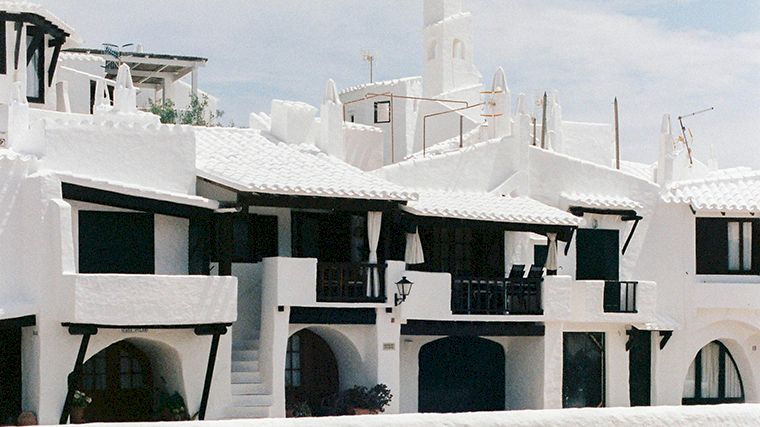
You’ll find it in all the travel guides for Menorca, but to be honest, we weren’t sure if the little town of Binibeca belonged on the list of Menorca’s best sights. But okay, here’s a quick mention. Why were we skeptical? Because at first glance, it looks like an authentic village, but appearances can be deceiving: Binibeca (Catalan: Binibèquer) was conceived by the tourism board and built in the 1970s. The original “fairy-tale” village— Binibèquer Vell —with its narrow streets is still quite charming, but the later expansion consists simply of white vacation homes. Incidentally, that original part has nothing to do with Menorca’s traditional architectural style; it looks more like a Greek village.
11. Ciutadella de Menorca
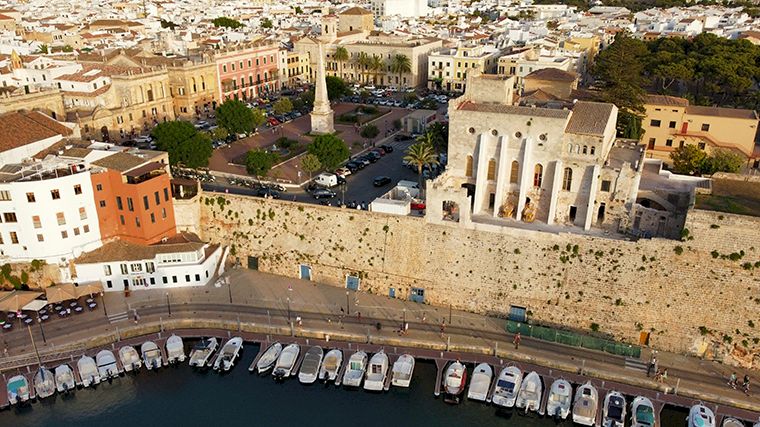
Until the 18th century, Ciutadella could boast of being the capital of Menorca, before the British decided that Mahón, with its strategic harbor, would henceforth hold that status. Ciutadella is located on the far western tip of the island and has a particularly beautiful old town with stunning historic buildings, fantastic shops, and cozy cafés. In the heart of the historic city stands the Catedral de Santa Maria. As is the case with so many cathedrals in Spain, this one was also built on the foundations of a 13th-century mosque. The spacious Plaça des Born is surrounded by stately homes, including the impressive Palacio Torresaura. On that same square stands the city hall, which somewhat resembles a castle—and for good reason, as it was built on the remains of a Moorish fortress. Also, don’t miss the Carrer de Ses Voltes in the old town—a narrow alley with arcades on both sides and charming little shops. The harbor area is especially lively in the evening thanks to its many outdoor cafes and restaurants. Near the harbor, there are two large parking lots where you can park your rental car before visiting Ciutadella.
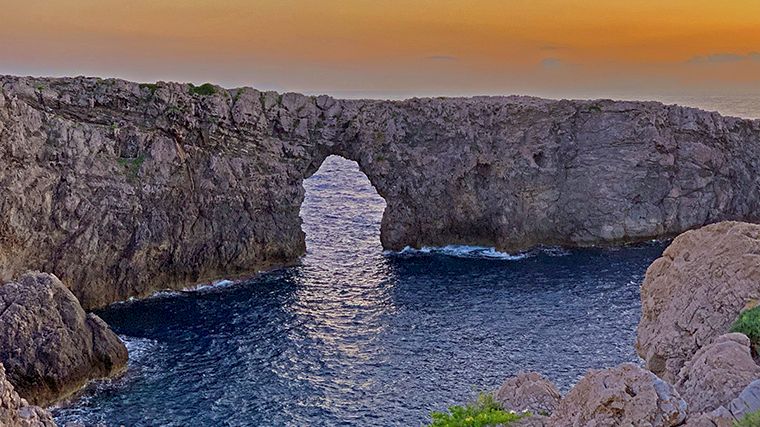
For a romantic sunset, drive to the Pont d’en Gil, just outside the city. This is a natural rock bridge, which you can reach with a five-minute walk from the parking lot. Further north (six kilometers from Ciutadella) stands the Far Punta Nati lighthouse, where you can also enjoy a beautiful sunset.
12. Líthica, Pedreres de s’Hostal
Just east of Ciutadella, you’ll find another former quarry, Pedreres de s’Hostal. The experience here is quite different from the quarry we described earlier, near Alaior. First, the quarry is much larger, and second, it’s actively maintained by a foundation called Líthica, under whose name the quarry is known. For example, a fun maze has been built using stones from the quarry. You can also wander through a garden, and in the summer, concerts are regularly held in the cube-shaped amphitheater nestled between the steep limestone walls.
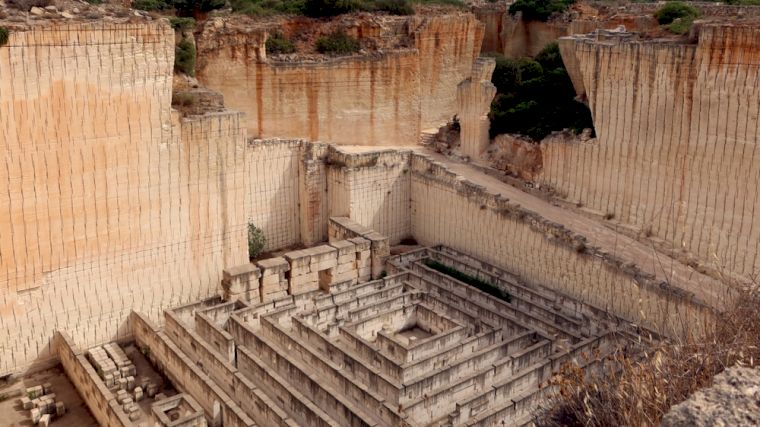
The turnoff to the quarry is clearly marked on the Me-1, near the roundabout. If you’re driving there in a rental car, it’s best to reserve a parking spot online to ensure you have one. This is especially true during the summer months. Also, be sure to bring plenty of water, because there’s plenty to see in this quarry.
13. Diving off the coast of Menorca
Off the coast of Menorca, there are several dive sites suitable for divers of all levels. The marine reserve on the north coast, in particular, is a beautiful place to admire the underwater life. It stretches from Cap Gros to Punta des Morter, with the town of Fornells—located on the easily accessible Cala Blanca bay—serving as the main base.
Spring is a great time to dive around Menorca. You’ll have a chance to see migrating stingrays, and if you’re lucky, even a large group of them. In addition, octopuses build nests in April and May, camouflaging them with stones and shells. But the underwater life around the island offers much more: lobsters, crabs, groupers, barracudas, bream, conger eels, and many other, often colorful, Mediterranean fish species.
The most beautiful dive sites in the coves (calas) and caves along the coast are accessible only by boat and are a five- to twenty-minute boat ride away.
14. Camí de Cavalls
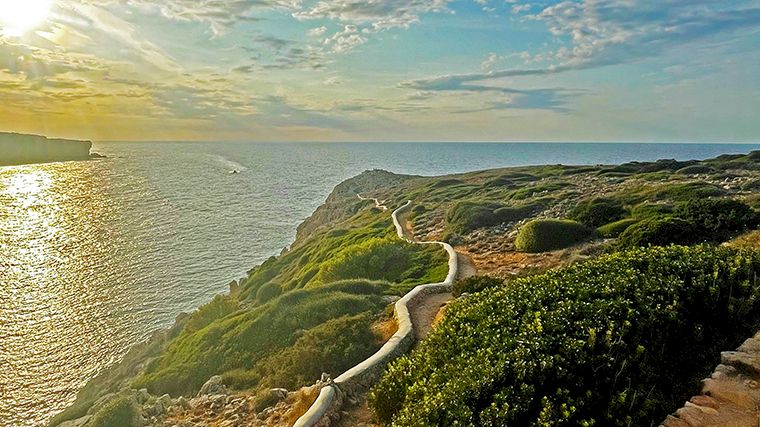
During your vacation in Menorca, you’ll undoubtedly walk along a section of the Camí de Cavalls at some point. This is a historic trail that was once used by horsemen and circles the entire island. Access to the many hidden coves and rustic beaches along the coast is often part of this route, which is 185 kilometers long in total. Some people travel to Menorca specifically to hike the entire trail through the unspoiled natural landscape, but for those who aren’t up for such a long distance, the route is divided into twenty sections.
At the start of each section, there is a large information board with a map of the route. Along the trail, small wooden posts with white horseshoe-shaped signs are placed at regular intervals to ensure you don’t get lost. There are also signposts pointing to nearby locations. On the official website of Camí de Cavalls , you’ll find an interactive map and detailed descriptions of each section. You can also download a PDF of each description and a GPX file for the route itself.
15. The Most Beautiful Beaches on Menorca
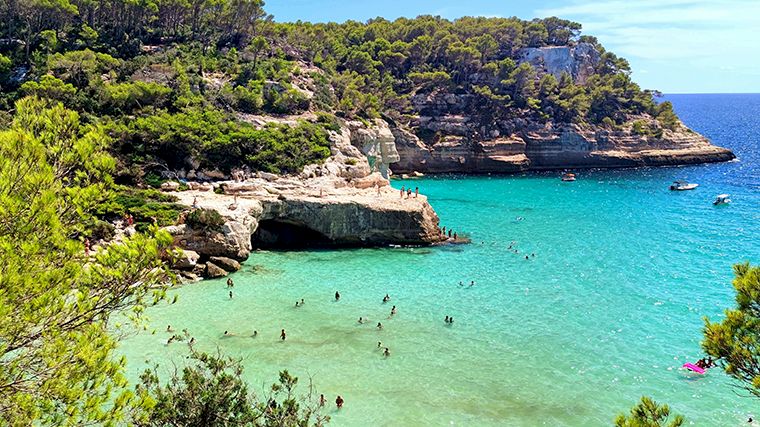
If there’s one thing that defines Menorca, it’s the many coves with crystal-clear water and white sand. There are so many that it’s hard to choose. Cala Macarella and the smaller, adjacent Macarelleta are very well-known, but they get very crowded. During the summer months, the parking lots at those beaches are even closed off in an effort to reduce the crowds. On the north coast, Cala Pregonda is one of the most beautiful—but also one of the busiest—beaches. Where can you drive to in your rental car that isn’t so crowded? We’ve listed a few suggestions below.
Cala Mitjana on the south coast is also a popular beach, but the smaller Cala Mitjaneta right next to it is much less crowded. You can also walk quite a distance east from the parking lot to reach Cala de Trebalúger. That beach is often deserted, especially in the morning; later in the day, small boats start to dock there.
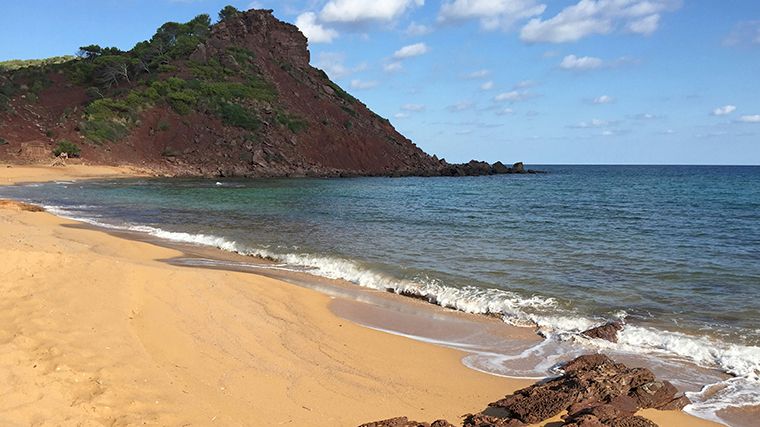
On the north coast, the beautiful Cala del Pilar isn’t very crowded because it’s a challenging walk from the parking lot. After that 30-minute walk, you’ll be rewarded with a quiet beach nestled among red rocks. It stays so quiet because cars aren’t allowed in once the (small) parking lot is full. So be sure to head there early. Note: the road to this beach is marked on the Me-1 as Camí del Pilar. Another beautiful beach on the north coast is Cala Pregonda. You can park your rental car along the road leading there, then walk to the beach via the Camí de Cavalls. Along the way, you’ll first pass two other beaches: the rocky Platja de s’Alairó and Platja de Binimel-là.
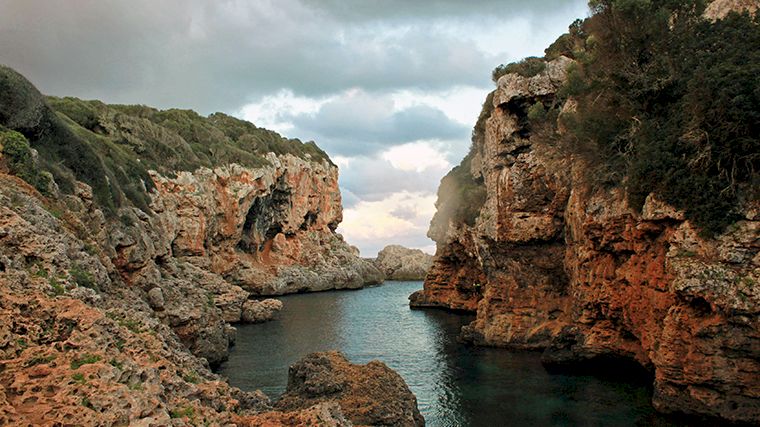
Finally, a cove where you can’t lounge on the beach, but where you can enjoy some great snorkeling and, if you like, even rock climbing: Cala Rafalet. You can also spot sea turtles in that cove. It’s located just north of the town of S’Algar, where you can park your rental car. The trailhead leading to the cove is behind the low wall next to that parking lot.
Island Hopping in the Balearic Islands
If you don’t want to limit yourself to Menorca, you can go island hopping in the Balearic Islands. For example, take the ferry to Alcúdia on Mallorca and go on a beautiful trip through the mountainous northwest, or discover other lovely spots and sights on that island. The best way to do this is to return your rental car in Menorca and rent a separate car on Mallorca. Read more about combining islands and renting cars in our blog about island hopping.
Why Rent a Car in Menorca
Although you can’t really go on a road trip in Menorca, we still recommend renting a car for your vacation on the island. You can do so much more when you have your own transportation and aren’t dependent on bus schedules. Plus, it’s the easiest way to reach Menorca’s less touristy spots. We hope the tips above have inspired you, but we have one last piece of advice: don’t wait too long to book a rental car in Menorca. You’re much more likely to get a good deal if you book the car online well in advance. Plus, you’ll have a wider selection to choose from, especially if you plan to rent a car in Menorca during the summer months.

Of course, you also want the best value for your money. And we’ve already made that easy for you, because you can filter our listings based on the ratings our customers have given to local car rental companies. These are real reviews from real customers. Or you can simply choose a rental car with our Worry-Free label, because only companies that have scored at least a 7 on customer reviews are eligible for it. Plus, you’ll be renting a car with covered deductible, a favorable fuel policy, and unlimited mileage.

Where would you like to rent a car?
- 24000+ pick-up locations
- Free cancellation
- Independent comparator

Useful tips for a well-prepared trip
Which insurance should I choose, and what's the deal with the deposit? Read our articles with useful information and tips to ensure you choose the right rental car for you.


- Renting a Car with Kids: The Best Routes and Stops
- La Palma by Rental Car: Routes, Day Trips, and Tips
- Explore 18 top destinations around Girona in a rental car
- The Best Road Trips Around Madrid in a Rental Car
- The 11 Best Day Trips in the Valencian Community
- Exploring the Fantastic Basque Country in a Rental Car