- Popular countries
- Popular regions
- Popular cities
- Popular airports
- Car hire United Kingdom
- Car hire Italy
- Car hire Spain
- Car hire United States
- Car hire Portugal
- Car hire Greece
- Car hire France
- Car hire Poland
- Car hire Ireland
- Car hire Cyprus
- Car hire Netherlands
- Car hire South Africa
- Car hire Switzerland
- Car hire Croatia
- Car hire Canada
- Car hire Malta
- Car hire Germany
- Car hire Hungary
- Car hire Norway
- Car hire Australia
- Car hire England
- Car hire Sicily
- Car hire Scotland
- Car hire Florida
- Car hire Sardinia
- Car hire Malta
- Car hire California
- Car hire Crete
- Car hire Lanzarote
- Car hire Majorca
- Car hire Menorca
- Car hire Tenerife
- Car hire Rhodes
- Car hire Fuerteventura
- Car hire Corsica
- Car hire Kefalonia
- Car hire Madeira
- Car hire Corfu
- Car hire Ibiza
- Car hire Gran Canaria
- Car hire London
- Car hire Faro
- Car hire Malaga
- Car hire Milan
- Car hire Lisbon
- Car hire Rome
- Car hire Alicante
- Car hire Dublin
- Car hire Manchester
- Car hire Porto
- Car hire Amsterdam
- Car hire Larnaca
- Car hire Geneva
- Car hire Luqa
- Car hire Bergamo
- Car hire Athens
- Car hire Budapest
- Car hire Pisa
- Car hire Orlando
- Car hire Palermo
- Car hire London Heathrow Airport
- Car hire Faro Airport
- Car hire Lisbon Airport
- Car hire Malaga Airport
- Car hire London Gatwick Airport
- Car hire Alicante Airport
- Car hire Manchester Airport
- Car hire Dublin Airport
- Car hire Larnaca Airport
- Car hire Porto Airport
- Car hire Malta Airport
- Car hire Bergamo Airport
- Car hire Athens Airport
- Car hire Budapest Ferihegy Airport
- Car hire Rome Fiumicino Airport
- Car hire Geneva Airport (Switzerland)
- Car hire Amsterdam Schiphol Airport
- Car hire Milan Malpensa Airport
- Car hire Pisa Airport
- Car hire Orlando International Airport

From Lisbon to Porto: 8 stops with driving and parking tips
8 Highlights of the Douro Valley by Rental Car
Updated on: April 16, 2026 – with new stops and up-to-date travel tips
The drive from Portugal’s capital, Lisbon, to the northern city of Porto takes just over three hours. But why rush? To discover the pure beauty of Portugal, it’s best to rent a car and cover the distance between the two cities in short stages.
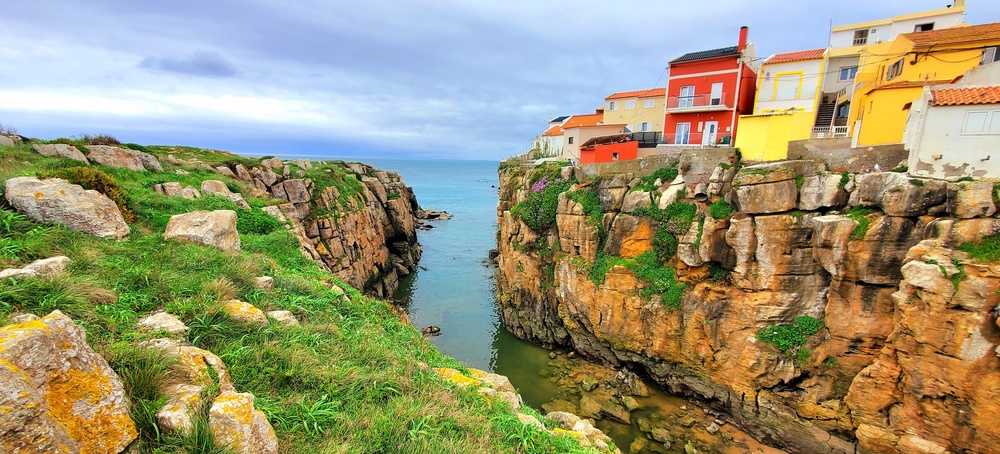
The route winds through hilly countryside and along winding roads past the sea, beaches, vineyards, and cork oak trees. You’ll visit sleepy villages and picturesque towns and drive to cliffs with stunning viewpoints. This blog describes the route from Lisbon to Porto in the north, but you can, of course, also travel it in the opposite direction.
Starting Point: Lisbon
When you arrive in the Portuguese capital, we recommend that you don’t hop right into your rental car, because Lisbon is a lively city where you can easily spend a few days. The hilly city has charming, historic neighborhoods like Alfama and Bairro Alto, with narrow streets, coffee shops, and eateries.
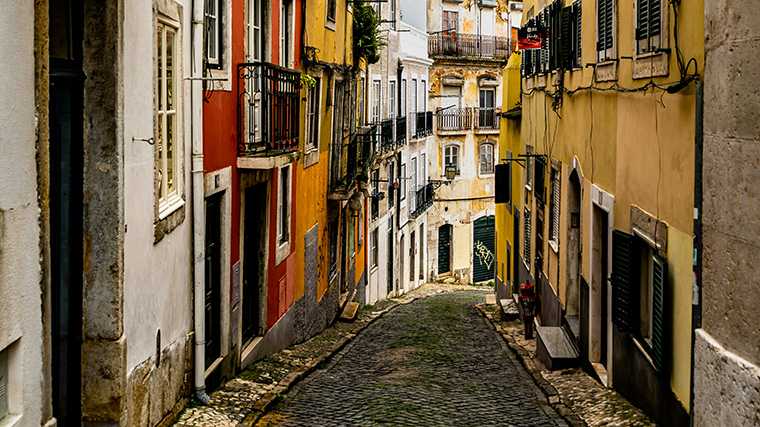
Enjoy the charms of Lisbon: the food and wine, the melancholic sounds of fado, and the views of the Tagus River. After a few days in Lisbon, it’s time to start your road trip.
Óbidos: Is it worth a visit, and where can I park?
Yes, this is a super photogenic little town and very compact. Park at the tourist office (Posto de Turismo) and walk to the center in 5–7 minutes. It’s a nice, short walk, and you can immediately enjoy the city walls and the castle.
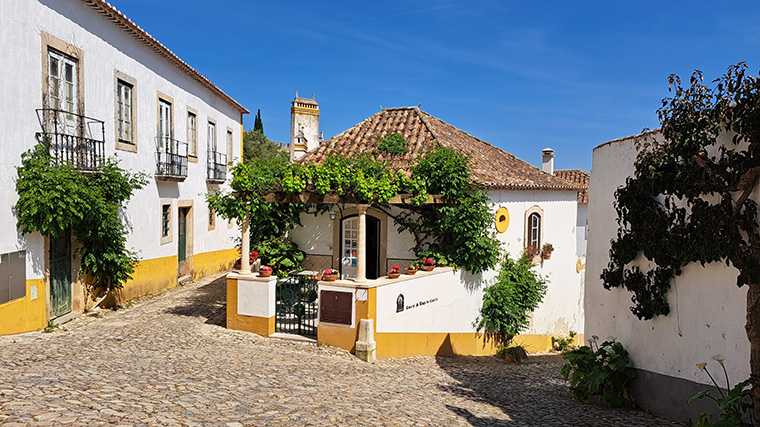
Why stop here: medieval walls and a castle—perfect for a short walk.
Parking: Right in front of the city’s main gate, Porta da Vila, there are large, free parking lots.
Time needed: 1–1.5 hours (walk + coffee).
Best time: before 10:00 a.m. or after 4:00 p.m. (less crowded, softer light).
With kids: the walk along the walls is fun, but the city walls are narrow, so always hold the youngest children by the hand.
Rainy-day option: a short city walk + cherry liqueur served in a chocolate cup.
Tip: Drive to the coastal town of Peniche with its rugged rock formations, such as Varanda de Pilatos.
Continue on: 40 km / 35 min to Nazaré via the A8.
Nazaré: Is the view worth the detour, and where can I park?
Yes, for the cliffs and (in winter) massive waves. Parking in the upper part of town (Sítio) is scarce.
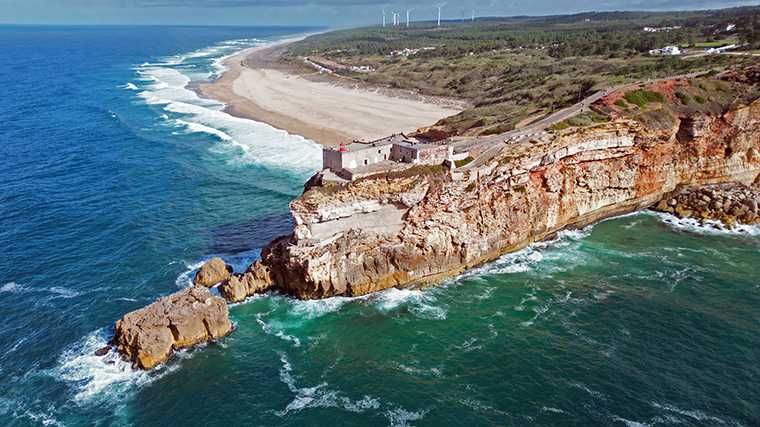
Why stop here: the iconic Farol da Nazaré + views of the wide, golden-yellow beaches on both sides.
Parking: If there are no parking spots left in Sítio, you can park at Praia do Norte beach.
Time on site: 1–1.5 hours (viewpoints + photo stops).
Best time to visit: fall and winter for high waves; in summer: late afternoon for the best light.
With children: Stay on the cliffs behind the fences, as there’s often a strong wind.
Rainy-day option: small-scale exhibits in the fort / coffee in Sítio.
Tip: If you’re heading to the beaches along the Silver Coast, consider the charming seaside town of São Martinho do Porto.
Drive on: 15 km / 20 min to Alcobaça.
Alcobaça: Is it worth the detour, and where can I park the rental car?
Yes, there’s a UNESCO-listed monastery here with impressive royal tombs. You can park nearby and walk to the entrance in 2–5 minutes.
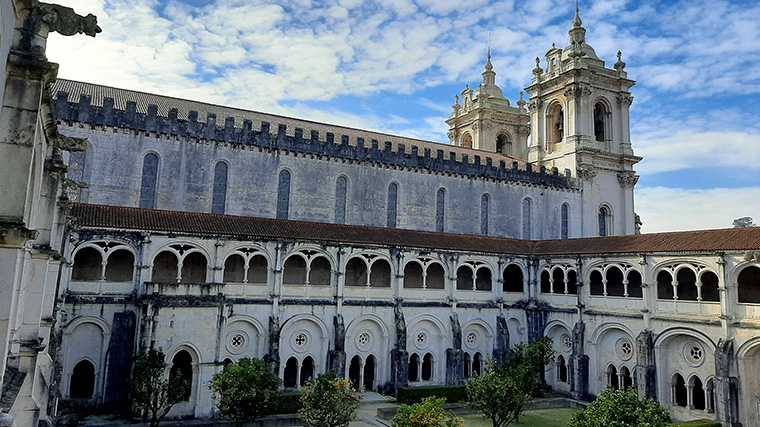
Why stop: the 12th-century Mosteiro de Alcobaça monastery, featuring a Gothic church and cloisters.
Parking: paid parking at Praça 25 de Abril (adjacent to the monastery) or free parking in the lot just east of the monastery.
Time needed: 1–1.5 hours (church + monastery).
Best time to visit: in the morning (less crowded) or during your lunch break to take photos.
With children: Around the large square near the monastery, there are picturesque cafés, chocolate shops, and ice cream parlors.
Rainy-day option: the monastery is mostly indoors.
Tip: Look for the extremely narrow door to the dining hall; if a monk couldn’t fit through it, he wasn’t allowed to eat!
Continuing on: 19 km / 25 min to Batalha.
Batalha: Is it easy to park near the monastery?
Yes, there are several free parking spaces around the complex. Park your rental car north or south of the monastery and walk 3–6 minutes to the entrance.
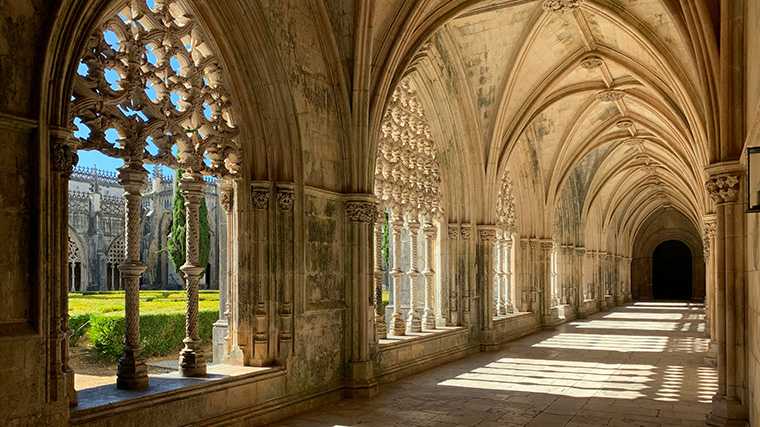
Why stop: the Mosteiro da Batalha monastery, built in the typical Portuguese Manueline style, and the Unfinished Chapels.
Parking: Paid parking near the monastery; free parking about 300 meters east of it.
Time needed: 1–1.5 hours.
Best time to visit: afternoon, when the sun shines on the facade.
With children: there’s an open plaza where children have plenty of space to run around.
Rainy-day option: The complex is largely covered (except for the chapels).
Tip: Drive to the Miradouro do Anfiteatro natural viewpoint and the Fórnea waterfalls, just south of Batalha.
Continuing on: 20 km / 30 min to Fátima (via N356).
Fátima: Where can I park without much trouble?
There are large, free parking lots around the shrine. Depending on where you park, it’s a 5–10-minute walk to the huge plaza. It’s car-free, making it ideal for visiting with children.

Reasons to stop: basilicas, Chapel of the Apparitions, pilgrimage atmosphere.
Parking: There are several numbered parking lots (Parques do Santuário); on holidays, it can be difficult to find an available spot.
Time needed: 1–1.5 hours (basilicas + square).
Best time to visit: In the morning when it’s quiet; in the evening, it’s beautifully lit; it gets very crowded on May 13 and October 13, as those are pilgrimage days.
With children: a large car-free square, which is ideal for children, but it gets very crowded on holidays.
Rainy-day option: the basilicas and museum spaces.
Tip: A 20-minute drive from Fátima lies the enormous Mira de Aire cave system, where you can descend 120 meters into the earth.
Continuing on: 30 km / 25 min to Tomar (via the A13).
Tomar: Is the Convento de Cristo worth visiting, and where can I park?
Definitely—it’s one of the most beautiful monastery-fortresses in Portugal. Park near the monastery or at the bottom of the hill and walk 5–12 minutes to the gate. This is easy to do, even with children.
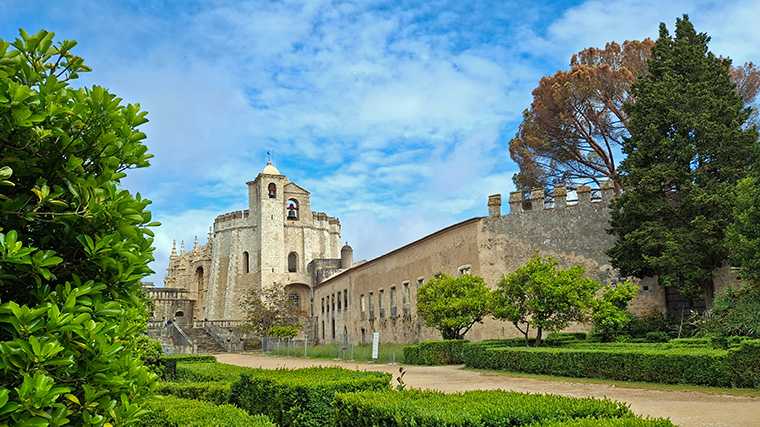
Reasons to stop: the Convento de Cristo, a UNESCO World Heritage Site, and the nearby castle; the Manueline window in Tomar; and the history of the Knights Templar.
Parking: Two small parking lots near the monastery; alternatively, park in Tomar and walk uphill.
Time on site: 1.5–2 hours (the complex is large).
Best time to visit: in the morning (less hot on the hill).
With children: the gardens and fortress walls are fun, but keep a close eye on little ones on the small and sometimes steep steps.
Rainy-day option: plenty of indoor spaces, but be sure to bring a jacket for the walk.
Tip: Just west of Tomar, you can drive your rental car along a large section of the aqueduct that supplied water to the monastery.
Continuing on: 86 km / ~60 min to Coimbra (A13 → A1).
Coimbra: Where can you easily park near the university and library?
Park in the lower town and walk or take the cable car up to the historic part of Coimbra, which is car-free. From the lower town, it’s a 10–15-minute walk to the university campus.
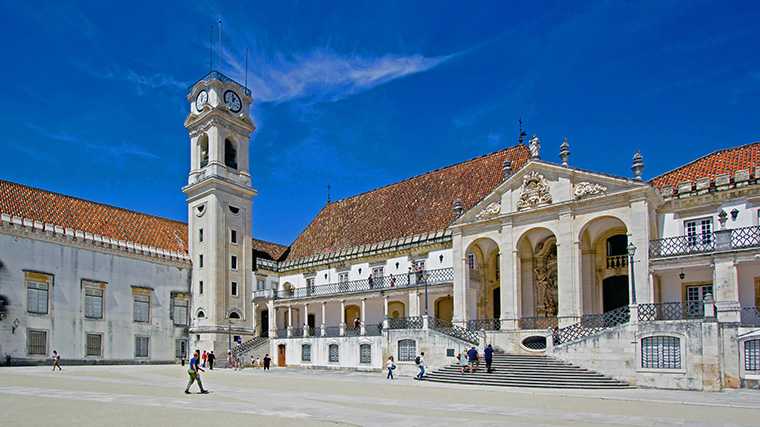
Why stop here: Biblioteca Joanina, the university, and the student-town atmosphere.
Parking: At Mercado Central, where you’ll also find the elevator to the cable car. Cheaper parking is available across the river, next to the stadium, or in the large Convento São Francisco parking garage.
Time needed: 1.5–2.5 hours (campus + old town).
Best time to visit: Depends on the time slot you’ve booked for the library (book this online in advance).
With kids: Combine your visit to the campus with a stop at the playground in the park along the river.
Rainy-day option: the library, or the science museum, Museu da Ciência.
Tip: attend a fado performance in the evening; fado de Coimbra is a subgenre of this melancholic musical style.
Drive on: 64 km / 60 min to Aveiro (via N1 and N235)
Aveiro: Is parking in the city center difficult?
Not really—there are large parking garages in the city center: Rossio and Fórum Aveiro are the most convenient (3–8 min walk).
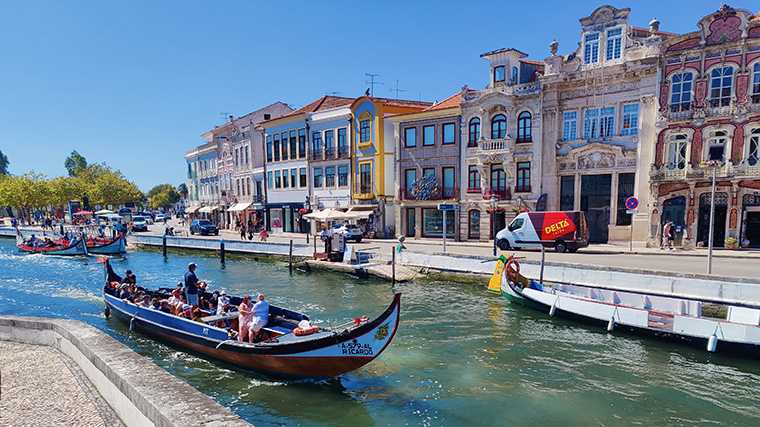
Why stop: a ride on a traditional boat (moliceiro), Art Nouveau-style houses along the canals.
Parking: Rossio and Fórum Aveiro (both underground, open 24/7); on the outskirts of town, near the Ponte dos Botirões footbridge, there is a large, free parking lot.
Time needed: 1.5–2 hours (boat tour + strolling).
Best time to visit: afternoon/sunset for photos along the quays.
With kids: The boat tour is ideal; you can easily combine it with an ice cream by the canal.
Rainy-day option: Museu de Arte Nova + coffee at the shopping center.
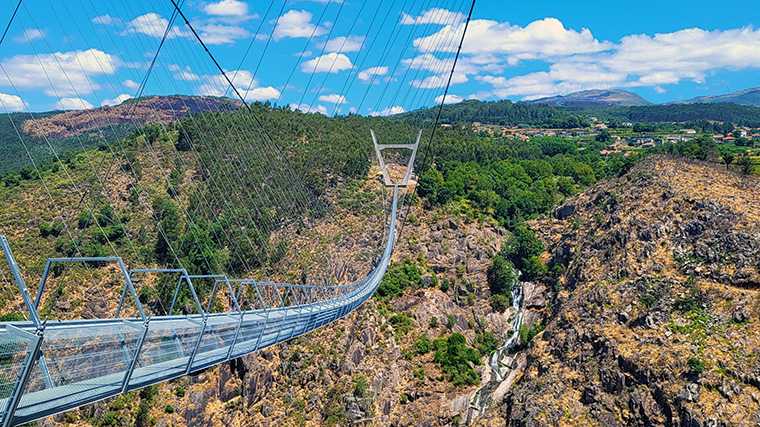
Tip: On your way to Porto, visit the Arouca Geopark, which features a long suspension bridge over a deep valley.
Drive on: 74 km / 50 min to Porto via the A1.
Bonus: the Douro Valley
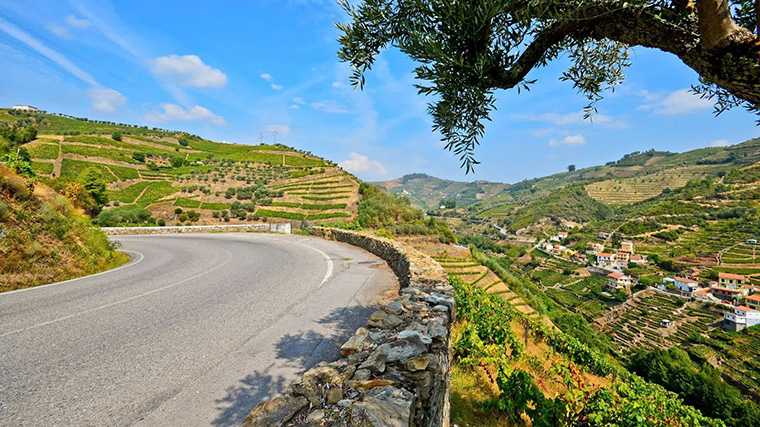
A rental car is the best way to explore the Douro Valley from Porto, starting at the village of Mesão Frio. Follow the N222 along the river’s south bank. This road is known for its breathtaking views of the vineyards and the region’s rolling, hilly terrain. The route passes through several picturesque towns and villages, such as Peso da Régua and Castelo de Paiva, and has thus become one of the most iconic and popular routes for those who want to discover the natural beauty and cultural heritage of the Douro region.
Do I need to arrange anything for tolls (Via Verde) with a rental car?
No, because all rental cars in Portugal are already equipped with an electronic toll device (Via Verde). This is required by law.
With Via Verde, you automatically pay tolls on Portuguese highways. If you rent a car in Portugal, you don’t need to make any arrangements for this, as rental companies are required to provide Via Verde transponders with their cars.
Some rental companies offer the transponder for free, so you only pay the toll charges. Other companies charge a daily rate for the transponder, but there is a cap on that amount. If you didn’t drive on any toll roads during your rental period, you’ll be refunded the cost of renting the transponder.
How much does it cost to drive on toll roads in Portugal?
That depends largely on which road you take and, of course, the distance. Expect to pay about 8 euro cents per kilometer. To find out exactly how much toll you’ll pay, you can enter the start and end points of your trip on the Via Verde website. This website also provides options for alternative, less expensive routes.
Incidentally, it’s not difficult to avoid toll roads. There’s often a free road running more or less parallel to them, though the trip will take a bit longer.
Frequently Asked Questions
Which stops are kid-friendly?
Portugal is a very child-friendly country, but the following stops are especially child-friendly because their downtown areas are compact and have limited car traffic: Óbidos, Aveiro, and Coimbra.
Where can you park for free?
You can park for free in many places in Portugal. Sometimes you have to pay for a spot right next to a tourist attraction, but usually you can park your rental car for free not far away.
Are there attractions to visit when it rains?
Yes, there are alternative sights and activities for when it rains. Consider the monastery in Alcobaça, the Biblioteca Joanina (reservation required) in Coimbra, and the large shopping center or the Art Nouveau museum in Aveiro.
What’s the best spot to capture a beautiful sunset?
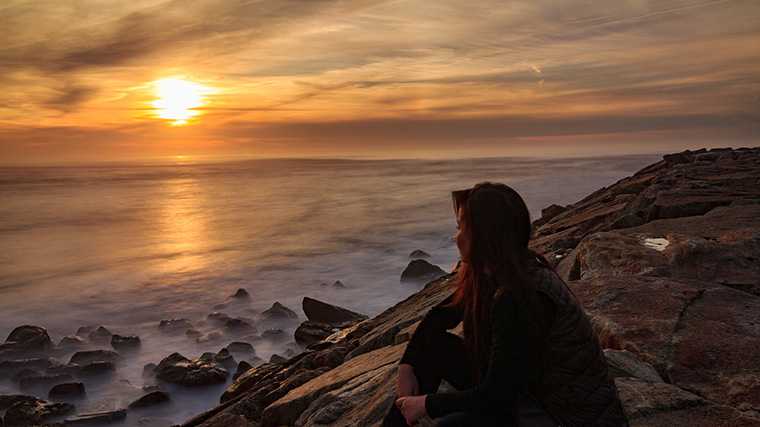
You can watch the sunset along the coastline near Nazaré or along the various canals in Aveiro, also known as “the Venice of Portugal.”
How does one-way car rental work in Portugal?
We can imagine that after a road trip from Lisbon to Porto (or vice versa), you might not feel like driving back to your starting point. That works out perfectly, because these two cities are very often combined for so-called one-way car rentals. For a small fee, you can return the rental car at your final destination!
Rent a car in Lisbon or Porto now
We hope we’ve inspired you to discover the beautiful region of Portugal between Lisbon and Porto. Choose where you want to start and rent a car in Lisbon, or search for a rental car in Porto.
For a worry-free road trip in Portugal, choose a rental car with our Worry-Free label. You won’t have to worry about a thing, because these cars come with:
Full damage coverage
Unlimited mileage
The best fuel policy (full-to-full)
No unnecessarily high deposit
Reliable rental companies

Where would you like to rent a car?
- 24000+ pick-up locations
- Free cancellation
- Independent comparator

Useful tips for a well-prepared trip
Which insurance should I choose, and what's the deal with the deposit? Read our articles with useful information and tips to ensure you choose the right rental car for you.


