- Popular countries
- Popular regions
- Popular cities
- Popular airports
- Car hire United Kingdom
- Car hire Italy
- Car hire Spain
- Car hire United States
- Car hire Portugal
- Car hire Greece
- Car hire France
- Car hire Poland
- Car hire Ireland
- Car hire Cyprus
- Car hire Netherlands
- Car hire South Africa
- Car hire Switzerland
- Car hire Croatia
- Car hire Canada
- Car hire Malta
- Car hire Germany
- Car hire Hungary
- Car hire Norway
- Car hire Australia
- Car hire England
- Car hire Sicily
- Car hire Scotland
- Car hire Florida
- Car hire Sardinia
- Car hire Malta
- Car hire California
- Car hire Crete
- Car hire Lanzarote
- Car hire Majorca
- Car hire Menorca
- Car hire Tenerife
- Car hire Rhodes
- Car hire Fuerteventura
- Car hire Corsica
- Car hire Kefalonia
- Car hire Madeira
- Car hire Corfu
- Car hire Ibiza
- Car hire Gran Canaria
- Car hire London
- Car hire Faro
- Car hire Malaga
- Car hire Milan
- Car hire Lisbon
- Car hire Rome
- Car hire Alicante
- Car hire Dublin
- Car hire Manchester
- Car hire Porto
- Car hire Amsterdam
- Car hire Larnaca
- Car hire Geneva
- Car hire Luqa
- Car hire Bergamo
- Car hire Athens
- Car hire Budapest
- Car hire Pisa
- Car hire Orlando
- Car hire Palermo
- Car hire London Heathrow Airport
- Car hire Faro Airport
- Car hire Lisbon Airport
- Car hire Malaga Airport
- Car hire London Gatwick Airport
- Car hire Alicante Airport
- Car hire Manchester Airport
- Car hire Dublin Airport
- Car hire Larnaca Airport
- Car hire Porto Airport
- Car hire Malta Airport
- Car hire Bergamo Airport
- Car hire Athens Airport
- Car hire Budapest Ferihegy Airport
- Car hire Rome Fiumicino Airport
- Car hire Geneva Airport (Switzerland)
- Car hire Amsterdam Schiphol Airport
- Car hire Milan Malpensa Airport
- Car hire Pisa Airport
- Car hire Orlando International Airport

Prevent Damage to Your Rental Car in Iceland
Windshield damage, stone chips, and flat tires caused by gravel roads
The best way to explore Iceland and enjoy its impressive natural beauty is to rent a car and drive to the most beautiful spots on your own. However, in Iceland—more so than in other countries—you need to be especially careful about potential damage to your rental car from flying rocks. Although many roads are well-paved, there may still be small stones on the surface. The country also has many gravel roads with potholes that can sometimes be quite deep. This can not only cause damage to the body, windows, or undercarriage, but can also result in a flat tire. Below, we explain the best way to drive on Icelandic roads and how to protect yourself against damage.
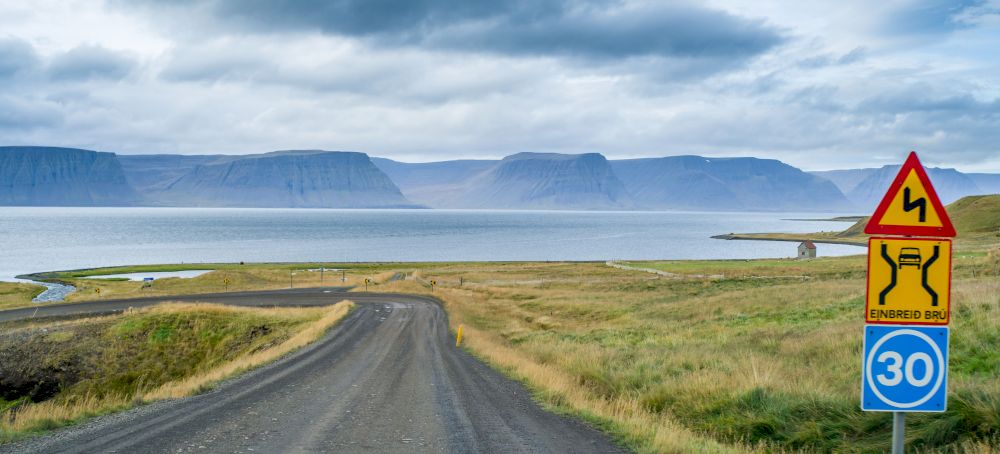
Renting a Car in Iceland: A Gravel Road Is Never Far Away
If you’ve rented a car to drive around Reykjavik and the surrounding area or just to visit the natural attractions right along the Golden Circle, you don’t need to worry about any damage to your rental car. That route, which is over 300 kilometers long, is entirely paved and exceptionally well-maintained. Things change, however, if you stray even slightly off the beaten path. And let’s be honest, who wouldn’t want to? Especially when you have the freedom of a rental car!
For example, Thingvellir National Park is a must-see stop along the Golden Circle, but why not take your rental car for a drive around Lake Thingvallavatn? You’ll be driving on a beautiful, winding gravel road with amazing views of the water. Along the way, there are plenty of spots where you can park your rental car to take photos or have a picnic.
In Iceland, you usually have to drive (a short distance) on gravel to reach the most beautiful spots. Even the ring road, which is over 1,300 kilometers long, has a small section of gravel (in the southeast). But also watch out for small stones on paved roads. Gravel can roll down from the mountains onto the road or be blown onto the road by the sometimes strong winds.
What to watch out for when driving a rental car in Iceland
Always be prepared for changing conditions. On that beautiful paved road, you might suddenly find yourself driving over small stones. That nice paved road can narrow or turn into gravel. This is usually indicated by warning signs, but still. By the way, it’s not a bad idea to familiarize yourself with Icelandic traffic signs in advance.
So you should always look far ahead—even more so than you’re used to. That’s not too difficult, though, because Icelandic roads are generally not busy, so you usually have a clear view of the road ahead. Brake gradually as you approach a gravel road and always drive slowly on such surfaces. Of course, you don’t want to damage other cars, but flying pebbles can also damage your rental car, especially the underside.
When encountering oncoming traffic on a gravel road, slow down even more and stay as far to the right as possible. As a rule, the oncoming driver will do the same, and you’ll be able to pass each other safely. Heavy trucks are a different story. No matter how slowly they drive, they will always cause stones to fly up on gravel roads (or on paved roads when there’s loose gravel). If a truck is coming from the opposite direction, there’s little you can do about it. But if you see a truck ahead of you, it’s best to keep a good distance. If necessary, look for the next opportunity to park your rental car, giving the truck a good head start. You should also keep a safe distance when driving behind another passenger car.
In Iceland, many sheep roam freely during the summer months. They’re allowed to graze wherever they want and will therefore also cross the road. Always slow down when you see sheep (or other animals, such as reindeer and horses) along the road. Above all, don’t honk your horn, as this can startle them, and damage to the rental car caused by animals isn’t covered by most insurance policies.
Never just stop your rental car by the side of the road
The Icelandic landscape is so breathtaking and varied that you’ll want to stop every five minutes to take it all in or snap a photo. As tempting as it may be, never just stop your rental car on the side of the road. It’s strictly prohibited and, moreover, dangerous. Think about how you’d react if, on a narrow road, you suddenly had to swerve to avoid a stationary car because a tourist just had to take a photo. Along Iceland’s roads, there are more than enough places to park your rental car safely (and legally).
Renting a Car in Iceland: Check the Weather Forecast
You shouldn’t just look far ahead while driving—you should do so even before you get in the car. Always check the weather forecast for the coming hours along your planned route. This applies not only in winter but also throughout the rest of the year. In Iceland, the weather can be very unpredictable: a clear blue sky in the morning can suddenly turn into a summer storm or a winter snowstorm. Download the Iceland weather app (Google Play / App Store) and check the forecast before setting out in your rental car.
If the weather changes, this will of course also affect road conditions. You can easily check road conditions on the umferdin (traffic) website. There, you can zoom in on specific parts of Iceland. The website also provides information about roadwork. If you click on the webcam icon, you’ll see a live camera feed of the road in question.
Renting a Car in Iceland in Winter
Iceland is a great place to visit in winter. Some people even consider it the best time to go, since it’s much quieter at tourist attractions. Winter tires are mandatory in Iceland from November 1 through April 15, and all rental cars are equipped with them during that period. This gives you better traction on roads that are more difficult to navigate due to hail, snow, or black ice. Sometimes roads are closed entirely, forcing you to change your plans. That’s certainly inconvenient, but such road closures are implemented for your safety. So be flexible and, in such cases, plan an alternative route to drive your rental car.
Even more so than in the summer months, you need to keep a close eye on the weather and road conditions in winter. Again: the weather in Iceland can change in an instant. You can experience all four seasons in a single day—really! You should also take into account the limited daylight hours in winter. This means you’ll be able to see less in a day.
If bad weather is forecast, it’s best not to get behind the wheel of your rental car. If you encounter poor visibility while driving, adjust your speed and consider stopping in the nearest village to find shelter.
Do you need additional insurance when renting a car in Iceland?
We always leave it entirely up to you whether you want to reserve a rental car with or without additional insurance. However, in the case of Iceland, we advise against renting a car with only the basic insurance coverage. Collision, liability,and theft insuranceare included as standard with every car you rent. However, additional insurance covering damage to the glass, wheels, roof, and undercarriage of the rental car is certainly not a luxury in Iceland. We call this “extended coverage,” and you can filter for it in our search system. Most rental cars with the Worry-Free label include this extended coverage. Additionally, cars with that label have no deductible or a deductible covered by us.
Car rental providers in Iceland sometimes recommend additional insurance for damage caused by sand or volcanic ash (Sand and Ash Protection – SAAP), gravel (Gravel Damage – GD), and even wind (such as doors being blown off their hinges). With some car rental companies, these risks are covered under the comprehensive coverage, so you don’t need to purchase additional insurance for them. But that’s not always the case! Therefore, when booking a rental car—especially in Iceland—be sure to read the terms and conditions thoroughly and check exactly what’s covered by the insurance. By the way, driving on so-called F-roads is only permitted for vehicles with four-wheel drive. If you haven’t rented a 4×4 and still drive on these roads, you’re not covered by insurance for anything!
Renting a Car in Iceland and Getting a Flat Tire
Gravel roads increase the risk of getting a flat tire. Especially when the gravel surface is brand new, the stones haven’t been “broken in” yet and can be very sharp. A flat tire is by no means a rarity, so that’s yet another reason to opt for comprehensive coverage when renting a car in Iceland, since damage to the tires is included in that coverage.
Not all rental cars come with a spare tire, and if they do, it’s usually just a “temporary spare.” If there’s no spare tire, you’ll find a repair kit in the trunk to temporarily patch the puncture and inflate the tire. In either case, you’ll need to go to the nearest service station or garage for a permanent solution. You can find these using the safetravel.is app. If you have a flat tire or experience other breakdowns while on the road, always contact the rental company by phone first.
Picking up a rental car in Iceland: Check extra carefully for damage
Just like in other countries, you should thoroughly check the rental car for damage when you pick it up. But in Iceland, you’ll need to conduct an especially thorough inspection, since damage is quite common there. So take plenty of time to inspect the rental car, take photos (or a video), and make sure any existing damage is noted on the so-called checkout form.
So, should you just skip renting a car in Iceland?
Don’t let the warnings above deter you from renting a car in Iceland. Set your own pace, enjoy the natural wonders, and experience the fantastic landscapes. Only with a rental car can you get the most out of your trip through Iceland. Take the necessary precautions and make sure you have good insurance. We guarantee you’ll have amazing experiences and a worry-free road trip. What are you waiting for? Rent a car to discover beautiful Iceland!

Where would you like to rent a car?
- 24000+ pick-up locations
- Free cancellation
- Independent comparator

Useful tips for a well-prepared trip
Which insurance should I choose, and what's the deal with the deposit? Read our articles with useful information and tips to ensure you choose the right rental car for you.


