- Popular countries
- Popular regions
- Popular cities
- Popular airports
- Car hire Italy
- Car hire United Kingdom
- Car hire Spain
- Car hire United States
- Car hire Portugal
- Car hire Greece
- Car hire France
- Car hire Ireland
- Car hire Poland
- Car hire South Africa
- Car hire Cyprus
- Car hire Netherlands
- Car hire Switzerland
- Car hire Croatia
- Car hire Malta
- Car hire Hungary
- Car hire Canada
- Car hire Germany
- Car hire Australia
- Car hire Norway
- Car hire England
- Car hire Sicily
- Car hire Scotland
- Car hire Sardinia
- Car hire Florida
- Car hire Malta
- Car hire Crete
- Car hire Lanzarote
- Car hire California
- Car hire Majorca
- Car hire Menorca
- Car hire Fuerteventura
- Car hire Tenerife
- Car hire Rhodes
- Car hire Kefalonia
- Car hire Madeira
- Car hire Corsica
- Car hire Gran Canaria
- Car hire Corfu
- Car hire Ibiza
- Car hire London
- Car hire Dublin
- Car hire Malaga
- Car hire Milan
- Car hire Faro
- Car hire Lisbon
- Car hire Rome
- Car hire Alicante
- Car hire Geneva
- Car hire Porto
- Car hire Bergamo
- Car hire Amsterdam
- Car hire Athens
- Car hire Luqa
- Car hire Budapest
- Car hire Manchester
- Car hire Larnaca
- Car hire Pisa
- Car hire Palermo
- Car hire Orlando
- Car hire London Heathrow Airport
- Car hire Dublin Airport
- Car hire Malaga Airport
- Car hire Lisbon Airport
- Car hire Faro Airport
- Car hire Alicante Airport
- Car hire London Gatwick Airport
- Car hire Porto Airport
- Car hire Bergamo Airport
- Car hire Athens Airport
- Car hire Malta Airport
- Car hire Budapest Ferihegy Airport
- Car hire Rome Fiumicino Airport
- Car hire Manchester Airport
- Car hire Geneva Airport (Switzerland)
- Car hire Larnaca Airport
- Car hire Amsterdam Schiphol Airport
- Car hire Pisa Airport
- Car hire London Luton Airport
- Car hire Milan Malpensa Airport

Road Trip in a Rental Car Through Morocco's Highlights
From fragrant souks to the dunes of the Sahara
Blue walls glistening in the morning sun, the scent of cloves and saffron wafting from a souk, and orange dune sand as far as the eye can see. A road trip through Morocco in a rental car doesn’t stop at just one image of the country—it strings them all together. When you rent a car, you decide for yourself where to stop for mint tea, a scenic overlook, a small market, or a roadside village. In 10 to 14 days, you’ll travel a route taking you through Marrakech, the Sahara, the imperial city of Fez, and the blue city of Chefchaouen—through a country that’s surprisingly accessible for first-time visitors.
Morocco is perfect for a fall getaway and as a destination for winter sun: winters in the south are relatively mild, while in the spring and fall you can travel comfortably through the interior.
On this page:
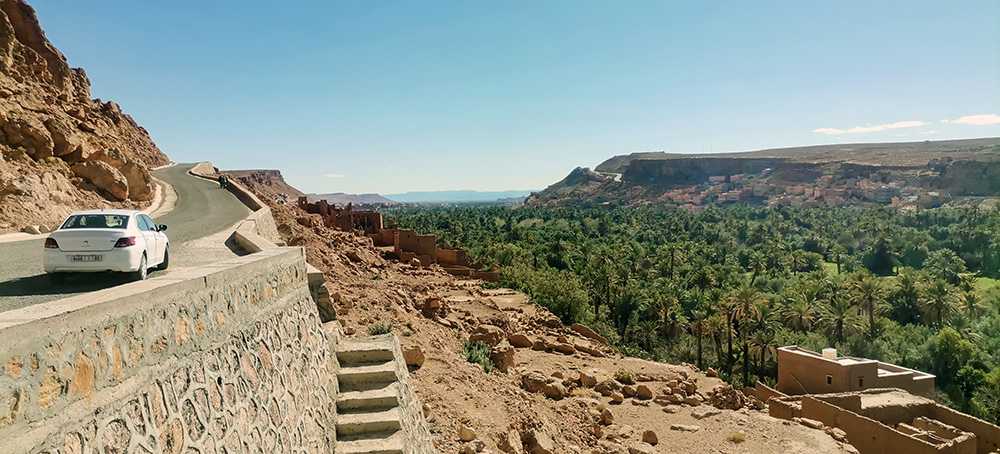
Why Explore Morocco by Rental Car?
A rental car isn’t just convenient in Morocco—having your own transportation is what truly opens up the country to you. Here are three specific advantages:
Freedom + Scenic Variety
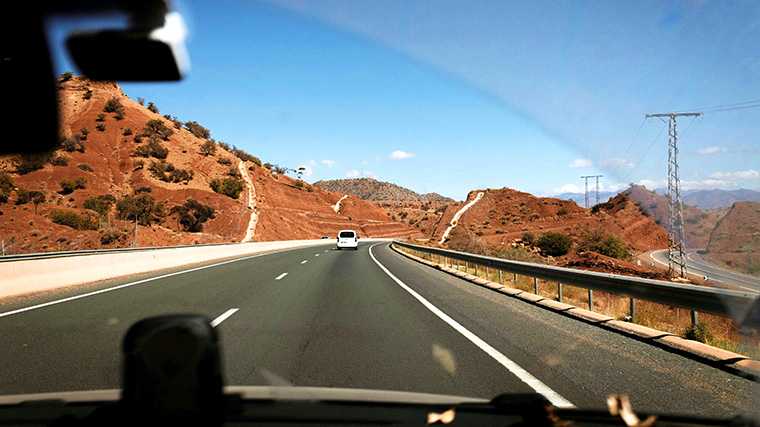
In a single trip, you can drive from the narrow alleys of the Marrakech medina over the mountain passes of the Atlas Mountains, past the dunes of the Sahara, through green palm oases, and all the way to the Atlantic coast. Public transportation reaches major cities and the coastline, but the interior, the kasbahs, the mountain passes, and the canyons remain out of reach.
Travel with a Deeper Cultural Experience
With your own car, you can stop wherever you want: at a Berber village, at an argan cooperative along the road, at a local market, or at a small kasbah where tourists are a rare sight. This leads to spontaneous encounters that a group tour with fixed stops will never provide. You also travel at your own pace: staying longer when a place surprises you, and moving on when you’ve seen enough.
Great value for your money
Gas, hotels, and food in Morocco cost a fraction of what you’d pay in Southern Europe, and renting a car is also affordable during the off-season. Morocco is generally much more affordable than most Western or Southern European destinations. The currency is the dirham; check the current exchange rate of the Moroccan dirham (MAD) against various currencies.
Overview: 8 stops on your road trip through Morocco
| Stop | Reason | Distance * | Days | Highlights |
|---|---|---|---|---|
| Marrakech | Red Medina and souks | -- | 2–3 | Djemaa el Fna, medina, gardens |
| Aït-Ben-Haddou | iconic kasbah (UNESCO) | 190 km | 0.5 | Kasbah-Ksar, film location |
| Ouarzazate + Dadès Valley | kasbahs and spectacular valleys | 30 km | 2 | Atlas Studios, hundreds of kasbahs |
| Todra Gorge | Dramatic mountain canyon | 175 km | 0.5 | 300 m high steep rock walls |
| Merzouga + Erg Chebbi | Sahara experience | 200 km | 1–2 | Orange dunes, sunset, desert camp |
| Fez | Historic royal city | 475 km | 2 | Tanneries, souks, palaces |
| Chefchaouen | Blue City | 200 km | 1–2 | Blue houses and streets, Rif Mountains |
| Casablanca | Modern coastal metropolis | 340 km | 1 | Hassan II Mosque, Atlantic Coast |
* Distance from the previous stop. Distances may vary depending on the route chosen and any stops along the way. Expect the full loop to be 1,700–2,000 kilometers.
The itinerary: from Marrakech to the Sahara and the north
1. Marrakech: the red city full of contrasts
Start your road trip by getting lost in the medina, haggling in the souks, and sipping tea on a rooftop terrace.
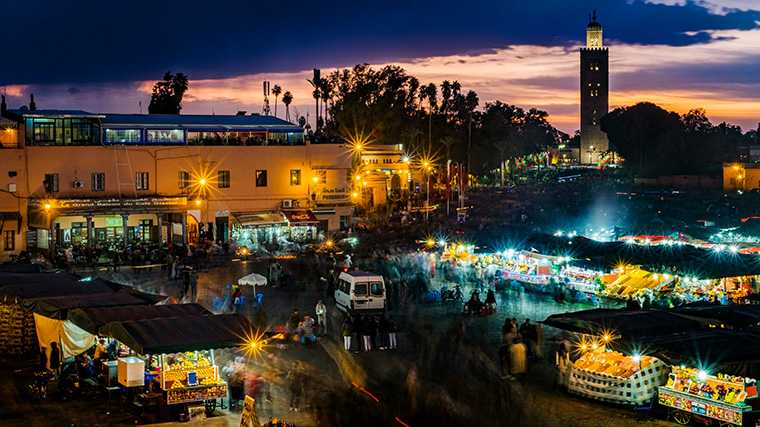
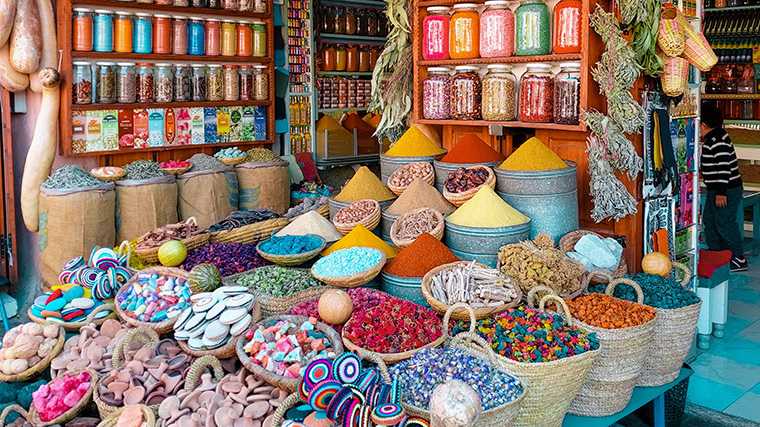
Marrakech is both chaotic and charming: in the evening, the central square, Djemaa el Fna, fills with snake charmers, storytellers, acrobats, and stalls overflowing with grilled meat and fresh orange juice. During the day, it’s easy to get lost in the souks, where a variety of scents, woven rugs, and copperware vie for your attention. Le Jardin Secret, right in the heart of the medina, offers a peaceful retreat from the hustle and bustle and is much less crowded than the better-known Majorelle Garden.
Recommended time: Allow 2–3 days to truly experience the city.
Parking: Don’t pick up your rental car in Marrakech until you’re ready to hit the road, as driving and parking in the old city add little to your trip (the narrow alleys aren’t passable by car anyway). Coming from Casablanca? Park your rental car in a guarded parking lot around the medina, for example right next to the Koutoubia Mosque.
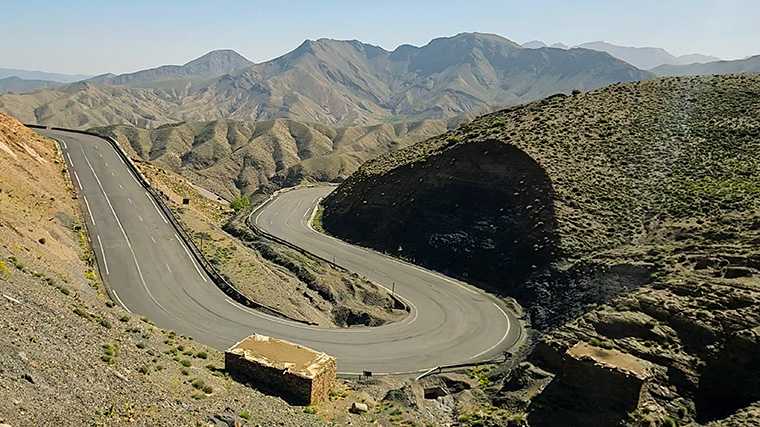
Driving distance: The distance to Aït Benhaddou is about 190 kilometers, via the spectacular Tizi n’Tichka mountain pass. Allow 4 to 5 hours for the drive.
Need more inspiration? Read 5 Day Trips + 2 Road Trips from Marrakech.
2. Aït-Ben-Haddou: Kasbahs That Conquered Hollywood
A walled clay fortress village that you’ll recognize immediately, even if you’ve never heard of it before.
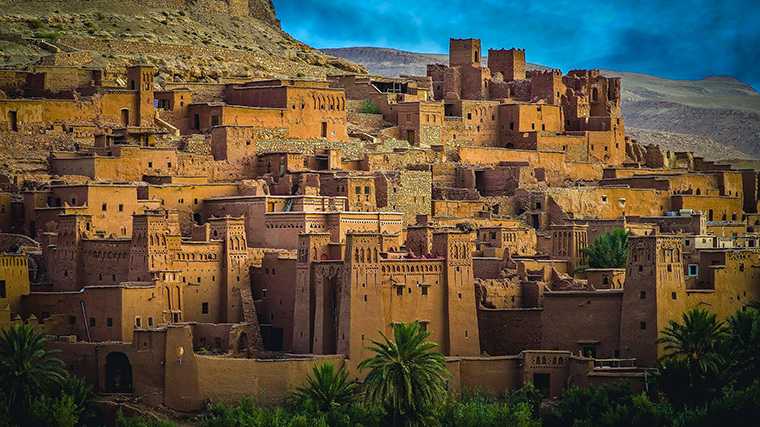
Aït-Ben-Haddou is a UNESCO World Heritage Site and one of the most frequently filmed locations in Africa. Productions such as *Gladiator* and *Game of Thrones* were filmed here, along with dozens of other movies. The interconnected mud-brick kasbahs are linked by narrow alleys and look as if time has stood still there. Be sure to take the time to walk to the highest point for a spectacular view of the Ounila Valley and the desert beyond.
Recommended time: A visit takes no more than 1 to 2 hours, so combine this stop with Ouarzazate on the same day.
Parking: on the outskirts of the village; explore the historic part on foot.
Driving distance: It’s about a 30-kilometer (45-minute) drive to Ouarzazate.
3. Ouarzazate + Dades Valley: Movie City and a Thousand Kasbahs
The “Hollywood of Morocco” and a landscape of kasbahs, red rocks, and deep valleys.
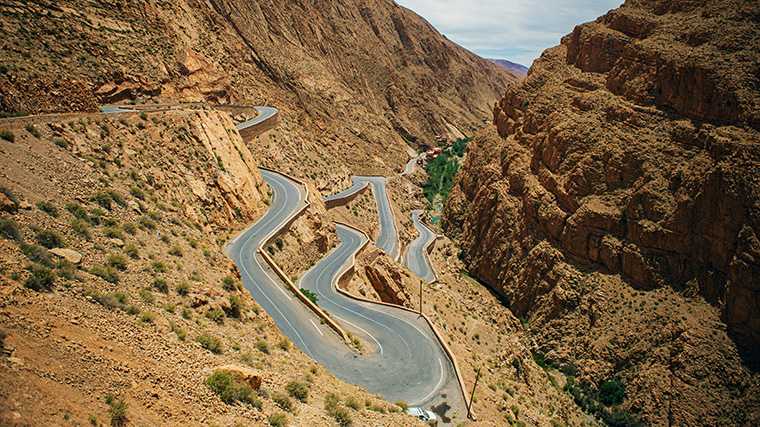
Ouarzazate owes its nickname to Atlas Studios, one of the largest film studios in the world, where sets from films such as *Gladiator* and *Kingdom of Heaven* are on display. From here, you’ll drive into the Dades Valley: a road that winds through a canyon, passing more than a hundred kasbahs, red rock formations that grow increasingly dramatic, and refreshing green palm oases. Stop along the way at one of the local weaving workshops or in the Vallée des Roses near Kelaât M’Gouna, famous for its rose water.
Recommended time: Be sure to set aside at least 2 days to explore both the studios and the valley at a leisurely pace.
Parking: very easy at both attractions and accommodations.
Driving distance: The Dadès Valley already leads partly toward the Todra Gorge; from Ouarzazate to Boumalne Dadès (where the narrowest part of the valley begins), the distance is 125 kilometers. The most spectacular route begins there and is about 60 kilometers long. You’ll need to return to Boumalne Dadès to drive to Tinghir (50 kilometers). The Todra Gorge is located just north of that town.
4. Todra Gorge: the breathtaking canyon
Hike between gigantic limestone cliffs 300 meters high.
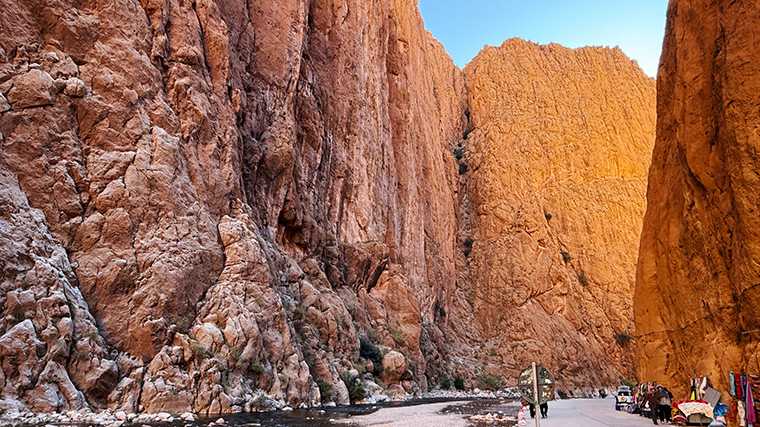
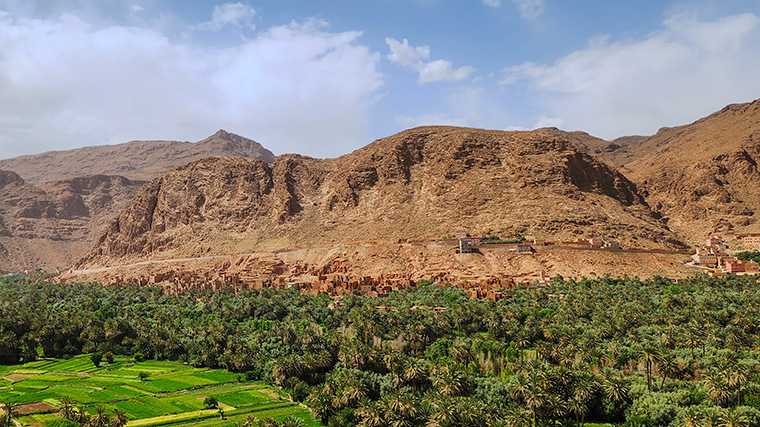
The Todra Gorge (also known as the Todgha Gorge) is one of Morocco’s most dramatic natural wonders: a narrow, deep canyon where the rock walls on either side rise almost vertically. You can drive through the gorge, but for the best experience, park your rental car and hike through the narrowest part of the gorge. Stop along the way for a mint tea at one of the Berber cafés. Climbers from all over the world come here for the rock faces; for the average traveler, even a short hike is impressive enough. It’s best to drive there early in the morning, before the tour buses arrive.
Recommended time: 0.5 day.
Parking: There is ample parking at the entrance to the narrow gorge.
Driving distance: It’s about a 200-kilometer (3-hour) drive from Tinghir to Merzouga.
5. Merzouga and Erg Chebbi: A Night Among the Sahara Dunes
Orange sand dunes up to 150 meters high and a starry sky free of light pollution.
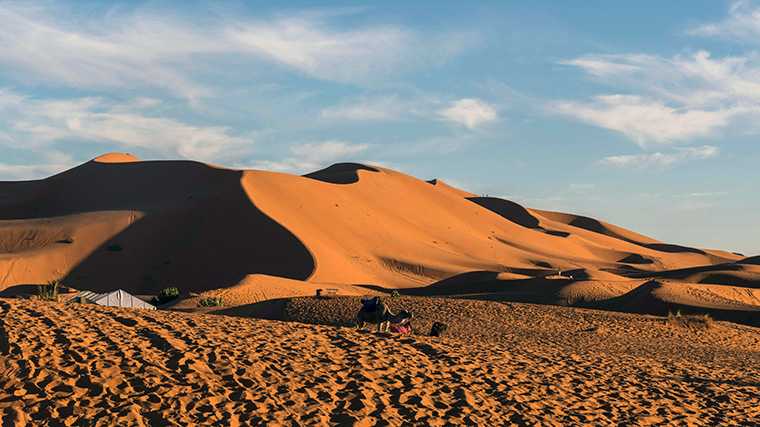
For most travelers, this is the absolute highlight of the itinerary. Near Merzouga lie the Erg Chebbi dunes, Morocco’s most accessible Sahara dunes. A camel ride at sunset, followed by an overnight stay in a luxury desert tent with traditional Berber music around the campfire, is an experience you won’t soon forget. If you get up early, you’ll see the sunrise over the dunes—a moment that makes the early wake-up call more than worth it.
Recommended duration: 2 days (including 1 night in a desert camp).
Parking: Follow your accommodation’s instructions on where to safely leave your rental car. Do not drive a standard rental car into the sand dunes yourself.
Driving distance: The drive from Merzouga to Fez is a long one—about 475 kilometers—so plan on at least an 8-hour drive. The route takes you past the palm oases of the Ziz Valley, the Blue Spring of Errachidia, and the cedar forests near Azrou (home to Barbary macaques). Consider a stopover in the apple-growing town of Midelt (260 kilometers from Merzouga).
6. Fez: A Maze of Craftsmanship and History
Lose yourself in the alleys of Fez el-Bali among ancient city gates, workshops, tanneries, and fragrant souks.
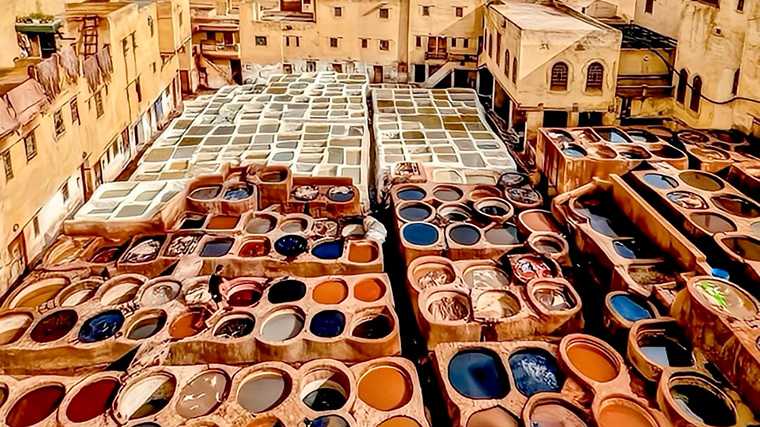
Fez el-Bali, the old medina of Fez, is a UNESCO World Heritage Site and is considered one of the largest car-free city centers in the world, where donkeys are still the primary means of transportation. The famous tanneries, where hides are dyed in colorful vats using traditional methods, are an impressive sight; ask for a sprig of mint at the entrance—a local trick to combat the strong odor. Be sure to also visit the royal palaces and Al-Qarawiyyin University, one of the oldest still-functioning educational institutions in the world.
Recommended time: Set aside at least 2 days so you don’t treat this intriguing city as just a quick stopover.
Parking: Drive your rental car to one of the secure parking lots: at the Bab Jdid city gate or at the Ain Azleten parking lot on the north side of the old city.
Driving distance: The distance from Fez to Chefchaouen is about 200 kilometers, with the final stretch winding through the beautiful Rif Mountains. Allow at least 4 hours of driving time. Consider driving to Meknes first to visit that imperial city as well.
7. Chefchaouen: The Blue City in the Rif
Every wall, door, and staircase is a different shade of blue, set against the green of the mountains.
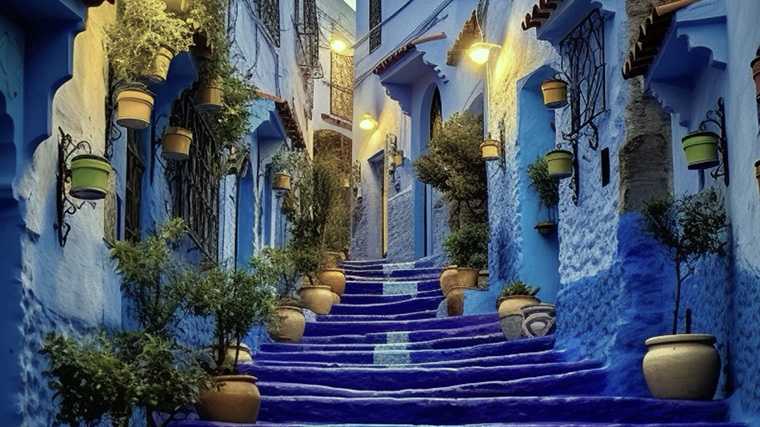
Chefchaouen is tucked away in the Rif Mountains and is famous for its blue-painted medina, a tradition that, according to legend, once began as a symbolic reference to the sky. The city is smaller and quieter than Marrakech or Fez, making it ideal for leisurely strolls, taking photos, and visiting local craft shops. Climb up to the Spanish Mosque just outside the city center for a spectacular view of the blue city and the surrounding green mountains.
Recommended time: 1–2 days
Parking: There are several parking lots around the old town, and there is also a small parking garage (Parking Jour et Nuit), though reviews of it are mixed.
Driving distance: It’s a 340-kilometer (5-hour) drive from Chefchaouen to Casablanca.
8. Casablanca: A Modern Finale on the Atlantic Coast
End your road trip through Morocco by the sea with a visit to the Hassan II Mosque and the country’s modern side.
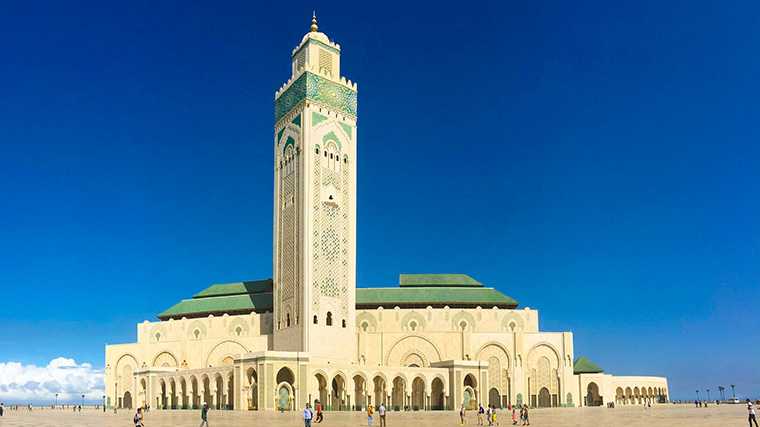
Casablanca is less fairy-tale-like than Marrakech or Chefchaouen, but that’s precisely why it makes for an interesting finale. The city showcases modern Morocco: wide boulevards, modern neighborhoods, and a lively coastline. The absolute highlight is the Hassan II Mosque, spectacularly situated on the Atlantic Ocean. The enormous mosque features a 210-meter minaret, the second-tallest in the world. Non-Muslims can visit the mosque on a guided tour, a unique opportunity to see its impressive interior.
Recommended time: 1 day
Parking: The parking garages under Place Rachidi and Place Mohammed V are perfectly located, but if Casablanca is the final stop on your trip, it’s better to return your rental car first and then explore the city.
Driving distance: It takes about 3 hours to drive from Casablanca to Marrakech (240 kilometers) via the A3 toll road.
Of course, instead of Marrakech, you can also use Casablanca as the starting and ending point of your route: book a rental car in Casablanca. And that’s where our blog post about a Moroccan road trip starting in Casablanca comes in handy.
Alternative final stop: one-way to Tangier
Why not rent a car for a so-called one-way trip? This allows you to pick up the rental car in one location and drop it off at another. Combining Marrakech and Tangier is very common. You’ll pay a so-called one-way fee, but you won’t have to drive back to your starting point—which saves both money and time!
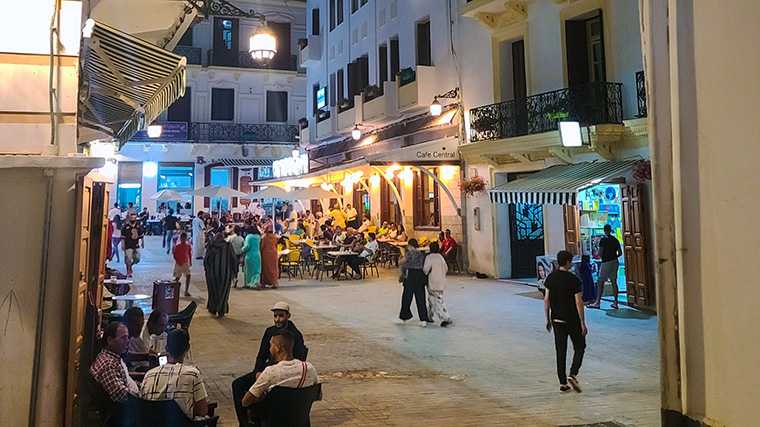
Explore the whitewashed labyrinth of the kasbah and lose yourself in the winding streets of the medina, where the scent of jasmine mingles with that of fresh bread. Enjoy a cup of mint tea in the intimate Petit Socco square, once a gathering place for Hemingway, Picasso, and Bowles. Drive to the Cap Spartel lighthouse (14 kilometers west of Tangier) for a fantastic view of the Atlantic Ocean and the Strait of Gibraltar.
Recommended time: 2 days to truly experience Tangier.
Parking: Park your rental car in one of the parking garages around the medina, as you’ll often be hassled by unofficial “parking guides” in open parking lots. If Tangier is your final destination, it’s best to return the rental car first.
Driving distance: From Chefchaouen to Tangier, you’ll drive about 120 kilometers (2 hours) on the N2 through mountainous terrain.
Want to take the route in the opposite direction? Then, of course, you’ll want to reserve a rental car in Tangier.
Practical information: driver’s license, traffic rules, and safety
If this is your first time driving in Morocco, this is the guide you really need.
International Driver’s License
Officially, an international driver’s license isn’t required when renting a car in Morocco, but many rental companies have their own policies and will ask for one anyway. We therefore recommend that you bring an international driver’s license along with your regular driver’s license. Some companies simply won’t let you rent a car if you can’t present an international driver’s license.
Traffic Rules in Morocco
In Morocco, you drive on the right. Traffic signs are bilingual: Arabic and French. The speed limits are 60 km/h in built-up areas, 100 km/h outside built-up areas, and 120 km/h on the highway (autoroute). The road number is usually not indicated on road signs, but it is shown on the kilometer markers. Seat belts are required for all passengers, including those in the back seat.
Police Checkpoints in Morocco
There are often police checkpoints near cities and on major thoroughfares. Keep your passport, driver’s license (including your international driver’s license), and rental agreement within easy reach. Also, make sure you can present the vehicle documents. Remain polite and cooperative; this is routine and not a sign of trouble.
Safety in Morocco
Morocco is generally safe for tourists, with a well-developed tourist infrastructure. Avoid driving at night outside of cities: livestock on the road and poor street lighting pose a real risk. Scooters, donkey carts, and goats also mingle freely with traffic. Defensive driving is therefore the norm, not the exception.
Which car class is right for your road trip through Morocco?
If you’re traveling solo or as a couple on a road trip through Morocco, a mini or economy car is usually sufficient. When choosing a car class, pay special attention to trunk space: for a family of four with luggage for 10–14 days, a mid-size rental car is often more comfortable than a compact car.
Do you want to explore small mountain roads, remote villages, or unpaved access roads in, for example, the Anti-Atlas or the Aït Bougmez Valley? Then an SUV or crossover with more ground clearance is a better choice. Be sure to check the rental terms: many rental companies prohibit driving on unpaved roads, even if you rent an SUV.
When it comes to fuel, diesel is worth considering: diesel is cheaper than gasoline in Morocco, and diesel engines are generally more fuel-efficient over long distances, which can quickly make a difference in your budget on a route like this.
Are you traveling with children? Reserve an appropriate child seat or infant seat in advance, right when you book your rental car in Morocco, and don’t wait until you’re at the counter. It’s usually more expensive that way—or worse, the seats may no longer be available.
Costs and When to Book a Rental Car?
Morocco isn’t an expensive destination for a road trip, and rental car rates remain fairly stable year-round, with a slight spike during peak season (March–May and October–November). By the way, don’t just compare prices—also consider the security deposit amount, the mileage limit, the fuel policy, and any additional fees. It’s best to book a rental car 6 to 8 weeks in advance to ensure ample availability and choice.
National roads are free, but tolls are charged on all autoroutes (highways). You can pay these in cash or by credit card, as rental cars in Morocco are not equipped with an electronic toll device. You can find the current toll rates on the Autoroutes du Maroc website. Parking in tourist cities costs only a few dirhams per hour. Also, factor in costs for excursions, such as a desert camp or a 4x4 tour at Erg Chebbi.
The best time to travel is September–November (which pairs nicely with fall break) and March–May (the spring season). Avoid July and August: temperatures in the interior and the Sahara can rise above 40°C during those months. December through February is a good time to visit if you want to combine Morocco as a winter sun destination with a road trip; however, nights in mountainous areas can be cold.
Also check out our guide on the best time to rent a car.
Frequently Asked Questions About a Road Trip Through Morocco
Is a road trip through Morocco safe?
Yes, Morocco is considered one of the safer countries in Africa and has a well-developed tourist infrastructure. Driving requires more attention than you might be used to. Avoid driving outside cities at night, don’t leave valuables in plain sight in the car, and be extra alert for animals, donkey carts, and pedestrians. Always remain polite during police checks.
How many days do I need for a road trip through Morocco?
For the route described above (Marrakech–Sahara–Fez–Chefchaouen–Casablanca), it’s best to set aside at least 10 days. Fourteen days is more comfortable and allows for longer stops, an extra night in the Sahara, or a detour to the Atlantic coast. If you go with fewer than 10 days, the route can quickly become too intense due to the long driving times.
Do I need an international driver’s license for Morocco?
That depends on the country that issued your driver’s license, and officially, it’s not required for many countries. However, virtually all car rental companies in Morocco have their own requirements and often do ask for one. Always bring your original, valid driver’s license as well as your international driver’s license, as the latter is not a substitute for your national driver’s license.
Can I take a road trip through Morocco with children?
Absolutely—Morocco is generally very child-friendly. Keep in mind, however, that young children are particularly sensitive to heat; a trip to the Sahara is not recommended for children under 5 years old. A family-friendly route through places like Marrakech, the Atlas Mountains, Essaouira, and Chefchaouen works well for children ages 6 to 12. Special car seats are required in Morocco for children shorter than 150 cm. Be sure to request a child or infant car seat when you book your rental car.
When is the best time for a road trip in Morocco?
For a road trip through the interior, March–May and September–November are generally the most pleasant months. Summers can get very hot in the interior and the Sahara. Winter is a great time to combine culture, city visits, and winter sun, but temperatures can drop significantly in the High Atlas and other mountainous regions. So plan your trip based on the areas you want to visit.
Can I drive a rental car from Morocco to Spain or vice versa?
Usually not. Most car rental companies in Morocco do not allow you to cross the border with a rental car, and if they do, it’s often only to the Spanish enclaves of Ceuta or Melilla. If you want to combine Spain and Morocco, rent two separate cars: one in Spain and a second rental car in Tangier for the Morocco portion of your trip.
Why a Road Trip in Morocco Is Worth It
Few countries let you experience so many different worlds in so few days as Morocco. One morning you’re wandering through the clove-scented streets of a souk; that same evening, you’re gazing out over sand dunes that shift color in the last rays of sunlight; and a few days later, you’re strolling among the blue walls of Chefchaouen. No organized tour gives you the freedom to decide for yourself which sights in Morocco you find worth seeing, where you’ll linger a bit longer, and where you’ll simply drive on. That’s exactly why a road trip in a rental car in Morocco works so well.
Fall and winter are ideal. From September through November, the interior has just cooled down to a pleasant 20–25°C, making Morocco a perfect choice for your fall vacation. In winter, it remains mild in large parts of the country, with only a slight chill at night in the Atlas Mountains, but you can fully enjoy the winter sun. The seaside resort of Agadir is a perfect base for road trips in southern Morocco.
Easily compare prices from different providers on EasyTerra and book your rental car in Morocco today.
Prefer an autumn road trip closer to home? In Europe, autumn has its own magic: colorful forests, quiet roads, and a pleasant atmosphere on the outdoor terraces. Our tips for driving in the fall will help you find the most beautiful routes and hit the road safely during the season.

Where would you like to rent a car?
- 24000+ pick-up locations
- Free cancellation
- Independent comparator

Useful tips for a well-prepared trip
Which insurance should I choose, and what's the deal with the deposit? Read our articles with useful information and tips to ensure you choose the right rental car for you.


