- Popular countries
- Popular regions
- Popular cities
- Popular airports
- Car hire United Kingdom
- Car hire Italy
- Car hire Spain
- Car hire United States
- Car hire Portugal
- Car hire Greece
- Car hire France
- Car hire Poland
- Car hire Ireland
- Car hire Cyprus
- Car hire Netherlands
- Car hire South Africa
- Car hire Switzerland
- Car hire Croatia
- Car hire Canada
- Car hire Malta
- Car hire Germany
- Car hire Hungary
- Car hire Norway
- Car hire Australia
- Car hire England
- Car hire Sicily
- Car hire Scotland
- Car hire Florida
- Car hire Sardinia
- Car hire Malta
- Car hire California
- Car hire Crete
- Car hire Lanzarote
- Car hire Majorca
- Car hire Menorca
- Car hire Tenerife
- Car hire Rhodes
- Car hire Fuerteventura
- Car hire Corsica
- Car hire Kefalonia
- Car hire Madeira
- Car hire Corfu
- Car hire Ibiza
- Car hire Gran Canaria
- Car hire London
- Car hire Faro
- Car hire Malaga
- Car hire Milan
- Car hire Lisbon
- Car hire Rome
- Car hire Alicante
- Car hire Dublin
- Car hire Manchester
- Car hire Porto
- Car hire Amsterdam
- Car hire Larnaca
- Car hire Geneva
- Car hire Luqa
- Car hire Bergamo
- Car hire Athens
- Car hire Budapest
- Car hire Pisa
- Car hire Orlando
- Car hire Palermo
- Car hire London Heathrow Airport
- Car hire Faro Airport
- Car hire Lisbon Airport
- Car hire Malaga Airport
- Car hire London Gatwick Airport
- Car hire Alicante Airport
- Car hire Manchester Airport
- Car hire Dublin Airport
- Car hire Larnaca Airport
- Car hire Porto Airport
- Car hire Malta Airport
- Car hire Bergamo Airport
- Car hire Athens Airport
- Car hire Budapest Ferihegy Airport
- Car hire Rome Fiumicino Airport
- Car hire Geneva Airport (Switzerland)
- Car hire Amsterdam Schiphol Airport
- Car hire Milan Malpensa Airport
- Car hire Pisa Airport
- Car hire Orlando International Airport

Car Rental in Pisa: Tips for the Most Beautiful Routes
Tuscany Road Trip: The Most Beautiful Villages from Pisa Airport
Although you can visit Tuscany in Italy by public transportation, you’ll only truly experience the region’s magic when you travel outside the major cities. Explore authentic villages, picturesque vineyards, rolling hills, secluded accommodations, and local restaurants at your own pace.
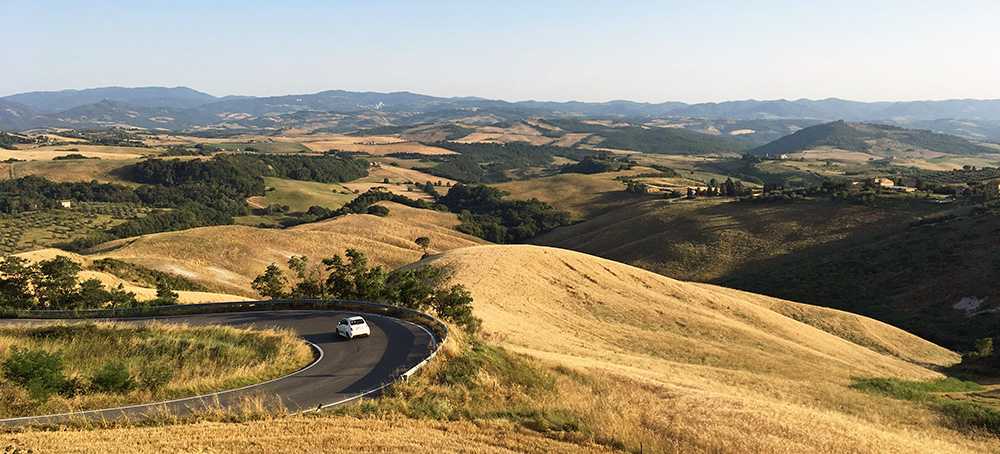
To discover that side of Tuscany, you'll need a rental car. And one of the best places to rent a car is Pisa: the perfect gateway to the entire region. This guide covers everything you need to know: picking up a rental car at Pisa Airport, exploring the Tuscan roads with confidence, tips for parking, and the delightful routes you can drive through one of the most beautiful landscapes in the world.
Renting a Car at Pisa Airport
Rent a car at Pisa Airport, as it’s the most convenient starting point for a road trip through Tuscany.
Where to Pick Up Your Rental Car?
At Pisa Airport, you can choose to pick up your rental car at a counter in a small building next to the terminal or at an office just outside the airport grounds. You can reach that small building on foot or by shuttle bus; shuttle buses always take you to offices outside the grounds. So, at Pisa Airport specifically, it doesn’t really matter which company you rent a car from. Except when it comes to price, since car rental companies just outside the airport are often cheaper. It’s important, however, to check the reputation of the company where you plan to reserve a rental car.
What type of car should you choose for Tuscany?
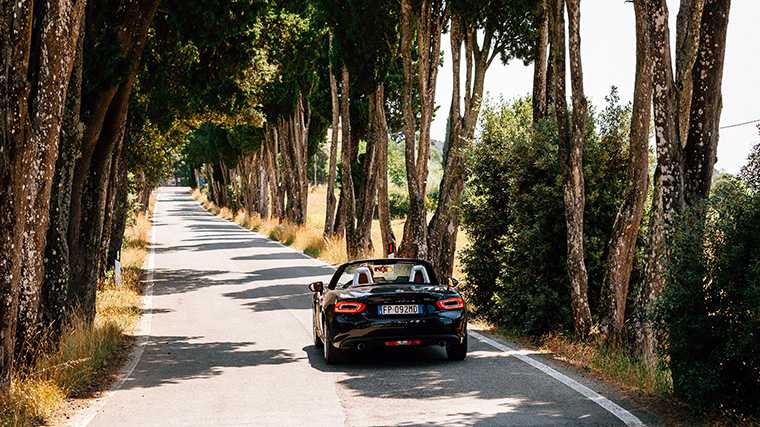
Choosing the right rental car for Tuscany requires careful consideration. While compact cars are cheaper and easier to park in historic towns, the gravel roads that wind through vineyards and between hilltop farmhouses can be a challenge for these vehicles. If you plan to explore the Val d’Orcia, the Chianti Classico region, or one of the smaller wineries, rent a car with sufficient ground clearance. A small SUV offers the best of both worlds: easy to park in town and reliable on bumpy roads.
How much does a rental car cost at Pisa Airport?
Rental car prices in Pisa vary depending on the season, the rental company, the size of the car, and the type of transmission. Car rentals are cheapest outside of peak season, and cars with manual transmissions are slightly cheaper than those with automatic transmissions. Furthermore, well-known international brands are usually more expensive than local companies. In general, it’s more cost-effective to book your rental car well in advance.
Driving in Tuscany
With good planning and preparation, you’ll enjoy a carefree and unforgettable road trip through Tuscany!
The country roads in Tuscany are popular with cyclists, who often ride in groups. Wait until it’s safe to pass. You may also find yourself stuck behind a tractor or other farm vehicle. The drivers may or may not pull over. If not, don’t worry—they don’t travel long distances.
Driving on Winding and Unpaved Roads
Winding roads mean it takes longer to get from point A to point B. Drive at a leisurely pace and don’t overplan your itinerary. Many gas stations in rural areas close between 1:00 p.m. and 3:30 p.m. for lunch and may be closed entirely on Sundays.
The strade bianche deserve a special mention. These unpaved gravel roads are a hallmark of the Tuscan landscape. They’re generally well-maintained, but dusty in the summer and slippery after rain. Always check with your local rental agency to see if you’re allowed to drive on these roads or if you have comprehensive insurance that covers damage to the undercarriage of the rental car.
Can you drive a rental car in ZTL zones?
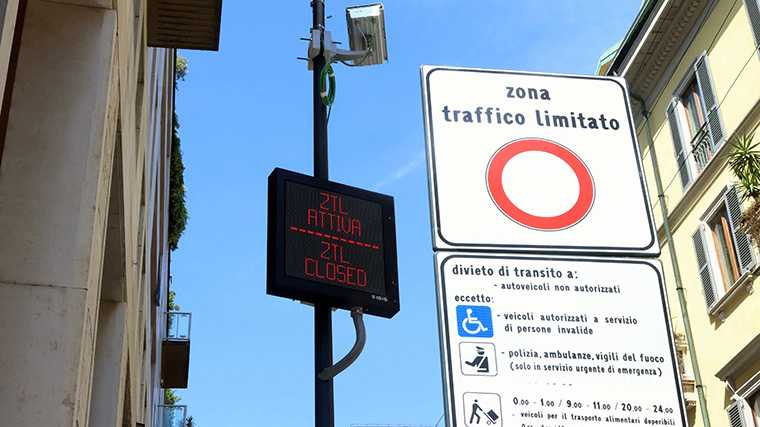
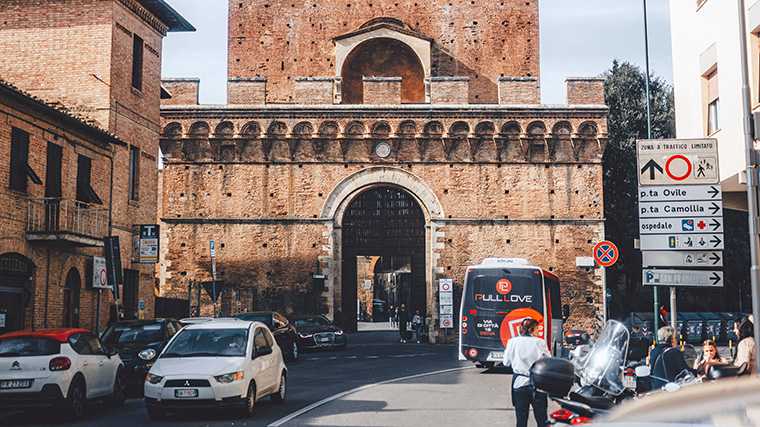
Virtually all Italian cities restrict access to their historic centers. Although the restrictions in these so-called Zona a Traffico Limitato (ZTL) zones often apply only at certain times, it’s best to avoid them altogether. If you drive into such a zone when it’s not permitted, you’ll inevitably be fined. There’s usually plenty of parking just outside the zone.
But what if that cute little hotel is located within the ZTL? In that case, make sure the hotel front desk enters your rental car’s license plate number into the registration system. Please note: you must take the shortest route to and from your accommodation; you’re not allowed to just drive around aimlessly within the ZTL!
Don’t rely entirely on GPS
Use Google Maps or Waze, but don’t rely on them entirely. Speed limits are often inaccurate; they can lead you into ZTL zones and sometimes direct you onto small, unpaved roads. Coverage in rural areas can be poor, so download your maps.
The Most Beautiful Routes by Rental Car in Tuscany
Pisa → Lucca
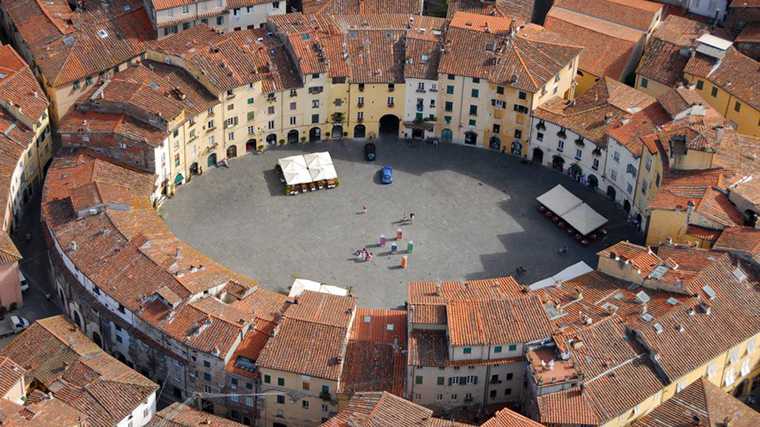
You can drive from Pisa to Lucca via the A11 highway, but didn’t you rent a car specifically to explore rural Tuscany? So take one of the back roads or make a nice detour.
Highlights:
Monti Pisani – Between Pisa and Lucca lie hills and mountains crisscrossed by beautiful roads. The Via del Cantiere is well worth a visit, offering panoramic views. There are several hiking and biking trails in this area.
Apuan Alps – Would you rather drive through higher mountains? Then take a detour through the Apuan Alps north of Pisa and visit the stunning Antro del Corchia stalactite caves.
Lucca – A magnificent city characterized by extraordinary Renaissance walls enclosing a labyrinth of medieval towers, Romanesque churches, Baroque palaces, and intriguing squares, including the oval-shaped Piazza dell’Anfiteatro.
Garfagnana – Drive north from Lucca and follow the road through the Serchio River valley. This green region is called Garfagnana and is very popular with tourists who appreciate a peaceful setting.
Lucca is a perfect first stop to get used to driving your rental car and parking in Tuscan cities. Park in one of the lots just outside the city walls.
Pisa → Siena
Siena is the heart of Tuscany, and you can reach it in just over an hour and a half via the highway. Much more enjoyable and scenic, however, is the slower route through the Chianti Classico wine region.
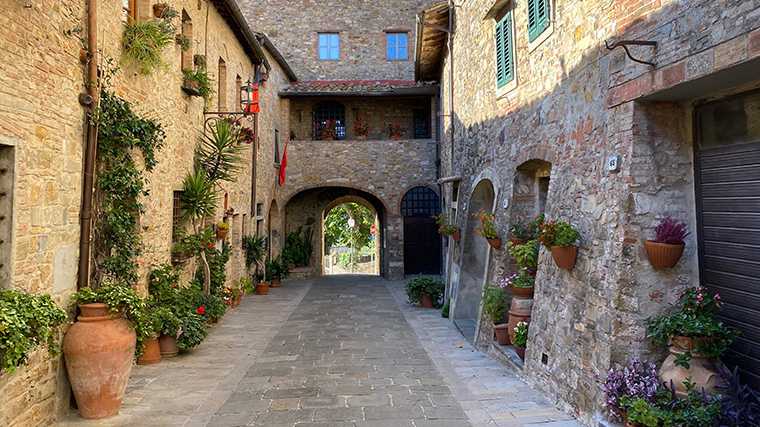
Highlights between Pisa and Siena:
San Miniato – A small town in a historically strategic location atop three hills. From the Rocca di Federico II on one of those hills, you have a fantastic view of Tuscany.
Vinci – The birthplace of Leonardo da Vinci, featuring, of course, a museum dedicated to him, but above all a charming Tuscan town that isn’t overrun by tourists.
Chianti Classico – South of Florence, the Via Chiantigiana (SR222) begins. The road winds through iconic landscapes: hills dotted with vineyards, old stone farmhouses, and the occasional hilltop castle. The stops along the way—Greve in Chianti, Radda in Chianti, and Gaiole in Chianti—are all well worth a visit. Don’t forget to take some side roads as well, such as the one leading to San Donato in Poggio.
Siena – You can park your rental car in one of the large parking garages around the city center. Siena’s historic center is exceptionally picturesque, and from its tall towers you’ll enjoy a stunning view of the surrounding countryside.
Pisa → Val d’Orcia
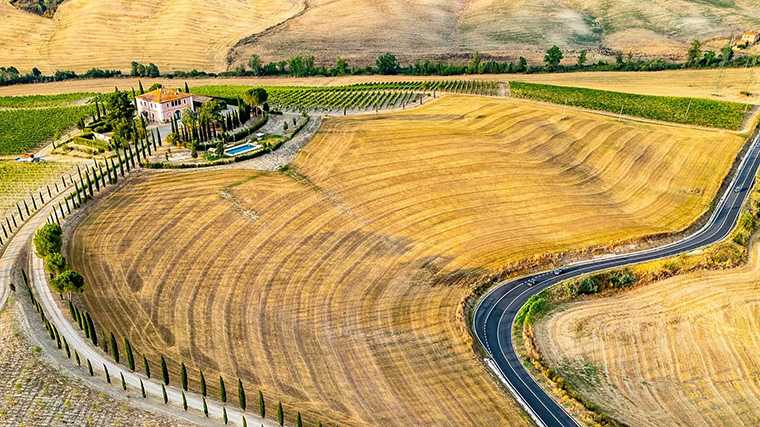
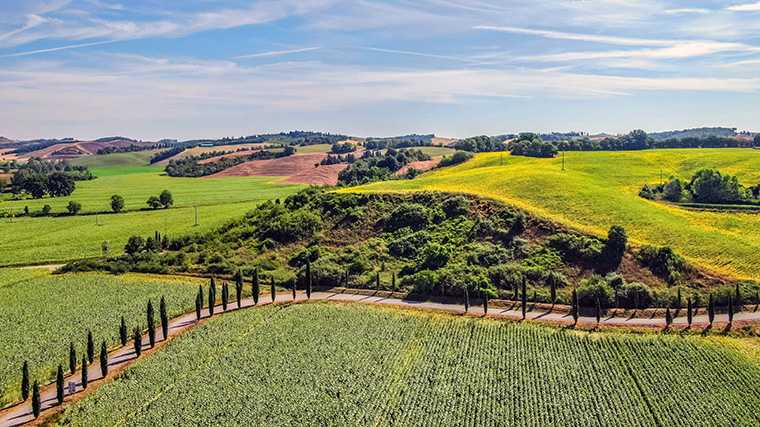
The Val d’Orcia is the landscape that has become the global symbol of Tuscany: rolling hills dotted with secluded farmhouses and rows of cypress trees lining the roads, silhouetted against a blue sky. From Pisa, the first part of the route follows the same path as the trip to Siena (see above).
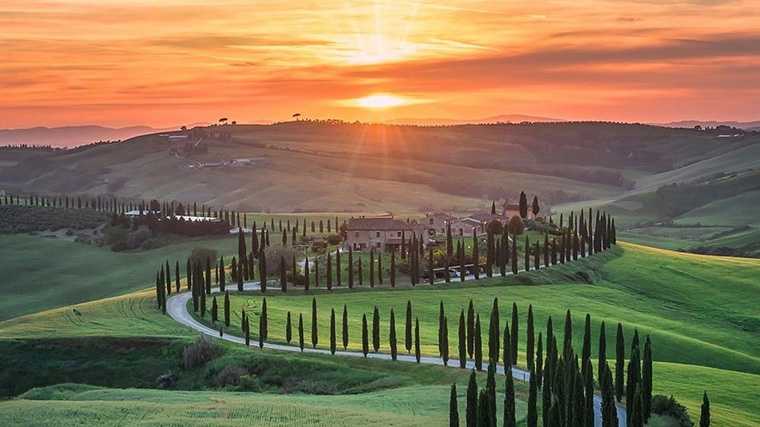
Highlights of the Val d’Orcia:
Agriturismo Baccoleno – From Siena, drive south in your rental car. From Asciano, take the SP60 and you’ll pass an iconic winding road lined with cypress trees on both sides.
Montalcino – The road gradually descends into the Val d’Orcia, and the landscape opens up as you approach Montalcino, a hilltop fortified town.
Pienza – The ideal Renaissance town, designed from the ground up in the fifteenth century by Pope Pius II and considered one of the finest examples of medieval urban planning.
Bagni di San Filippo – Val d’Orcia isn’t just hills and cypress trees; it’s also home to thermal baths. The most beautiful are the baths of San Filippo, nestled among strangely shaped rocks.
Other Tuscan villages accessible by rental car
A rental car is essential for visiting the most beautiful villages in Tuscany: trains do not run there, and even if there is a bus service, the buses run on a very limited schedule and likely not at all on Sundays.
San Gimignano
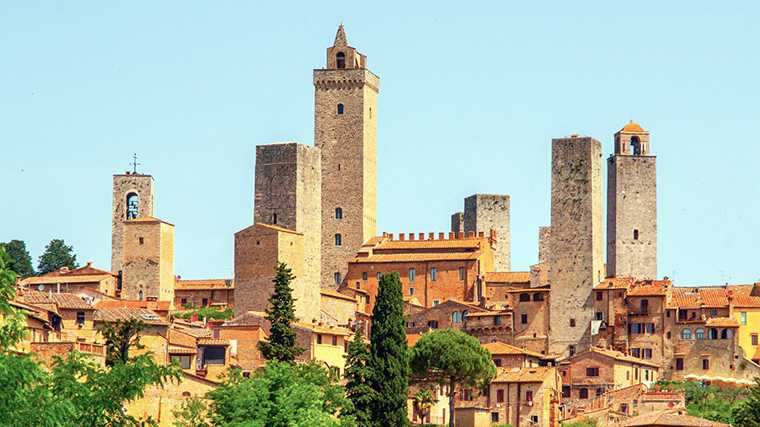
San Gimignano enchants visitors with its medieval towers, of which only 14 remain out of the 70 that once stood there. The town is situated on a large hill, and from the highest tower you have a beautiful view of the surrounding vineyards and fields.
Montepulciano
A beautiful medieval hilltop town. Of particular interest is “la città sotterranea,” or the underground city. You can explore historic underground passages featuring suits of armor, water reservoirs, a wishing well, wine aging in barrels, and much more.
Montefioralle
This village is on the list of Italy’s most beautiful villages (borghi più belli). Although it’s less than thirty kilometers from Florence, it feels like you’re in another world.
Collodi
If you’re traveling with children who know the story of Pinocchio, you must visit Collodi. It’s the birthplace of the author, and the Parco di Pinocchio brings the story to life through artwork and attractions.
Frequently Asked Questions
Is a rental car necessary in Tuscany?
No, not if you’re only visiting major cities like Florence, Siena, and Pisa. They’re all easily accessible by public transportation.
Yes, if you (also) want to spend time in the Tuscan countryside and explore small villages. With a rental car, you have the flexibility to go wherever and whenever you want. You can stop at any spot worth a photo (and there are plenty!) or pop into a small trattoria full of locals. You’ll find even more tips in our guide to 7 day trips by rental car around Pisa. Be sure to also read our guide to renting a car abroad. (CHECK LINK!!!)
Is it difficult to park a rental car in cities and towns?
In cities, there are almost always large parking garages and/or lots just outside the restricted traffic zone (ZTL). They’re well-signposted and cheaper than street parking. In historic cities, this offers the most stress-free experience: arrive, park, and explore the city on foot. You can find detailed information in our guide to parking in Europe.
In smaller hilltop villages such as Montepulciano, Pienza, and Montalcino, you can usually park your rental car in special parking lots on the lower slopes. Walk a few minutes uphill, and you’ll find yourself in a world that has barely changed over the centuries.
How does one-way car rental from Pisa work?
If you rent a car in Pisa, drive through the Tuscan countryside, and then return to Pisa for your flight, that’s fine. But if you want to go somewhere else after your road trip through Tuscany, consider a one-way rental: you pick up the car in one place and drop it off somewhere else. This almost always comes with a one-way fee, but you’ll likely make up for it with savings on gas, tolls, and time. Popular destinations for one-way rentals from Pisa include Rome, Venice, and Milan.
A Worry-Free Road Trip Through Tuscany
For a worry-free vacation, book a rental car with our Worry-Free label. You won’t have to worry about a thing, because these cars come with:
Unlimited mileage
The best fuel policy
No high deposit
Highly rated rental companies
We recommend booking a rental car in Tuscany well in advance to ensure you get a car that fits your travel plans and budget. The online comparison platform EasyTerra makes it easy to compare prices from all providers. By booking two to four weeks in advance, you’ll typically get the best combination of choice and price.

Where would you like to rent a car?
- 24000+ pick-up locations
- Free cancellation
- Independent comparator

Useful tips for a well-prepared trip
Which insurance should I choose, and what's the deal with the deposit? Read our articles with useful information and tips to ensure you choose the right rental car for you.


- 14 Best Day Trips by Rental Car from Rome
- 12 stops between Venice and Florence
- 16 places of interest between Naples and Lamezia Terme
- The 11 Most Beautiful Travel Destinations in Southern Italy
- 12 Tips for a Road Trip Starting from Olbia or Alghero
- Rental Cars in Italy: Everything You Need to Know About ZTL Zones