- Popular countries
- Popular regions
- Popular cities
- Popular airports
- Car hire United Kingdom
- Car hire Italy
- Car hire Spain
- Car hire United States
- Car hire Portugal
- Car hire Greece
- Car hire France
- Car hire Poland
- Car hire Ireland
- Car hire Cyprus
- Car hire Netherlands
- Car hire South Africa
- Car hire Switzerland
- Car hire Croatia
- Car hire Canada
- Car hire Malta
- Car hire Germany
- Car hire Hungary
- Car hire Norway
- Car hire Australia
- Car hire England
- Car hire Sicily
- Car hire Scotland
- Car hire Florida
- Car hire Sardinia
- Car hire Malta
- Car hire California
- Car hire Crete
- Car hire Lanzarote
- Car hire Majorca
- Car hire Menorca
- Car hire Tenerife
- Car hire Rhodes
- Car hire Fuerteventura
- Car hire Corsica
- Car hire Kefalonia
- Car hire Madeira
- Car hire Corfu
- Car hire Ibiza
- Car hire Gran Canaria
- Car hire London
- Car hire Faro
- Car hire Malaga
- Car hire Milan
- Car hire Lisbon
- Car hire Rome
- Car hire Alicante
- Car hire Dublin
- Car hire Manchester
- Car hire Porto
- Car hire Amsterdam
- Car hire Larnaca
- Car hire Geneva
- Car hire Luqa
- Car hire Bergamo
- Car hire Athens
- Car hire Budapest
- Car hire Pisa
- Car hire Orlando
- Car hire Palermo
- Car hire London Heathrow Airport
- Car hire Faro Airport
- Car hire Lisbon Airport
- Car hire Malaga Airport
- Car hire London Gatwick Airport
- Car hire Alicante Airport
- Car hire Manchester Airport
- Car hire Dublin Airport
- Car hire Larnaca Airport
- Car hire Porto Airport
- Car hire Malta Airport
- Car hire Bergamo Airport
- Car hire Athens Airport
- Car hire Budapest Ferihegy Airport
- Car hire Rome Fiumicino Airport
- Car hire Geneva Airport (Switzerland)
- Car hire Amsterdam Schiphol Airport
- Car hire Milan Malpensa Airport
- Car hire Pisa Airport
- Car hire Orlando International Airport

Rent a car for the perfect road trip around Seville
10 Attractions Near Seville to Visit by Rental Car
Seville is absolutely beautiful and a fantastic destination for a city trip, with plenty of sights to see. It’s also a wonderfully laid-back city where—surprisingly—it’s not difficult to get around in a rental car. However, almost all streets in the city center are one-way. Still, you probably won’t rent a car just to explore the city—you’ll want to head out and discover Andalusia! Below, we’ve put together some tips for beautiful day trips in the area around Seville. Of course, you can also combine these day trips to nearby villages, towns, and nature reserves into a complete road trip with your rental car.
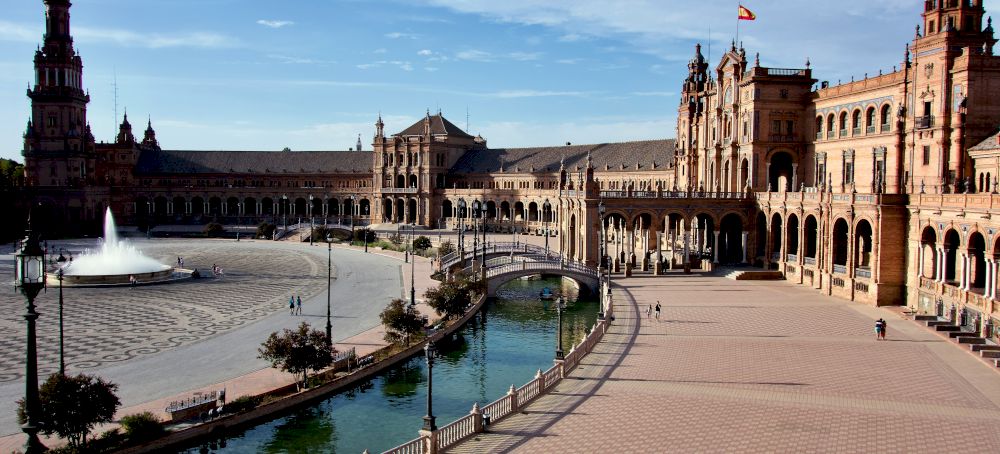
If you’d like to spend a few days in Seville before setting off in a rental car, you might want to consider renting from a company with an office at the Santa Justa train station. It’s located in the eastern part of the city, right near the major thoroughfare Avenida de Kansas City. Via that road, you can reach Seville’s inner ring road (the SE-30) in no time, which connects to roads in all directions.
Gruta de las Maravillas
Seville is a beautiful city, but it attracts many tourists and can therefore get very crowded. If you want to avoid the crowds, drive your rental car to Aracena, about 90 kilometers northwest of Seville. We recommend taking a slightly longer route by avoiding the main roads and driving to the town via smaller, local roads. Along the way, you’ll pass so many beautiful spots that you’ll have to make an effort not to stop every few kilometers. Aracena’s main attraction is the Gruta de las Maravillas (Cave of Wonders). It’s a remarkable stalactite cave, where the variety of features is particularly fascinating: the Shell Chamber, the Light Chamber, colorful shimmering lakes, the Glass Chamber, and the famous Chamber of the Nudes. You’ll see why the latter got its name once you’re there. The entrance is located in the center of Aracena, at the foot of the hill on which the castle stands. The mountains to the west of the town (Sierra de Aracena) are also well worth driving through in your rental car—if only for the idyllic towns and villages you’ll encounter along the way. The famous local ham (jamón ibérico) is produced in this region, and if you’re not a vegetarian, you should definitely try it.
Cádiz
When the Guadalquivir River silted up and (increasingly larger) ships could no longer reach Seville, Cádiz became the new port city for trade with the Spanish colonies in the “New World.” As a result, the city also became a target for hostile powers, particularly the fleets of England and the Netherlands. Large parts of Cádiz were destroyed during these battles. Nevertheless, historic buildings have been preserved, such as in Barrio del Pópulo, the medieval heart of the city that still retains its three 13th-century gates. The 18th-century Puerta de Tierra marks the boundary between the old city and modern Cádiz. Watchtowers were built to keep an eye on shipping (and potential enemies). The tallest is the Torre Tavira, from which you can enjoy a panoramic view of the city, the sea, and the beaches.
Those beaches are another major attraction of Cádiz. The city is surrounded by beautiful, wide sandy beaches. The city beach , La Caleta, is the most popular, and after admiring the sunset, you can enjoy delicious tapas in the narrow streets behind it.
Cádiz was difficult to reach until 2015, but that year the large Puente de la Constitución de 1812 bridge opened, making it easy to drive to the city in a rental car.
White Villages Routes
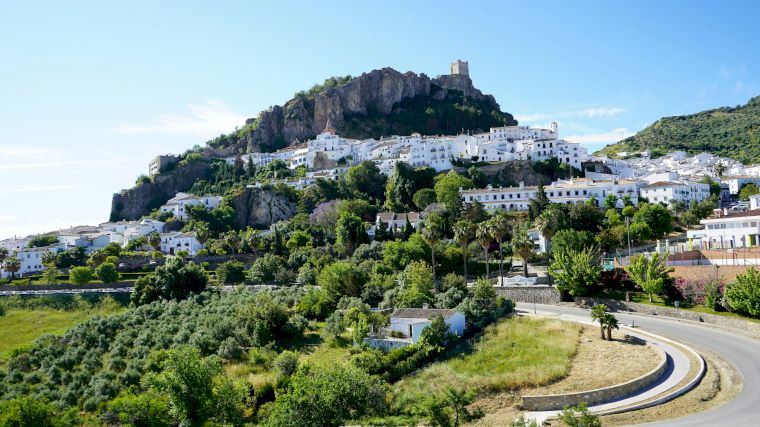
Between Cádiz and Málaga, you’ll find some of Andalusia’s most beautiful traditional white villages. Ever heard the saying, “The journey is the destination”? That certainly applies here. The villages themselves are incredibly picturesque, with a labyrinth of steep alleyways and whitewashed houses adorned with colorful flowers, but the route through these villages is just as enchanting. The towns are often perched high on a mountain and are visible from afar as you drive toward them in your rental car.
https://unsplash.com/photos/a-car-driving-down-a-road-next-to-a-lush-green-hillside-ecsLGLZygzk
Pueblos blancos are often spectacularly perched against mountain slopes. (Photo: https://unsplash.com/@jorgefdezsalas)
If you’ve rented a car in Seville, Arcos de la Frontera is a good starting point. It’s also one of the most beautiful pueblos blancos. The town’s location alone is impressive—about a hundred meters above the Río Guadalete, on a plateau with steep slopes. The next destination is Prado del Rey, which is especially worth visiting for the ruins of the Roman settlement of Iptuci. Salt has been harvested here using traditional methods for three thousand years. The routes through the Sierra de Grazalema between Ubrique and El Bosque—and on to Zahara de la Sierra—are stunning. The latter town sits imposingly above a reservoir. A little further east lies a truly unique white town: Setenil de las Bodegas. The whitewashed houses not only cling to the mountainside, but in some narrow streets, they are situated beneath and between the overhanging rocks of the Río Guadalporcún gorge.
Sierra Morena & Sierra de Hornachuelos
If you cross the Guadalquivir north of Seville, you’ll find yourself in a vast mountainous region. First comes the Sierra Morena, with its oak forests, waterfalls, and caves. This is not only a popular area for hiking and biking, but you can also enjoy active sports here, such as kayaking, rafting, and rock climbing.
Further to the northwest lies the nature park Sierra de Hornachuelos with densely forested gorges and ravines, over which eagles and vultures circle. The Fiordos del Bembezar are particularly beautiful, and you can enjoy breathtaking views there! Drive through the park at your own pace, but be sure to pull over your rental car every now and then to go for a walk, as that’s how you’ll discover the most beautiful spots. From the visitor center (Centro de Visitantes Huerta del Rey), you can choose from four marked hiking trails, ranging from a very short one (half a kilometer) to a fairly long one (over 11 kilometers). The two trails along the banks of the Bembezar River are the most beautiful.
Doñana National Park
The main gateway to Doñana National Park is a somewhat quirky little village: El Rocío. When you drive in with your rental car, you get the feeling that you’ve landed on the set of a traditional Western: wide sandy roads lined on both sides by low houses with wooden posts in front for tying up horses. Consequently, there are many horses roaming around in El Rocío, and they have the right of way over cars! The town attracts hundreds of thousands of pilgrims once a year. In the fifteenth century, a hunter found an image of Mary carved into a tree. That “apparition” was enshrined in a small chapel, which has since become a massive church. The wooden statue is said to still exist, but you can no longer see it because a large statue of Mary has been built around it.
Doñana consists of beautiful lagoons, sand dunes, and marshes. The area is of great importance to birds, both permanent residents and migratory species. It is also home to wildlife, including the Iberian lynx, deer, and wild boars. Various tour operators in El Rocío offer trips ranging from a few hours to full-day excursions. Even if you’re not a birdwatcher, you’ll enjoy the unspoiled nature around you during one of these guided tours. Incidentally, the nature reserve is an especially attractive destination in winter and spring, after it has rained. In the summer, the wetlands are more like “dry lands.”
Jerez de la Frontera
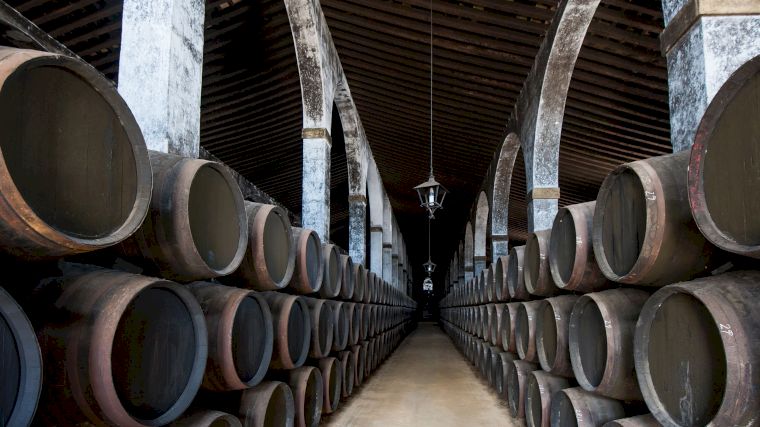
You probably know Jerez de la Frontera as the city of sherry. And indeed, there are many bodegas where you can take guided tours and learn more about the sherry-making process. The tours at the large brands’ facilities tend to be rather impersonal. A more enjoyable option is a tour of a smaller bodega in the historic center, such as Bodega Maestro Sierra or Bodegas Fundador. Incidentally, that same sherry is also used to make vinegar, which is considered the cream of the crop among connoisseurs. So don’t forget to pick up a bottle of Vinagre de Jerez.
But Jerez isn’t just the city of sherry. Horse lovers will be in their element at a performance at the Royal Andalusian School of Equestrian Art, located in the magnificent Recreo de las Cadenas Palace. Did you know that Jerez is also the birthplace of flamenco? At the Centro Andaluz de Flamenco, courses are offered in all aspects of the art form: guitar, dance, and singing.
The Alcázar of Jerez may not be as grand as other Moorish fortresses in Andalusia, but it’s also steeped in history, and the beautiful gardens alone are worth a visit. Next to it stands the cathedral, built on the foundations of a mosque. The minaret was, as is so often the case, converted into a freestanding bell tower.
Carmona
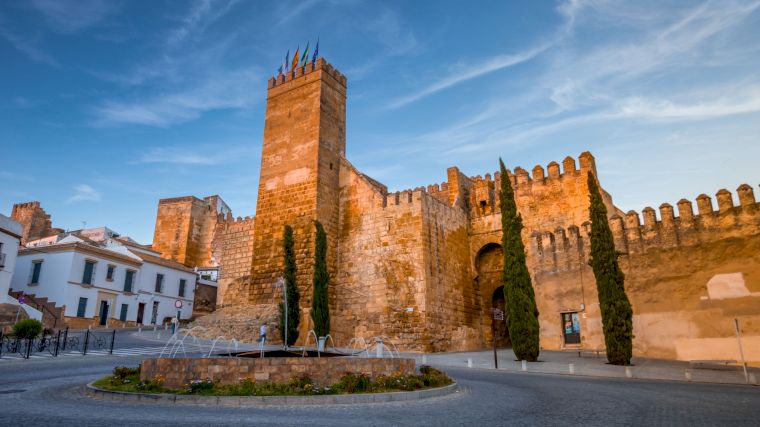
Just a half-hour drive east of Seville lies one of the province’s most historic towns: Carmona. It’s situated on a hill, the ideal location for a fortified town. Just outside the modern city, you can visit the Roman necropolis with its tombs carved into the rock. Its sheer size demonstrates just how important Carmona was in those days. Parts of the city walls also date back to Roman times. Carmona’s old town features the narrow, winding streets typical of Moorish architecture. The Moors also built the imposing city gates, Puerta de Córdoba and Puerta de Sevilla, though the first stones were laid by the Carthaginians. Park your rental car on the edge of the oldest part of Carmona, near one of these two city gates, depending on which direction you’re coming from. Are you staying overnight in Carmona? Then you really should book a room at the parador, which is housed in the Alcázar del Rey Don Pedro. Built on the edge of a plateau, it offers stunning views of the surrounding landscape.
Écija
The town of Écija was destroyed by an earthquake in the 18th century but was subsequently rebuilt in the Baroque style. It’s best known as the “City of Towers”: there are more than ten church towers inspired by the Giralda (in Seville). Also very beautiful are the Baroque mansions (palacios), such as the Palacio del Benamejí and the Palacio del Marqués de Peñaflor. This particularly charming town is located halfway between Carmona and Córdoba. If you drive from the A4 toward the center, you’ll come across the entrance to the parking garage beneath the central square, Plaza de España, where you can park your rental car. That rectangular square is Écija’s living room, surrounded by cozy bars and restaurants.
Córdoba
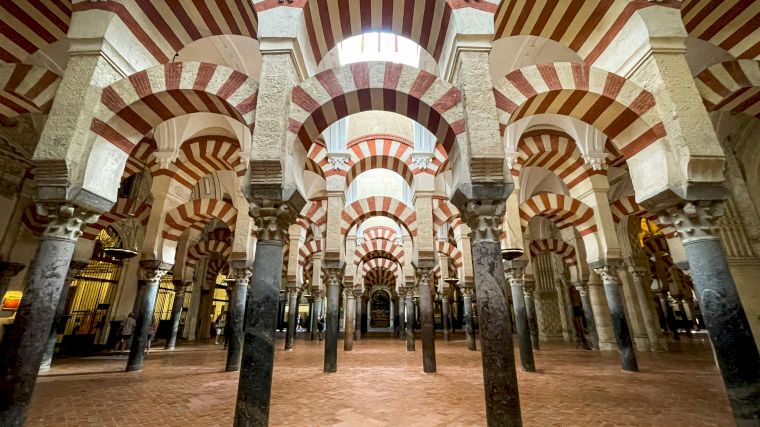
If you’re in Seville, a visit to Córdoba is a must. It’s a bit of a drive (if you’ve rented a car in Seville, it takes about two hours via the highway), but you definitely won’t regret it. The city is less visited than other attractions in Andalusia, such as Granada. Córdoba is somewhat underrated, even though it also has a beautiful historic center with authentic neighborhoods and a maze of narrow medieval alleys interspersed with small squares. Old houses often feature intimate, flower-filled patios, and many of them are open to the public—especially during the Festival de los Patios in May, when most are open for visits. Córdoba’s top attraction is the Mezquita, a massive mosque whose first section was built in the eighth century but was later significantly expanded. The hundreds of pillars give a sense of infinity. What’s truly remarkable is that a cathedral was built right in the middle of the mosque. Emperor Charles V later regretted having given permission for this.
Like Seville, Córdoba lies on the Guadalquivir River, and from the Roman Bridge spanning the river, you have a beautiful view of the Alcázar de los Reyes Cristianos, which was built on the ruins of a Moorish fortress. Those “Reyes Cristianos” were King Ferdinand and Queen Isabella.
In addition to its highlights, Córdoba is the perfect city to get a taste of Andalusian life, especially after the day-trippers have left. In the evening, it’s a great place to relax in the tapas bars and on the outdoor patios near the Plaza de las Tendillas, the Plaza de la Corredera, and around the Parque Juan Carlos I. So don’t drive back to Seville in your rental car the same day—stay a night (or two) in Córdoba.
Beaches near Seville
Fancy a day at the beach? It’s not hard at all to get there from Seville, and the best part is that the closest beaches, in the province of Huelva, are usually nice and quiet. The Costa de la Luz (Coast of Light) has hardly been developed for international tourism. The provincial capital, Huelva, is a port and industrial city and the departure point for ferries to Gran Canaria and Tenerife. The endless sandy beaches near this city are particularly attractive!
The most developed seaside resort is Punta Umbría, which has a lively nightlife in the summer. There’s a wide selection of restaurants serving seafood, including large shrimp and shellfish. On the way to Punta Umbría, you’ll drive your rental car past the protected marshes of the Odiel River. If you enjoy birdwatching, be sure to stop for a walk through the Paraje Natural Marismas del Odiel. There you’ll see spoonbills, grebes, cormorants, and flamingos, among other birds.
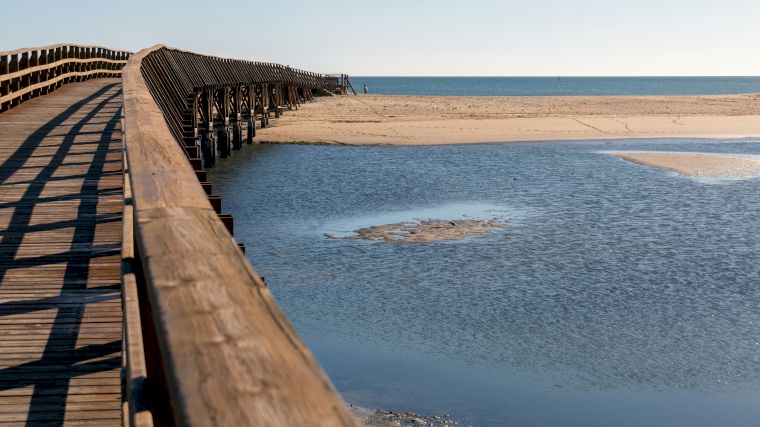
Further to the west lie smaller beach towns on fine-sand beaches, such as La Antilla, the fishing village of El Rompido, and the popular Isla Cristina, which is also bordered by a beautiful marshland area. East of Huelva, between the resorts of Mazagón and Matalascañas, lies a 20-kilometer-long stretch of wide sandy beaches, which are also popular among kitesurfers.
Road Trip Through Andalusia in a Rental Car
Above, we’ve described trips to attractions just a few hours’ drive from Seville in a rental car. You can also use that city as a starting point for a road trip through Andalusia —and you know what’s best? You don’t have to return to Seville if you rent a car for a so-called one-way rental. That way, you pick up the rental car in one place and drop it off somewhere else, such as in Málaga, Granada, or Almería. This way, you can not only take a longer trip but also enjoy plenty of time in the cities at the beginning and end of your road trip.

Where would you like to rent a car?
- 24000+ pick-up locations
- Free cancellation
- Independent comparator

Useful tips for a well-prepared trip
Which insurance should I choose, and what's the deal with the deposit? Read our articles with useful information and tips to ensure you choose the right rental car for you.


- Renting a Car with Kids: The Best Routes and Stops
- La Palma by Rental Car: Routes, Day Trips, and Tips
- Explore 18 top destinations around Girona in a rental car
- The Best Road Trips Around Madrid in a Rental Car
- 15 Tips for the Best Vacation in Menorca
- The 11 Best Day Trips in the Valencian Community