- Popular countries
- Popular regions
- Popular cities
- Popular airports
- Car hire United Kingdom
- Car hire Italy
- Car hire Spain
- Car hire United States
- Car hire Portugal
- Car hire Greece
- Car hire France
- Car hire Poland
- Car hire Ireland
- Car hire Cyprus
- Car hire Netherlands
- Car hire South Africa
- Car hire Switzerland
- Car hire Croatia
- Car hire Canada
- Car hire Malta
- Car hire Germany
- Car hire Hungary
- Car hire Norway
- Car hire Australia
- Car hire England
- Car hire Sicily
- Car hire Scotland
- Car hire Florida
- Car hire Sardinia
- Car hire Malta
- Car hire California
- Car hire Crete
- Car hire Lanzarote
- Car hire Majorca
- Car hire Menorca
- Car hire Tenerife
- Car hire Rhodes
- Car hire Fuerteventura
- Car hire Corsica
- Car hire Kefalonia
- Car hire Madeira
- Car hire Corfu
- Car hire Ibiza
- Car hire Gran Canaria
- Car hire London
- Car hire Faro
- Car hire Malaga
- Car hire Milan
- Car hire Lisbon
- Car hire Rome
- Car hire Alicante
- Car hire Dublin
- Car hire Manchester
- Car hire Porto
- Car hire Amsterdam
- Car hire Larnaca
- Car hire Geneva
- Car hire Luqa
- Car hire Bergamo
- Car hire Athens
- Car hire Budapest
- Car hire Pisa
- Car hire Orlando
- Car hire Palermo
- Car hire London Heathrow Airport
- Car hire Faro Airport
- Car hire Lisbon Airport
- Car hire Malaga Airport
- Car hire London Gatwick Airport
- Car hire Alicante Airport
- Car hire Manchester Airport
- Car hire Dublin Airport
- Car hire Larnaca Airport
- Car hire Porto Airport
- Car hire Malta Airport
- Car hire Bergamo Airport
- Car hire Athens Airport
- Car hire Budapest Ferihegy Airport
- Car hire Rome Fiumicino Airport
- Car hire Geneva Airport (Switzerland)
- Car hire Amsterdam Schiphol Airport
- Car hire Milan Malpensa Airport
- Car hire Pisa Airport
- Car hire Orlando International Airport

The Ultimate Road Trip Through Andalusia by Rental Car
Rent a car for the top 10 destinations
Andalusia is a region that lends itself perfectly to a road trip in a rental car. The name of this southern Spanish region immediately conjures up images of flamenco, passionate dancers with castanets accompanied by melancholic singing or, conversely, rousing guitar music. But Andalusia is also known for the often crowded beaches along the Costa del Sol. It is a region of contrasts: beaches where mass tourism reigns supreme set against stunning and tranquil nature reserves; impressive Arab palaces and castles alongside Christian cathedrals; rolling hills covered with grapevines and olive trees interspersed with rugged mountains, bustling cities set against picturesque villages where time has stood still, and snow-capped mountain peaks rising above a desert-like landscape.
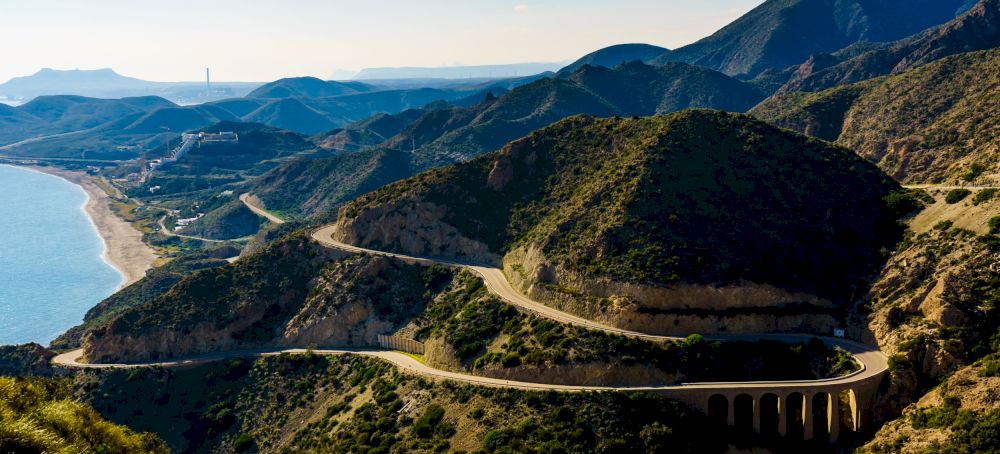
These contrasts make Andalusia incredibly diverse, with attractions that defy easy categorization. But no matter where you are, enjoying life is always part of the experience. Music, dance, good food, and raising a glass in good company are all part of everyday life for Andalusians. You won’t experience the real Andalusia if you stay cooped up in a tourist resort on the Costa del Sol. Get out and explore with a rental car! You’ll discover that one or two weeks aren’t enough, and you’ll start making plans for your next trip to spirited and enchanting Andalusia even while you’re still on your current journey.
Below is a detailed itinerary for a road trip through Andalusia, broken down into ten cities along the route. We also describe the attractions in the surrounding areas. We use the cities as base camps because it’s easy to rent a car there, allowing you to start from any location to drive (part of) the route.
Málaga
This city is the gateway to the beaches of the Costa del Sol. It’s also the ideal starting point for a road trip through Andalusia, because—compared to other cities in southernSpain —you can rent a car relatively cheaply. Before you hit the road, you should, of course, spend a few days in Málaga itself. Be sure to visit the cathedral, the adjacent Moorish fortress (Alcazaba), and the Castillo de Gibralfaro perched above it—if only for the spectacular views of the harbor. A beautiful promenade runs along the harbor, lined with cozy restaurants and cafés. Art lovers should head to the Picasso Museum in the Palacio de Buenavista. A combination of classic cars and matching fashion can be found at the Museo del Automóvil y la Moda. In addition to its famous attractions, Málaga is a very lively city with great shopping, though you might want to save that for the end of your road trip through Andalusia.
From Málaga, drive east. To be honest, the first part of the route isn’t all that impressive, but a nice surprise awaits you at our first stop.
Nerja
The seaside resort Nerja is best known for the Balcón de Europa, a name given in the nineteenth century by King Alfonso XII to a rocky promontory jutting out into the sea with a view of the beautiful coastline. The king is immortalized there with a statue. Steps lead down to the small beaches and coves below.
Just east of Nerja, near the village of Maro, lies the stalactite cave Cueva de Nerja. The cave is enormous, and in one of its colossal underground chambers you can see, among other things, the world’s largest stalactite, measuring over 32 meters in length. You must purchase a ticket to visit, but there is an exception for residents of the European Union. They may enter for free at 9:30 a.m., provided they have booked a spot online in advance. During the summer months, concerts and dance performances are regularly held in the Nerja Caves.
From Nerja, the route gets more and more beautiful. Just outside the town, you’ll have a great view of the Acueducto del Águila (Eagle Aqueduct). If you head north in your rental car just before Motril (via the N-323a), you’ll pass a rock face that’s irresistible to rock climbers: the Ruta de escalada Tajo Los Vados. Even if you don’t plan to climb the rock yourself, it’s fun to watch others doing so.
We recommend driving further east as much as possible on the smaller inland roads, such as the A-348. Not only are these winding roads more scenic, but you’ll also avoid driving through the sea of plastic in the Campo de Dalías greenhouse area, just before you Almería . Moreover, you’ll be driving through an area known as Las Alpujarras on the southern slopes of the Sierra Nevada—a stunning green landscape crisscrossed by valleys and dotted with some fifty quaint mountain villages in the Andarax River valley. The typical architecture of the whitewashed houses is reminiscent of the style found in the Rif Mountains in Morocco.
Almería
This city lies a bit off the beaten path, but is—perhaps precisely because of that—particularly charming. Of course, Almería also has a Moorish fortress and a cathedral. From the outside, the cathedral looks more like a sturdy castle, but inside you’ll find incredibly elegant and intricate masonry. Don’t forget to wander through the city itself. Almería isn’t brimming with history like many other cities in Andalusia, but it’s very charming, especially around Plaza Puerta de Purchena. Near the harbor stands an impressive steel structure, El Cable Inglés. It’s a kind of pier that trains used to travel across to load English cargo ships with ore. Since 2023, this pier has been open to the public, except in bad weather. It offers a fantastic view of Almería and the sea.
Just east of Almería lies a truly unique nature reserve: Parque Natural de Cabo de Gata. Solidified lava from ancient volcanic eruptions has created a fascinating landscape. Along the park’s coastline, you’ll find dunes, salt flats, cliffs, and coves. If you prefer very quiet beaches, head to Playa de Monsúl or Playa del Barronal. There are no amenities on these beaches, and you should also be aware of the sometimes strong currents. If you’re traveling with children, it’s better to drive your rental car to Playa de los Genoveses, where the sea is shallow and calmer. You can also take a canoeing and snorkeling excursion along the coast of the nature park.
If you drive north from Almería, you’ll feel as if you’re in the desert. It’s a bone-dry landscape, dominated near the village of Tabernas by the ruins of a Moorish fortress. Many Western movies have been filmed around that village, and a special route (Ruta del Cine) takes you past the locations of some famous scenes. There’s also a recreated Western village (Oasys), though it’s quite touristy.
Granada
Next, drive your rental car along the A-92 through the northern foothills of the Sierra Nevada. That road goes around Guadix, but for a unique experience, be sure to take the exit to this town. It boasts the largest neighborhood of cave dwellings in all of Europe, the Barrio de Cuevas. These houses are carved into the hillsides, topped with a chimney, and are still inhabited today. Want to spend the night somewhere a little out of the ordinary? Some of these cave dwellings are available for rent!
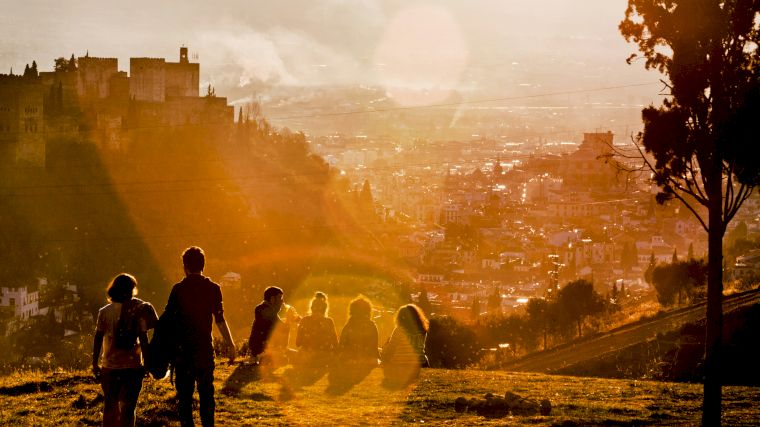
From Guadix, it's about an hour's drive to Granada. If you’re not afraid of a few twists and turns, you can take the A-4003 (exit 253) for the final stretch. You’ll then enter the city itself via the Carretera de Murcia, and from the Mirador de San Cristóbal (near the church of the same name), you’ll have a beautiful view. Granada is home to the crown jewel of Andalusia, the imposing Alhambra. This complex of fortress (Alcazaba) and palace (Alcázar) is a must-see, but keep in mind that tickets are often sold out weeks in advance. So be sure to book your admission ticket online well in advance; otherwise, you’ll miss out on this magnificent World Heritage Site. The adjacent Moorish quarter, Albaicín, is a maze of narrow and often steep streets and stairways. From the hilltop neighborhood of Sacromonte, you’ll have a fantastic view of the Alhambra.
From Granada, the mountains of the Sierra Nevada are easily accessible by rental car. But don’t just drive through them—these mountains invite you to get active: hiking, mountain biking, horseback riding, paragliding, mountaineering, or rappelling. From the ski resort, you can take lifts up to an altitude of 3,300 meters—all year round!
Jaén
Whenever possible, take the smaller back roads to our next destination, for example via Valdepeñas. These roads wind past vast olive groves and Jaén is often called the olive capital of the world. The fruity olives grown here are, according to many, the best in Spain. In the town itself, you can, of course, taste and buy these olives and olive oil of exceptional quality. Jaén also boasts an impressive cathedral, a unique triangular castle (Castillo de Santa Catalina), and well-preserved Arab baths (Baños Árabes) located beneath the Palacio de Villardompardo, which also houses two art museums.
Úbeda and Baeza
Most people who visit Jaén are passing through on their way to Úbeda and Baeza, two charming towns with exceptionally well-preserved monuments. Úbeda’s old town is brimming with beautiful Renaissance-style mansions and churches set in majestic little squares. It is one of the few places in Andalusia where most of the historic buildings were not built by the Moors (although the original Moorish street layout remains largely intact). The Palacio de Vásquez de Molina is a must-see. Baeza is smaller and best known for its artistically designed fountains and its 16th-century university.
Are you a nature lover with some time to spare? Then we recommend driving your rental car further east to visit the beautiful Cazorla Natural Park, a nature reserve surrounding the source of the Río Guadalquivir. It’s wonderfully peaceful in this green, mountainous area. A beautiful scenic route to drive in your rental car is the A-319 from the village of La Iruela, over the Puerto de las Palomas (Pigeon Pass) to the Guadalquivir valley and the Tranco de Beas reservoir. There, you can take a boat tour of the lake, go kayaking on your own, and, of course, go swimming.
Córdoba
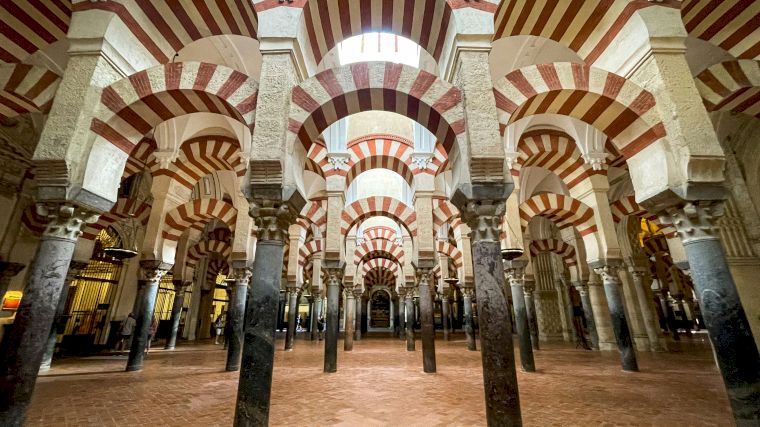
The next stop on the road trip through Andalusia was, a thousand years ago, one of the most powerful and wealthiest cities in Europe. Córdoba was, in fact, the center of the Moorish Caliphate. This city, too, offers a wonderfully contrasting mix of sights. First and foremost, of course, is the impressive Mezquita, the gigantic mosque with a Christian cathedral built right in the middle of it. To make way for this, approximately 400 (of the original 1,200) columns were demolished. Emperor Charles V later regretted having given permission for this. The Moorish fortress, perched high on a hill, was completely replaced by a new castle, the Alcázar de los Reyes Cristianos. In the old Jewish quarter, the Judería, you can admire beautiful patios. You can see several patios all at once at the Palacio Museo de Viana. The city walls and, in particular, the Puerto de Almodóvar city gate are also worth a visit. From the Roman bridge over the Guadalquivir, you have a beautiful view of Córdoba.
To the west of Córdoba lies the nature reserve Sierra de Hornachuelos, which is crisscrossed by three rivers (the Guadiato, Bembézar, and Retortillo) that have carved out impressive gorges and deep ravines. They bear some resemblance to the fjords in Norway, but here the slopes are densely forested. From Córdoba, you can reach the park by rental car after a scenic drive of less than an hour. Most hiking trails start from the village of Hornachuelos; the most beautiful ones run along the Bembézar River. Or rent a canoe to explore nature from the water.
Seville
Before heading from Córdoba Seville , you’ll pass through the medieval town of Carmona, which is definitely worth a stop—maybe even an overnight stay. The town’s parador is housed in a 14th-century fortress with a stunning view of the surrounding landscape and the Corbones River. Even if you’re not staying overnight, it’s worth stopping by for a cup of coffee—the panoramic view is stunning. Like so many historic Spanish towns, Carmona is best explored on foot. So park your rental car at one of the two old city gates, Puerta de Córdoba or Puerta de Sevilla.
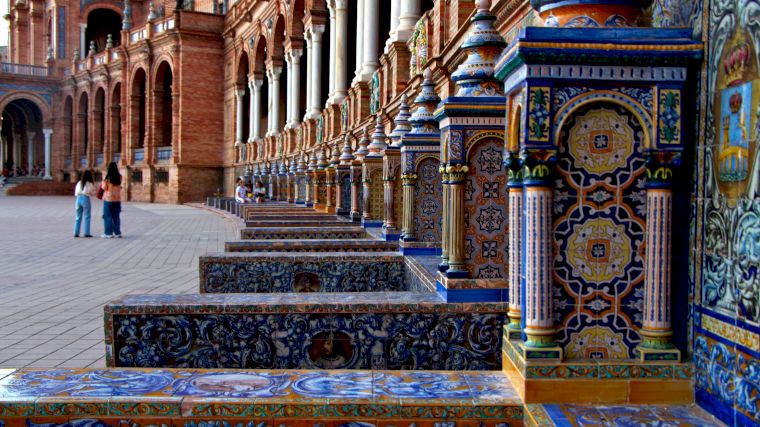
If there’s one city that symbolizes the Andalusians’ zest for life, it’s the capital, Seville. In this cradle of flamenco and tapas, they know how to party and enjoy themselves. Seville may well have the highest number of charming tapas bars per capita, where people gather from late afternoon until at least midnight to eat, drink, and laugh in a convivial atmosphere. The festivities reach their peak during the Feria de Abril. It’s a wonderful city where you should set aside at least a few days, but you can easily stay a week without getting bored for a moment. The Royal Palace (Alcazaba) alone is worth half a day, and that’s not even counting the massive cathedral (María de la Sede) with the Giralda bell tower and the grand Plaza de España. Be sure to wander through the narrow streets of the Barrio de Santa Cruz and visit the working-class neighborhood of Triana across the river.
Cádiz
From Seville, drive south in your rental car. Before you reach Cádiz , you can stop by Jerez de la Frontera. This is not only the city of sherry, but also home to a famous riding school and dazzling flamenco shows. From Jerez, it’s very easy to drive across the large Puente de la Constitución bridge to the center of Cádiz, also known as La Isla because it’s situated on a narrow peninsula. You’ll get the best feel for the city by taking a walk along the city walls and along the quays. Inside the walls lies Barrio del Pópulo, the heart of the city, which still has its three 13th-century gates.
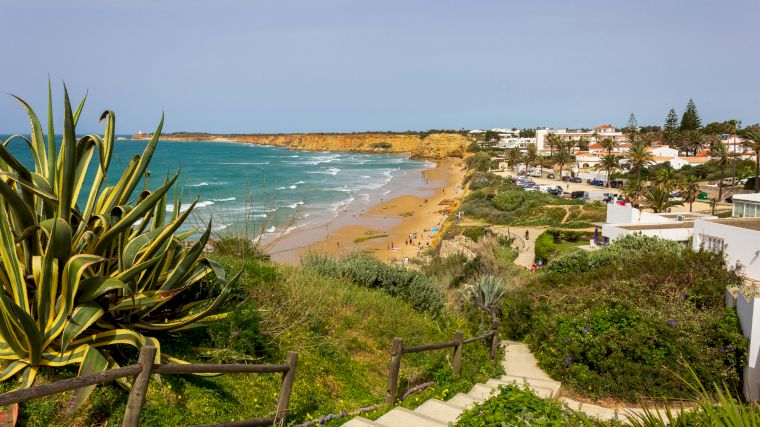
Ready to relax a bit on the beach? There are plenty of options in and around Cádiz. The city beach, La Caleta, is a popular spot to watch the sunset, but for full days at the beach, you’re better off driving your rental car to the seaside resort of Conil de la Frontera in your rental car. The wide, long, and quiet white-sand beach, Playa Castilnovo, is especially worth a visit.
White Villages / Ronda
Cádiz is a great base for a road trip along the so-called pueblos blancos (white villages). These villages are ancient fortresses and are generally situated at fairly high elevations. It’s not so much the villages themselves that make these routes so interesting, but rather the roads: winding over mountain passes, down into a valley or through a gorge, and then back up into the mountains. Along the way, you’ll encounter many beautiful viewpoints. To truly experience life in one of these villages, book an overnight stay in a quiet pueblo blanco and have a drink with the locals once most of the (day) tourists have left. Starting from the first white village (and one of the most beautiful), Arcos de la Frontera, you can take the central route, but it’s also the most popular and therefore quite busy. You’ll drive your rental car through places like Ubrique, El Bosque, the high-altitude Villaluenga del Rosario, Zahara de la Sierra, and the nature reserve Sierra de Grazalema. The northern route is just as beautiful and, in any case, much quieter. Olvera is beautifully situated; you can see the cathedral and the adjacent Moorish fortress from a distance. The Peñón de Zaframagón Nature Reserve is home to the largest concentration of griffon vultures in all of Spain. The village of Setenil de las Bodegas is truly unique and has adapted perfectly to its surroundings: houses and even some streets have been carved out of the rock.
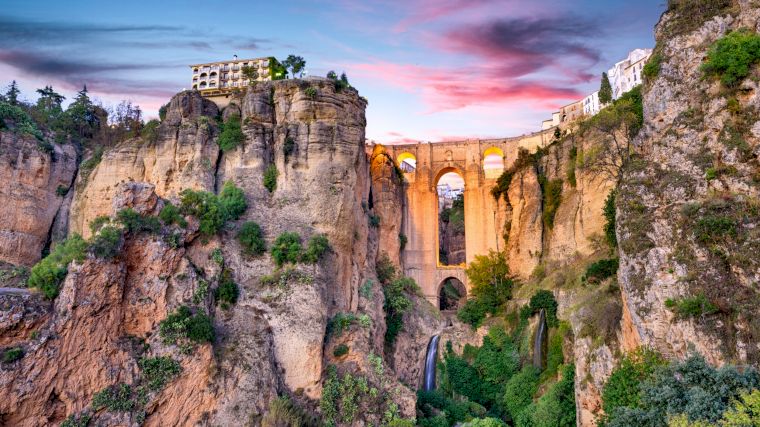
On your drive back to Málaga, you can’t miss the most famous white village, Ronda, which is spectacularly situated on the edge of a gorge over a hundred meters deep and spanned by three bridges. The most famous is the Puente Nuevo (New Bridge)—well, “new”… it was built in the 18th century. From the bottom of the gorge (accessible via the Carretera de los Molinos), you’ll have the best view of the bridge. The old town itself is also well worth a visit, especially in the early morning and in the evening once the day-trippers have left. A great viewpoint is the Balcón del Coño.
From Ronda, the A-397 leads back to the coast. This is a stunning, though very winding, road that passes through the Sierra de las Nieves National Park, among other places. Once you reach the coast, you can drive straight to Málaga or take a moment to relax at one of the beaches along the Mediterranean Sea, such as at San Pedro de Alcántara, Fuengirola or Torremolinos. That’s the beauty of renting a car in Andalusia: you get to decide exactly where you want to go and which route to take!
Why rent a car for a road trip in Andalusia?
We hope we’ve already answered that question above. You don’t necessarily need a rental car to visit the major cities, but it’s precisely the routes between those cities that make a road trip through Andalusia so special. This adds variety to your road trip: interesting historic cities interspersed with wild nature, a day at the beach, or an authentic Spanish village. Those villages—as well as starting points for nature hikes—are almost exclusively accessible if you have a car. And you’ll have tremendous flexibility. Discover something fun while driving? Head right over in your rental car!
One-Way Car Rental in Andalusia
The road trip described above is just a suggestion. There’s so much to see in Andalusia that we can’t possibly describe every attraction. You don’t have to follow this route in its entirety either. You can rent a car in any of the cities we’ve mentioned and return it somewhere else. That’s called one-way car rental and is very easy to arrange. Just select a different drop-off location on the search form, and we’ll show you the rental cars that allow for that. In southern Spain, a one-way trip between Seville and Málaga (or vice versa) is very popular. For even more inspiration, we have two blog posts featuring day trips from those cities: 10 Day Trips by Rental Car from Málaga and 10 Attractions in the Seville Area.

Where would you like to rent a car?
- 24000+ pick-up locations
- Free cancellation
- Independent comparator

Useful tips for a well-prepared trip
Which insurance should I choose, and what's the deal with the deposit? Read our articles with useful information and tips to ensure you choose the right rental car for you.


- Renting a Car with Kids: The Best Routes and Stops
- La Palma by Rental Car: Routes, Day Trips, and Tips
- Explore 18 top destinations around Girona in a rental car
- The Best Road Trips Around Madrid in a Rental Car
- 15 Tips for the Best Vacation in Menorca
- The 11 Best Day Trips in the Valencian Community